Fireside Chat: Xumo’s Evolution from FAST to Streaming Platform, and Its Industry Impact

Last year, Comcast and Charter established Xumo, a joint venture driven to bring consumers nationwide a new way to enjoy streaming entertainment in the home. I’m excited to sit down with Colin Petrie-Norris at the NAB Show Streaming Summit for a fireside chat, as the company prepares to launch its first streaming devices later this year. You can see full details on the session here and still get a ticket to the event. #streamingsummit

Sponsored by

Episode 52: Earnings Recap from Warner Bros. Discovery, fuboTV, DISH, Brightcove, Vimeo + Sports Streaming News

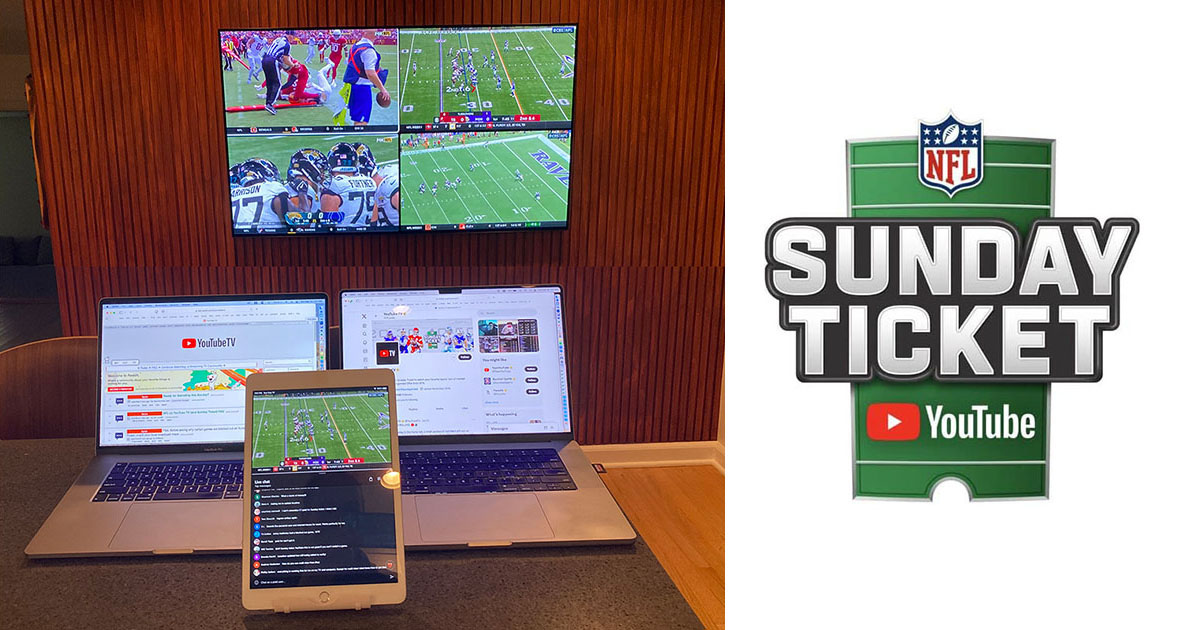
Podcast Episode 52 is live! This week we detail the numbers you need to know from the Q4/full-year earnings of Warner Bros. Discovery, Vimeo, fuboTV, Vizio, Brightcove, DISH and Altice. We highlight revenue growth, free cash flow, pay TV subs lost, streaming subs gained and ARPU. We also cover some of the news around sports streaming and OTT services from MSG+, RSN licensing, NFL Sunday Ticket and Indian Premier League cricket.

Companies and services mentioned: Netflix, HBO Max, fuboTV, Warner Bros. Discovery, MSG+, Brightcove, Vimeo, DISH, Altice, YouTube TV, Tubi, Tubular Labs and Chartbeat.

Executive Interview: Harmonic Discusses the Latest Challenges and Opportunities in Cloud Workflows

I’m pleased to announce the launch of a second podcast, called “Executive Interviews“. Each month I interview executives to get their thoughts on opportunities and challenges they are seeing in the streaming media space. For this episode, Gil Rudge, SVP, Video Products and Solutions at Harmonic joins me for a discussion about some of the latest deployment trends for cloud-based video workflows. (Listen here)

We discuss the lack of adoption of 4K; the complexity of live sporting events; the trade-off between on-prem versus the cloud; and the success Harmonic has shown in diversifying the company’s revenue from hardware to the cloud.

If your company has an executive they would like to be considered for the interviews series, please reach out to me.

I’m Organizing Video Engineering Topics at The StreamTV Show, June 12-14 in Denver

I’m excited to announce that in association with the Fierce Video team, I will be organizing and chairing content tied to video engineering topics at the StreamTV Show, June 12-14 in Denver.

Called the Video Engineering Summit, these set of sessions will focus on technical content for developers, engineers, and business stakeholders, tasked with building great video experiences at scale. These technical papers, presentations and case studies will highlight and showcase some of the best ways to ingest, encode, package, and deliver streaming media services across the OTT, broadcast, media, sports, and entertainment industries. All of this content is included as part of the StreamTV show, at no additional cost to attendees.

If you are interested in submitting a technical paper or presentation, please reach out to me via email: dan@danrayburn.com and check out the website for some of the topics I expect to cover. It will be about 1.5 days of content, across one track.

Episode 50: Key Takeaways from Disney Earnings; Sling Launches FAST Offering; Pay TV Isn’t Dead

Podcast Episode 50 is live! This week we breakdown all the numbers from Disney’s Q4 calendar 2022 earnings including subscriber losses with Disney+ (2.4M); Gains at Hulu (800K) and ESPN+ (600K); announcement of 7,000 layoffs; loss of $1.1B from DTC business; latest ARPU numbers; the re-org of Disney into three divisions and the CEO’s comments that Disney is not considering a spinoff of ESPN. We also discuss Sling’s newly launched FAST service called “Sling Stream” and discuss why pay TV will not be “dead” in three years like some executives are suggesting. Thanks to this week’s podcast sponsor, Agora.

Companies and services mentioned: Netflix, Disney, AMC Theaters, Sling, Amazon Prime Video, Yahoo, Zoom, ESPN, Hulu.

Live Streaming the Super Bowl Across 12 Devices and 6 Platforms

I’m testing the FOX Sports live stream of the Super Bowl (1080p HDR, upscaled to 4K) across 12 devices from 6 different platforms including multiple models of Apple TV’s, Roku’s, Fire TV’s, Macbook’s, iPad’s and smart TVs from Samsung, LG and Vizio. The platforms I’m streaming from include the FOX Sports website, FOX Sports app, Hulu, YouTube TV, Sling TV and fubo TV. More updates to come…

If you’re looking for streaming stats from the 2022 Super Bowl, (blog post testing stream) note that NBC said the 11.2 million number they gave out is a viewers-per-stream figure and is not directly comparable to previous years, when co-viewing was not as prevalent. The figure comparable to past years is the 6 million number NBC released for 2022, which marks a 5% increase over the 2021 Super Bowl of 5.7 million AMA (Average Minute Audience).

Updated Feb 13 – FOX Sports says Super Bowl LVII was the most-streamed Super Bowl in history, delivering an average of 7 million streams, up +18% over last year (vs. 6 million). But last year NBC measured it with the Average Minute Audience (AMA) metric and the FOX Sports release simply says “average”. (UPDATED: FOX says that’s 7M “simultaneous”) I’ve asked for clarity if they mean AMA. The Super Bowl LVII live streaming audience includes consumption across: the FOX Sports app; FOX.com; the FOX NOW app; NFL digital properties including the NFL mobile app, the NFL Fantasy mobile app, NFL.com, the NFL connected TV app and NFL+ for subscribers.

Updated Feb 13 – FOX Sports streaming peaked at about 30Tbps.

10:21pm – That’s a wrap. I’ll update this post with streaming viewer stats when FOX Sports pushes them out in the next few days. FOX Sports did a great job on the event. Other streaming services looked to be good overall, with the only exception being fubo TV that seemed to have some issues.

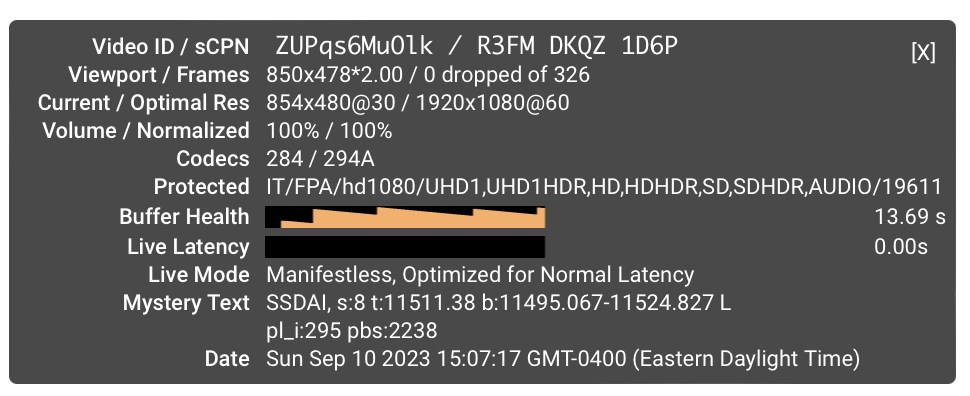
10:12pm – YouTube TV’s support team does a good job of pointing users to a page on their site that shows users how to share “stats for nerds” with the YouTube team when viewers are having a problem. More streaming services should have a page like this. Throughout the game, YouTube support said they were, “actively monitoring things and everything is quite stable,” and provided timely updates to questions on reddit.com/r/youtubetv

9:46pm – For all the support people at the streaming services who have to deal with consumers online, I feel for you. Between Amazon TNF, World Cup, Super Bowl, Olympics, Apple Friday Night Baseball, HBO Max soccer etc. I’ve read and scrolled through easily 10,000+ comments in the past 12-months during live events, just on Twitter alone. The amount of cursing and language used by many are vicious. And the vast majority of those that report problems, provide no details of their device, error message, error code, zip code etc. requiring more back and forth then should be required.

9:33pm – I see very few people reporting issues with the stream on Hulu, but they did acknowledge they were looking into reports of people having issues when trying to switch profiles, with Hulu tweeting, “It sounds like you may be experiencing a behavior we’re currently looking into. Rest assured, we’re all hands on deck.”

9:15pm – In the browser from the FOX Sports website their encoding bitrate ladder shows 7 streams, all HLS TS going over Fastly, but they are not the only CDN involved. Akamai, Edgio and Amazon are also in the mix. Also note, no upscaled 4K version is shown, which I assume is because this is being viewed in the browser:

  • https://foxvideo.global.ssl.fastly.net/1677117580_4a9b207714a9ec0e02a28ed11b82ca38b8c9960a/*~/haw/mcl-haw/stream_7_270p_30.m3u8
  • https://foxvideo.global.ssl.fastly.net/1677117580_4a9b207714a9ec0e02a28ed11b82ca38b8c9960a/*~/haw/mcl-haw/stream_6_360p_30.m3u8
  • https://foxvideo.global.ssl.fastly.net/1677117580_4a9b207714a9ec0e02a28ed11b82ca38b8c9960a/*~/haw/mcl-haw/stream_5_480p_30.m3u8
  • https://foxvideo.global.ssl.fastly.net/1677117580_4a9b207714a9ec0e02a28ed11b82ca38b8c9960a/*~/haw/mcl-haw/stream_4_540p_60.m3u8
  • https://foxvideo.global.ssl.fastly.net/1677117580_4a9b207714a9ec0e02a28ed11b82ca38b8c9960a/*~/haw/mcl-haw/stream_3_720p_60.m3u8
  • https://foxvideo.global.ssl.fastly.net/1677117580_4a9b207714a9ec0e02a28ed11b82ca38b8c9960a/*~/haw/mcl-haw/stream_2_720p_60.m3u8
  • https://foxvideo.global.ssl.fastly.net/1677117580_4a9b207714a9ec0e02a28ed11b82ca38b8c9960a/*~/haw/mcl-haw/stream_1_1080p_60.m3u8

9:02pm – I find it odd Sling TV continues to recommend the FOX News Channel to me when I log out/in, instead of showing the Super Bowl as the first choice. I get this in the app and in the browser. Their stream is currently about 55 seconds behind broadcast for me on Fire TV and desktop.

8:49pm – Still more issues being reported on fubo TV. Unknown now many are being impacted.

8:27pm – I’m seeing some slight audio delay from the FOX Sports app on Fire TV and Roku which I didn’t experience earlier. 1-2 seconds behind the video.

8:10pm – Looking at the manifest file for FOX Sports website I see 60 FPS and streams coming from Akamai and Fastly. That’s not to say more CDNs aren’t involved, those are just the two I am seeing. Not surprisingly, Nielsen and Conviva are collecting data.

8:00pm – Fubo TV looks to be having some issues with errors being reported by users on Twitter and down detector as of 7:12pm. Stream not loading, constant buffering or errors. Unknown how widespread it may be but I’d consider it to be too many complaints when compared to other services. Fubo seems to know about the issue as they keep replying to people on Twitter saying, “As a workaround, you can use your fuboTV credentials in the FOX NOW app to sign in and watch through there.”

7:50pm – Looking at all of the Twitter accounts online for all the streaming services, YouTube TV has the most complaints of picture quality, buffering and reports of the stream being minutes behind the broadcast for some users. However, note that YouTube TV has more subscribers, both free trial users and paid, than any other live linear streaming service. So one would expect to see more complaints overall, due to the size of their audience.

7:39pm – Sling has some angry users on Twitter complaining they paid to get the Super Bowl but it’s no where to be found. While Sling does have the Super Bowl as part of their Sling Blue or Orange + Blue package, it’s only available in certain markets.

7:29pm – Hulu users are reporting online that Hulu went to a commercial in the middle of the National Anthem. I wasn’t toggled over to Hulu at that time, but sounds like an ad triggering problem.

7:20pm – Across all services, I am getting less latency streaming from the FOX Sports app when compared to any other streaming service. Latency of 7-30 is the norm across service and devices. Note that I don’t think latency is a big deal and there is no business incentive to get it down to sub-seconds. Hulu has the worst latency for me of any streaming service so far.

7:11pm – Multiple users online are reporting issues with FOX Sports app no loading, amongst other issues, but nothing that looks like more than normal. Some users are always going to have issues and will need to update OS, update app or do a restart of the device.

7:02pm – I started testing the streams about an hour before the game started and so far, I don’t see any major issues across any service with excess buffering. I see some audio sync issues with the FOX Sports app on Roku and I see a handful of people on Twitter reporting the same issue.

Notes: For all of these devices and my testing, Verizon is my ISP. All Fire TV devices are connected via ethernet and all other devices are a combination of Wi-Fi and ethernet. All devices are running the most up to date OS and app versions.

Netflix’s New Account Sharing Rules Are a Mess With Confusing, Incomplete and Conflicting Information

Netflix has a major problem. Since rolling out their new account sharing rules in Canada, New Zealand, Portugal and Spain, numerous problems with their policy have appeared. Customers have been left with a lack of details, confusing language, conflicting statements and instructions by Netflix support and a lack of transparency and clarity into how the new policy works. Over the past 48 hours, users are sharing their Netflix cancellation screens all over message boards and on social media.

Since the launch, I have spoken to more than a dozen friends in Canada, reviewed their accounts and chat logs with support and read through more than 1,000 comments on Twitter from consumers sharing issues they have encountered. I don’t say this lightly. Netflix has a very serious problem on their hands that needs fixing. If they roll out this new policy in the U.S. and other locations where they have the most subscribers, without making major changes, I think it will seriously hurt their subscriber numbers in a negative fashion.

The biggest problem Netflix has encountered is the poor job they have done in explaining to customers what has changed. Netflix is now enforcing that their service can only be used within a “single household”. Netflix has restricted their plan not based on who you are related to, but rather to a single address. As Netflix’s language states, “a Netflix account is for people who live in the same location.” While some might argue that Netflix has always said their plans were to be used by people living at the same location, that’s not how consumers think of it. In 2013, Netflix rolled out a new plan they called a “family” plan and while Netflix doesn’t use that term any more, that’s still how most of their customers think of being able to use Netflix, amongst family. Netflix may have changed their definition of a “household” a long time ago, but that definition has not changed in the eyes of consumers.

Some of the chat logs I have seen from Netflix support told users that if Netflix, “detects persistent use of a device outside of the primary account owner’s household, we may ask them to verify that device before it can be used to watch Netflix.” What is considered “persistent use” and what’s the methodology behind that? All I can find online is Netflix saying, “We use information such as IP addresses, device IDs, and account activity to determine whether a device signed into your account is connected to your primary location.” Netflix says that if you trigger this alert, you will have to sign into your account and verify the device based on a “verification code sent to the account owner email address”. Once you do verify the device, how long will the device work? Multiple users are reporting online that Netflix support has told them the device will be able to stream for 7-days and then will need re-verification. Online, I can’t find any mention of this.

If your kids are away at college, or deployed in the military, or you are charging your Tesla car at a Supercharger, based on Netflix’s language, these are use cases where you are no longer allowed to use the same Netflix account. Maybe you still can stream with your account, but the point is it’s unclear to consumers. When it comes to traveling Netflix says, “members can still easily watch Netflix on their personal devices or log into a new TV, like at a hotel or holiday rental,” but Netflix’s instructions online of how to do this are vague saying, “open the Netflix app on your mobile device(s) while connected to the Wi-Fi network at your primary location once a month and then when you arrive at the second location.” That might work for mobile devices, but what about a TV or device connected via ethernet at the second location? These instructions are found on the Netflix Canada FAQ page under the heading of “second home or frequent travel to the same location”, but what if it’s not the “same location” when traveling?

Adding to the confusion is language on Netflix’s site that says, “If you don’t watch Netflix on a TV or don’t have one, you do not need to set a primary location for your account.” Does that mean one can share their account with others outside of their primary location as long as Netflix is only being viewed on tablets and phones? Only a few days ago, on February 8th, Netflix tweeted out via their Netflix Canada account saying, “We know there’s been a lot of confusion about sharing Netflix,” and they provided a link to a short post on their website that lacks any details.

Starting on Saturday and now 24 hours later, going to Netflix’s FAQ page brings up a message that says, “We are currently experiencing a higher than normal wait time for support via phone and chat. Please try again later or check our online help center for answers to frequently asked questions.” It’s no wonder support is so busy.

Another issue that came to light is language on Netflix’s website stating that if you have two ISPs in your house, Netflix probably won’t work on both of them. Netflix’s Canada help page says, “If you have multiple Wi-Fi networks, we may only recognize one as your primary location. Devices connected to Wi-Fi networks that are using different ISP accounts or that have different external IP addresses may be blocked from watching Netflix.” If Netflix is using more than just IP addresses in their decisioning like they suggest, why would two ISPs be a problem? You could do a look up of both IPs and see they are at the same location.

There is also no explanation by Netflix of how devices will stream from within the same home, if they use ethernet to connect and not Wi-Fi. I have a TV in the basement where Wi-Fi doesn’t work, so it’s connected via ethernet. Based on Netflix’s language, the TV has to connect to Wi-Fi at least once every 31-days to be able to stream. Or maybe it doesn’t if it sees a similar IP on the device? In practicality, the TV connected to ethernet may work with no problems. But the point is, Netflix doesn’t address any of these questions anywhere online so consumers are making their own assumptions.

Another big question that Netflix doesn’t answer on their website or in any chat log I have seen to date is whether or not the account holder can change their primary location as often as they like. What do you do if you move? What if you rent a house for the summer and live at another location for a few months? What if you have a second home? Netflix says, “You can always update your primary location from a TV by connecting to your Wi-Fi,” but they don’t say how often you can do that. Will users have to do this every time they go on vacation and then change it back to their home addresses after each trip?

In response to a member of the military, Netflix support told them they would have to get a second account if they want to use Netflix in Canada as well as another country they might temporarily be stationed at, since Netflix’s new rules don’t allow you to add another person outside of your household in another country. Netflix is not taking into account people who work remotely for a living, traveling amongst different countries, which might be more people than ever in this new hybrid workforce. Netflix seems out of touch with how many in the world now work and the changes that have taken place since the pandemic.

In calendar year Q4 2022, Netflix had a Domestic (US and Canada) ARPU of $14.78, which doesn’t include any ad revenue. That means on average, for every user that cancels Netflix, they need two new people added to a Netflix account, at an average of $8 per user, just to make up for the user they lost. In my opinion, those seems like bad odds to take with the business.

Netflix knows that consumers gravitate to things that are easy to use. That’s been the hallmark of Netflix since the beginning. But with Netflix’s new account sharing rules, it is no longer convenient and consumers are confused. Netflix’s messing has been poor, its language vague and at times, conflicting. I can’t find any FAQ page on Netflix’s website that answers all of these questions on a single page. You have to click on multiple hyperlinked words, directing you to multiple pages to try and find more details. Online, some users are reporting they have cancelled their service simply due to the confusion and not having a clear understanding of how it all works, even if some of their assumptions are in fact wrong. Consumers don’t like uncertainty.

One would “assume” that Netflix is rolling this out in regions where they have fewer subscribers so they can learn from the experience and make changes for when they roll it out in the US, where they have the most subscribers. If this is not the case and Netflix rolls this out in the U.S., as is, they are going to see a volume of cancellations large enough to impact the numbers they give out to wall street, which we would see show up in calendar year 2023 Q2 earnings. I have no insight into how many consumers have already cancelled their accounts in the countries this has been rolled out in, or how many may have added a new user to their account, but as you can see online, this is a snowball rolling down hill.

Netflix should have made this simple by using simultaneous streams as the methodology to determine when you have to pay to add another user to your account. Customers would understand that metric and Netflix would not have to track IPs, devices, where a user was located or have users sign into Wi-Fi with devices every 31-days. If Netflix doesn’t backtrack on how they are rolling this out and realize how complex they have made it, their subscriber churn could get ugly.