When It Comes To CDN, What Is Value Add Services and What Isn’t?

The term “value add services” is used a lot by content delivery networks to describe services that don’t fall under the typical commodity CDN business. It’s hard to define exactly what those services are as most CDN vendors don’t define it down to a product level. I get many questions asking what services are classified as value add, but the answer all depends on who you ask. The way I define it for people is that CDN services typically include four kinds of content delivery. Those are – audio/video streaming, audio/video downloads, software downloads and small object delivery.

Services outside of those would be considered value add and would include things like, application acceleration, dynamic site acceleration, front-end optimization, mobile content acceleration, media management (transcoding, ad insertion, content protection) and a host of other services for the purpose of security and commerce. That said, many of those value add services also utilize the CDN’s network to deliver this content, so not everything that falls under CDN can be that easily quantified as value add versus non-value add.

Each CDN vendor looks at and defines their services differently and many confuse the industry even more when they break out their revenue under the generic term of “value add services”, but then don’t define what those services are. Akamai in particular confuses the market because they break out part of their revenue based on services (products), while the other half is broken out by media and entertainment, which is not a product or service, but rather a vertical. All of this aside, here are what I consider to be the most common services that would fall under the term “value add services”, the way I define it, and definitions on what those services are.

  • Dynamic Site Acceleration (DSA): Dynamic site acceleration is a suite of technologies and products that deals with optimizing dynamically served content across the network. Traditional DSA services often include TCP optimization, route optimization, connection management, on-the-fly compression, SSL offload and pre-fetching technologies.
  • Front-End Optimization (FEO): Front-end optimization technologies help to reduce the number of page resources required to download a given page and makes the browser process the page faster. FEO technology isn’t used to bring content closer, but rather makes the content itself faster by optimizing the client side delivery of website resources.
  • Transparent Caching: Transparent caching platforms make intelligent decisions about which content can and should be cached inside a carrier’s network. By deploying intelligent caches strategically throughout their networks, operators can cache and deliver popular content close to subscribers and reduce the amount of transit traffic across their networks.
  • Licensed/Managed CDN: Licensed and managed CDN refers to software and services aimed at helping telcos, carriers and service providers build and deploy their own CDN services inside their network. Licensed CDN refers to the licensing of CDN software to the carrier who then builds a CDN solution on their own. Managed CDN is when a service based content delivery vendor helps build and manage the CDN component of the carrier’s network for them.
  • Application Acceleration: Application acceleration is a suite of technologies that combines fast packet processing with SSL acceleration, connection multiplexing, dynamic caching and adaptive compression to improve application response times. These technologies enable enterprise customers to accelerate the delivery of internal, external and latency sensitive applications to distributed users across the Internet or via their enterprise network.
  • Mobile Content Acceleration: Mobile content acceleration technologies are designed to specifically eliminate latencies found on mobile broadband networks to reduce page load times on mobile devices.

In addition to these listed, you also have a whole host of different services to handle things like DoS attacks (security), custom and managed DNS, custom reporting, tracking and analytics (especially for ad delivery) and lots of pieces in the video ecosystem for managing and adding business rules around the monetization of video. This is how I would classify value add services, but others may define it differently. How you would define it?
Sponsored by

Free Giveaway: Win Vizio’s New $99 Co-Star Streaming Box

I’ve just posted a review of Vizio’s new $99 Co-Star streaming media box and as part of the review, I’m giving away one brand new unit to a lucky reader of my blog.

To enter the drawing, all you have to do is leave one comment on this post and make sure you submit the comment with a valid email. The drawing is open to anyone with a mailing address in the U.S. and I will select the winner at random in September. Good luck! The drawing is now over. Congrats to Andy S. who won the item.

And if you like free stuff, I’m also giving away two Google Nexus 7 Tablets.

Vizio Co-Star Review: Hands-On With Vizio’s New $99 Streaming Box

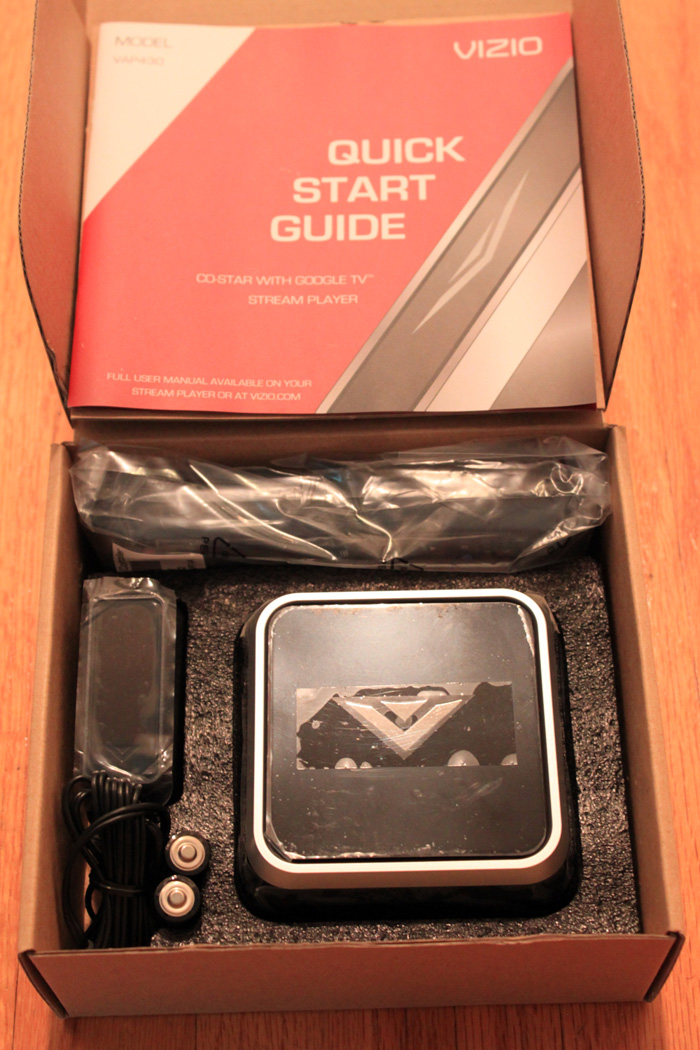
The market for streaming boxes just got a little more crowded with the release of Vizio’s new $99 streaming media device, named the Co-Star. Joining the ranks of Roku, Apple, Western Digital, Sony and Netgear who already have $99 boxes in the market, Vizio’s Co-Star device is being delivered this week, to those who pre-ordered from Vizio.com. I’ve been testing the box for the past two days, and overall, the box performs pretty well. [Updated: See part two of my Vizio Co-Star review, where I answered some of your questions.]

Vizio said they sold out of the original run of boxes made just for the pre-order, but won’t say what quantity that was. The box will soon be up for general availability, but in the mean time, I’m giving one away for free. (See the link at the bottom of this post to enter.)

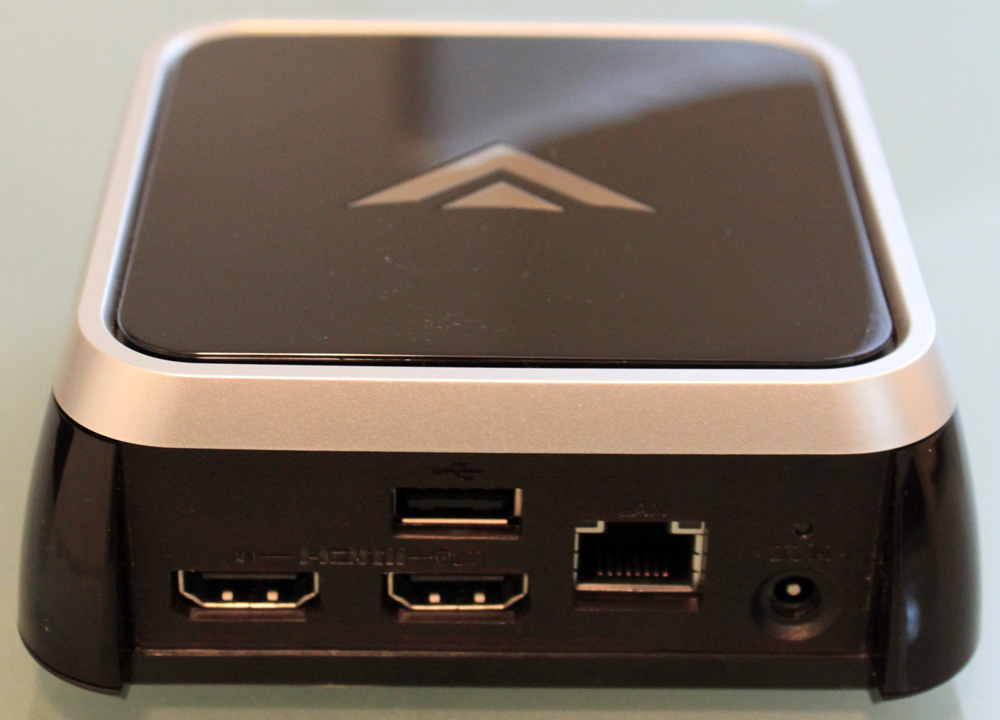
Starting off with the basics, the Co-Star has built-in ethernet, WiFi, two HDMI ports (in and out), DLNA support, one IR port and has USB to support the playback of local content. The Co-Star supports 1080p streaming and is about the size of two Apple TV units stacked on top of one another. The box supports content offerings from Netflix, YouTube, Amazon Instant Video, HBO GO, Wall Street Journal, Pandora, iHeartRadio and Slacker Radio. M-GO video-on-demand is advertised as being available, but hasn’t yet launched. While Vizio originally said the box would support Hulu Plus when they announced the Co-Star, the box does not currently have Hulu Plus support. Vizio says more content services will be added to the box before the end of the year, but aren’t hinting at what those services will be.

While this would be just another $99 box on the market if the specs stopped there, unique to the Co-Star is that it comes bundled with the Google TV platform, which Vizio has completely re-skinned for their device. In addition, no other $99 box on the market has HDMI pass through, thereby allowing you to overlay the Google TV platform and apps on top of live TV, thanks to the Co-Star’s HDMI in port. This is one of the nicest features of the device, as the user experience switching between live TV, Google TV and apps is seamless, but is still hampered by the fact that the Google TV platform still feels like a beta product.

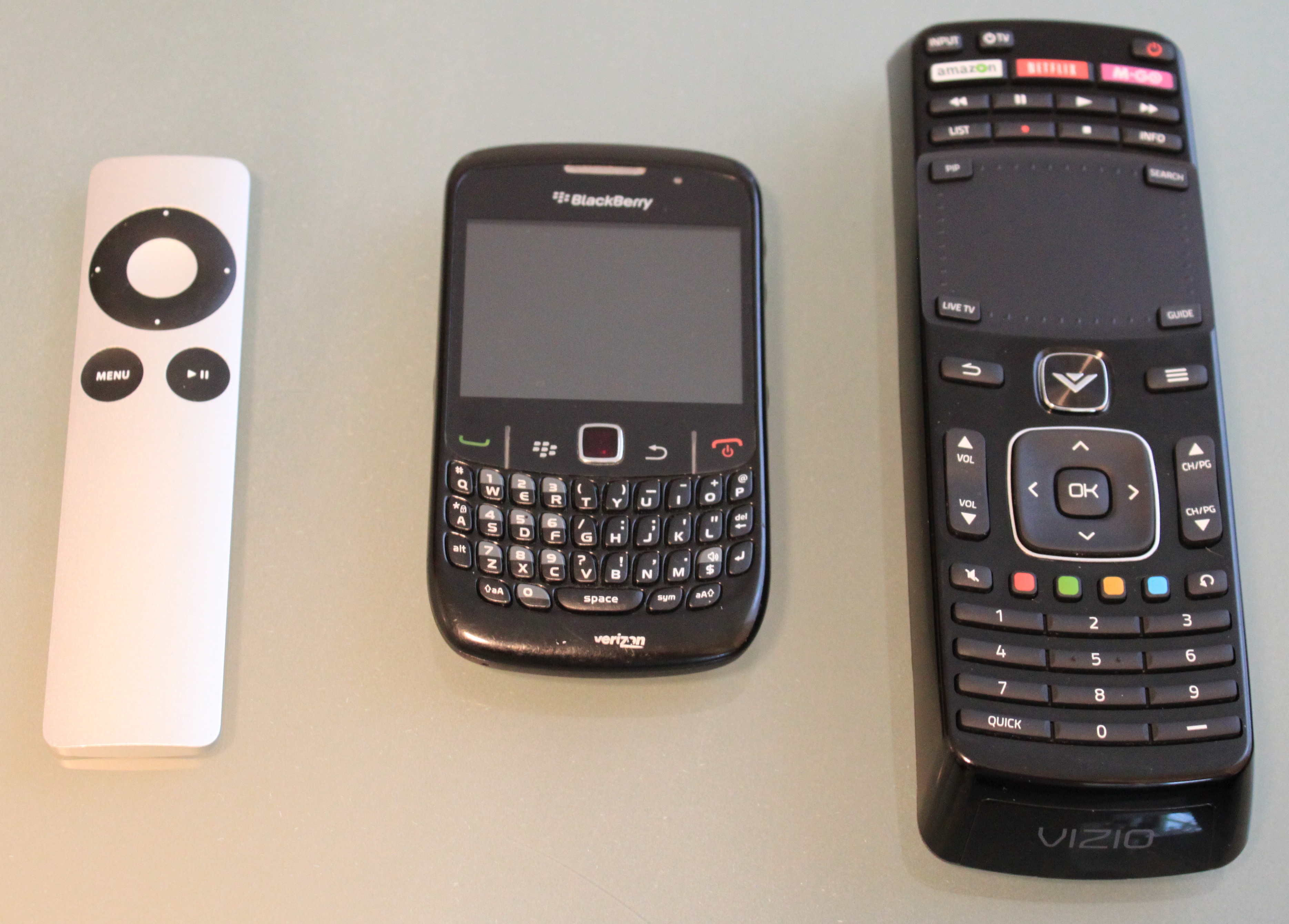
Included with the box is a bluetooth touchpad universal remote with QWERTY keyboard. For comparison purposes, I included a photo of the remote next to a Blackberry and the Apple TV remote. The keyboard works quite well and the touchpad is easy to navigate, but the downside of all this functionality is that the remote is big, heavy and really thick. The buttons are very small, especially the numbers and all buttons require a hard press. There is no chance of you using the remote in low-light conditions since the remote is not backlit, so it really requires you to have to look at it each time you want to use it, especially if you want to change channels via the numeric keypad. While Vizio intends for users to adopt their remote for controlling their Co-Star, DVR, TV and sound system, any real power user isn’t going to use their remote for all their devices. Unlike many streaming media boxes, the Co-Star remote does have a power button to turn the device on/off, but has no LED light in the front of the box indicating on/off status. Clearly you know will know when it is off since it does pass through of your cable signal, but if it has on/off capabilities, I’d personally still like to see some indicator of this on the front of the unit.

Setting up the Co-Star is pretty easy, but it’s no Roku. That said, it’s a bit unfair to compare the two as the Roku has no HDMI in and doesn’t overlay live TV. So naturally, setup with any device that has more functionality, like the Co-Star, is going to take more time. The initial setup isn’t difficult, but will take 15-20 minutes to pair the bluetooth remote, connect the box to the Internet, enter your Google account info, select your TV model, select your DVR or STB model, select your cable provider and do a software update. I’ve already been pushed one software update and Vizio says another one is coming out this week. For anyone like me who got one of the first boxes during pre-order, your setup will be a bit more complex, as there were some issues that the update fixed. But any boxes going forward will have the latest software and will be easier to set up. While I did have some issues during setup, I chalk that up to getting one of the first boxes made and Vizio already knew about the problems and released the software patch. The patch coming out later this week will fix the problems with the 5.1 surround sound, so it’s great to see how responsive Vizio is being to fixing software issues.

I tested the Co-Star hooked up to a TiVo Series 3 unit with cable cards as well as a regular set-top-box from Verizon and saw quite a difference in performance between the two. The Co-Star had some major issues with the TiVo as many of the TiVo commands aren’t on the Co-Star remote and changing channels really lagged. If you have a TiVo, the Co-Star is probably not the box for you. On a regular set-top-box, the Co-Star performed much faster, didn’t have the lag and was pretty responsive, outside of the Netflix app. Most apps on the Co-Star load within a few seconds, but Netflix takes nearly 20 seconds to load.

I didn’t test playback of local content via a USB drive, but Vizio says the box supports H.264 (MP4, MKV, MOV, AVCHD, 3GP, TS), MPEG-4 part 2 (MP4, DIVX, AVI, 3GP, TS), WMV9 (ASF, AVI), MPEG-2 (MPG, TS), H.263 (MP4, 3GP, FLV). I’ll have to put USB playback to the test when I have time, but based purely on format/codec support, this box gives the Western Digital WD TV Live box some competition, for those users who have a local library of digital content they want to play through the device.

While the Co-Star has a lot of features, it’s really hard to call it the box to beat, or declare any box the winner, as consumers have different needs. The Co-Star won’t work with any TV that doesn’t have HDMI, so it won’t be a fit for everyone. No other $99 box has Google TV built-in though, so the Co-Star wins in that category, as well as the HDMI pass through. There really isn’t much to complain about on the hardware front with the Co-Star, but it still lacks support for Hulu Plus, EPIX, Vudu, MLB.TV, NHL and NBA. So Vizio still has some work to do to catch up to the content choices available on the Roku.

Overall, Vizio’s Co-Star device will please most consumers and Vizio’s made a really nice device, considering this is their first entry into the $99 streaming box market. If they can add content services from Hulu and MLB in particular, along with a few others, then this box will have more functionality than a Roku, at the same price.

Updated: I did not have the time to test the OnLive gaming service on the box, so I don’t know how well that performs.

I have two Vizio Co-Star boxes, so I’m giving one away on my blog. Click here to enter the drawing.

Akamai Said To Be Guaranteeing AT&T $100M In CDN Reseller Deal

At the end of last week, and over the weekend, multiple people from the industry were sharing with me what they know about the negotiations between Akamai and Limelight, who are both competing for a CDN reseller contract with AT&T. Everyone I spoke with said they expect Akamai to win the contract and all of them also said that as part of their proposal, Akamai is guaranteeing AT&T at least $100M in revenue, over a multi-year deal. Some people told me the deal size was $100M and others said it was “more than” $100M, but either way, it sounds like Akamai has put forth the best revenue numbers.

While $100M may sound like a lot of sales, when it is spaced out over a couple of years, it’s really not that much revenue for AT&T. But I’m also hearing that Limelight was only willing to guarantee half as much revenue to AT&T, between $40-$50M, which if true, it’s probably one of the reasons why everyone I speak to keeps saying Akamai will win the deal. Of course, until a contract is signed, none of this is official and we still need to see AT&T execute on this new strategy. Companies put a lot of ideas and plans on paper, without following through with them, but from everything I am hearing, it sounds as if AT&T is looking to wrap this up pretty soon and sign a contract with Akamai or Limelight.

Here’s The Four Hottest Upcoming Streaming Devices You Should Know About

There are a lot of streaming media devices out in the market right now from tablets and game consoles to stand-alone streaming boxes and connected TVs. While I have, use and test consumer streaming services across more than 50 devices, there are a few new devices that have just come out or will be coming out shortly that I am excited about. Here what those devices are and why I can’t wait to get hands-on with them.

Vizio Co-Star

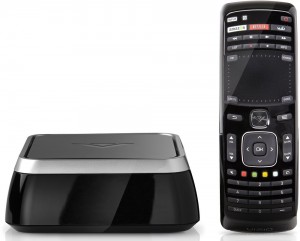
Vizio’s Co-Star streaming box could challenge Roku, Apple TV and the WD TV Live as the most full-featured $99 streaming box in the market, which just started shipping in the past 24 hours to those who pre-ordered last month. The box has built-in ethernet, WiFi, two HDMI ports (in and out), DLNA support, one audio IR port and has USB to support the playback of local content. The box supports 1080p video quality and also supports 3D streaming and will have an app for OnLive’s gaming service. On the content side, the box comes bundled with the Google TV platform which Vizio has completely re-skinned, thereby creating a new user interface for the Google TV platform. In addition the box supports content offerings from Netflix, YouTube, Amazon Instant Video, HBO GO, Wall Street Journal, Pandora, iHeartRadio, Slacker Radio, M-GO video-on-demand and other content services not yet announced.

Included with the box is a bluetooth touchpad universal remote with QWERTY keyboard. Vizio says the idea with the all in one remote is to allow customers to connect cable or satellite set-top boxes through the player’s built-in HDMI ports for a smoother experience for the overlay of live TV. Over the years, a lot of companies like D-Link, Sony and Netgear have come out with their own $99 boxes in an effort to compete with Roku and Apple TV and so far, don’t have a lot to show for it. But Vizio’s Co-Star box is very different since none of the other $99 boxes come bundled with the Goolge TV platform, have HDMI pass-through and most don’t have DLNA support. It’s one of the reasons that Vizio’s box is on the top of my list of devices I’m really excited to see in the market.

Simple.TV

Simple.TV is a HD Tuner and DVR video server in one simple package. Announced at CES in February, and slated to ship by the end of this year, Simple.TV allows consumers to connect an external USB hard drive for storage, plug-in a TV signal from their basic cable or over-the-air antenna and connect the box to their home network. They offer free apps for the iPad and Roku with more on the way and plan to offer an enhanced service for $4.99 a month. The premium service will give consumers access to a rich interactive program guide, unlimited remote streaming for up to five users and an easier way to record TV shows automatically. The device is expected to ship by the end of this year and retail for $149.

To date, a lot of boxes on the market allow you to stream content or place-shift it to another device, but none of them give you any DVR style functionality. Some like Boxee do support over-the-air antennas, but doesn’t have a program guide tied into any kind of DVR style services. It’s too early to know how successful the Simple.TV device will be, but from my conversations with the founders of the company, they are hoping to sell a few million devices over the first few years, which is pretty realistic.

Roku Streaming Stick

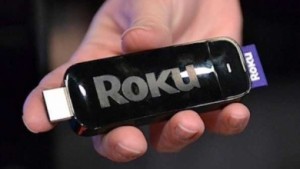
The Roku Streaming Stick will be the easiest way to take a dumb TV and turn it into a smart TV. The Streaming Stick plugs directly into the MHL port on newer TVs and feeds video to the HDTV, accepts remote control inputs and power, and brings its own WiFi support for Internet access. Roku hasn’t yet disclosed the cost for the stick or when it will ship, but they have indicated that they’ll release more details in a few weeks. Roku’s already got a nice box on the market that’s only $49, but this streaming stick allows you to add Internet functionality and content to any TV with no wires or boxes, something a lot of consumers would appreciate.

The company has already announced a list of manufacturers that will deliver Roku Ready hardware and I expect we’ll see that list grow. To date, the way to get a smart TV was to buy a new one or get an expensive box giving you Internet access, but not real user-interface. If Roku can create a very easy way to navigate the big screen, along with an intelligent easy and to use user-interface, the Roku Streaming Stick should be a big hit, especially if they sell it for as cheap as I think they will. (think $30)

Belkin @TV Plus

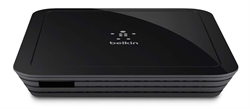
[Updated: I’m hearing Belkin has confirmed that this device will only output 480p video. Based on the lack of HD support, this device is nothing to be excited about] Belkin’s @TV Plus is looking to go head-to-head with the Slingbox PRO-HD, which allows you to stream your live cable TV service to multiple devices. I love my Slingbox Pro and it is by far the best device in the market today for a true TV everywhere experience. I have access to my full channel lineup and my DVR from my computer, tablet and phone. But the one shortcoming of the device is that is has no built-in WiFi, so you need to have it close to your router, drop an ethernet jack into your wall, or use some sort of adaptor to push your Internet signal via your electrical outlets. Belkin’s @TV Plus has built-in WiFi, so that should make setup much easier and allow you to really extend where you can place the units, which is something I have had problems doing with the Slingbox PRO.

Another advantage of Belkin’s @TV Plus device is that they don’t charge for their tablet app, something Sling makes you pay for. Belkin does charge $12.99 for the mobile app, but that’s much cheaper than Sling’s price of $29.99 for their mobile app. Belkin’s device is also cheaper than the Slingbox Pro-HD, currently selling on Amazon for $179.99, compared to the Slingbox PRO-HD which is priced at $249.99. The lower price for the unit and the apps is welcomed, but only if they work as well as Sling’s apps do and can match the level of video quality produced from the Slingbox PRO-HD. Belkin’s @TV Plus started shipping this month and while I haven’t yet had the chance to test it out and see how good it is, I hope to have a review up shortly.

What streaming media devices are you interested in seeing this year?

Want to see how the current streaming media devices in the market stack up? Check out our device comparison sheet at www.StreamingMediaDevices.com

Netflix’s Expansion Across Europe Targets 22M Internet Users

This morning, Netflix (NFLX) announced they plan to roll out streaming services to consumers in Norway, Sweden, Denmark and Finland by the end of this year. Based on the number of Internet users in those regions, Netflix is targeting about 22M connected consumers. Here’s how that breaks down per region (numbers based on data from the ITU).

  • Sweden: 8,441,718 Internet users on Dec.31, 2011, 92.9% penetration rate
  • Finland: 4,661,265 Internet users as of Dec.31, 2011, 88.6% penetration rate
  • Denmark: 4,923,824 Internet users as of Dec.31, 2011, 89.0% penetration rate
  • Norway: 4,560,572 Internet users as of Dec.31, 2011, 97.2% penetration rate

To get subscribers, Netflix needs content for these new regions, specific to what consumers want to watch in these countries. But they have the chicken and the egg problem. To get subscribers, Netflix needs content. To get content, Netflix has to pay the studios which requires subscribers. Netflix is having to commit to up front massive payouts to studios for whatever content they can get. But if subscriber growth stagnates, Netflix could quickly find itself upside down in those agreements. From a financial perspective, Netflix has already estimated it won’t be profitable next year as they expand into new territories in a clear sign that content costs are skyrocketing.

The good news is that there are a lot of Internet users in these European regions and their broadband speed is pretty high. The exact speed per country depends on which stats you look at, but the average looks to be at least 5Mbps, which is plenty for Netflix’s streaming service. Netflix has their work cut out for them in terms of licensing the right kind of content for these regions and that will determine how successful they can be in signing up new subscribers. So far, the company hasn’t done a good job with their content licensing strategy in Latin America, so one has to hope they have an easier time in these new European countries.

AT&T In Talks To Re-Sell Akamai or Limelight’s Enterprise CDN Services

After many years of AT&T (T) trying to sell their own CDN services into the enterprise, multiple sources tell me that AT&T has decided that it makes more sense for them to simply re-sell CDN services from either Akamai (AKAM) or Limelight (LLNW). Both vendors are currently in negotiations with AT&T bidding on the business and while AT&T has not yet picked a winner, I’m hearing that even though Limelight had been favored to win the deal, the reseller business is now Akamai’s to lose.

No deal has yet to be finalized and considering this involves AT&T, who doesn’t have a track record of moving quickly, we’ll have to wait and see if they execute on this plan. From the details I have, Limelight has put forth a better offer business wise but AT&T has more confidence in Akamai’s ability to sell into the enterprise market. While Akamai does have the advantage there, the downside is that AT&T will run into a lot of channel conflicts with Akamai since a very large percentage of enterprise customers are already taking services from Akamai. AT&T would have less channel conflict re-selling Limelight’s CDN services, but to date, Limelight hasn’t had a lot of success in growing their enterprise business.

I’m told that as part of this contract with AT&T, the winning vendor would take on some of AT&T’s employees from their digital media group, so Akamai or Limelight would stand to gain some additional headcount with the contract. While many would be quick to assume that a re-seller contract with AT&T would generate a lot of revenue for Akamai or Limelight, it won’t. At least not in the near term. Last year, AT&T did a total of $10M in CDN revenue and right now, no telco is killing it when it comes to selling their own CDN services, or re-selling those from a third-party. There is a good opportunity to grow the CDN business over time, but it’s over many years and it won’t amount to a large amount of revenue for either Akamai or Limelight over the next 24 months.

While many are familiar with the multi-year contract that AT&T already has in place with EdgeCast, that should not be impacted if AT&T goes through with this new strategy. AT&T has always been using EdgeCast’s licensed CDN platform for their wholesale CDN services and federation model, so I would expect AT&T would still manage this portion of their CDN business. Customers who are currently buying this solution from AT&T purchase it from a wholesale division of the company, not from an enterprise sales team, so a new re-seller deal with Akamai or Limelight should not impact AT&T’s wholesale CDN business, which continues to grow. We don’t know exactly how much traffic AT&T is pushing for this portion of their business, but earlier in the year EdgeCast did say that combined, “multiple operators” are “already pushing tens of Gbps via the CDN federation”. So it sounds like any CDN business already running across EdgeCast, wholesale or not, would not see any disruption.

While enterprise customers could also go direct to Akamai, most of AT&T’s large enterprise contracts are for multiple products, including things like co-location, transit and managed services, which are services Akamai does not offer. So AT&T isn’t trying to get CDN only business with a re-seller deal like this, but rather want to use CDN to keep or get them more of the non-CDN business they already have.

We’ll have to wait and see exactly which CDN vendor AT&T teams up, if they follow through on this new strategy, and how long it would take them to execute such a plan. But it seems pretty clear now that AT&T has finally made the decision not operate their own CDN outside of the wholesale business and that by re-selling Akamai or Limelight, it will give them access to a bigger section of content delivery products and a bigger piece of the pie.

Updated: I did not contact any company mentioned in this post asking for them to comment as I know none of them would have been able to talk about a potential pending deal.