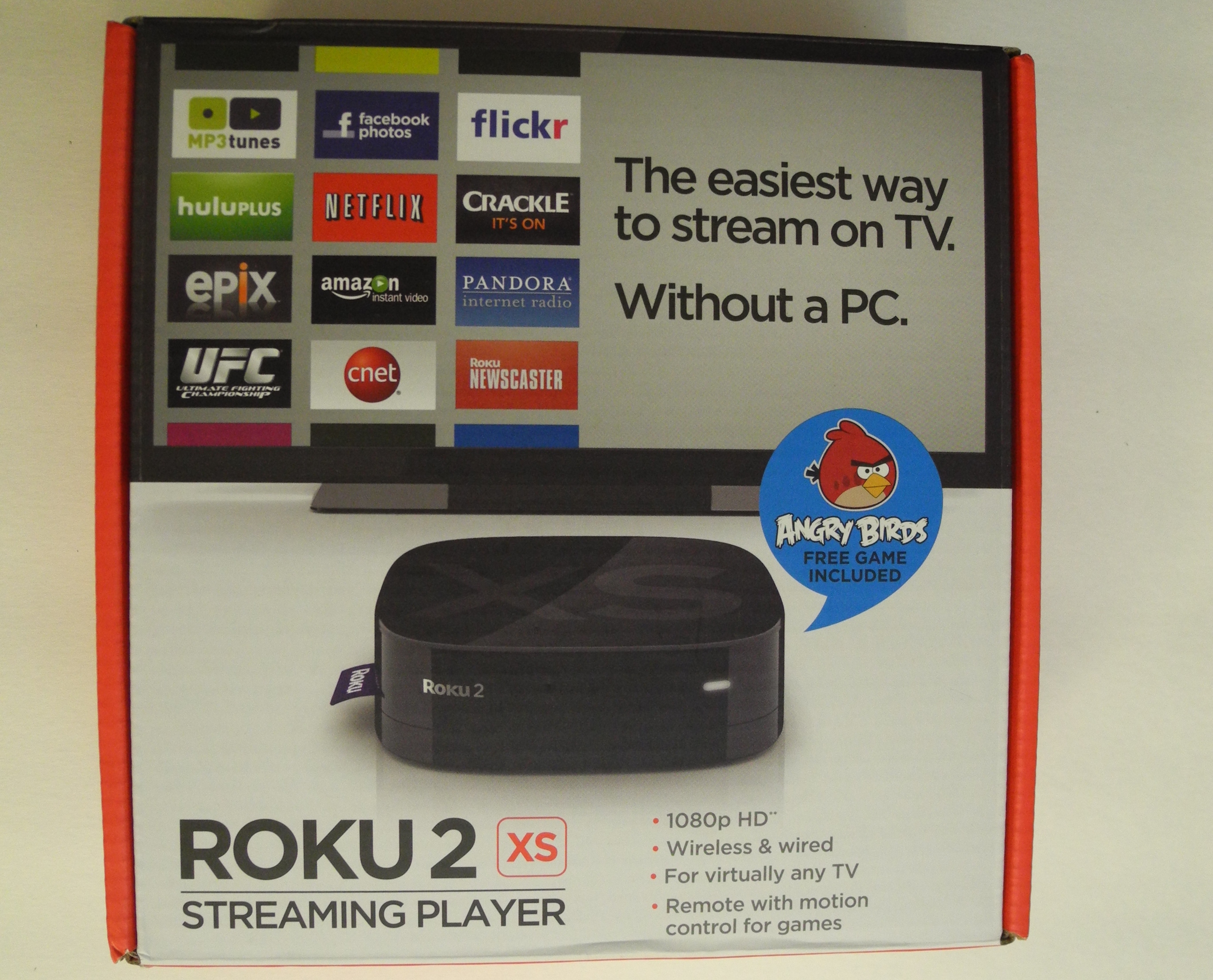
Free Giveaway: Win A New Roku 2 XS

Earlier today I reviewed the Apple TV player in a head-to-head comparison with the Roku 2 XS in an article entitled “Roku 2 vs. Apple TV: How To Chose The Right $99 Streamer“. To go with the review, I am giving away one Roku XS device to a lucky reader of my blog. To enter the drawing, all you have to do is leave one comment on this post and make sure you submit the comment with a valid email address. The drawing is open to anyone with a mailing address in the U.S. and the winner will be selected at random later this month. The drawing is now over. Congrats to Larry S. who won the item.

I’m also giving away an Apple TV unit and a Vizio Co-Star unit. You must enter each drawing separately. Good luck!

Sponsored by

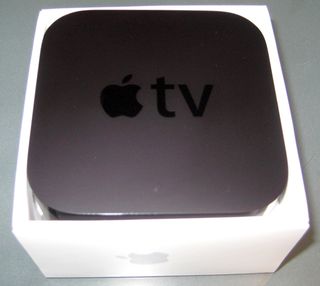
Free Giveaway: Win A New Apple TV

Earlier today I reviewed the Apple TV player in a head-to-head comparison with the Roku 2 XS in an article entitled “Roku 2 vs. Apple TV: How To Chose The Right $99 Streamer. To go with the review, I am giving away one Apple TV to a lucky reader of my blog. To enter the drawing, all you have to do is leave one comment on this post and make sure you submit the comment with a valid email address. The drawing is open to anyone with a mailing address in the U.S. and the winner will be selected at random later this month. The drawing is now over. Congrats to Addison L. who won the item.

I’m also giving away a Roku 2 XS unit and a Vizio Co-Star unit. You must enter each drawing separately. Good luck!

PS3 To Stream NFL Sunday Ticket: Still Costs $300, Must Be Paid All At Once

This morning Sony announced that for the second year in a row, their PlayStation3 system can be used to stream the NFL Sunday Ticket from DirecTV. The bad news, those who don’t have the NFL Sunday Ticket Max plan will once again have to pay $300 if they want access to the games. Even those with the Max plan won’t be able to stream all the games, as only out-of-market matchups will be available. Sony said that unlike last year, where customers could pay over a 3-4 month period, this year the $299.995 needs to be paid all at once to make it “easier” for them to manage.

While it’s great to see more content available via devices like the PS3, charging $300 really is way too expensive, let alone charging it all upfront. Considering MLB.TV is a third of that cost, and gives you access to thousands of games over the course of the year, DirecTV should make this more affordable. I’m sure there are a lot of people like myself who don’t want a dish on their roof, can’t have one installed and would be willing to pay about $150 a year to get access to the games. But at $300, it almost as if DirecTV doesn’t want people to sign up for it.

Last year, there were also quite a few issues with the system, most notably being the fact that while you could pause a game, if you un-paused it after the game had ended, it wouldn’t pick up where you left off but would give you a message telling you the game had ended. I hope they have fixed that along with how much the streams lag delay wise. Also, it seemed like a lot of times, the quality of the video was not in HD and was simply a SD feed being stretched, which is not what you should be getting for a $300 service. It’s hard to find specs on DirecTV’s website saying exactly what the video quality specs are. So for $300, customers expect and should get a better service this year, and I hope that’s the case. I’ll see if I can test it out and do a review.

How much would you be willing to pay? $150? $200?

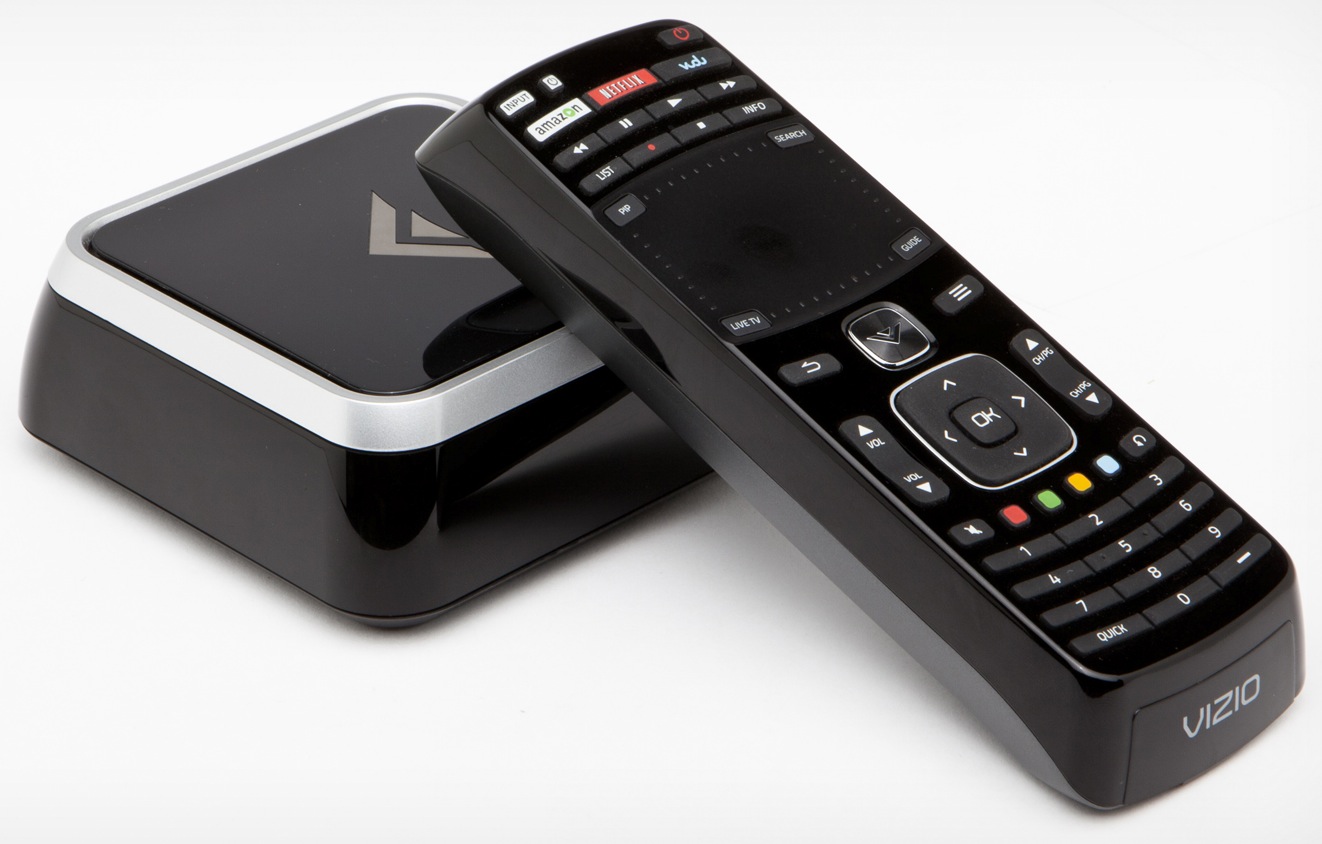
Vizio’s Co-Star Streaming Box Will Be Back Up For Order Sept. 9th

If you were interested in buying Vizio’s new $99 Co-Star streaming media box and missed out on the pre-order, the good news is you don’t have to wait much longer for them to be back in stock. While the Vizio.com website currently says ‘Temporarily sold out”, Vizio let me know that they will open their website back up for orders on September 9th. And if that batch gets sold out, the company will have more in stock, available for ordering on September 18th. So check out my hands-on review of the device, put the date on your calendar and get ready to place your order for this nice little box. And if you want to try and win one for free, you can entering my drawing, where I am giving one away.

Juniper To Refocus Their CDN Efforts, Drops BitGravity’s CDN Technology

Over the past few weeks, I’d been hearing a lot of rumors that Juniper was planning to exit the CDN business. As you may recall, Juniper entered the content delivery game in early 2010 when it acquired Ankeena and the technology became Juniper’s Media Flow portfolio. In a call with the company last week, Juniper said they are not exiting the business, but are changing their focus and are dropping BitGravity’s CDN technology that they licensed earlier in the year.

While Juniper gets lumped into those who offer CDN services, like other vendors, Juniper develops and delivers gear that customers use to deliver content more efficiently. In the case of Juniper, its Media Flow delivery products could be used within a CDN, within a managed video delivery network, or it could be used for transparent caching, depending on which customer we’re talking about.

Juniper made it clear to me that its Media Flow products aren’t going anywhere. It will still deliver the fundamental caching and content delivery products that are the core of its Media Flow portfolio, for customers to use as transparent caches, for multi-screen delivery or even CDNs and will continue to work with its ecosystem partners who are solution providers and offer solutions in this space. But the company will be making some changes with regards to where they focus their efforts on CDN products going forward.

The company said they came to the decision that building a complete CDN solution didn’t make a lot of sense for a company like Juniper, so instead they are focusing their efforts on their strengths: the core Media Flow content delivery and caching engine. This will be the focus for the company and they will continue to invest, develop, enhance and sell the solution. The service management technology acquired from BitGravity, and some other CDN-related technology projects that were underway will no longer be a focus for the company.

What this means for customers is that they can continue to buy Juniper’s Media Flow products just as they were doing today. But if you were holding out for Juniper’s end-to-end CDN solution with service management, you are out of luck—but for everyone else its business as usual.

To me, I don’t see this change in strategy as a negative for Juniper. Very few vendors truly have an end-to-end solution, for any service, and having a focused product strategy is a big key to being successful. Juniper’s approach is to focus on edge services and caching, which are very important pieces needed for what’s taking place with regards to content delivery in the last-mile.

New $99 Google TV Box Announced: Called The Hisense Pulse, Ships In November

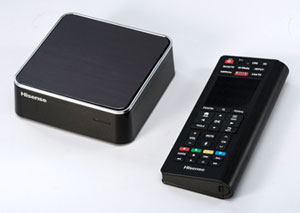
Earlier today, a new $99 Google TV box was announced by Hisense, a company that sells flat screen TVs for cheap, mostly in stores like Walmart and Costco. Named the Hisense Pulse with Google TV, the company says the box will ship in November and will have support for 1080p, built-in WiFi, HDMI in and out, ethernet and a double sided remote control featuring a built-in touchpad and dedicated Netflix button on one side and a QWERTY keyboard on the other. The company says the box is small, with the dimensions being 4.5″ x 1.4″ in size.

If you ask me, this sounds like the exact same box that Vizio just released, the Co-Star, which I just reviewed. To date, it’s the only box in the market with HDMI pass-through and allows the overlay of live TV, but it sounds as if they won’t be the only device with this feature much longer, once the Hisense Pulse comes out. The question I have though is what the build quality will be like with the Hisense Pulse. Some people may compare Vizio to Hisnese and say they both make cheap TVs, but that’s not accurate.

Vizio is known for making good quality gear, affordable. Hisense is knowing for making ok quality TVs, cheap. Most have probably never heard of Hisense before and while their TVs are in some cases $100-$400 cheaper than a Vizio or Samsung, the picture quality is not as good as the major brands. When their 40″ 1080p LCD TV is selling for $299 at big box retailers, you know they had to skimp in the quality somewhere. Hisense’s TVs do get good reviews online, but most of the positive remarks are the price, with many saying things like, “not as good as my Samsung“, and “it is not the best out there in terms of picture quality.”

I’ve seen many Hisense’s TVs at the store before, but have never tested one at home, in my lab, so I’ll have to get one and see how it performs against my Vizio, LG, Sony, Samsung and Panasonic models. All this aside, the biggest hurdle Hisense will have with their $99 Google TV box is that most have never heard of the company, so they are going to have to spend a lot of money to market the device. But it does look like more Google TV boxes on the cheap are going to be coming to the market, which is great for consumers.

Part Two Of My Vizio Co-Star Review: Your Questions Answered

Last week, after I posted my review of Vizio’s new $99 Co-Star streaming box, I got a lot of questions from readers wanting me to comment on certain features of the box. So I’ve made a list of the questions, done some additional testing and have provided answers to them below. I’m also giving one of these boxes away, so go here to enter the drawing.

[In addition to these questions, I also got a few others that I sent to Vizio asking for more details. I’ll update this post as soon as they respond.]

Do you know when the next wave of Co-Star’s will be released?
Vizio’s Co-Star device started to be delivered last week, to those who pre-ordered from Vizio.com. Vizio said they sold out of the original run of boxes made just for the pre-order, but said the box will soon be up for general availability. From what I have heard, it sounds like the Co-Star will be generally available in September.

What kind of chip is in the box and what processing power does it have?
iFixit took the box apart and says it is using a Marvell Armada 1500 1.2 GHz Dual-Core Processor, with just 4GB of flash memory to store everything for the OS and Google TV platform. Vizio says their box is so robust that the processor can also support the playback of 3D content, although I haven’t tested that yet.

How does it handle local content playback? Is it better than the Boxee Box?
The Co-Star has excellent video format and codec support, more than the Boxee Box and has pros/cons over Western Digital’s WD TV Live. If you want to playback lots of formats from a local USB drive, the Co-Star device will handle just about all of them. (It does not support ISO or xVID)

What additional content services are coming to the box? Will it have Vudu and Blockbuster On Demand in the future?
Vizio told me that more content services will be added to the box before the end of the year, but aren’t hinting at what those services will be. I really can’t speculate, but I doubt it would be Blockbuster On Demand. I’m also hearing that more content services will soon be coming to the Google TV platform, so it may be that more content for the box comes from Google rather than Vizio.

Did you test the streaming services via WiFi or ethernet? How well did WiFi work?
All of my testing was done via WiFi. The WiFi signal and reception was excellent, even when I moved the box to a TV located on the opposite side of my house from where my router was. I’ve had some reception problems with the WiFi on Roku’s in the past, and the Co-Star seems to have stronger WiFi reception than the Roku. BUT, many factors go into how well WiFi works on any device, including the unique setup in your home. So what worked best for me is not guaranteed to work best for you.

How well does the chrome browser handle flash content?
Using the Chrome browser via the Google TV platform, worked very well. I didn’t have any trouble playing Flash content and it didn’t stutter or have any hiccups.

I’m curious how the Vizio Co-Star stacks up to the Sony Blu-ray Google TV player?
The Google TV platform is the same on both boxes, but Vizio has re-skinned the Google TV platform for their box, making it easier to overlay live TV. But it is really hard to compare the two boxes as the Sony model is a Blu-ray player firs and the Vizio Co-Star isn’t. The Sony Blu-ray player is also 2x as expensive as the Co-Star.

Can’t I get android apps of Hulu Plus and MLB.TV via the Google Play store?
No. Hulu and MLB, along with others, are blocking access to their website if you’re using the Google TV setup. There are no apps in the Google Play store for MLB.TV, Hulu Plus and others for the Google TV platform.

As for Hulu Plus and the other apps, couldn’t you use something like PlayOn as a substitute and still pull them in?
I haven’t tested it, but you should be able to. PlayOn works on the Google TV platform by entering g.playon.tv into the search bar, which will bring you to the page that discovers your PlayOn PC. While you need a keyboard to control Google TV, Vizio’s Co-Star remote should be fine for this purpose since it has the trackpad and keyboard.

I’m wondering if this is an open API leaving the door open for a third-party app to use my iPhone or tablet as a replacement remote?
Vizio hasn’t given me a clear answer on what their API and SDK plans are for the Co-Star, so I don’t know what their long-term strategy is for this.

Since this has the Google TV platform on it, can you hook up a webcam and do video chat like you could with the Logitech box?
Presently there are not any apps available for Co-Star that support video chat, but as those become available webcams could be supported.