TV Commercials Showcasing Terrible User Generated Content

User Generated Content
User generated content is now everywhere and it seems companies are using it more and more in TV commercials just to look cool or to highlight the fact that it’s UGC content as if that makes them hip. In just one night of watching TV, I saw commercials by McDonald’s, Geico and some mattress company all using UGC content or filming the video in such a way to look like user generated content. And we all saw what Doritos did with UGC content during the Super Bowl half a year ago. A commercial that would have never gotten any publicity if Doritos didn’t highlight the fact it was user generated.

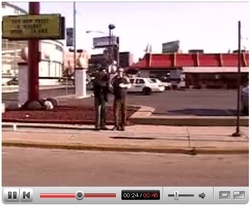
The McDonald’s commercial in particular highlights on the screen the fact that the video was "actual user generated content" featuring two kids rapping about McNuggets outside of a store. It’s the most annoying commercial ever and companies need to remember that a commercial is about the quality of the content. That’s rule number one. Just because the content you use might be user generated, it does not make it quality content. I’m sure someone will say that McDonald’s did a good job marketing wise as I now have remembered their UGC commercial and their brand. Yes, I remember it alright. I remember that when I see it, I change the channel.

Sponsored by

Reminder: NY Video 2.0 Meetup in NYC Tonight

NYC Video Meetup
Tonight, the NY Video 2.0 Meetup will take place at the Columbia Business School. I’ll be moderating a panel entitled "Beyond Pre-Roll: What’s Next for Online Video Advertising?" starting at 7pm. The panelists for this discussion will be:

  • Kevin McGurn, VP, Advertising, nbbc
  • Jeff Minsky, Director of Digital Media, OMD
  • Robert Victor, Product Manager, Emerging Media, DoubleClick
  • Jed Savage, EVP, Strategy and Development, ScanScout

For those attending, I will be asking direct questions. I want to know what video CPMs are today, how much companies are spending on campaigns and what the real dollars look like in terms of where this business is today. Please bring any and all questions you have if attending.

The event is free but the room size is limited to 200 attendees, so check the RSVP page to see if there is room if you want to attend.

I am being told this event will be archived in video for viewing after the fact.

Webcasting Large Entertainment Events Still Unprofitable

I love webcasting more than any other facet of this industry as it’s how I got my start fourteen year’s ago and it’s what I use to do for a living. But it’s sad to see that so many year’s later, there is still no successful business model in place for large-scale entertainment based webcasts.

In the year’s between 1997-2001, there was at least a couple of large music and entertainment webcasts each night on sites like SonicNet, Rocktropolis, MTV, Pepsi.com and many others. Back then, no website was making any money from the traffic or from the content, but they didn’t need to. In those times all that mattered was getting eyeballs to your site and growing your page count while showcasing content available for free. Since the bubble burst in late 2001, there have been very few webcasts trying to reach a wide mass audience with entertainment based content.

The problem is that no one has yet to find a way to monetize the content. While this is nothing new as it’s a topic we talk about every day in the industry in regards to on-demand content, producing live content is even more expensive and requires more in the way of resources and time. Some have tried doing pay-per-view events with no success as consumers are not yet willing to pay for something that has always been free.

And when it comes to the content rights, entertainers want huge payments as they think this stuff is worth a lot of money online thinking as if this is some sort of PPV event on TV. They quickly learn however that there is no money to be made with PPV on the web and they always end up scraping the webcast when they realize this is not a cash cow. How many large entertainment webcasts have you seen in the past 5 years?

It is a lot of work and money to put on a webcast and even more when it’s goal is to reach a global audience all at the same time. But that is exactly what MSN is looking to do with it’s LiveEarth series of concerts that kicks off today at 9pm EST. The Al Gore-promoted series of concerts will have close to 40 video feeds from countries all over the world for a span of 24 hours. The cost to produce something like this runs into the tens of millions, especially since some of the content will also be broadcast via traditional TV on NBC and Bravo amongst other channels. Since it needs to be TV quality and not just web quality, that means even more cost in the way of audio and video production. Throw in the cost to license the content, pay the artists, pay for audio and video production services, satellite time, encoding services (which one article says consists of a team of 80), not to mention distribution costs to deliver this via the web and you’re talking serious dollars.

Now this event may make back some of it’s money since it has a traditional broadcast component on TV and NBC can sell advertising around it, but even with that, this is a loss leader. And without the TV broadcast, I bet this would not even happen unless a sponsor, or MSN, was willing to kick in millions of dollars to cover the webcasting and productions costs.

The worst part about this whole thing is that it’s just going to play into the hype about millions of people watching video on the web as if it is the TV. It’s not. Remember Live 8 over two years ago? How did that make money? Where are the ROI articles saying how successful the Internet medium was for webcasting to big audiences? Most of the revenue generated from that event came from DVD and content licensing deals after the webcast for mediums other than the Internet.

Already, the hype is starting. ""We expect it to be the most highly watched entertainment event online," MSN senior director Lisa Gurry said in an Hollywood Reporter article. The article also says that "MSN, predicts Live Earth will be a record-breaker." Come on. Is that the best that MSN can say? How about telling us how many sponsors you have? Or how you plan to cover your costs? Or if this is a loss leader for MSN to create awareness for the brand? Or better yet, what metrics MSN is going to use to determine the success or failure of the event? And stop with the "record-breaker" comments. There is no such thing as a record breaker webcast or "largest webcast ever" as no one makes their logs available for review and everyone measure "viewers" differently. And many large webcasts never ever give out numbers or the numbers are inflated. I know. I use to give customers numbers of viewers after a webcast only to see them make the number a lot higher in press releases, sometimes by a few million. And if IF it was the largest ever, so what? Does that mean it’s successful? No.

One other thing to note, unlike the Madonna event or the Live 8 event which was only on the Internet, much of the content of LiveEarth will be on TV. So why would I go to the Internet to watch it?

It’s a shame this has not all been figured out by now. Like many, I love the webcasting medium. It’s fun to webcast, brings its own set of challenges and is a technology that allows anyone to communicate without any geographical boundaries. And while the application has been successful in the enterprise, government, education and other verticals it still does not work for the large-scale entertainment events.

Marketing 101: Companies In This Space Need To Do A Better Job

I find it very hard to fathom but I still run into a lot of marketing folks in person at events who say something like "I’d love for you to write about our company and to look at what we’re doing but didn’t know how to contact you." Or it’s the line of "I saw this month’s copy of Streaming Media magazine and noticed that you wrote about our competitor but not about us, why?"

Come on now, those are bad excuses. Where are your marketing skills? Marketing 101 says you always know how to contact someone in the media who may be covering the industry you are in. And if you can’t find my e-mail and phone number on this blog, on the home page of StreamingMedia.com, on DanRayburn.com or all the other sites out there that list it, then you should not be in the marketing profession.

As for the idea that any member of the media can and should cover every vendor, product or service in any industry – that’s just not possible. There are only so many hours in the day and vendors should make it easier for the media to know what they are doing. Especially since unlike a lot of the other blogs out there where the blog is their only job, this blog is just one of the many, many things that consumes my time. Why is it that so many vendors as me why I don’t call them?!? How about being proactive and calling me?  Or how about looking at our editorial calendar on StreamingMedia.com and calling the Editor of the magazine, Eric, before we write a story and it goes to print instead of asking us when the story comes out why we didn’t feature you. This happens way too often.

Now some companies do a great job. No question, there are those out there who have marketing folks and teams who help to keep us in the loop and do a really good job. And I know that not all companies have the resources of entire teams at their disposal. But there is one thing that many, many companies do that really irks me and is just dumb for your business.

Many times, I will e-mail a PR or marketing person at a company that I have dealt with before only to have two things happen. One, the e-mail bounces back to me saying no person with that name exists. Ok, so if the person has moved on, why the hell doesn’t the company have that address setup to forward to another PR or marketing person!!! Now I am stuck with no PR contact and not even an automated message in the e-mail telling me who the new person is to contact. How is that good for your business? Many of you may be surprised but this happens all the time.

Second, the e-mail won’t bounce back but I will never hear from the person. After having to call around in the company, I’ll find out that the person is no longer there and there is either a new person to contact or no one knows who you should contact. How can this be? If the person has left the company, have an automated reply come back when I send the e-mail letting me know that. Bouncing the e-mail is bad, but accepting it and then not following up on it is even worse as I have no way of knowing the person is now gone. This is why many times, someone from your company gets invited to speak at a show one year and not the next. Your speakers placement person has left the company and I am e-mailing someone who is not there.

Also, why I am ranting about marketing issues, why do companies post press releases on their websites as PDF documents? It makes it a lot harder to search the release for specific words, it’s harder to share a link to a PDF with someone in an e-mail and Google and others don’t index the contents of PDFs so you lose out on potential traffic. The whole reason to  put out a press release is to get it in front of as many "qualified" media people as possible, but you put it in a format that is then hard for us to work with.

Also, many times we are on deadline, which you should understand but many companies don’t. If any member of the media e-mails you with a question, speaking invite, quote request etc… and says they need to hear back within a certain period of time, why do you respond literally a week after the deadline? Now if you don’t want the press or don’t care about the coverage, ok, that’s fair. But when you call back a week later and act all surprised that the opportunity is no longer available, why do you seem so surprised? This happens quite often as well.

Again, not all companies are like this. Many are very good. But way too many aren’t. The bottom line is that many companies need to be more proactive and follow basic marketing rules that all companies should be applying to maximize their exposure in the industry.

Note: The editorial calendar is not currently on the Streaming Media magazine page as we just took it down and are creating a new one for the second half of the year. It will be up shortly.

Fast Company Article Highlights Comcast’s Web Video Strategy

Comcast Online Video
There is a good article from Fast Company this month that profiles Comcast’s online video business which has been around for over five years now. It’s an interesting read since most cable companies have only recently begun to have online video strategies while the Comcast.net portal was launched in 2001 amidst down times in the industry. The article highlights the correct mentality that Comcast had back then to know how important a role online video would play to cable companies years later.

This summer, Comcast’s new video portal FanCast is expected to launch and will contain content from the newly formed NBC and News Corp. joint venture.

BusinessWeek Article: “A Better Way to Stream TV?” Gets It Wrong

Arootz Video DeliveryI like BusinessWeek. It’s the one publication I always make time to read no matter how many start to stack up on my desk. But an article from last week entitled “A Better Way to Stream TV?” features a profile about a Israeli based startup, Arootz, who says it can satisfy Web video demand using multicasting and cheap hard-drives.

By itself, not a bad topic to cover, but there are many places where the article never questions the hype clearly being fed to the author by the vendor. Why are so many people in the media falling for the idea that the web is breaking when it comes to video delivery? Four sentences in, the article starts with the hype saying, “The demands of streaming video over the Net are already starting to put a strain on both the infrastructure and the business models of the world’s Internet service providers (ISPs).” Really? Please give one example.

The article explains that Artooz says it has devised a solution that greatly increases the Net’s ability to deliver video without requiring substantial new infrastructure by multicasting and by using “off-the-shelf hard drives that can store vast amounts of data fast and cheap.” Apparently, the author thinks or was told by Artooz that, “The combination of the two represents a radical new approach to using the Net.” Wrong. Multicasting has been around for at least ten years and is anything but new. And using cheap hard drives to store videos, well that’s what everyone has been doing for years. Where is the radical approach? Store and forward models for video have been used for years.

The article goes on to say that, “The company figures that all of Israel could be served with just one server farm, while the U.S. could be covered with about 20.” More hype. 20 servers to cover how many users? Also says that, “Providers of Net-based TV services, such as Joost (which uses a P2P architecture) and Babelgum, are bound to be interested in what Arootz is up to”. Why? Multicasting has been around for so long now, that if multicasting was a reasonable option, more networks and ISPs would be multicast enabled, but they aren’t for many reasons.

What the article doesn’t say is how this technology is going to work to deliver content to someone who uses an ISP that is NOT multicast enabled. More questions than answers.

NY Video 2.0 Meetup in NYC: Beyond Pre-Roll, What’s Next for Online Video Advertising?

NY Video Meetup
The next NY Video 2.0 Meetup will take place Monday July 9th in NYC at the Columbia Business School. I’ll be moderating a panel entitled "Beyond Pre-Roll: What’s Next for Online Video Advertising?" starting at 7pm. The panelists for this discussion will be:

  • Kevin McGurn, VP, Advertising, nbbc
  • Jeff Minsky, Director of Digital Media, OMD
  • Robert Victor, Product Manager, Emerging Media, DoubleClick
  • Jed Savage, EVP, Strategy and Development, ScanScout

This is a great chance to come hear if anyone is making money with online video advertising and learn the going CPM rates for video ads. As always, the event is free but the room size is limited to 200 attendees. As of today, there are only 26 spots left, so RSVP now if you want to attend.

Have any questions for the panelists? Leave them in the comments section and I’ll ask them during the Q&A portion of the session.