Reminder: NY Video Meetup Tonight, 6:30pm At AOL’s HQ

Screen shot 2011-02-21 at 7.45.17 PM The next NY Video Meetup is taking place tonight at 6:30pm at AOL's HQ in NYC, located at 770 Broadway, 6th Floor. Each month local startups, content producers and big media companies demo in front of hundreds of peers followed by bi-directional Q&A. Pizza and beer after the presentations thanks to AOL. Go to nyvideo.org for all the details and to RSVP.

Sponsored by

Paying $50 Per Speaker You Help Me Place At The Streaming Media East Show

SMEast2011 The Streaming Media East show is taking place May 10th and 11th in NYC and with the new HTML5 video track, I have a total of 140 speaker and presenter spots to fill across more than 40 different sessions. While I already have over 800 speaking submissions and get a lot of help from PR and speaker placement companies, I'm still always looking for more help. Maybe times getting an introduction or referral from someone else in the industry is one of the best ways that I get new speakers.

So take a look at the advance program, look through your contacts and please let me know if there is someone you think would be a good fit for a particular session. You can make an intro to me via email, Twitter or send me their details and I'll call them up. Anyone I place gets you $50 per speaker which is paid out via check or in Amazon Gift Cards. And if you end up helping me place multiple speakers or they are from companies that don't speak often, I'll pay even more.

The speakers I am looking to place are from content companies, studios, broadcasters, ad agencies, mobile device manufactures, publishers and enterprise corporations.

I know a lot of people and companies in all of the different segments of the market but I am always looking for more contacts and there is a good chance you know more people than I do in verticals I am not as well versed in. If you can help in any way, I am interested.

Please note: The referral fee will not be paid to speaker placement companies, PR firms or vendors who are placing their own customers.

Free Product Giveaway: Logitech Harmony One Advanced Universal Remote

Remote Thanks to the generous folks at Logitech, I am giving away a Logitech Harmony One Advanced Universal Remote to one lucky reader of my blog. This is the same model remote I use myself to control dozens of broadband-enabled devices in my home and as far as I am concerned, it the best remote on the market today. To enter the drawing all you have to do is leave one comment on this post with a valid e-mail address and I'll pick one lucky user at random at the end of the month. Drawing is only open to those with a U.S. mailing address. A big thanks to Logitech for the gear. Good luck!

New Data Released On The Performance Of Akamai’s HTTP-Based Adaptive Streaming Technology

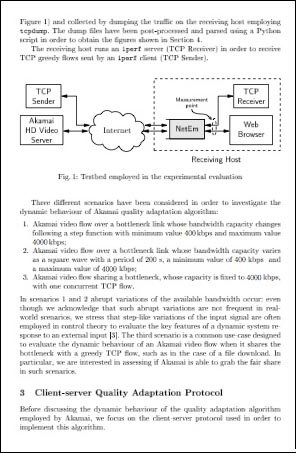
Akamai Two professors from the Department of Electrical and Electronic Engineering at the Technical University of Bari, Italy have released a white paper detailing their testing of Akamai's HTTP-based adaptive video streaming technology. The paper includes a lot of charts and graphs on their testing methodology as well as the results. They analyzed the client-server protocol employed in order to actuate the quality adaptation algorithm and they evaluated the dynamics of the quality adaptation algorithm in three different scenarios. Some of the highlights of their findings are:

  • video is encoded at five different bit rates and each level is stored at the server
  • the video client computes the available bandwidth and sends a feedback signal to the server that selects the video at the bitrate that matches the avail- able bandwidth
  • the video bitrate matches the available bandwidth in roughly 150 seconds
  • a feedback control law is employed to ensure that the player buffer length tracks a desired buffer length
  • when an abrupt variation of the available bandwidth occurs, the suitable video level is selected after roughly 14 seconds and the video reproduction is affected by short interruptions.

The same authors have also released their findings in another paper on the subject of Feedback Control for Adaptive Live Video Streaming. I am not a networking expert or engineer and don't know the technologies down to this level. So while I am not endorsing the findings of either of the papers I'm sure others who know more about this than I do will have some comments to share.

Netflix Expected To Launch Streaming Service In South America

Netflix's domination is about to truly go global. While Netflix has been saying that they will expand internationally in 2011, the company has yet to release any info about which location they plan to target next. While I don't have all the details or know all the specifics, it looks like South America is the next territory that Netflix will launch their streaming based subscription service.

In order for Netflix to expand their business and keep up their current rate of growth, the company needs to enter countries that have a large population capable of getting a 2-3Mbps video stream. While not every country in South America fits that bill, many do, and they have huge populations with large Internet penetration rates:

  • Argentina: As of March 2010 the country had a 64% Internet penetration rate with 26.6M users with an average broadband speed of 3.33Mbps. 
  • Brazil: As of Dec. 2009 the country had a 37.8% Internet penetration rate with 75M users with an average broadband speed of 4.46Mbps.
  • Chile: At the end of 2009 the country had a 50% Internet penetration rate with 10M users with an average broadband speed of 6.62Mbps.
  • Colombia: In mid 2010 the country had a 48% Internet penetration rate with 21M users with an average broadband speed of 4.32Mbps.
  • Mexico: In 2010 the country had a 27% Internet penetration rate with 30.6M users with an average broadband speed of 3.54Mbps.
  • Peru: As of June 2010 the country had a 27% Internet penetration rate with 8.8M users with an average broadband speed of 4.62Mbps.

In 2010, South America had a estimated population of just under 400M with 156M Internet users. Central America had a estimated population of 154M with 38M Internet users. Depending on which territories exactly Netflix launches in, the company has the potential opportunity of expanding into a new market with a combined population of more than 500M users, with just under 200M of them online, with a combined average broadband speed of 3.2Mbps.

From what I am hearing, the new Netflix service is already being tested in certain regions and is expected to launch shortly. Last week, on Akamai's earnings call, the company commented that they had signed a "new" deal with Netflix saying that they, "expect to work closely with them to leverage our globally distributed network to their market expansion." While Akamai has been doing caching of small objects for Netflix for some time, to date, Netflix has not had a reason to deliver content outside the U.S. or Canada. Netflix's new contract with Akamai, which I don't believe to be exclusive, is just another sign that Netflix is about to launch out into International markets very soon.

There are a lot of questions about what type of content Netflix will offer and while I don't know those details, I do know that some content will be in-country and other content will come from the U.S. and be streamed to the new territories. From what I am hearing, it sounds like we should see the new service launch Internationally before the end of March.

* Data on broadband penetration, population and download speeds were compiled from Wikipedia, the US Census Bureau, AMIPCI, ITU, eMarketer and SpeedTest.net

Note: I didn't contact Akamai asking for a comment as I knew they would not be able to give out any information and while Netflix did return my inquiry, they were not willing to confirm or deny anything.


Blockbuster Closing Stores, Selling Pre-Owned Movies For 2x What Amazon Sells Them For New

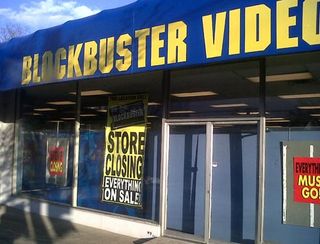
Blockbuster-store Earlier today, signs went up at my local Blockbuster store saying the location was closing and that everything was now on sale. I decided I would pick up a few games and DVDs on the cheap, but boy was I wrong. Of course I should of known that this is Blockbuster and they don't do anything that makes sense, so I probably should not have been so surprised to see that Blockbuster is selling most of their pre-owned DVDs for 2x the price that Amazon sells them for new.

Salt As an example, Blockbuster is selling the Deluxe Unrated Edition of Salt for $16.99 for a pre-owned copy. Amazon sells it new for $8.99 and sells the Blu-ray version for $13.99. Blockbuster's store shelves were full of movies priced at $14.99 and $16.99, all pre-owned, and all 2x more expensive than buying them new from Amazon. Apparently Blockbuster doesn't know what movies rent OR sell for these days. I don't like seeing a company go under, it puts a lot of people out of jobs, but in this case, as a consumer, one can't help but be happy to see Blockbuster closing down. Any company that treats consumers as if they are idiots and thinks they don't already know of other options in the market for getting movies cheaper and in better quality, does not deserve to stay in business.

Level 3 Details CDN Revenue: $60M In 2010

I didn't get to listen to Level 3's fourth quarter earnings call live last week (transcript) and initially missed hearing them disclose, for the first time, actual revenue numbers for their CDN business. Level 3's CDN revenue grew 27% sequentially, compared to 11% in Q3 and the company said that their CDN services now represent about 2% of their total CNS revenue. That puts their total CDN revenue for 2010 at about $60M with another approximately $100M coming from their Vyvx broadcast services.

While we constantly hear about how much growth there is in video and the impact video traffic is having on last mile networks, the fact is that from a revenue stand point, the market for outsourced video delivery is still small. In a report that Frost & Sullivan will publish shortly, we estimate that the total worldwide size of the video delivery market was $545.5M last year. We expect to see a CAGR of about 38% this year, but even with that, the market is still just getting started.

That number does not include all of the different products in the video delivery ecosystem like video servers, hardware, P2P solutions or platforms sold to companies to build out their own CDN network. The estimates are revenue from third party CDNs who essentially rent out their networks for content owners.

While some might think Level 3's CDN number is small, it's easily large enough to make them one of the top five CDNs in the industry based on revenue. Potentially even the top three, but we don't know how much revenue Amazon's CloudFront CDN services has or how much revenue AT&T does. It's a safe bet to say that Level 3 is doing far more CDN revenue right now than AT&T, but Amazon CloudFront is the real question mark.

Level 3 is making video a long-term play for their business and when the industry turns into a billion dollar market, which I estimate to be in 2013, that's when this whole video delivery industry is going to get really interesting.

Added: I forgot to mention that in an era where most companies don't want to go into too many details on their revenue or break out numbers based on product lines, it's nice to see that Level 3 was willing to do it publicly. They didn't have to break out their CDN revenue and they did. Doing so really helps those who are trying to track and project growth in the CDN market and it helps the industry as a whole since it now serves as another data point we can use as a barometer for growth.