Webinar 2pm ET Today: Best Practices For Effective Multi-Screen Delivery

Driven by the proliferation of smartphones, tablets, over-the-top media players, and smart TVs, multi-screen video delivery presents a vast opportunity for content owners to get eyeballs on a wide range of devices. Today at 2pm ET,  I will be moderating a live webinar with presenters from Wowza Media, Haivision, Telestream and Highwinds on "Best Practices For Effective Multi-Screen Delivery".

This webinar assembles industry experts who will talk about techniques and best practices that make multi-screen delivery effective both from a technology and cost perspective. The webinar will cover:

  • Automate transcoding to multiple formats and wrappers for multi-screen delivery
  • Produce cost-effective, portable live video production for web and mobile distribution
  • Match multiple devices to a single encoding profile
  • Benefits of adaptive bitrate streaming for multi-screen reach
  • What the future looks like for connected devices and which ones are most important
  • Effective technics for creating, managing and delivering content to any screen
  • Market influences that drive multi-screen opportunities

Register here and bring your questions for the presenters for the live Q&A portion of the event.

Sponsored by

Going To IBC Next Month? Here’s A List Of Companies To Check Out

IBC If you're headed off to Amsterdam next month for the IBC show, the floor will have over 1,000 exhibitors from many different industries. To make it easy for you to find and meet up with some of the companies specifically in the streaming media space, StreamingMedia.com has put together a PDF that lists vendors booth number and description of what they offer. You can get a copy of the PDF here.

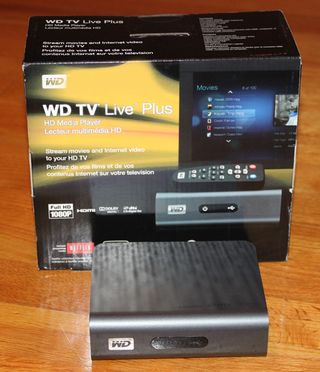
Free Giveaway: Win A Western Digital WD TV Live Plus Streaming Player

Wdtvlive The drawing is now closed. Congrats to Robert Mirman from Charlotte, NC who won the device. Up for grabs is a Western Digital WD TV Live Plus streaming player that I'm giving away for free. To enter the drawing, all you have to do is leave one comment on this post and make sure you submit the comment with a valid email. The drawing is open to anyone with a mailing address in the U.S. and I will select one winner at random in about two weeks. Good luck!

For a more detailed review of the WD TV Live Plus, Roku, Apple TV and Sony SNP-N100, check out my post entitled: "Device Comparison: Apple TV vs. Roku vs. WD TV Live Plus vs. Sony SMP-N100."

Live NFL Streaming Coming To The PlayStation 3: $50 For DIRECTV Users, $340 Standalone

SundayTicket In conjunction with DIRECTV, Sony announced that they plan to make the NFL SUNDAY TICKET package available on their PlayStation 3 console. Users who already have DIRECTV can add the service for $50 and have access to the live games via PCs, mobile devices and certain tablets and now, the PS3. For those who don't have DIRECTV, they can still sign up for the package and watch it online, but at a cost of $339.95 for the season. That's not cheap. New subscribers to DIRECTV'S satellite service can get the NFL SUNDAY TICKET for free.

While the economics still don't make a lot of sense for the standalone package, Sony is doing a better job than Microsoft of getting sports content to their console. The PS3 will now have support for MLB, NHL, NBA and NFL content subscriptions, while the Xbox 360 console currently only has ESPN360.com. But I do hear that the MLB.TV service may come to the Xbox platform pretty soon. Would you pay $340 for the football package?

More details on NFL's online video offerings can be found here: NFL Now Offering Four Ways To Stream Games Online

Here’s Why The Future Of The CDN Business Is In Mobile Content Acceleration

In a post about mobile acceleration in June, I dug into some of the technical reasons why mobile content tends to load so slowly on mobile devices and is so often interrupted by the spinning wheel and plagued by slow response times. In this post, I'll give a bit more background on why alleviating the aggravating and unpredictable latency experienced by most smartphone users is so critical and why this service is at the heart of the future of the CDN market.

Last holiday season, online auction and eCommerce giant eBay became a mobile commerce (mCommerce) giant when sales soared by 134% to well over $100 million over the holiday shopping season. eBay was hardly alone. Most of the major retail players saw enormous percentage increases year-over-year in commercial transactions and purchases that originated from mobile devices. If the early days of online commerce are any guide, then the increase should actually accelerate further for the 2011 holiday season.

Meanwhile, Groupon, the hottest daily deal company, is betting heavily on location-based deal offers to expand its reach, with the U.S. mobile display advertising market likely to eclipse $600 million in 2011. With PayPal now supporting person-to-person mobile payments, that market, still quite nascent, will likely take off in the same manner that PayPal grew quickly as a person-to-person payments vehicle in the earlier days of the Internet. All of these segments are extremely sensitive to latency and slow page-loads.

Today, just building a mobile-friendly app is not enough. Rather, as these businesses drive broader vertical trends towards monetization and maturation in mCommerce, mobile deals, mobile advertising, mobile payments, and social networks, acceleration of mobile content will be the fastest growing part of the CDN and content acceleration sector over the next few years. eBay may have started out with the belief that a nice app would be a sufficient mobile strategy, but increasingly, companies that are serious about mobile monetization will begin to view their mobile application delivery network and ecosystem in the same way that they view their online commerce strategy. They will begin to create a mobile-specific business and monetization strategy that emanates from the user back down through the technology stack to ensure maximum engagement and a minimum of activity interruption for users on handsets and tablets. We are already seeing that with some of the early adopters that I'll discuss a bit later.

Frost & Sullivan is forecasting that by 2015, mobile advertising revenues in the U.S. alone will rise from $491 million to $2.04 billion. That's compared with total global mobile advertising revenues today of roughly $2 billion. By that year, mobile commerce is expected to reach $119 billion in total transaction value and half the world's mobile subscribers could be making mobile payments. According to a survey of 1800 people by advertising and marketing agency Leo Burnett, 50% of consumers use a mobile device as part of their shopping experience, be it searching for deals, locating product information, or executing on-the-fly price comparisons.

In the U.S. location-based-services (FourSquare, Gowalla, Loopt) usage on mobile devices will hit 50 million users in the U.S. alone, up from 16 million users. Use of social networks over mobile devices is soaring, according to ComScore. In 2010, 30% of smartphone users accessed social networks via mobile browsers, a hefty increase from 22.5% in 2009, Twitter and Facebook saw huge increases in mobile usage at 347% and 112% year-over-year growth, respectively. So what do all these numbers really mean for companies in the mobile commerce space? We're now talking about a major monetization engine for many companies, something that really took hold for the first time in 2010 and will continue to demand more attention from companies with mobile monetization plays in the near future.

The reason for this is because the business and revenue impact of mobile latency is no longer a trivial thing that can be passed off as part of leading edge technology adoption. Similarly, it's no longer just the alpha adopters who will get angry at a brand that delivers a poor mobile experience. Now its tens of millions of Americans and hundreds of millions of people worldwide with access to high speed wireless data networks. Here are just a few of the ways that latency can crush revenues. In the mCommerce segment, slow-loading coupon offerings will convert users at much lower rates. This will become a more acute problem as coupon offerings go from national to regional and local targeting, some even with same day purchase requirements.

In this new reality or hyper-local and up-to-the-minute deals, the old ways of caching coupons in legacy CDNs for broad swatches of the country or very large regions no longer works well. Taking that thought one step further, slow-loading location-based deals will make it harder for companies to execute on loyalty or proximity offerings targeted to specific users who may be regular customers. For a company like Groupon, which not only will rely on local deals but also time-sensitive local deals, the penalty for high latency is even higher because their deals go away quickly, eliminating opportunities for further revenues.

In mobile advertising, high latency means fewer impressions, lower click-through-rates, and lower monetization. Studies have shown that ads shown during searches on mobile devices have much higher conversion rates than ads served to a computer over a landline connection. That's because mobile advertising is more personal and more immediate. Someone looking for a restaurant in the Lower East Side of Manhattan is doing so because they want to find a place to eat now or very soon. Someone searching through reviews for electronics on a handset are likely standing in a Best Buy considering a purchase. So the opportunity for ad monetization is greater, unless you can't deliver the ads quickly. Mobile users will quickly move to another review site or search on Yelp instead of OpenTable if their page is loading too slowly.

As a result, publishers will not hesitate to boot slow-loading ads off their mobile sites, a trend we have been seeing on the non-mobile Internet for some time. So latency for mobile advertising has a higher opportunity cost and a higher risk, both of which are complicated by the fact that serving any content over mobile networks is far less predictable due to differences in device capabilities. Not to mention, the varying behavior of HTTP and TCP which can compound latency to aggravate an already bad latency problem, and the huge variability in network performance. So mobile advertising networks will put a tremendous premium on anything that can reduce latency and allow them to be more confident in fast delivery of their content.

In a similar vein, online offer-based engagement advertising in social games, like Farmville, is incredibly reliant on fast load-times with even faster abandon rates. Latency, thus, can be even more painful because an advertiser that broadcasts an engagement offer such as a promotional video which requires completion but interrupts the user experience with a wait time for loading media will not only lose the engagement payment, they will also have to eat the cost of network resources. Even worse, aborted engagements will cause advertisers to move to other options. Big brands hate wasting their time and money and they won't put up with latency issues for long.

These types of richer engagements put greater demands on mobile networks and start to blur the boundaries of mobile apps and mobile content from the Internet. The blurred boundaries can mean novel mobile use cases, which threaten to choke mobile networks. Do@T, for example, launched a novel search capability that takes mobile search queries and quickly routes users to relevant mobile apps that are actually called through a browser. So someone who searches for “godfather” could well end up finger swiping between Netflix and other movie-related apps, an activity that is particularly unforgiving for latency considering the swipe factor implies instant gratification.

In a social network setting, failure to provide personalized content quickly on mobile devices will reduce advertising revenues for the network. A number of the largest social networks are now using or piloting mobile content acceleration platforms from CDNs to ensure that their users, who chat, play social games, share photos and movies on the network, all remain tightly engaged. This type of highly-personalized content is difficult to cache and extremely dynamic. This, as I discussed in my last post, is something that CDNs who are only focused on video or small object delivery, simply can't handle. All of these use cases are reasons why publishers and businesses are turning to mobile-centric CDN solutions to deliver content faster and reduce latency and round trip times back to the origin server.

Equally important to the business reasons I already mentioned, (which all focus on improving user experience to maximize revenues and monetization) is the new reality that mobile businesses need to quickly dial up their network capabilities in order to maintain good user experience quality levels. VocalWall allows Facebook users to leave an audio clip as a wall comment. When the service took off, largely due to use on mobile devices, VocalWall was ready with a mobile-specific CDN and content acceleration program that allowed it to scale up effortlessly. This allows it to promise to big brands that advertising on the platform or using its paid offering end-users will not have a high-latency experience under the support of that brand.

On the upside, in mobile content delivery very small changes can reap huge rewards. For example, according to Keynote Systems, when Dell reduced the footprint of its mobile homepage by 24 kilobytes, that sliced the download time of the page by a whopping 2.74 seconds. Because the average mobile page download has 46 different components, there are huge opportunities for CDNs focused on mobile and commerce, to use intelligence to make small changes that dramatically reduce latency.

For example, mobile content acceleration services that can cache certain javascript elements which are generally loaded and reloaded for every page on a site in a CDN server close to the user can slash microseconds of round trip times, a change that might translate into a multi-second reduction in load time. And by speeding up round trip times for pages, the mobile CDN offering will not only reduce immediate latency but also compounded latency resulting from TCP assigning slower requests to a lower transport priority, creating a downward spiral of bad performance that often ends with the user clicking the back button or being forced to reload the page.

The conclusions of this are pretty simple. Now that there is real money in mobile, bad performance is a more painful problem that hits revenue numbers and corporate profitability. At the same time, the evolution of mobile behaviors and use cases (for users, publishers, and advertisers) underscores the need for new ways to overcome weakness in wireless data network delivery to ensure that content arrival on handsets can hold users and maintain high engagement rates. Fortunately, some CDNs are starting to think about these business problems and have started offering mobile content acceleration platforms, laying the groundwork for a parallel CDN technology solely focused on mobile which integrates nicely within existing CDN offerings. But a lot of work is still ahead and many CDNs don't yet have a true mobile video offering in the market, let alone a mobile acceleration one.

CDN vendors that don't start addressing these developments in the market and start offering mobile delivery platforms are going to have a very hard time diversifying their business and growing their revenue over time. This is the next chapter of the CDN business and it’s developing in real-time right now.


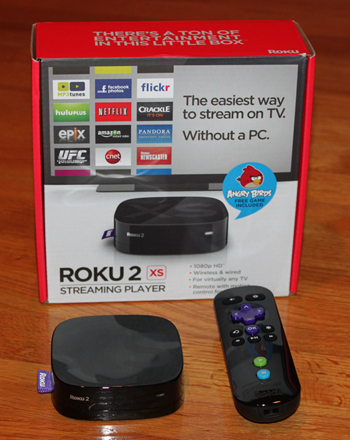
Free Giveaway: Win A Roku 2 XS Streaming Player

Roku2 The drawing is now closed. Congrats to Trevor K. from San Jose, CA who won the device. I've been playing with the new Roku 2 box over the past few weeks and soon I will be publishing my review of the unit along with my thoughts on whether or not users should upgrade to the newest model. But in the mean time, I'm giving one lucky reader of my blog the chance to win a free Roku 2 XS streaming player. To enter the drawing, all you have to do is leave one comment on this post and make sure you submit the comment with a valid email. The drawing is open to anyone with a mailing address in the U.S. and I will select one winner at random in two weeks. Good luck!

Limelight Networks And Level 3 In Discussions To Merge Their CDN Offerings

Two weeks ago, I wrote about the discussions I was hearing with regards to Limelight Networks being in talks to get acquired. A week after my post, Limelight Networks reported earnings and missed guidance by $2M, sending their stock to an all-time-low. As a result of the drop in their stock price, it's going to be hard for Limelight to get the kind of buy-out they were hoping for before their stock price took a hit, but they that does not change the fact they are still in the market looking for a buyer.

While I've heard that both AT&T and Microsoft have passed at acquiring Limelight, the bigger news I have confirmed is that Level 3 and Limelight have been in discussions for a few weeks now about joining forces and combining their CDN assets as a joint venture. I also hear that Limelight wants to sell their EyeWonder business and exit the interactive advertising portion of the market, which would be a smart move. I don't know what Limelight will get for the business, but they paid $110M for it last year.

I don't have details on how a deal between Level 3 and Limelight would be structured, if it happens, but it sounds like there are two ways this can go. Limelight could acquire Level 3's CDN business and then own and operate the CDN portion of the network with a guarantee from Level 3 to use the newly combined CDN. In a deal like this, one would expect Level 3 would get a couple of board seats on Limelight's board and have a great deal of say in the business. Combined, Level 3 and Limelight will have over $200M in CDN based revenue this year and taking Level 3's network and Vyvx business and Limelight's content management and web acceleration platforms, both companies would have all they need to double-down on the CDN space. The other option is that Level 3 could just buy Limelight outright. Considering Limelight has no debt and such a low share price, it would be a cheap buy for Level 3 and a deal that could close quickly.

One could argue that the CDN space is too commoditized to ever make a real business of it, let alone a profitable one with the way pricing declines each year, but if you own the network and have the ability to scale at a lower cost, profitability can be reached. Plus, even though CDNs have been offering delivery services for fifteen years, the real surge in demand for video delivery is in the next few years, when we actually have a real penetration and usage of tablets, broadband-enabled TVs and Blu-ray players and more subscription based content services. Traffic volumes are going to skyrocket in 2012-2013 and Level 3 has been betting big on the future of IP based video delivery.

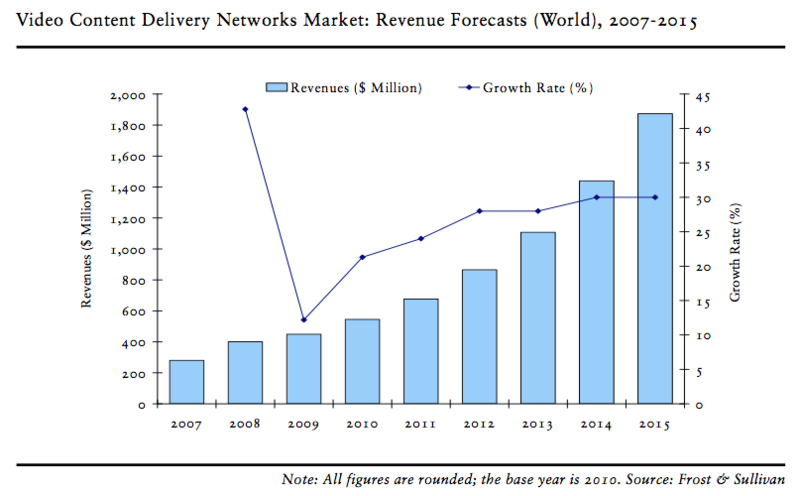
Based on the recent data from my Frost & Sullivan report on the CDN market, we expect the video CDN market alone to have a revenue CAGR of 28% between 2012-2015 with the video CDN market reaching over $1B in 2013. With Limelight's current CDN business expected to grow between 10-12% this year, that's a long way away from the 28% number. But a combined Level 3/Limelight solution that integrates Limelight's platforms with Level 3's network and Vyvx assets, there is no reason to believe the new venture, however it is structured, can't grow the business much more than 10-12% a year.

Screen shot 2011-08-14 at 2.39.38 PM
Right now, Level 3 offers the lowest price in the market, in most cases under-cutting Akamai by 25-30% on CDN deals as Level 3 owns the network and has a lower cost of delivering bits. One of Limelight's biggest costs is the network and if they can merge with Level 3 in some fashion, the cost of doing business will go down a lot for both companies, simply based on the scale and volume of bits being delivered.

While I've heard some suggest that Goldman Sachs, who owns almost 35% of Limelight, wants to dump their shares and get out of the CDN business as quickly as possible, I don't think that's accurate. Goldman could have sold shares back in February, but didn't, when Limelight raised another $71M and offered more shares to the market priced at $7.10 per share. I've also heard some say that Akamai should acquire Limelight and just get rid of their closest competitor. While that sounds good on paper, the problem is that Level 3 is the one creating the pricing pressure, not Limelight. So acquiring Limelight would not solve the price compression problem for Akamai. Also, if Akamai acquired Limelight they would most certainly shut down Limelight's network and move customers over to the Akamai platform. Akamai doesn't value Limelight's technology so any offer by Akamai, if they made one, would put no value in Limelight's platform, only in their customers and revenue. As a result, the price Akamai would offer to acquire Limelight would be too low.

If Level 3 acquires Limelight, it's a pretty straight-forward deal. But if Level 3 wanted to spin off their CDN business and have Limelight operate it, in order for Limelight to actually acquire Level 3's CDN business, it would be logical to expect them to have to raise more money as the $116 million in cash and short-term marketable securities that Limelight has right now would not be enough to acquire the business and still have operating capital. Selling off the EyeWonder platform might be enough, but I don't know what Limelight would get for it or how much it would take to acquire Level 3's CDN business. Clearly, Limelight knew they would miss earnings weeks before they announced and have been looking at multiple options for their business, as any smart company does. But being I'm not a banker and don't know the inner workings of how complex deals can get done, between cash and stock, someone with a background in finance would be better suited to figure it out. But maybe that's why I was also hearing rumors of Limelight raising money at the same time as acquisition talks.

With the patent lawsuit still on-going between Akamai and Limelight, one interesting thing to watch would be what happens if Level 3 and Limelight merge. When Level 3 entered the CDN space by acquiring the CDN assets of SAVVIS in December of 2006, Level 3 said that for any CDN to be successful over the long term, they’d have to have the intellectual property necessary to protect their investment in the CDN market. Back in 2008 I reported that Level 3 was quietly buying up CDN related patents, including at least 20 from IBM.

In 2008 Level 3 had 50 patents that were pending pertaining to content delivery and already owned over 80 patents specific to content delivery and streaming media technology. Today, those numbers are probably even higher. So I don't think Level 3 is worried about any patent suit from Akamai and if Level 3 merges with Limelight, one has to wonder how that may affect patent suits amongst Akamai, Limelight and other CDNs moving forward.

If a deal between Limelight and Level 3 gets done, it's going to have a lot of impact on the content delivery market overall. Such a combined offering would also give telcos and carriers a run for their money and might also convince a few of them not to spend money to try and build out their own CDN. While it's too early to know all the ramifications of such a deal, it would drastically change the CDN landscape. None of these deals I am hearing about are final and anything can still happen, but I don't think it will be too long before we have confirmation in the market on what the end result for Limelight Networks will be. The natural fit for Limelight is to be acquired or team up with a carrier, and there is no carrier who understands the CDN market better than Level.

Both Limelight and Level 3 declined to comment for the post saying, "we don't comment on these kinds of rumors".

Note: Sometimes, when I write articles about potential acquisitions in the market, I get a lot of emails from individual investors who want to suggest that I have an ulterior motive. If a company does or does not get acquired, I don't make money or lose money. I have never bought, sold or traded a single share of stock in any public company ever. If the share price of a company I am writing about goes up or down, I don't benefit in any way. Also, I won't respond to any requests asking me who my sources are.