Free Giveaway: Win A 24″ Sony Internet TV, With The Google TV Platform

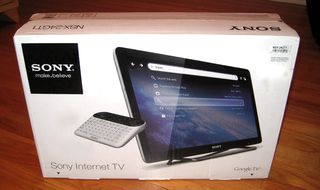
Google-tv Last month, Sony once again reduced the prices of their Sony Internet TVs and today, I have one 24" Sony Internet TV, model NSX-24GT1, to give away to one lucky reader of my blog. (Retail value $295). This model is the one with the Google TV platform, which is going to get a major software update in the next few weeks. To enter the drawing, all you have to do is leave one comment on this post and make sure you submit the comment with a valid email. The drawing is open to anyone with a mailing address in the U.S. only, and I will select one winner at random at the end of the month. Good luck!

Sponsored by

Ooyala Enables Video Monetization On Facebook With New Social TV Offering

ArticleImage.10367 In July I reported that Ooyala was working on a deal with Facebook and today, Ooyala officially announced their new social TV offering for Facebook dubbed Ooyala Social. The new solution offers content owners the ability to monetize their video on Facebook via rentals, subscriptions, advertising or purchases and also gives Facebook users the ability to share videos, chat live while viewing and watch video across multiple screens and devices.

Miramax, which began streaming movie rentals on Facebook last month, is the first content owner using the new system and Mitzi Reaugh, the SVP of Strategy and Business Development at Miramax will be one of the speakers at the Streaming Media West show in LA in November, on a panel entitled "Facebook: Transforming The Future of Online Media."

While most people tend to think of content offerings in the market from Netflix and Hulu as being the future of over-the-top video offerings, Facebook is reaching 750M monthly users on their platform who are already using a lot of social elements, something neither Netflix or Hulu has. Before long, Facebook's platform is going to become more important to the major studios looking to deliver premium content than either Netflix or Hulu can ever become.

And if Facebook is smart, they don't ever come out with a video offering of their own and instead, let the content owners create their own video subscriptions services that Facebook simply promotes and organizes all in one place. Down the road, Facebook's platform is going to enable content owners to make a lot of cash from their videos and Ooyala is smart to start laying the groundwork now to enable content monetization on Facebook's platform.

Thought Equity Motion Acquires The Assets Of Cloud Based Transcoding Provider Panvidea

Tem-logo Last Thursday, Thought Equity Motion announced they had acquired Panvidea, a cloud based transcoding platform formerly known as mPOINT. While the company declined to comment on the terms of the deal, I’ve learned that Thought Equity Motion acquired the assets of Panvidea, not the company as a whole. Chris Cali, Panvidea’s CEO and Co-founder will join Thought Equity Motion as VP of Platform Technologies.

Panvidea, which raised $2M in VC funding last year, never really got much traction in the market and as of March of last year, said they had “about 15 customers”. The company had been looking for a buyer for awhile and it’s a good technology pick up for Thought Equity Motion, which will integrate the transcoding platform into their T3 Platform, which already has storage, video search, preview, metadata, and delivery functionality. The company has over 400 media customers (Paramount Pictures, Sony Pictures Entertainment, National Geographic, The New York Times, and the NCAA) using their technology to manage large scale video libraries via its global footage licensing platform.

In August, Thought Equity Motion raised $25M from Shamrock Capital Advisors to expand their platform and grow internationally and I expect we’ll be seeing more of them in the market in the coming months.

“Have our troops hoist the colors to its peak, and let no enemy ever haul them down.”

Hands-On Video: Streaming With Sling’s Android Player Over Verizon’s 4G Network

For as long as I can remember, streaming to mobile devices has been one of the most talked about topics in the online video industry. For well more than five years now, companies have been saying that mobile video growth was going to explode and that mobile devices would be the biggest opportunity for the long term success of the online video market. While that’s not been the case to date in the U.S., which has seen slow adoption of video on handsets, with all the new tablets in the market and 4G services being rolled out, mobile video adoption in the U.S. is on the horizon.

Over the past few days I have been testing some of the latest video offerings in the mobile space via a Droid Charge using Verizon’s 4G service. I have to say I am blown away by the quality of the video being delivered over Verizon’s 4G network. For a mobile device, it really is a compelling user experience, which in my opinion, was something that had been lacking in the mobile market for some time. I’m testing a bunch of different apps and services in the market, including Verizon Video, a new on-demand service launched last week. I’ll have a review on that shortly, but for now, he’s a hands-on video of the Sling Android player running over Verizon’s 4G network.

MVI_0003.AVI

The Sling app, which costs $29.99 in the Android store, is the best Sling player I have seen to date. The video starts up very fast, switching between channels has the lowest lag time I have seen of any Sling player and the quality of the video over Verizon’s 4G network is really, really good. While it’s hard to tell just how good the video quality is in the demo video I shot above, it really is incredible. I’ve never seen video quality this good on a mobile device that’s not using a WiFi connection.

From a technical level, in order for mobile video services to succeed, the app, the hardware and the network all need to work together to create a quality user experience and in this case, that’s exactly what happens with the Sling player on the Droid Charge over Verizon’s 4G network. Of course, from a customer adoption point of view, 4G data plans are still too expensive. Verizon charges $30 a month for 2GB of data transfer and customers get hit with a $10 charge for each 1GB over their quota. Verizon also offers a 5GB a month plan for $50 and 10GB a month for $80, all out of reach of the average customer.

While there is no bitrate standard when it comes to mobile, Encoding.com said they see customers encoding content at around 700Kbps for mobile and others I spoke with said it was between 500Kbps to 750Kbps. Using those numbers, that means the average consumer could get 6 to 10 hours of video streaming to their mobile device before they would break Verizon’s 2GB cap. So while that’s not bad today considering that most people view short-form videos on handsets, 8 hours of video a month on average won’t cut it as these services get more widespread adoption. Cap limits are going to need to increase and prices are going to have to come down for mobile video services to really take off.

The good news is that from a technology point of view, these services now work, they provide a very good user experience and Verizon along with other carriers are spending a lot of money to expand their 4G network. As that happens, costs for the consumer will come down and more video services will be adopted via mobile devices. It’s still going to take time, it won’t happen within a year or two, but video to mobile is the future of our industry and we are just now starting to see some real signs of what the experience is going to look like.

Disclaimer: I was provided with a free copy of the Sling app and access to Verizon’s 4G network for a limited time, although I have been a Verizon Wireless and Verizon FiOS customer for a long time.

Limelight Sells EyeWonder Business, Still Working On Bigger Transformation

This morning, Limelight Networks announced it would sell their EyeWonder business to DG Fast Channel for $66M in cash. Limelight originally paid $110M for the business last year, so the sale to DG Fast Channel comes at a loss. Limelight also announced that they would buy back $25M of their stock, or about 8% of their outstanding shares.

As I reported earlier in the month, Limelight has been in discussions with Level 3 about merging both company's CDN businesses and the first step Limelight needed to do was was get out of the interactive advertising market and focus only on their CDN and SaaS based platforms. I'm hearing that Level 3 and Limelight are still in talks, but no deal is done and there is no guarantee it will happen. Today the Office of Fair Trading (OFT) announced they had "cleared" the Level 3 and Global Crossing merger and the full text of the decision will be available shortly on their website. So that now makes a Level 3 and Limelight deal much easier to accomplish.

Limelight clearly wants their share price to be higher so that they get a bigger buyout from Level 3, but there is no guarantee that will happen. If Limelight's share price goes up and they can an $8-$10 share buyout from Level 3, then I think the deal will get done. But, Level 3 may just sit back and wait a few months and see what happens. If Limelight does not grow revenue the rest of the year, then Limelight won't get the buy out they want and would have to sell any way, with Level 3 benefiting from the lower price.

But if you are Level 3, you don't want to wait too long to acquire the company as you still want to acquire them when their CDN business is strong. So it's really going to come down to timing on this one. With all these factors in play, I would not be surprised if it takes till the end of the year before this plays out. Limelight does not have a lot of options in the market and Microsoft, Verizon and AT&T have already all passed on acquiring them. So either way, Limelight is going to have to do something in the market soon, but I think it will probably be a few months before it happens.

Free Giveaway: Win A Netgear Roku Streaming Player

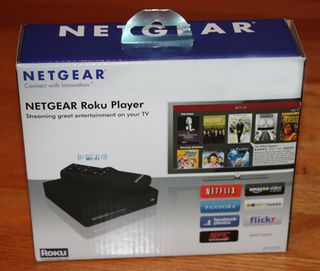
Netgear The drawing is now closed. Congrats to Robert Mirman who won the device. While Roku no longer has an OEM agreement with NETGEAR, I still have one NETGEAR branded Roku streaming player (Roku XD model) to give away. To enter the drawing, all you have to do is leave one comment on this post and make sure you submit the comment with a valid email. The drawing is open to anyone with a mailing address in the U.S. and I will select one winner at random in September. Good luck!

I'm also giving away a Roku 2 XS here and a Western Digital WD TV Live Player here.