How Instart Logic Wants to Solve Web Application Delivery

Last week, web and application delivery provider Instart Logic announced they have raised $26M in a third round of funding from Kleiner Perkins Caulfield Byers and existing investors. The company has now raised a total of $52 million and is growing quickly, with nearly 100 employees around the world. Since launching last year, Instart Logic counts a growing list of marquee clients including the Washington Post, big online retailer One King’s Lane, and SaaS provider If This Than That. The backdrop for Instart Logic’s new funding round is an increasingly commoditized CDN landscape with falling prices for vanilla caching and distribution. What were considered value-added services, such as adaptive image delivery to match device type, are now becoming more commodity type services.

Web performance and CDN vendors, in particular Limelight Networks, EdgeCast, and Amazon, have been trying to climb up the chain of ever more complex value-added services. To date those services have focused on mobile and images, two of the biggest pain points for modern web applications. The mobile Internet is now on the verge of eclipsing the landline Internet and mobile is the primary pain point for many web applications companies. For its part, Akamai has seen real success in selling additional value added services such as security and application acceleration solutions.

Clearly, though, a new frontier is emerging. As cloud overtakes on-premise applications, the web performance needs of cloud-based apps are casting a spotlight on the problems with traditional application delivery systems. Those systems were never designed to accommodate users on wireless devices accessing highly dynamic, highly personalized, web-based applications. Cloud also overlaps heavily with the mobile trend.

Instart Logic is looking to position itself ahead of these two key trends – mobile and cloud – and wants to disrupt the whole CDN market by trying to make these older application delivery approaches outdated while simultaneously expanding the concept of what a high performing web app can do. Their dual-sided (client-cloud) platform was built to accelerate web and mobile in what they say is a very different way than traditional CDNs. Their technology works at the application layer, not the network layer and adds intelligence and business logic to the acceleration process that prioritizes the parts of a web app users will click on first or needs to see the most in order to interact with the app.

Instart Logic says their “secret sauce” is a heavily patented client-cloud platform that inserts a small virtualization layer onto the browser. This forms a closed loop that pumps information about how applications are consumed on the client side back to Instart Logic’s servers in the cloud. The information and analytics allows Instart Logic to aggressively and accurately prioritize the order that bits and bytes are shipped down to the browser in granular detail to allow users to interact with their applications much faster. This client-cloud architecture is something that I haven’t seen any other CDN using right now and I have not heard of any other company with similar technology for web apps.

Such a tight connection between the web performance service and the user device is particularly relevant when wireless networks bog down. By shrinking the data footprint of web applications and shipping only the most relevant information, Instart Logic better handles wireless congestion. It’s important to note that in Akamai’s latest earning call, the company cited strong media demand driven by delivery requirements for higher quality images over 4G networks as a key source of revenue growth. Instart Logic directly attacks this market with a product it claims is significantly faster and higher quality than Akamai’s multi-stage image downloading. Beyond images, the client-cloud architecture lends itself nicely as a differentiated way to compete with Akamai in the value-added services business by providing a true closed-loop for tasks like client-based security or intelligent client-side storage and caching, courtesy of the newer capabilities of modern browsers.

In general, Instart Logic is building a large portfolio of proprietary technology, with over two dozen patents pending, as a long-term moat against legacy CDNs. This includes the virtualization layer technology and other soon to be announced services that the company is working on. Instart Logic also recently announced PCI Compliance, a key requirement for e-commerce sites and any provider who wants to sell services to that segment of the market. Instart Logic is still in the early days and their products have only been in general availability for less than a year. But their team has already launched multiple product revisions and a few of their customers I have spoken with are very happy with their services and tell me they are excited about the road map that Instart Logic has shared with them.

Competition with Akamai is always hard for any vendor but the fact that some marquee media clients – like Washington Post and online retailer One Kings Lane – have opted to switch from Akamai to Instart Logic, shows that the newcomer is clearly getting their foot in the door in a market that Akamai considers its sweet spot. The funding from Kleiner Perkins, too, means that Instart has the backing of yet another major VC that bets heavily on getting to IPO. This can only happen if Instart Logic attains its goal of rapid sales and market growth and Instart Logic just hired a VP of marketing who has experience building businesses into the billion-dollar sales range, including lengthy experience at Cisco. Akamai always reacts vigorously to competition and this will likely be no exception.
Sponsored by

Netflix Just Got A Big Backer In Their Paid Interconnect Argument, Google Fiber

Only a short time ago, Google published a post on their Google Fiber blog in which they make the case for why they don’t charge content owners for peering, why they give someone like Netflix access to their network for free and why they partner with content providers and CDNs like YouTube, Netflix, and Akamai. While not all ISPs feel the same way Google does, Netflix just got a big voice in the market saying that for their business model, and size of their network and small number of subscribers, it makes sense for them to not charge anyone for access to their network.

Chart Shows Which Content Owners Have Direct Interconnect Deals With ISPs

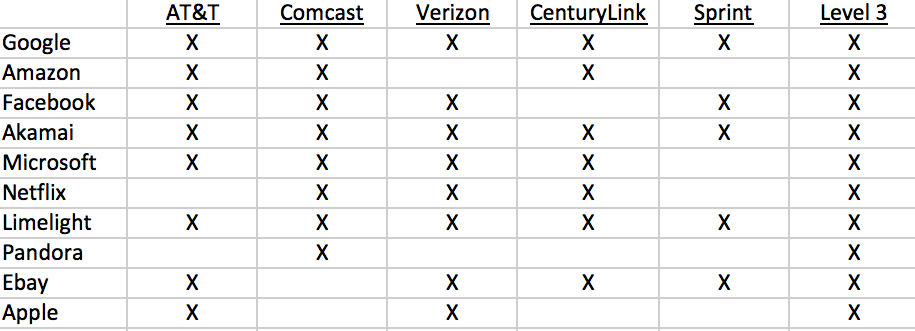
With all the confusion in the media around the topic of interconnects, I thought it would be helpful to show exactly which content owners have done direct interconnects with ISPs. While some members of the media want to claim that content is exchanged on the Internet in a “secretive nature”, the fact is, it’s not a secret at all. If you know how and where to look, you can easily see what is taking place between networks. All of the information I provide in the chart below is from public information that anyone can lookup simply by knowing the networks Autonomous System number (AS) and looking at their peers. You don’t have to be a networking engineer to look at BGP relationships and see what is taking place. It’s all public info.

The search results won’t come right out and say which relationships are settlement free versus settlement-based, but you can infer from traditional business relationships and public peering policies, who’s paying whom. Not to mention, the companies who pay for these interconnect relationships will tell you which ISPs they are paying, and which one’s they aren’t, if you have a good relationship with them. Anyone involved in building out networks for a living understands how this has worked since the late 90’s. It is not a secret. Many members of the media simply don’t have any insight into these deals because many of them don’t cover infrastructure topics for a living. But just because they don’t know themselves, does not mean that these deals happen in secret.

Based on the AS lookups I did, here are the companies that have direct interconnects with various ISPs. I didn’t look at every ISP out there or every content owner, simply some of the larger ones.

Screen Shot 2014-05-20 at 8.56.01 PM

Updated 6:08pmFor those asking why Level 3 is on the list when they are not an ISP, I wanted to show that there are many forms of direct business relationships between companies for both transit and paid peering.

What you can see on the chart is that all of the major content owners have negotiated direct business relationships with multiple ISPs for their CDN. There are various business and technical reasons why they pick one ISP over another, but there are a lot of these deals in the market and have been for many, many years. Some ISPs in the U.S. have dozens of paid interconnect deals in place. Multiply that by the number of ISPs in the U.S., and the number of paid interconnect deals is probably close to 100. So for Netflix’s CEO to call their paid interconnect deal with Comcast “unprecedented,” is intentionally misleading.

Each of the X’s in my chart shows that large content providers are unafraid to connect with large ISPs, most have been doing so longer then Netflix, and none have found the need to seek intervention. Of course that does not tell you the size of the deal, how much the ISP is charging or any of the other business terms, but no one should argue or debate that these deals aren’t common, continue to happen and are how networks, especially in the U.S., have connected to one another for almost twenty years.

Part of the argument by many around interconnects is that it costs the ISPs almost nothing to turn up ports on their network, or they say that ISPs have “unlimited capacity”. Neither would be accurate. There is a direct cost to the ISP to add ports and backhaul infrastructure to bring traffic all the way into their network. For anyone to say that the costs should now shift to the ISP because it’s “cheap” to them, or “doesn’t cost them much”, it’s not a valid argument. If that’s the argument some want to use, then by the same token I could say that if I have a letter to deliver to someone’s house and the postman is already going there, then it costs them next to nothing to deliver my letter and my cost should be free. It’s simply not a logical argument.

Put it another way. What if Google, Apple, Netflix, Facebook, Ebay and Microsoft all said to the same ISP that they want unlimited peering capacity, in multiple cities in the U.S. Would anyone think that would be fair to the ISP and that they should have to spend the money to fulfill all of those requests, at no cost to the content owner? Would this entitlement give major content owners special treatment over a smaller startup competitor? I think most would agree that’s not fair, yet that is what many are suggesting should happen. And using the argument that the ISP is already charging consumers for access to the Internet is also not valid. Your connection from your ISP is about broadband Internet. It is not about the service infrastructure cost for third parties.

Historically companies like Netflix have always paid for their transit connectivity, or Internet delivery costs. The 60% of broadband customers who do not use Netflix, should not suddenly have to pay for the network transit/interconnect costs of others because Netflix feels their Internet costs should now shift to all ISP customers. Perhaps someone wants to use Hulu, Amazon or consume no video at all. Each of these companies has a cost for their service infrastructure and paid interconnect deals are not increasing that cost. These costs are staying where they have always been, included within the specific service. Saying that it is new or unprecedented is just not true.

Follow up questions can be put in the comments section below or you can email me or call me (917-523-4562) at any time.

Apple Negotiating Paid Interconnect Deals With ISPs For Their Own CDN

In February I blogged about a new group formed inside of Apple last year, tasked with building out their own CDN to deliver Apple software updates, apps and other Apple related content. Since my post, Apple has been very busy with their build out deploying a lot of boxes running Apache Traffic Server and buying a ton of transit, co-location, wavelengths and other infrastructure services. Their CDN is quickly growing, and it won’t be long before we start seeing a portion of their content getting delivered from their new CDN.

As part of their build out, Apple is currently negotiating paid interconnection deals with some of the largest ISPs in the U.S. I’m not going to disclose which ISPs they are talking to and what deals they have already done, but it’s interesting to note that with all the talk lately of net neutrality, peering and interconnect relationships, Apple isn’t out in the market making any complaints. While Netflix has used the media, consumers and lawmakers to try and argue that CDNs should get as much peering as they want, at no charge, Apple doesn’t seem to agree with that sentiment. If they do, they certainly aren’t complaining in any public forum.

At a time when interconnection deals are getting so much exposure, Apple hasn’t used it as an opportunity to argue about the current business models of how networks connect with one another. Much like Microsoft, Google, Facebook, Pandora, Ebay and other content owners that have already built out their own CDNs, Apple appears to see paid interconnect deals as simply part of the costs associated with building out their own CDN network. To date, no other content owner or content syndicator that has built out their own CDN has complained of the current business models or argued about doing mutually beneficial interconnect deals between networks. If interconnect deals are such a problem in the industry, or a threat as many make it out to be, you don’t see the ones who actually have to pay for these deals complaining, other than Netflix.

Some might suggest that the reason for this is that Apple is not as big as Netflix since according to Sandvine data, Apple takes up only 2% of total Internet traffic at peak while Netflix takes up 34%. While that’s true, when Apple releases a new operating system for the iPhone, like they did last year, their iOS 7 and app downloads accounted for nearly 40% of all the traffic inside ISP’s networks, almost overnight. So Apple does push a lot of traffic at times and the more devices they sell, the larger their traffic grows.

What Apple is working on aligns with what all of the other big content syndicators out there have already built, which is a considerable amount of their own distributed origin infrastructure, for both large and small objects. Part of Apple’s reasoning for building their own CDN is because of performance issues with iCloud, with Apple wanting to have more control over the end-user experience. Apple already controls the hardware, the OS and the iTunes/App store platforms. Right now Apple controls the entire customer experience, except for the way content is delivered to their devices, so it’s only natural that a company of their size would build out their own CDN.

For all the talk in the media about how bad paid interconnect deals are for the Internet, this is how the Internet (updtaed: in the U.S.) was able to grow over the last twenty years and how services got to the scale and performance that they are today. Without these interconnect deals taking place, the Internet would not operate as well and fewer services would be available in the market. I think we should rely on those who actually have to build out these CDNs and pay the costs associated with doing so to tell us whether or not the current way of doing business need to be changed. But so far, out of those who have built their own CDNs to deliver content including Netflix, Microsoft, Apple, Pandora, Yahoo, Ebay, Facebook, Amazon and others, only Netflix is complaining.

There is only one company that I can think of that could bring even more exposure to the interconnect topic than Netflix, to try to get the current business models changed, and that would be Apple. So far, they haven’t done that, have not complained to the media or to the public and are currently signing and negotiating paid interconnect deals with ISPs. So it’s just another example you have to look at when some make the statement that paid interconnect deals are bad for everyone involved. It seems that other than Netflix, those companies paying and signing these deals don’t seem to have a problem with them.

Comcast Launches Commercial CDN Service Allowing Content Owners To Deliver Content Via The Last Mile

Comcast has quietly entered the CDN market with a commercial content delivery service primarily targeting medium and large size content owners. The service is live and the company has a few paying customers already delivering their content on Comcast’s CDN. This new offering allows content owners to go directly to the ISP and have their content stored and delivered via the last mile, thereby displacing some traffic currently delivered by third-party CDNs like Akamai and Limelight Networks. While this is the same type of CDN service that other commercial CDNs like Akamai already offer, Comcast can offer a very good SLA and pricing, since they own the network. This is similar to what Level 3 did, when in 2010, they came to the market with a CDN service that was priced lower than others.

[Updated 4:06pm: Just in case it wasn’t clear to some readers, Comcast’s CDN service is not providing any kind of “fast lane” for content or any type of “prioritization” of content. A well operated third-party CDN will have similar performance to Comcast’s CDN and user experience will mostly be imperceivable by the average consumer. The service also has nothing to do with net-neutrality or interconnect agreements. Those who want to imply or suggest otherwise are doing so incorrectly.]

Because Comcast owns the last mile, and commercial CDNs don’t, content owners who go direct to Comcast will be able to get a cheaper price for CDN services. While contract variables like volume and length of contract will dictate price, I expect some content owners to be able to pay 20%-40% less than what they pay now. Since Comcast owns the network and has a lower cost, they can offer a lower price in the market. Right now, Comcast’s CDN service is primarily targeting large and mid-sized content owners for large file downloads and streaming of video, both live and on demand. While Comcast can also deliver content for smaller content owners, it does not make sense for the majority of small content owners to go direct to an ISP for content delivery. Comcast isn’t offering what the CDN industry calls value add services, so CDNs like Akamai that get a large percentage of their revenue from services like dynamic site acceleration won’t see that portion of their business affected.

Comcast’s new service is considered an on-net CDN offering as Comcast is primarily delivering content via their last mile. While they can also support off-net delivery outside of their network footprint, that’s not the business they are targeting. For content owners that have a large percentage of their content going to Comcast subscribers, it would make sense for some of them to take that portion of their traffic off a third party CDN and move it over to Comcast. While Comcast’s offering will be attractive to large content owners, this does not mean ever large content owner will use it. Many will find it as an attractive option in the market as a large portion of major content owners already use a multi-CDN approach to delivering their content. So if they can have Comcast pull content from their origin storage and deliver it locally for Comcast subscribers, and at a discounted price, many will the see the value considering that Comcast subs probably account for about 30% of their overall traffic.

As the news of Comcast’s commercial CDN offering gets out, I’m sure some are going to suggest that Comcast is doing this to counter the arguments that paid interconnect deals, like the one they have with Netflix, is bad for the little guy. By Comcast now offering content owners the ability to deliver their content directly inside Comcast’s network, this now opens up the service for smaller content owners. The problem with that argument is that it is dead wrong. No small content owner builds their own CDN, so small content owners don’t need to go direct to any ISP for CDNs services or interconnect deals. Small content owners will always use third party commercial CDNs as it’s cheap and they can get good quality delivery from a single provider. That’s why the only companies doing interconnect deals are content owners like Microsoft, Google, Netflix, Apple, Yahoo! etc. because they have built their own CDNs. The reason Comcast is doing this is to open up another commercial option for any content owner who wants to deliver content.

Comcast’s new CDN offering has absolutely nothing to do with interconnect relationships and Comcast isn’t targeting small content owners or those who have already built their own CDN. Their ideal customer for the new service would be broadcasters, gaming companies, software companies, large publishers and those in the media and entertainment vertical. What Comcast is doing with their commercial CDN offering may sound like a new idea to many, but it’s not. In 2010, Verizon did a deal with HBO to deliver their content inside Verizon’s last mile for FiOS subscribers. This was due to the fact that Verizon had built out their own CDN, using the technology from Velocix, which was acquired by Alcatel Lucent. Verizon didn’t do many deals with content owners and ended up changing their CDN plans a few years back, but I do expect Verizon to once again enter the market and offer a similar service to Comcast’s, due to Verizon’s recent purchase of EdgeCast.

Since the commercial CDN market for any ISP is small when compared to their core business, some will ask why Comcast or any ISP even wants to be in the commercial CDN business to being with. The key thing to remember about commercial CDNs is that many times they make cost trade offs around performance. Adding a disk drive to a cache to improve hit rate or a new server in a location does not have the same financial drivers as it does for any ISP. Typically a CDN pays the same $/Mbps to serve a city whether it is sourced locally or from across the country. An ISP’s network costs to serve from long distance drives financial incentives to both add local storage and server capacity to keep traffic local. Some CDNs deliver a large portion of their traffic from  sub-optimal locations to save on server and storage costs.

Right now, Comcast is the only ISP in the U.S. to offer a commercial CDN service directly to content owners via their own in-house solution, as opposed to licesing a platform from a third party. While some might suggest that ISPs offering commercial CDN services will be a trend moving forward, it isn’t. The only three ISPs this kind of service would even make sense for would be Comcast, Verizon and AT&T, and AT&T has already given up on their own internal CDN and simply resells Akamai.

Here’s Why YouTube Would Want To Buy Twitch, and How Big Their Market Is

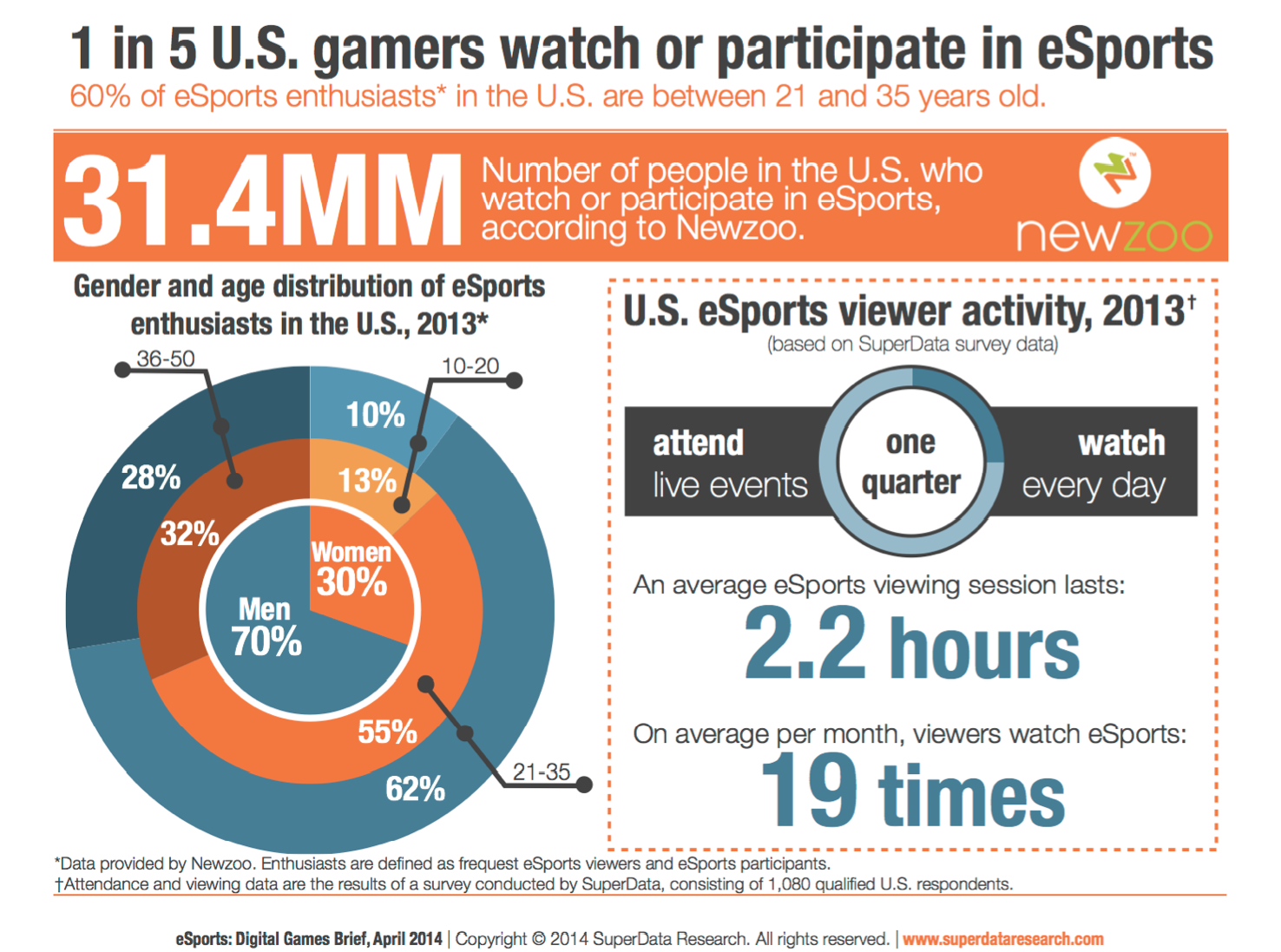
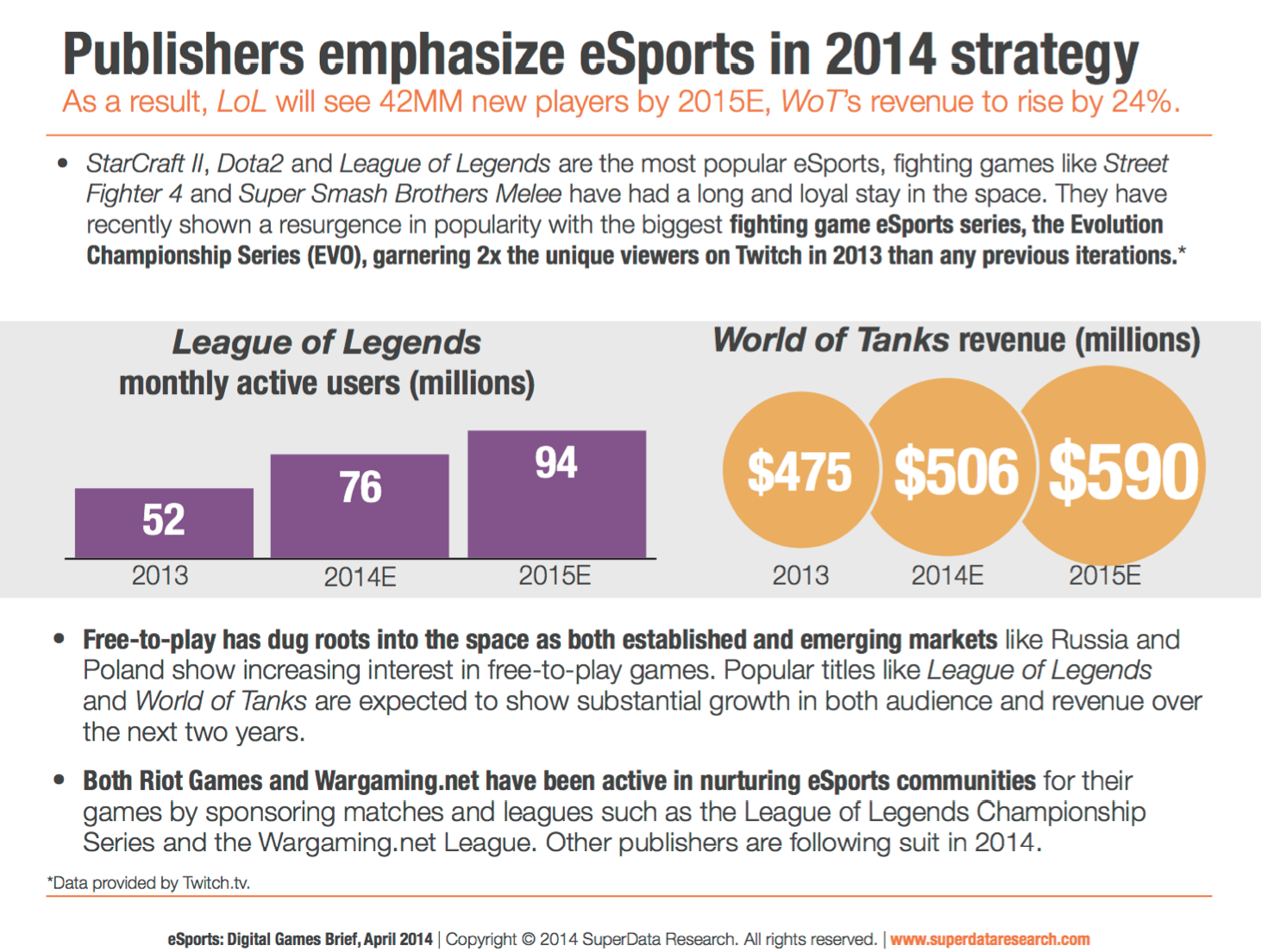
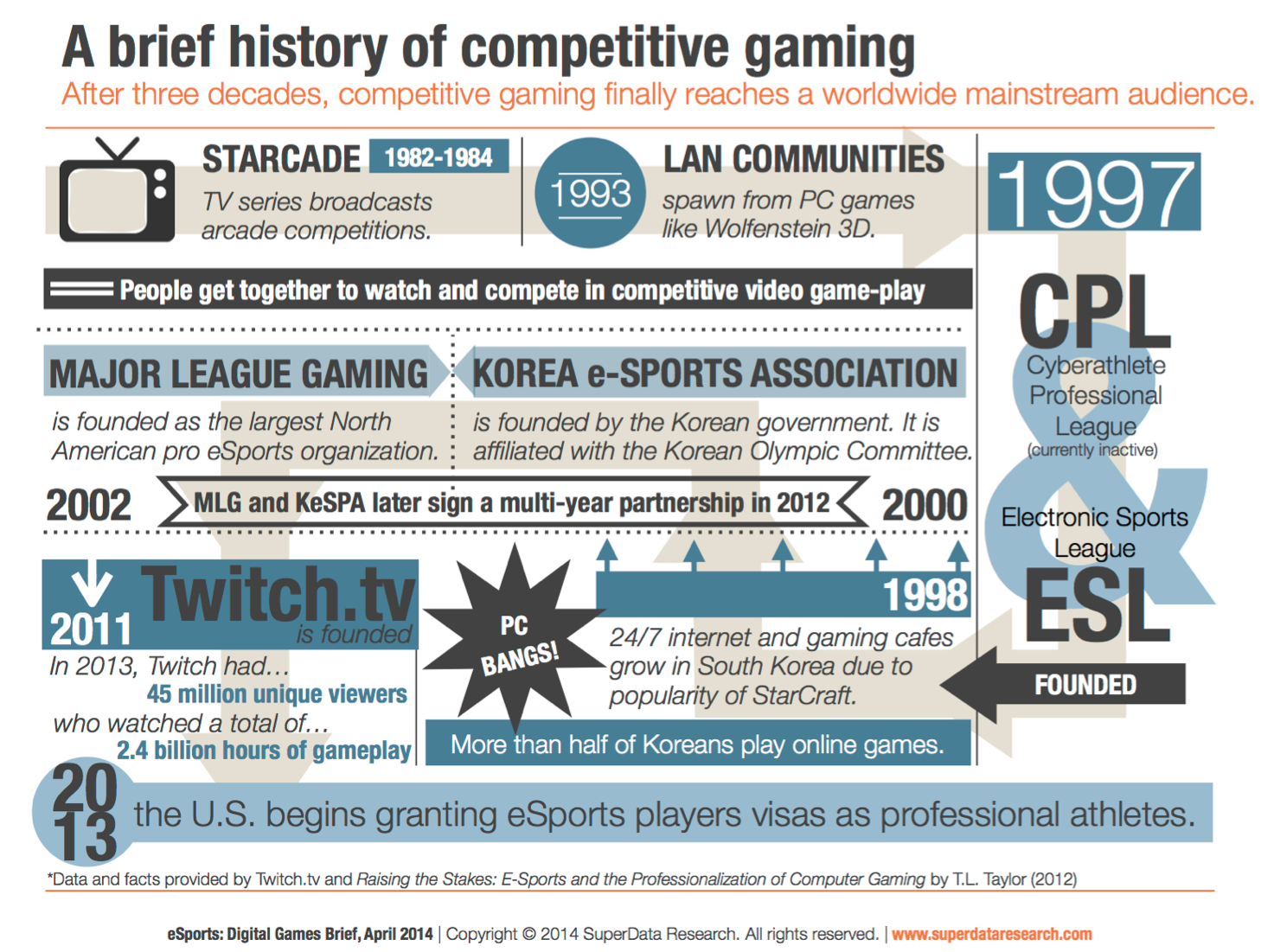
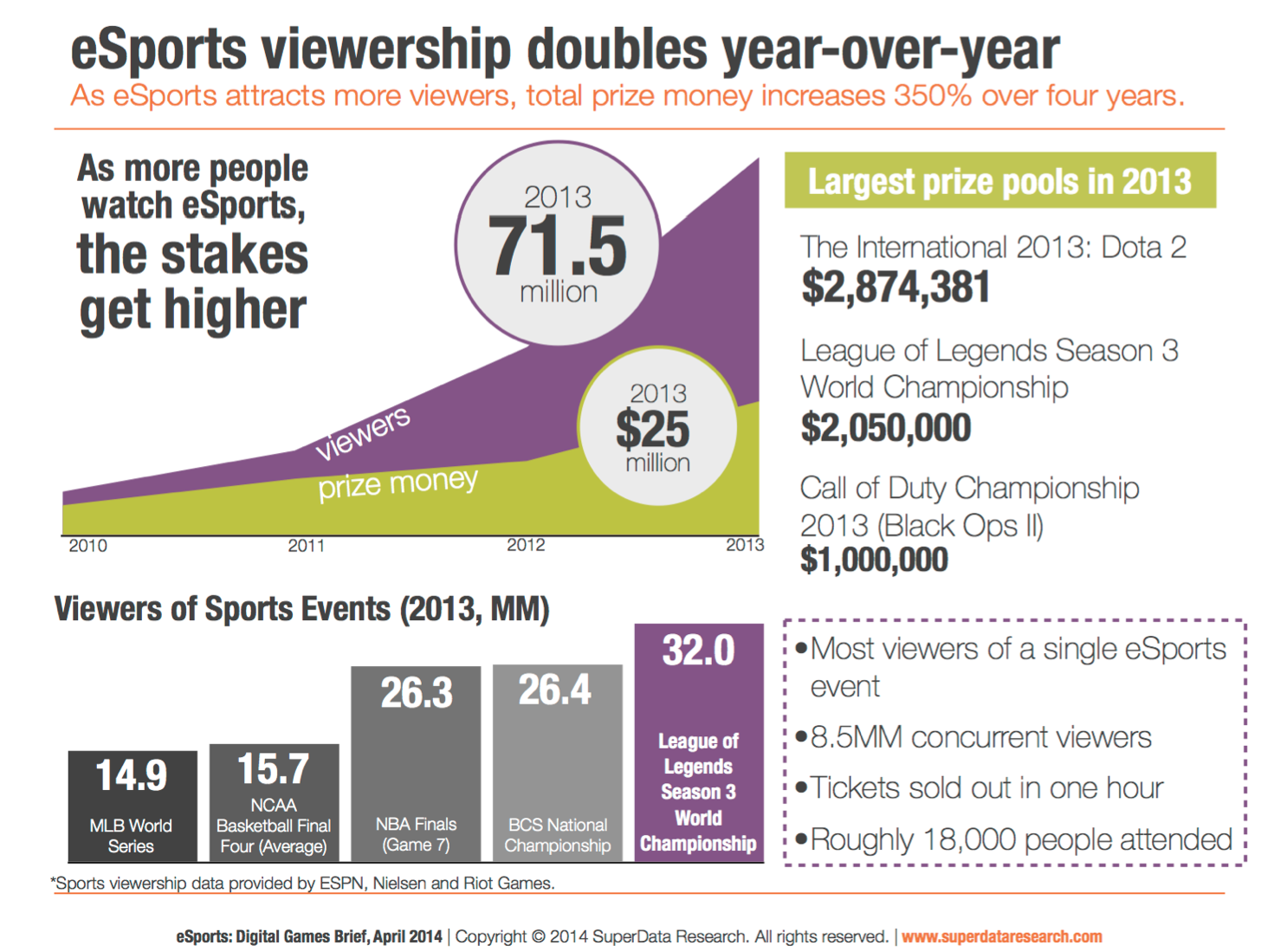
at Variety is reporting that YouTube has agreed to buy Twitch for over $1B in an all cash deal. While I have no insight into the deal, I would not be surprised to see Google acquire the company. Last week, Twitch was the keynote at our Streaming Media East show in NYC and they gave out some impressive data not only on their business, but also on the size of the eSports market they are in. Below are some of the slides from Twitch’s keynote and some highlights on their business.

In 2013 Twitch had:

  • 45 million+ Unique Viewers per Month
  • 1 million+ Unique Broadcasters per Month
  • 13 billion minutes watched per month
  • 106 Minutes Watched per Person per Day
  • 58% spend more than 20 hours/week on Twitch 540K average prime time viewers
  • 68% have decreased their television consumption
  • 10 million installs of the Twitch iOS/Android mobile app

Screen Shot 2014-05-18 at 9.37.29 PMScreen Shot 2014-05-18 at 9.37.33 PMScreen Shot 2014-05-18 at 9.37.39 PMScreen Shot 2014-05-18 at 9.37.23 PM

Presentations From CDN Summit and Streaming Media East Shows Now Online

DSC01488Thanks to everyone who made it to this week’s Content Delivery Summit and Streaming Media East shows in NYC. Both events were successful and the Content Delivery Summit was standing room only for most of the sessions. There are a lot of blog posts I am working on and we’ll have videos from both shows up in a few weeks.

I am uploading the presentations from both shows as quickly as I am getting them. You can download the CDN presentations here and grab the Streaming Media East presentations here. If you have any post-show follow up questions or need help with anything regarding both shows, please reach out to me at anytime.

The 2015 Content Delivery Summit will take place Monday, May 11th and Streaming Media East will be Tuesday May 12th and Wednesday May 13th.