NAB Streaming Summit Program Now Live: Speaking Spots Open

I’m pleased to announce the program for the NAB Streaming Summit is now live on the website at www.nabstreamingsummit.com. Some of my moderators are currently looking for more speakers on the broadcast and OTT side, so check out the program and let me know if you’re going to NAB and are interested in speaking. Here are some open sessions:

We have a few spots left for broadcasters, Pay TV and OTT providers and those that distribute and syndicate content. Spots will go fast, you can also call me at 917-523-4562 if you are interested in any of the sessions.

Sponsored by

Save The Date! NYC Streaming Meetup Tuesday March 27th

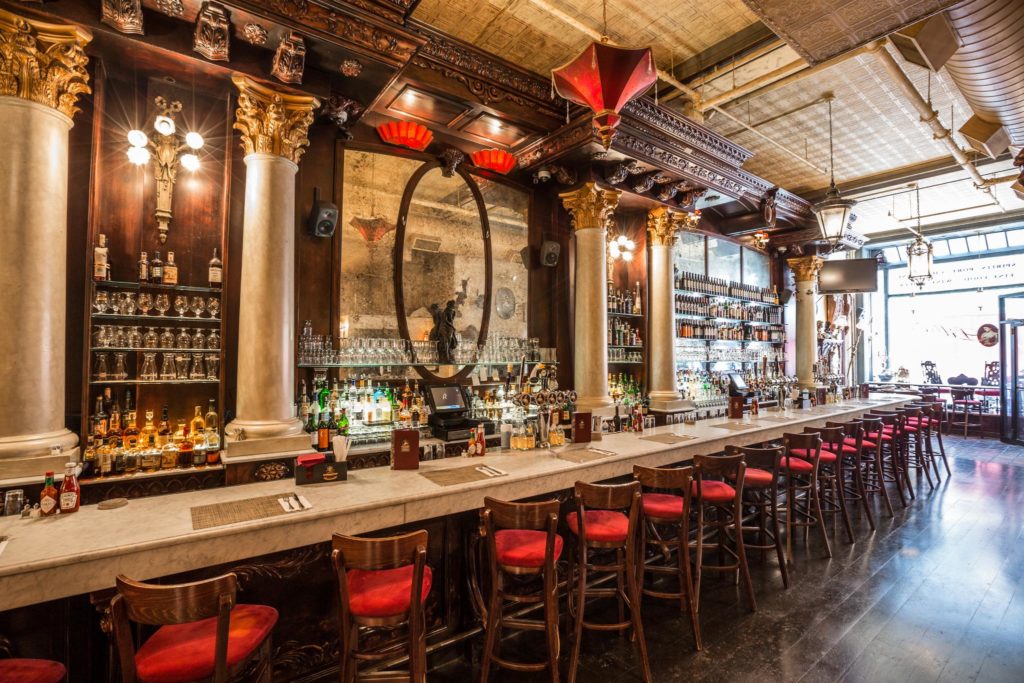
Back by popular demand the next NYC Streaming Meetup will take place on Tuesday March 27th, starting at 6pm at Lillie’s, located in Union Square at 13 East 17th Street (map). There is no RSVP list, just show up and walk to the back of the venue, bring a friend and spread the word! We will have free drinks thanks to sponsors Bitmovin, Piksel, Priority PR, CDNetworks and I’ll be giving away a few passes for my new NAB Streaming Summit.

[If your company would like to sponsor the meetup and cover $500 of the bar tab, please let me know]

These meetups are a great way to network with others tied to the online video ecosystem. We get a great mix of attendees from companies including AOL, NFL, Showtime, Omnicom, NBC, NBA, Time, HBO, Viacom, CBS, Twitter, WPP, Google, Nielsen, Facebook, FOX, R/GA, Twitch, Riot Games, American Express, Comcast, wall street money managers, government agencies, VR production companies and vendors from all facets of the video ecosystem.

I’ll keep organizing these every month so if you want to be notified via email when the next one is taking place, send me an email and I’ll add you to the list.
Save

Save

Save

Save

Save

Save

Save

Save

Save

Save The Date: Big NAB Beer Garden Mixer Tuesday April 10th

If you going to the NAB Show next month, I’m having a big Beer Garden mixer on Tuesday April 10th from 5-6pm, right outside the convention center in the Silver Lot. Just look for the big tents, food trucks and beer. No special tickets are needed, just show your NAB Show badge. If you are interested in sponsoring the mixer, please contact me. Look forward to seeing you there!

Save

Save

Save

Save

Wall Street Take Note: Akamai Is A Platform, You Can’t Separate Their Media Business

In December of last year, Hedge fund Elliott Management disclosed they had taken a 6.5% stake in Akamai, with the goal of trying to force Akamai to make operational and strategic changes, in an effort to maximize shareholder value. Today, Akamai announced what some of those initiatives would be. One of the ideas that has been floating around Wall Street is that Elliott wants Akamai to sell off their media business to a third-party and exit that portion of the market. While that sounds like a positive thing to do from a numbers standpoint, since it would greatly reduce Akamai’s CAPEX spend, in reality, it can’t easily be done from a technical level and would have a negative impact on Akamai’s other product lines. Investors should put it out of their mind that Akamai is going to sell off their media business.

Many don’t understand how Akamai’s platform works, the technical pieces involved in providing a CDN platform or how they all tie together. Elliott has made a big investment in Akamai and holds 2.0M common shares (1.2% outstanding), equity-backed derivatives equal to 3.1M shares (1.8% outstanding) and cash-based derivatives equal to 6.0M shares (3.5% outstanding), unchanged since its December 15th 13D filing. The equity-backed derivatives can be converted into common shares at any time, while the cash-based derivatives are settled for cash. 13F filings only include common shares and exchange traded options (Elliott’s derivative position is not required to be reported). In Elliott’s Q4 13F filing, the firm disclosed a position of 2.0M shares, the same as in its 13D filing on Dec 14.

While some have suggested that Akamai simply doesn’t want to sell off their media business and is being stubborn, the bottom line is that it is not so simple to do so. One way to think about it is to break the media business into four categories: software, hardware/network, organizational and financial. The first three are where separability is difficult and the latter would just end up costing Akamai more with regards to their non-media services.

When it comes to software, Akamai has the same edge and network mapping software across all of its solution sets. They could potentially fork the code base, of course, but there would be a fair bit of code that wouldn’t apply to one solution set or the other. I would also put in this category solution breadth because virtually all of Akamai’s media customers leverage their web solutions. So a customer might accelerate their web site or app with Akamai’s Ion product, secure it with their Kona product, and deliver content using their media solution set. Some customers may end up requiring multiple vendors (e.g. Fastly + Imperva + LLNW), that would cost Akamai business. Since each of these other providers could do most of this at some level as well, separating media completely would actually put the media business at a competitive disadvantage for their customers.

On the hardware and network side, Akamai leverage co-lo facilities, bandwidth agreements across over 1,000 network operators, system deployments, etc. across both solutions sets. Akamai’s network operator relationships are a key leverage point, as they are to all CDNs. Maybe even more importantly, media delivery that is secure uses Akamai’s web TLS network. So if anything, Akamai is driving the opposite direction (i.e. combining networks, not separating them) as more and more delivery even on the media side is required to be secure by customers.

From an organizational level, Akamai has a platform team that provides a good portion of the common software and tools. While they do have a fairly clean divisional split at the solution level, they do not at the platform level. It is one platform, and it is not obvious how they would split that team. And from a financial standpoint, many are clearly missing the fact that there is a material benefit to Akamai’s web solutions financials, based on the cost structure they are able to negotiate given media volumes. This would be mitigated to a large extent if Akamai got rid of their media business as then their costs would rise dramatically for their web and security solutions.

Also, despite having 245,000 servers residing on over 3,000 ASNs globally, Akamai knows that the future of their business won’t scale with simply more servers being deployed. As a result, Akamai continues to invest in more software in more places, to better optimize delivery, including in UDP, QUIC and P2P technology designed to improve the quality of delivery and reduce its cost. Akamai has said that the future of online content delivery is won when the quality is multiples higher than the competition and the cost is multiples lower, something they are working to achieve. Focusing on protocols and new distribution techniques is a bet that Akamai is making on their long term plan and Akamai recently combined their carrier and media business, since more content is becoming available through service provider channels.

On paper, it’s very easy for Wall Street firms, private equity companies and hedge funds to layout how a company should re-allign it’s business. But when it comes to the technical pieces, it’s important to understand how they work and the costs as they pertain to the entire platform, not just one piece of it. If Elliott wants to try to push Akamai into selling to a private equity firm, cutting costs by closing offices, laying off employes, or buying back shares (which is going to take place) to increase shareholder value, that’s all reasonable. But thinking that Akamai is going to sell off their media business shows a lack of technical, business, market and competitive knowledge of the market Akamai is operating in. It’s not going to happen.

Save

Last Week’s Record DDoS Attack Shows How Much CDNs Are Investing In Security

For anyone who follows me on social media, or is following the latest technology news, you’ve seen that there has been a significant amount of news generated by a new DDoS attack vector. The memcached UDP-reflection attack, that some are referring to as memcrashed, spoofs origin IP addresses to take control of memcached instances exposed to the public internet. One result of this type of attack was the largest DDoS attack ever recorded last week, levied against GitHub at 1.35 Tbps, or roughly twice the volume that the Mirai botnet levied against the Krebs site (a prior record).

From a streaming media perspective this is significant, since memcached instances are a common element in technology stacks powering streaming media infrastructure. Just because a business has implemented memcached does not mean that they are susceptible to having their machines taken over, however at the time of this writing there are nearly 60,000 memcached instances that are openly accessible. Since UDP is easy to spoof, these instances are not only vulnerable, but can amplify traffic by a factor of over 50,000, meaning a 203 byte request results in a 100 megabyte response. So if an attacker spoofs the IP address with that of their target, they have the means to generate a potentially massive DDoS attack.

The important thing to consider is that because of the way this attack vector works, and how relatively easy it is to initiate, the potential exists for even larger attacks to come. In fact, if you look at reports from Akamai and others, in a 24 hour period there were reports of attacks from 190 Gbps, 500 Gbps, and subsequently the largest reported at 1.35 Tbps. This means that any media company or digital business needs to have a strategy in place and take action. Most are blocking the default port used by memcached: UDP port 11211, but beyond that, you should be reviewing the SLA provided by your current DDoS protection provider to understand their capacity limits and behaviors if you come under attack. You don’t want one of your high value or critical streams to be disrupted or taken offline because your provider started to black hole your traffic.

All CDNs inherently protect you from most volumetric attacks, but more sophisticated stuff will require active filtering (or for these ports to be default blocked). Recent attacks are bigger than most any non-institutional DDoS provider to absorb themselves. If you were monitoring these events last week, you might have seen this tweet from Thousand Eyes highlighting their capture of GitHub withdrawing their routes from the telcos (and a subsequent writeup they performed on the entire event) providing their service and moving them to Akamai’s Prolexic platform. Because GitHub had already configured their platform for Prolexic, once they routed on to the platform they were able to restore service.

But more importantly, you need to know what the actual mitigation plan is with your DDoS provider. If there is going to be a hard cut into scrubbing mode, you need to plan for down time. What’s that going to do to your failover? What systems will be impacted? Are you sure you can recover gracefully? Github engineered for this, so their downtime was “only” 6mins. For most web facing applications, it should just come right up, but if you’re cutting over an API which you AND your customers rely on, how’s that going to behave? Akamai, Amazon, Fastly, Google and others all offer edge cloud based WAF and DDoS services and customers should look for solutions that are inline all the time and fully distributed across the entire network/platform.

Across the industry, CDNs continue to evolve their solution set and cloud-based WAF and DDoS solutions have become the new products CDNs are investing heavily in. While video was the killer app for a long time, security is now the new CDN.

Speak At The New NAB Streaming Summit: Call For Speakers Open

In case you haven’t heard, in partnership with the NAB I’m launching a new series of focused conferences at the NAB shows in Vegas and NY, dedicated to the streaming media industry. See my blog post here with all the details.

The call for speakers is now open and am looking for those that want to present and speak on a host of business, technology and content topics, on April 11th. OTT, live workflows, content monetization and packaging, transcoding, HEVC, future technologies in a multiscreen world (VR and AI) and a host of other subjects.

I’m looking for how-to technical presentations, case studies, moderators for round-table sessions and those that can present on business topics. If you’re interested in speaking, please reply to this email and send me your ideas. The show is only six weeks away, so now is the time to reach out to me with any/all suggestions. dan@danrayburn.com

And if you’re headed to Vegas for the NAB show, I’ll be hosting a big Beer Garden networking reception on Tuesday, April 10th at 5pm. Stay tuned for more details!

Save

Save

Job Opening: Sales Director, Media and Entertainment (LA and NYC)

GlobalLogic, the design and engineering firm that has developed and worked on some of the most widely used OTT apps and platforms in the market, currently has two sales positions open, in LA and NYC. Details on the jobs are below, contact me if you’d like an intro.

The ideal candidate is someone with strong experience in establishing new customer relationships and has established connections with technology executives in the Media and Entertainment industry.

Responsibilities:

  • Identify and develop key relationships with potential clients to grow sales revenue
  • Work directly with senior decision makers; Chief Technology Officer, Chief Digital Officer, Chief Product Officer, VP of Engineering and their teams
  • Deep engagement with customers to understand their needs and build/ nurture long term relationships
  • Conduct client presentations, proposals and negotiations
  • Own the sales funnel across the entire cycle – from lead to close
  • Own all sales conversion metrics and monthly goals

Experience required:

  • A minimum of 10+ years of proven experience selling technology products and services to Media industry customers
  • Strong network of key decision makers in the target (media) segment
  • Proven track record in new business acquisition
  • Expert understanding of the technology needs of target segments
  • Exceptional verbal and written communication skills
  • Exceptional prospecting skills and excellent closing skills

Target segments and customers:

  • Entertainment: TV Networks, Studios, Distributors, vMVPDs, technology providers
  • Publishing: Magazine and Newspaper publishing customers
  • Education: Publishers of education content

GlobalLogic Service offerings:

  • Strategic Design, User Experience and Technology Development for Digital Transformation, New Products Creation, Tools for internal needs and Platform Customization
  • Technology development for Video delivery through OTT, Liner TV, TV Everywhere
  • Development of “native” client apps for Big-screen, Mobile and Web platforms
  • Cloud native software application development, Analytics platform development, Automation using AI / ML technologies