Sawmill Releases Product For Analyzing Flash and Windows Media Formats

Streaming Media Reporting
Sawmill, a software package that allows for the analytics of raw log files from streaming media services, announced that hey have upgraded their product to support the Adobe Flash media and Microsoft streaming media log file formats.

I’ve long been one to complain about the lack of tools on the market for those who serve their own streaming media content. (See, "Reporting Tools Lacking For Companies That Delivery Videos Online") Ever since Lariat got acquired and EnScaler went out of business over five years ago, there hasn’t been a product on the market that has gotten any real traction. That may change with Sawmill.

StreamingMedia.com did a review of the Sawmill product last month and you can read the review by Steve Mack for more details into the products features and cost. Based on Steve’s positive review, it looks like Sawmill may have a chance at really fulfilling a huge need in the market.

The biggest hurdle for Sawmill is that not many know of the company or the product. and the company is based in the UK. You can buy the product from them directly via their website but they really need to start marketing the product here in the U.S. since 9 times out of 10, when I asked people about reporting tools, they have never heard of Sawmill. If the product works as well as Steve’s review says, I’m rooting for them.

Sponsored by

Lack Of Online Video Data and ROI By Companies Is Hurting The Industry

Reading this months Fast Company, which has an excellent article about bottled water and how American’s spend more money on bottled water than they do on iPods or movie tickets, there were some great examples of how in other industries, companies seem to be willing to say what something costs to buy or what the ROI is or potentially could be. I see a lot of this in many other industries from many companies willing to give details, but we see it from very few companies in the online video industry.

For example one of the stories in the magazine was about a band who’s song was used in an video game by Electronic Arts. It gave exact numbers on how many games were sold and exactly how much money the band made. In another article, a woman who runs the lifestyle marketing for Toyota’s Scion brand was explaining how much money they spend on marketing their product around musicians and she was up-front when asked how that leads to financial success for Scion. She replied, “The honest answer is we don’t know. Anyone who says it can be measured is flat-our lying”.

My point is this. Why is it that so few people and companies are willing to talk about success or failure, with data and numbers in nearly all facets of the online video industry? Asking any major website what online video advertising CPMs are and you won’t get an answer. And if you do it will be such a range that it us completely useless. Ask many content delivery networks what the average price is they charge per GB and typically you won’t get an answer. Ask any of the major networks how successful their online video initiatives are and you’ll be told they are successful, but no metrics will be given to validate that. Total eyeballs or streams delivered is typically the only number you hear and large traffic does not mean something was successful or profitable. Ask what is costs to sponsor online video content and you won’t get any details when it comes to numbers. Ask many content companies what their cost is to produce a program and how much it then costs them to distribute it online and numbers won’t be discussed. And of course, revenue numbers are near impossible to get from anyone.

The real question ask is why doesn’t one of these companies just share numbers on one project, or one online video campaign or some facet of their business so they can show a real ROI? Show something, set an example and give others something to strive to want to emulate to make this industry into a truly new business.

It’s a shame. At some point, you would think some of these companies would want to stand up, give out the details, set the example and be seen as the leaders in any facet of this industry. Setting the example and being a leader would help others strive to follow your lead and push this industry forward. Without that, all this mention about “success” is just a bunch of marketing talk. Think of the publicity that any company would get if they backed up their words with data. They would become the example for others to follow, they would get tons of exposure for showing a successful venture and it would help to kick-start some real data sharing. I don’t care if these big content companies and websites are only making $1 after all is said and done, that’s a profit and others can learn from it. Everyone is too cautious with data, no one wants to stand up and take charge and in the online video advertising world in particular, no one is sharing any data on CPM pricing, sponsorships rates, viewership data etc… the only data that is shared is generic or high-level with no details.

When I ask for data for an article or blog post, it’s funny how many times, the company will say, “who else are you speaking to about this article? did they give you any data?” And when I say no, then they don’t either. Snooze. What a missed opportunity to have not followed what everyone else is doing but rather lead the pack by example.

I know, many will say I am asking the impossible or talking about something that is unrealistic. But that’s not the case. It is all about thinking outside of the box, trying to foster change and drive this industry forward faster.

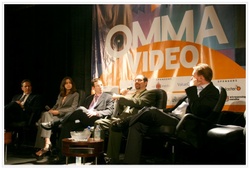
OMMA Video Archive With FOX, AOL, Yahoo! and ABC Now Online

OMMA Video Show
Mediapost has now archived the sessions and presentations from the OMMA Video show in NYC. The session I moderated entitled "TV Content Comes Online: Prime Time on the Web" with FOX, AOL, Yahoo! and ABC is now available for viewing.

I asked the panelists some of the questions that readers of my blog wanted to know more about so check out the Q&A portion of the video about 15 minutes in.

You can also read David Kaplan’s recap of my session over at PaidContent.org or another overview at Mediapost.com.

MSN Releases Traffic Numbers For LiveEarth Webcast, Sort Of

On Sunday, MSN put out a press release talking about the traffic to the Live Earth webcast. But as I mentioned in my previous post, the way the numbers are given out after webcasts, they don’t really accurately measure  the traffic.

The title of the release says "Live Earth Global Concerts Reach More Than 10 Million Online At MSN…" More than 10 million what, people? Apparently not. Because the details of the release then say "MSN had received a total of more than 10 million video streams." So it’s not 10 million people as viewers are making more than one request or visiting the site multiple times. So how many unique people was it? And why does it says MSN "received" the streams? MSN does not receive the streams, the receive the request for the stream.

They then say, "…and has the most simultaneous viewers of any online concert ever" but then the release does not give out any details on how many simultaneous streams they did. Why is it so hard for companies to keep from being so vague?

  • how many total stream requests did you full fill?
  • how many unique streams did you serve?
  • what was the average length of time someone watched the webcast?
  • what percentage of traffic came from what regions of the world?
  • what was the average bitrate that someone watched?

Very easy questions. Basic. These are the same questions that all customers ask their stream hosting provider after an event and gets exact figures.

TV Commercials Showcasing Terrible User Generated Content

User Generated Content
User generated content is now everywhere and it seems companies are using it more and more in TV commercials just to look cool or to highlight the fact that it’s UGC content as if that makes them hip. In just one night of watching TV, I saw commercials by McDonald’s, Geico and some mattress company all using UGC content or filming the video in such a way to look like user generated content. And we all saw what Doritos did with UGC content during the Super Bowl half a year ago. A commercial that would have never gotten any publicity if Doritos didn’t highlight the fact it was user generated.

The McDonald’s commercial in particular highlights on the screen the fact that the video was "actual user generated content" featuring two kids rapping about McNuggets outside of a store. It’s the most annoying commercial ever and companies need to remember that a commercial is about the quality of the content. That’s rule number one. Just because the content you use might be user generated, it does not make it quality content. I’m sure someone will say that McDonald’s did a good job marketing wise as I now have remembered their UGC commercial and their brand. Yes, I remember it alright. I remember that when I see it, I change the channel.

Reminder: NY Video 2.0 Meetup in NYC Tonight

NYC Video Meetup
Tonight, the NY Video 2.0 Meetup will take place at the Columbia Business School. I’ll be moderating a panel entitled "Beyond Pre-Roll: What’s Next for Online Video Advertising?" starting at 7pm. The panelists for this discussion will be:

  • Kevin McGurn, VP, Advertising, nbbc
  • Jeff Minsky, Director of Digital Media, OMD
  • Robert Victor, Product Manager, Emerging Media, DoubleClick
  • Jed Savage, EVP, Strategy and Development, ScanScout

For those attending, I will be asking direct questions. I want to know what video CPMs are today, how much companies are spending on campaigns and what the real dollars look like in terms of where this business is today. Please bring any and all questions you have if attending.

The event is free but the room size is limited to 200 attendees, so check the RSVP page to see if there is room if you want to attend.

I am being told this event will be archived in video for viewing after the fact.

Webcasting Large Entertainment Events Still Unprofitable

I love webcasting more than any other facet of this industry as it’s how I got my start fourteen year’s ago and it’s what I use to do for a living. But it’s sad to see that so many year’s later, there is still no successful business model in place for large-scale entertainment based webcasts.

In the year’s between 1997-2001, there was at least a couple of large music and entertainment webcasts each night on sites like SonicNet, Rocktropolis, MTV, Pepsi.com and many others. Back then, no website was making any money from the traffic or from the content, but they didn’t need to. In those times all that mattered was getting eyeballs to your site and growing your page count while showcasing content available for free. Since the bubble burst in late 2001, there have been very few webcasts trying to reach a wide mass audience with entertainment based content.

The problem is that no one has yet to find a way to monetize the content. While this is nothing new as it’s a topic we talk about every day in the industry in regards to on-demand content, producing live content is even more expensive and requires more in the way of resources and time. Some have tried doing pay-per-view events with no success as consumers are not yet willing to pay for something that has always been free.

And when it comes to the content rights, entertainers want huge payments as they think this stuff is worth a lot of money online thinking as if this is some sort of PPV event on TV. They quickly learn however that there is no money to be made with PPV on the web and they always end up scraping the webcast when they realize this is not a cash cow. How many large entertainment webcasts have you seen in the past 5 years?

It is a lot of work and money to put on a webcast and even more when it’s goal is to reach a global audience all at the same time. But that is exactly what MSN is looking to do with it’s LiveEarth series of concerts that kicks off today at 9pm EST. The Al Gore-promoted series of concerts will have close to 40 video feeds from countries all over the world for a span of 24 hours. The cost to produce something like this runs into the tens of millions, especially since some of the content will also be broadcast via traditional TV on NBC and Bravo amongst other channels. Since it needs to be TV quality and not just web quality, that means even more cost in the way of audio and video production. Throw in the cost to license the content, pay the artists, pay for audio and video production services, satellite time, encoding services (which one article says consists of a team of 80), not to mention distribution costs to deliver this via the web and you’re talking serious dollars.

Now this event may make back some of it’s money since it has a traditional broadcast component on TV and NBC can sell advertising around it, but even with that, this is a loss leader. And without the TV broadcast, I bet this would not even happen unless a sponsor, or MSN, was willing to kick in millions of dollars to cover the webcasting and productions costs.

The worst part about this whole thing is that it’s just going to play into the hype about millions of people watching video on the web as if it is the TV. It’s not. Remember Live 8 over two years ago? How did that make money? Where are the ROI articles saying how successful the Internet medium was for webcasting to big audiences? Most of the revenue generated from that event came from DVD and content licensing deals after the webcast for mediums other than the Internet.

Already, the hype is starting. ""We expect it to be the most highly watched entertainment event online," MSN senior director Lisa Gurry said in an Hollywood Reporter article. The article also says that "MSN, predicts Live Earth will be a record-breaker." Come on. Is that the best that MSN can say? How about telling us how many sponsors you have? Or how you plan to cover your costs? Or if this is a loss leader for MSN to create awareness for the brand? Or better yet, what metrics MSN is going to use to determine the success or failure of the event? And stop with the "record-breaker" comments. There is no such thing as a record breaker webcast or "largest webcast ever" as no one makes their logs available for review and everyone measure "viewers" differently. And many large webcasts never ever give out numbers or the numbers are inflated. I know. I use to give customers numbers of viewers after a webcast only to see them make the number a lot higher in press releases, sometimes by a few million. And if IF it was the largest ever, so what? Does that mean it’s successful? No.

One other thing to note, unlike the Madonna event or the Live 8 event which was only on the Internet, much of the content of LiveEarth will be on TV. So why would I go to the Internet to watch it?

It’s a shame this has not all been figured out by now. Like many, I love the webcasting medium. It’s fun to webcast, brings its own set of challenges and is a technology that allows anyone to communicate without any geographical boundaries. And while the application has been successful in the enterprise, government, education and other verticals it still does not work for the large-scale entertainment events.