
Streaming Media East Agenda Now Live: Starting Speaker Selections

The advance program for the Streaming Media East show in May in NYC is now online. We've got roughly 35 sessions this year and about 110 speaking spots. I am starting to place speakers today. I have over 800 speaking submissions to go through but have already placed a bunch of great folks from Disney, Babelgum, boxee, ABC Television, MetLife, BusinessWeek.com, Tuner, Syracuse University and a few others. The process of placing speakers has just started, so if you see a session you think you need to be a part of, better contact me fast.

Here is a quick outline of the session titles, full descriptions can be found online.

  • Bridging TV And Broadband And Cutting The Cable
  • Streaming Production: Improving Your Video Quality
  • Online Video And Set-Top Boxes
  • Demo: Compelling Video Advertising Campaigns
  • Using Metadata to Better Engage Your Audience
  • Live Broadcasting with Mobile Phones, Consumer Cameras and Laptops
  • How Old Media Is Embracing Online Video and New Media
  • Content Production for the Web
  • The CDN Ecosystem: Moving Beyond Bit Delivery
  • Successful Content Syndication and Aggregation Strategies
  • Monetizing Long-Form Video
  • Can Broadband Network Operators Successfully Harness P2P?
  • Media Framework: Video Publishing Platforms
  • CDN Research Data: Market Sizing and Pricing Trends
  • Implementing Flash Video DVR Functionality For Live Broadcasts
  • Tools And Best Practices For Enterprise Streaming Media
  • Best Practices: Marketing Video for Multiplatform Delivery
  • Making Effective Online Video for Education
  • Microsoft Smooth Streaming: Delivering HD-Quality Video Over HTTP
  • Reinventing The Ad Model Through Discovery And Targeting
  • The Impact Of Broadband-Enabled TVs, Gaming Consoles And Devices
  • Automation And Workflow Solutions For Transcoding Your Video Content
  • New Advertising Platforms and Networks
  • Live Broadcasts And HD Video: Can Web Video Ever Scale To TV-Sized Audiences?
  • Cost Savings from Enterprise Streaming
  • Video for Distance Learning & Classroom Training

In addition to the Streaming Media East program, shortly we will publish the special one-day Content Delivery Summit agenda. Stay tuned
Sponsored by

Level 3’s CDN Group Hiring: Product Management, Operations, Account Managers

While Level 3 recently laid off part of their workforce in December, their CDN group is still hiring and has half a dozen open positions they are looking to fill today. The list they just sent me includes the following:

  • CDN Product Manager – Broomfield, CO or Thousand Oaks, CA
  • CDN Field Expert, Director Product Management – Washington, DC area
  • CDN Operations Engineers – Broomfield, CO
  • CDN Service Delivery Technicians – Broomfield, CO & Tulsa, OK
  • CDN Account Directors – DC, LA, San Francisco

If you're interested, contact Mary Spuler at Level 3.

If your online video related company has any job openings, let me know. In many cases I will highlight them here on the blog – free of charge.

MLB.TV Launches, $10 Cheaper Than Last Year, HD Video, DVR Functionality

Mlbtv
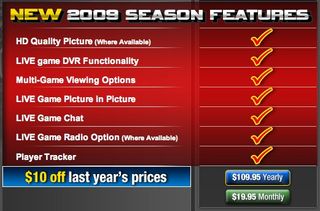
As an avid Mets fan, I check their website every day and within the past 24 hours, MLB put up a notice on all team pages that they have opened up MLB.TV for 2009 with cheaper rates than last year. MLB is once again going with two different options, a basic subscription service at $79.95 for the year and a premium service at $109.95 for the year. As the website points out, both of these packages are $10 cheaper than they were last year if you pay upfront. But for those who want to pay monthly, there is no discount being offered with the monthly costs being $19.95 for premium and $14.95 for the regular package.

In December, Major League Baseball Advanced Media (MLBAM) President and CEO Bob Bowman told PaidContent.org that in 2009, "…we have to lower our prices". Clearly MLBAM is looking to drive more subscriptions with a reduced rate and only offering the discount to those who pay upfront for the entire year is pretty straight forward. In addition to the lower price, the premium service comes with some new technology features enabled by MLB's switch to Flash in the beginning of the year. The most relevant of which is the ability to have DVR like functionality during a live game, a new feature of Flash Media Server 3.5 that Adobe introduced in November of last year.

MLB's premium service also allows for a new picture in picture feature and they also say HD quality is new for 2009. With the high-bitrate encoding MLB was doing last year, their video quality was already very good, taking it up to HD only makes the deal even sweater. I'm interested to hear the tech specs on how MLB is doing the encoding for HD video and what they will be providing.

As far as I am concerned, MLB is doing everything right with their online video offering in 2009 by giving us better quality, at a lower cost. Now if only they could figure out a way to get rid of all the blackout restrictions.

Netflix Streams 1.5 Billion Minutes Worth Of Videos To The Xbox 360

In a joint press release issued early this morning, Microsoft and Netflix announced that to date, Netflix members have streamed 1.5 billion minutes worth of videos to the Xbox 360 console. Considering the Netflix streaming service has only been available to the Xbox 360 console for the past three months, I think anyone would view that as a huge number with great success early on. To put that number into perspective as it pertains to bits delivered, since we know the technical details on how Netflix encodes videos, since November, content delivery companies Limelight Networks and Level 3 combined have delivered nearly 25 million GB of data. That's some serious traffic.

While the 1.5 billion minutes is huge, it's still very small when compared to the total minutes of content they ship via their DVD business. If we use the numbers Netflix has on their website, they ship around 730 million DVDs a year. If we use an average of 120 minutes per DVD, Netflix ships roughly 88 billion minutes of video in the mail, if I did my math right. So the streaming service is still very small in the overall picture but clearly has some really nice traction in only three months time.

The release also stated that Netflix's application for the Xbox 360 has been downloaded and activated by one million Xbox Live Gold Members but keep in mind that does not mean one million unique consoles since every Xbox Live account can contain multiple profiles or members. UPDATED: Microsoft's PR folks responded to my question on the one million number and said that the number of multiple gold account houses (on a single console versus two), where both accounts also have a Netflix subscription, has to be rare. So they wouldn't expect the correlative number of consoles to be anything less than around 95-98 percent of 1 million, if not higher.

These viewing numbers clearly highlight that the Xbox 360 console is by far the most important broadband connected device for the success of Netflix's streaming service. That really comes as no surprise considering that to date, Microsoft has sold nearly 14 million Xbox 360 consoles in the U.S., which is far more than the Roku, TiVo, Blu-ray players and broadband enabled TVs combined.

NaviSite To Resell CDN Services From EdgeCast

Hot on the heels of EdgeCast signing up Deutsche Telekom to resell their CDN services, EdgeCast announced another partnership this morning with managed hosting provider NaviSite.

This is a natural fit between the two companies and one of those deals where it doesn't look good just on paper. While NaviSite currently has some CDN service of their own, the company made a strategic decision almost two years ago not to invest any more money into their CDN business and to not come into the crowded CDN market. Probably a smart move on their part to instead focus on services outside of content delivery like managed hosting and application services.

Reselling the EgdeCast CDN will let NaviSite transition customers off of their infrastructure over time and also give them more services to sell since EdgeCast's CDN product has more functionality for things like streaming and support for Flash. This is also a good tie up between the two companies, as NaviSite already knows what CDN is, has the technical depth to understand the technology and should be fairly easy for their sales force to sell the offering. While NaviSite's sales force will now have the ability to sell more advanced CDN services, they are not looking to compete with the pureplay CDNs in the market and intend to focus on selling CDN to their current crop of customers.

EdgeCast says they have close to 25 resellers now for their CDN
services and have even more in the pipeline. I like the way EdgeCast is
using other companies to act as their sales force and letting the
channel of resellers push customers onto their network. It's a smart
move for EdgeCast as they have managed to sign up over 300 customers to
date, while only having raised a very small amount of capital. Since
launching, EdgeCast has stayed very focused on going after medium sized
customer and is not getting caught up in trying to focus on the really
large content owners that all the other major CDNs seem to be fighting
over.

Netflix’s Streaming Service Did Not Drive Increased Earnings

After Netflix gave earnings last week, various news sites pointed to Netflix's streaming service as the reason why Netflix earnings beat estimates. Most seem to attribute this to the comment Netflix's CEO said on the earnings call, which was, "It's very clear that streaming is energizing our growth."

What I didn't see anyone asking is what "growth" Netflix was talking about? Since the CEO didn't elaborate on exactly what he meant, too may people assumed he meant revenue or subscriber growth, which is not the case. I was going to just leave it alone and not even blog about that point, but a week later folks are still talking about this and also being way too vague about the Netflix content offering as well. Today I read an article about the success Netflix is having with their "digital downloads", which sounds great, except for the fact that Netflix isn't in the "digital download" business. Netflix doesn't download anything since they stream all of their movies to multiple devices.

This may seem like I am splitting hairs over terminology, but I'm not. It's important to break out the market from digital download services like iTunes and others versus the streaming media service that Netflix offers where the user never owns any actual piece of content. We've got to talk about this technology right and we have to make sure expectations are set properly.

Getting back to my main point, at no time on the earnings call did Netflix say that the streaming service allowed them to beat or increase their earnings. In fact when I asked them for more details about this after the call, Netflix said the exact opposite, saying, "Reed Hastings was referring to growth in the generic sense, not tying specific subscriber growth, revenue or earnings to the success of streaming.  We haven't said that instant watching has driven a specific number of new subscribers."

Netflix was very forthcoming with this and made their point very clear in their follow up response. Did anything think of actually asking Netflix what they meant on their earnings call before they ran with stories proclaiming streaming as the reason they beat estimates? Sure, one can speculate that down the road their streaming service could generate a whole new business model, or earn them revenue in some other way, but right now no one can say they make more money simply because they have a streaming service.

The fact that they are seeing an increased demand for their watch now service might indicate that over time, Netflix can increase their P&L if it is cheaper for them to deliver a movie via streaming as opposed to having to pay to ship a DVD to and from the customer. Streaming could be a cost savings but that will only happen with serious economics of scale and with the DVD business growth slowing, which Netflix does not see happening until 2012. We don't know what it costs Netflix to stream a single movie and the watch now service could actually cost Netflix more money if the convenience of being able to see movies at any time allows a member to consume more movies instantly then they would ever get if they were only coming in the mail. These are all speculative questions since Netflix has yet to break out numbers for the digital portion of their business but right now, Netflix's streaming service is not increasing their revenues.

Steps Internap’s New CEO Could Take To Get The CDN Business Back On Track

With the announcement last week that Internap's new CEO comes from Tandberg Television, Internap will shortly have the best chance they have had in awhile at getting their CDN business back on track. But in order for this to happen, the new CEO needs to make some drastic changes, and quick.

Last Thursday, Internap announced that effective March 16th, Eric Cooney, who is the current CEO of Tandberg Television, will take over as Internap's new CEO and President. This marks the fourth C level executive change at Internap in the past year including the CFO, COO and CSO.

With the new CEO having a background in video, hopefully this is something that Internap will really be able to leverage to get their CDN services back out into the market and growing again. But before that can happen, Internap's new CEO needs to make some quick changes to the CDN product line and to Internap's CDN strategy. Here's what I would recommend.

  • Change the way Internap sells content delivery. Since Internap acquired VitalStream they have always though of their CDN services as something that has to be bundled with other Internap products. While this is great for customers who need multiple products, Internap is missing all of the other customers who don't want a bundled solution and just want CDN. Internap should be able to sell to both sets of customers and while they can today, it's not their focus and not the message they are delivering to the market.
  • Streamline the CDN product line. When Internap acquired VitalStream they also acquired all of the products and services that VitalStream had from their acquisitions of PlayStream and EonStreams. Even with the integration Internap has done since then, Internap has too many systems and services on their plate. The entire product portfolio of CDN services needs to be streamlined for internal benefits and for the services they sell externally. Their CDN services are still too complex for Internap to manage which makes scaling the business very difficult.
  • Pick a customer market and focus on it. Historically Internap has been going after three sets of very different customers. Small business customers which their inherited from VitalStream's acquisition of PlayStream, larger customers that Internap targets for other services outside of CDN and third party resellers. This is a very fragmented sales process and keeps Internap from really focusing their sales efforts in one direction. While many of the smaller customers are ones that can sign up for Internap's services and self-provision themselves without too much Internap involvement, they are not a strategic fit for Internap. They don't generate a lot of revenue and the systems needed to allow them to do things like self-provisioning take up too many internal resources.
  • Get out of the ad insertion/ad sales business. When Internap acquired VitalStream, they got a legacy ad insertion platform that was from the EonStreams days. This platform is geared mostly towards ad insertion for radio stations and provides no value at all to Internap. Last year this product accounted for less than $1M in total revenue and is a huge burden to Internap internally in terms of time and money to keep the platform up and running. The business of streaming radio on the web is a poor one and you can't make money from radio stations unless you are properly setup to really scale this business. The growth, both traffic and revenue wise is coming from video. Internap needs to move away from very niche segments of the market like radio ad insertion and start streamlining their CDN services for video applications. At one time, Internap also had a small dedicated ad sales force which simply does not allign with any of their other products and services and only acts to distract the company.
  • Hire a CDN evangelist. More than anything, Internap needs someone in the company who is going to be their champion for CDN services out in public. When there is a conference, local meetup group or discussion taking place on a blog, website or discussion list, someone from Internap needs to be represented. Nearly all of the other CDNs are in attendance giving guidance on the market and Internap is almost never represented. Someone needs to become the face of CDN for Internap and be able to speak and comment on the market, trends and the company's CDN services in a very public light. This person needs to be someone who loves the CDN market and has a passion for video.
  • Get some senior, experienced CDN sales reps. Since Internap acquired VitalStream their sales force has seen a tremendous amount of churn. As a result, many of the sales reps at Internap today are completly new to the CDN industry and don't have the business knowledge about the market. Without that knowledge and backgroud they can't act as the voice for Internap when out on the street and are not connected into what's going on in the CDN vertical. Internap should grab a handful of seasoned senior sales reps from their competitors and give them the opportunity to really play a role in changing Internap's CDN strategy. Since Internap has not grown their CDN business in at least a year, some may think it would be hard to get senior sales reps to leave a competitor to come to Internap. But if the new CEO can convince them that CDN will be a big focus moving forward and gives these special reps the ability to really drive and shape Internap's CDN business, folks will be interested. Let these reps give direct feedback to the CEO, let them be brutally honest about what they see and ask them for their help in figuring out how to change it. While some of it will be technical in nature, much of it will simply be the strategy and positioning of Internap's brand in the market.
  • Get rid of the red tape and politics. While all companies, big and small have internal red tape and politics, I can't remember the last time I saw so much of this like I have seen and heard at Internap. Things take too long to get done, too many procedures are in place to keep folks from doing their job and sales needs to be able to respond to RFPs and get pricing out in the market fast.
  • Make Internap a fun place to work. I don't work at Internap yet I feel for a lot of the folks who work there. For some time now, talking to many folks at the company gives you a very depressed feeling. Many don't seem to be excited about what they are doing, lots of executive changes have taken place, lots of churn has happened and things feel very unsettling, even for an outsider. From those I have spoke to I get a sense of confusion and disappointment and things being stagnant. The new CEO needs to re-energize the company and really make folks excited again about what can be accomplished if they all buckle down and work together.
  • Re-brand the CDN product line. When Internap acquired VitalStream, they never re-launched or re-branded any of VitalStream's services. They just replaced VitalStream's logo with Internap's. Many customer I spoke to months after the VitalStream acquisition told me that they knew VitalStream was no longer in the market, but didn't know what happened to them. Internap's management at the time thought that since folks already know of the Internap name for services outside of CDN, that would somehow translate over to the CDN product as well. It would not hurt Internap to re-brand the entire company and give it a new look and feel, but if that can't happen, it at least needs to happen to the CDN product line.

While Internap's CDN business has been flat since the VitalStream acquisition, I think Internap still has a shot at growing their CDN reveue and having it be a more important part of their overall business. The window of opportunity is not closed yet, but time is running out. Some say Internap's CDN business will never become what Limelight's is today, but the folks who say that are missing the point. Internap does not need to be, nor should want to be Limelight. Internap gets the vast majority of their business from services outside of CDN. The value in the CDN business to Internap is to leverage assets they already have to be able to nicely grow their CDN revenue organically. Doing so will enable them to diversify their revenue over time to many products and services that all show signs of growth.

And keep in mind, even with Internap not growing their CDN revenue last year, they still did more CDN revenue than two thirds of all the other CDNs in the market. Internap new CEO already has a base to work with. The real question is whether or not he can streamline the offering, re-brand the products and get the right people on staff to sell them quickly enough, before the window of opportunity for Internap's CDN business completely closes. They still have time, but will need to successfully execute a plan this year. For I fear that if Internap can't get their CDN business growing again and get their name back in the market in 09, it will then be too late.