
Some Industry Vendors Betting Big On TV Everywhere, Most Will Lose

As many readers already know, I'm not a big supporter of the notion that TV Everywhere is going to do much to change our industry. Some vendors in the online video industry disagree with me and want to tell me how TV Everywhere is going to change their business, providing the catalyst for them to really grow their revenue.

While that sounds nice, for the vast majority of vendors, it's a pipe dream. None of these vendors I speak to seem to be able to tell me what the size of the market could be, how many MSOs would want to offer a TV Everywhere type service or how they actually make any money. I get the sense that many in the industry now think they have to use the phrase TV Everywhere to sound cool or to make it sound like they "get it", even though no one seems to be talking about the business side of the offering. (Definition of MSO: Multiple System Operator. It's the industry term for cable company.)

But the biggest problem with some vendors theory, with regards to the impact it could have on their business, is the fact that there aren't enough large MSOs to make an entire business out of TV Everywhere services. As of June 2009, numbers put out by SNL Kagan show that the top 25 MSOs in the U.S. have a combined total of 59,947,100 subscribers. Of that number, the top three MSOs combined, Comcast, Time Warner and Cox, make up 70% of all cable subscribers. Seventeen of the top 25 MSOs have less than 1M subscribers each.

Looking at those numbers, it's clear that very few MSOs are going to be in a position to offer TV Everywhere services. There is no incentive for a MSO with 300,000 subscribers to bring to the market any type of TV Everywhere offering. That being the case, it means the total number of MSOs that any one vendor could even try and sell their service to is probably five or six. That's not a large enough market for any vendor to bet their business on or expect to see big revenue growth from. Some vendors will do just fine selling into those five or six companies with the correct expectations that it's just another one of many verticals they focus on.

But for the vendors who talk about TV Everywhere as being the catalyst for taking their business to the next level, or enabling them to drastically grow their revenue, it's just not going to happen. When I tell this to vendors, some of them want to really argue the point, but so far, not a single one can explain to me why they think otherwise. It's easy to say something will have a major impact, but it's another thing to show, with data, or some kind of evidence how that's actually going to take place. If any vendor feels they have that, I'd love to see it. I've asked many vendors for it and so far, none of them have produced anything other than to tell me, in marketing terms, why TV Everywhere is such a big deal to their company. The comments section is open.

Related Posts:

The Promise Of TV Everywhere Is Doomed For Failure, Here's Why

TV Everywhere Offerings Will Struggle To Be Successful

Cable Companies Hyping Over-The-Top Video, But Where's The Business Model?
Sponsored by

Roku Announces Two New Devices, Hands-On, With Video: More Content Coming

This morning, Roku announced two new devices that they are calling the Roku player and the Roku HD-XR. At first glance, the new units look identical to the original Roku device but the new entry level Roku player has no support for HD. It is however priced at $79.99, twenty bucks cheaper than the original Roku HD unit. The new Roku HD-XR player is priced at $129.99 and now supports WiFI n and has a USB port on the back.

Roku is not saying what the new USB port on the HD-XR unit will be used for, but one could imagine all sorts of media extender functionality. Roku also said they are getting very close to launching their new Roku Channel Store, which will include pay and free ad-supported content to enable photo sharing and music streaming. We've already heard that content from TWiT.tv, Mediafly, blip.tv. Motionbox, Revision3, Pandora radio and Flickr will be coming to the Roku platform shortly.

So to recap, here is how the three Roku units stack up:

  • Roku player: $79.99. No HD support, WiFi b/g
  • Roku HD player: $99.99. HD support, WiFi b/g
  • Roku HD-XR player: $129.99. HD support, WiFi b/g/n, USB port

In addition, Roku said that once their Channel Store launches with their first round of content partners, a second round of partners who have been working with Roku's SDK are waiting in the wings to launch their services. It sounds like the Roku box is going to be getting a lot of content updates over the next couple of months. It's also going to be interesting to see just how many boxes Roku has out in the market by the end of the year. Roku has said that to date, they have sold a combined "high six figures" of units and with a good holiday season, I think they have the potential to have close to a million units in the field.

Join Me This Thursday For A Frost & Sullivan Webinar On The CDN Market

(Updated: The archived webinar and slides can be found here) On Thursday October 29th, I’ll be hosting another Frost & Sullivan webinar on the CDN market. Starting at 3pm ET, I’ll be presenting the current state of the CDN market, as well as providing the latest pricing data from a recently conducted survey of over 700 content owners. You can sign up for free here.

Every time I do a webinar on the topic of CDNs, I get a lot of questions and have a hard time getting to all of them during the event. So this time around, I’m going to save plenty of time for Q&A and also encourage you to send in your questions now if you like. Is there a topic you want to see me address during my presentation? If so, put it in the comments section below and I’ll do my best to cover it.

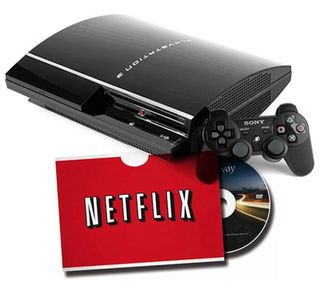
Netflix Streaming Coming To PS3 Next Month, Will Require Blu-Ray Disc To Play

Netflix-logo-with-playstation-3-console So much for my bet that Netflix would come to the Wii before the PS3. Today, Netflix and Sony announced that sometime next month, Netflix streaming will come to the PS3. Initially, users will be required to insert a Blu-ray disc in the PS3 which will take advantage of Blu-ray's BD-Live technology to access the Netflix interface.

The disc, which is free for all Netflix members and can be ordered at www.netflix.com/ps3, is a temporary solution, but Netflix is not disclosing when the embedded PS3 solution will replace it. While the PS3 is clearly a great fit for Netflix streaming, I'm still surprised that Netflix would raise their fourth quarter guidance based on this news. With the streaming not due until sometime next month, and users having to first order the disc, I can't imagine that so much streaming takes place in about a six week window, that Netflix things it will impact earnings. To date, Sony has sold just under 9M PS3 units in North America and it's going to be really interesting to see the customer adoption percentage of Netflix on the PS3 in this quarter. It took about three months for 10% of Netflix's members to use the Xbox 360 which has an install base of about 6M more units than the PS3.

The PS3 joins many other Netflix streaming compatible devices including the Roku, Xbox 360, TiVo, Internet TVs from Vizio, LG Electronics, Sony and Blu-ray disc players from Samsung and Best Buy’s Insignia brand. Pretty soon it's going to be easier to make a list of the devices Netflix isn't on.

Netflix Streaming Coming To A New Device, I’m Betting It’s The Wii

On yesterday's earnings call, Netflix CEO Reed Hastings said that sometime this quarter, Netflix's streaming service will be coming to a new consumer electronics device. As a result of this forthcoming offering, Netflix said it was raising their guidance for the fourth quarter.

Clearly, whatever device it is, it must have a lot of penetration in the market if Netflix thinks it will have that much of an impact on their earnings so quickly. While it could be  the PS3 or the Wii, if it's a gaming console, my money is on the Wii. To date, Sony has sold about 9M PS3 units in the U.S., while Nintendo has sold more than 25M Wii consoles. When Netflix streaming rolled out on the Xbox 360, 10% of Netflix's members used the service within three month, pushing more than 25M GB of video. Based on those numbers, I don't think the PS3 has a big enough install base to impact Netflix quick enough.

In order for Netflix to get a lot of traction quickly in the remaining two months of this quarter, the service needs to be coming to a device that has a really large reach. What other device in the home has an install base large enough to make it relevant? The Wii, Xbox 360 and PS3, in that order, are the only devices that have a large enough install base in the living room. The only other possible device I can think of would be a set-top-box, through a cable operator, but most of them would see Netflix as competition.

It's also interesting to note that Netflix launched their streaming service on the Xbox 360 almost one year ago, on November 19th. Many have speculated that Microsoft's deal with Netflix includes Microsoft having an exclusive deal for one year, to be the only gaming console to support Netflix streaming. If that is in fact the case, that exclusivity would be ending in 27 days and it would make sense that Netflix would be talking about a new CE device just a few weeks before.

Netflix To Offer Streaming Only Package, But Profitability Will Be Hard To Come By

On Netflix's Q3 earnings call, CEO Reed Hastings announced plans to take Netflix's digital offering international, sometime in the second half of 2010. Reed said Netflix plans to roll out a streaming only offering by starting small in one market, proving the model and then expanding into other countries. While such an announcement probably comes as no surprise to anyone and is simply the next evolution for Netflix, the company will have a difficult time generating profit from such a service.

Without any details on how much Netflix plans to charge per month for their streaming only service, you can't figure out their exact costs. But you can come pretty close. Between the prices they pay to the CDNs to stream the videos, which could be a bit more expensive overseas, and the price Netflix has to pay to license the content, users who watch enough movies each month would actually cost Netflix money. With some popular content, licensing and delivery costs can be as high as $0.50 per stream, if not higher. At fifty cents per movie, ten movies streamed by a customer just cost Netflix five bucks.

And how much can Netflix possibly charge for a digital only offering? I don't think they could try and charge more than $5.99 a month, which means Netflix is going to be playing the laws of average when it comes to video consumption. Netflix is going to have to hope that those customers who tax the system and stream a lot of movies each month end up being offset by a larger percentage of customers who only stream a few movies each month. That's a hard business model to forecast when you're trying to guess the consumption rate by consumers, for a brand new service. Clearly, that's one of the main reasons why Netflix is going to start small, in a yet to be announced region and use a lot of that data they collect as guidance for the business.

On the call Netflix said that 42% of their of their subscribers had streamed at least 15 minutes of video in the last quarter. While the number of minutes sounds really low per subscriber and makes it sound like a streaming only service would be profitable, keep in mind they broke out that numbers across nearly half of their subscribers. The real question is what percentage of minutes did the top 10% of their customers make up? My guess is that a much smaller percentage of the overall base of customers makes up the vast majority of minutes watched.

The other interesting part about this announcement is that right now, Netflix does not have the international rights to a lot of the content they stream in the U.S. I don't know what percentage of content is U.S. only, but clearly Netflix is going to have to make a lot of new licensing deals for content relevant to the territories they end up launching in. That alone would keep Netflix from having a large catalog of inventory at launch, which is probably the reason why they won't offer the service for at least another eight months.

It's going to be really fun to watch how this offering does in the market, what region Netflix launches in first and what type of consumption numbers they are willing make public once the service is up and running. This is going to be a great test for a lot of other content owners, like Hulu, who we know are going to launch a subscription based service shortly, and even mentioned today at a conference that it will be sometime next year.

Save The Date! We’re Throwing A Big Video Networking Mixer, Nov. 17th In San Jose

Thanks to AT&T, Brightcove, Episodic, Influxis, Limelight Networks and VideoPublishing.com, we’re throwing the biggest networking mixer we’ve ever had in conjunction with the Streaming Media West show. Come join hundreds of your peers on Tuesday November 17th for free drinks and lots of networking. The mixer immediately follows the closing of the Exhibit Hall on the first night of the show and starts at 7pm in the San Jose Marriott Ballroom.
We’re expecting well over 400 attendees soget your RSVP in now, bring a stack of business cards and you’re in.