Hands-On Review Of ESPN Streaming On The Xbox 360 (with video)

In June, Microsoft and ESPN announced a deal to bring over 3,500 live events a year to Xbox LIVE gold members via the Xbox 360 console. For the past week I've been testing the offering on my Xbox and overall, it's a pretty nice service. Content includes both live and on-demand videos of college basketball, college football, soccer, MLB, NBA, tennis tournaments and golf majors amongst others.

MVI_0062

The videos are the same ones you get from ESPN3.com providing your ISP has cut a licensing deal with ESPN. (Here is a list of all the current ISPs that have a license with ESPN) The quality of both live and on-demand content looks good on a 50" screen and maxes out at 720p. Buffering on my FiOS connection is very quick and live events start within a second. In addition to the live events, ESPN has a ton of on-demand content including shows like SportsCenter.

The ESPN offering is part of a new dashboard upgrade for the Xbox which also includes an improved Netflix streaming app and a lot more
movies and TV shows available for rental via the Zune video channel.

Overall, the quality and selection of the content with ESPN is pretty good. The one thing I like about the offering is that it allows you to get content to your TV that's only available online, without having to use your computer or connect it to your TV. Microsoft isn't giving out the exact date when the new dashboard update with ESPN will launch, but did say it will be available just prior to Kinect being available, which is only about a month away.

I didn't have time to film the new Netflix functionality in the new dashboard, but you can check out a video of it over at Joystiq.

Sponsored by

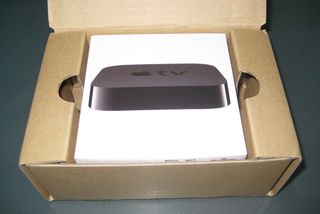
Apple TV Is Here: Unboxing Photos

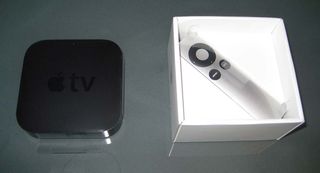
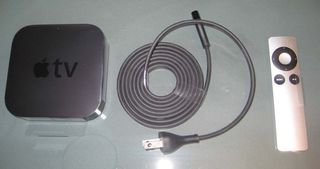
FedEx delivered my Apple TV's bright and early this morning and he's a few shots me unboxing one of the units. Later today I'll have a review up comparing Apple TV to Roku and I'll also be opening up a drawing and giving away an Apple TV to one lucky reader of my blog. If you're interested in a Roku, I'm giving away one of their new XDS units right here.

IMG_0057
IMG_0058
IMG_0059

The Online Video Industry Is Flying High Right Now, But It Can’t Last

Today, just about any company involved or associated with streaming movies or TV shows over the Internet seems to have evaluations that we haven't seen in quite a few years. Companies like Netflix, Apple, Akamai and others have share prices that seem to be based more on excitement, rather than basic business fundamentals. While there is nothing wrong with being excited about what's taking place in the market and the growth we are seeing in digital content consumption, many have now set expectations for these companies that simply can't be achieved.

I do a lot of calls with institutional money managers on the buy and sell side and lately, far too many of them are getting all caught up with the idea that online video is going to somehow replace cable, DVDs, or other forms of media. The fact is that today, digital content offerings from the likes of Hulu, Netflix, Apple and Amazon are a compliment to traditional media. There is no doubt that digital is growing, but online video is not replacing cable and streaming movies are not replacing DVDs today, or any time soon. Seismic shifts like that don't happen overnight or over a few years but rather usually over a long period of time, measured by a decade or more. To put it in perspective, Netflix has only been streaming for three years and while they have been the hands down leader, DVDs and cable TV are still around in volume.

When you look at the kind of money Netflix is spending to license content for digital, there is no way to run the numbers to show that Netflix can possibly sign up enough new subscribers over the next five years to cover their $1B licensing deal with EPIX. Yet in the past six months Netflix's stock has gone from $74 to $165 a share simply due to excitement. Financial analysts seem to be asking more about the rate of growth rather than how these services work, what the quality looks like, what devices they work on and what the business model looks like. I am amazed at how many financial analyst pieces I read where the author talks about a particular streaming service yet admits they have never used it. How can they possibly have tens of millions of dollars tied up in a company yet haven't spent $99 to buy a box and actually use the service for themselves?

I see a lot of investors making decisions based on three to five year projections of the size or growth of the industry while ignoring the reality in today's market. I keep hearing about devices, yet 95% of the time when I ask someone on Wall Street how many Roku's, TiVo's or broadband enabled TVs have been sold, they have no clue. How is that possible? How can you track or invest companies in this space who's sole growth is dependent on these devices yet not know how many have been sold, how they work or what the service looks like?

The last thing we need is another
bubble, yet I'm afraid that what we currently have. I keep hearing or
reading things that imply that the ad dollars from TV are flowing to
online. Online video advertising is absolutely growing, but lets keep things in
perspective. Last yet
the online video advertising market was around $500M, the broadcast TV
ad market was $60B. One is not putting the other out of business. And while digital video consumption is growing, it's not growing as fast as some may think. NPD just released numbers stating that 75% of all U.S. consumers did not
stream or download any multimedia content of any kind in the past three
months. That's the kind of data we need more of in the market to keep things in perspective.

Now I'm sure some are going to comment that I'm always negative or I
always have to try and ruin someone's high but the fact is that setting
the proper expectations is crucial in the long term
success and growth of any industry which is all I care about. I'm not in this for the short-term and I don't play stocks. I've been in this industry for
fifteen years and I want to be in it for another fifteen more. But in order for
that to happen, the market needs to evolve into services that can
become profitable and sustainable on real profits, not hype or future projections. Just take a look at how many companies in this space
are actually profitable today. Very, very few. To help them get there we
need sensible, rational thinking with expectations they can meet. Not
evaluations based on wild projections and statements about one service
killing off and replacing another.

I hate to say it, but the current bubble we are in is not going to be able to last much longer. Some of these companies are going to have to get knocked down and many on Wall Street are going to have to come back to reality. We need more folks looking at the core fundamentals of what companies have to offer as opposed to that day trader mentality which is simply trying to figure out if a stock will go up or down the next day.

Disclaimer: I have never bought, sold or traded a single share of stock in any public company ever.

Microsoft Answers Your Questions About Encoding, Codecs and Silverlight

Microsoft_Expression_Encoder_4 StreamingMedia.com recently hosted a webinar entitled "Encoding Workshop: Best Practices and Strategies" and attendees had quite a few questions about Silverlight, SmoothStreaming and other Microsoft technologies. So Allan Poore, Principal Group Manager for Expression Encoder at Microsoft nicely answered some of the most common questions below. You can also view the webinar on-demand and if you have additional questions about Expression Encoder, you can email Microsoft for answers.

Question: What are pros and cons of using H.264 and VC1 for Silverlight Smooth Streaming? Why would you select one over other?

Answer: Smooth Streaming's VC-1 implementation can support 2-pass VBR, adaptive GOP length, and dynamic frame resizing. The H.264 implementation is like the old VC-1 CBR Smooth Encoder, with a fixed GOP length and 1-pass CBR only. In general, VC-1 will have better results for Windows and Macintosh playback, particularly when CPU performance is a bigger limitation than bandwidth.

Continue reading »

Free Giveaway: Win A New Roku XDS Streaming Box

Xds-home-small Last week Roku announced new boxes and after using the Roku XDS for a week, outside of a gaming console, Roku is still my favorite box in the market for video streaming and will soon have support for Hulu Plus. I've bought a top-of-the-line model, the Roku XDS and will be giving it away to one lucky reader of my blog. To enter the drawing, all you have to do is leave one comment on this
post and make sure you submit the comment with a valid email address. The drawing is open to anyone with a mailing address in the U.S. or Canada and the winner will be selected at random on October 11th. Good luck!

Confirmed: Hulu Coming To Roku Streaming Boxes

Unknown (Updated 9/28: Roku has announced Hulu Plus will be coming to all Roku devices later this fall.) Last week I got sent a photo of a Hulu channel on the Roku home screen and have confirmed that Hulu will be coming to Roku devices shortly. While both Roku and Hulu said "no comment" when I asked them about it, I was able to confirm with two of Hulu's content partners that Roku owners will soon be able to get Hulu content. While I don't know for sure whether the Hulu content will be free, my initial thought is that it will probably only be Hulu's paid service, Hulu Plus.

Since Hulu Plus was launched, Hulu has been hard at work to get on more devices in the market and Roku's box is a good match. It also makes Roku's newly announced boxes last week even more valuable, but Hulu Plus still needs to really launch in the market and come out of invite only mode before anyone can judge their success. It will also be interesting to see how much value consumers put on Hulu Plus now that NBC has licensed a lot of the same content in Hulu Plus to Netflix.

Want one of the Roku's brand new boxes for free? I'm giving one away right here.

Roku Announces New Boxes, USB Support: Hands-On Review (with video)

Roku just announced three new streaming boxes with a whole host of new features. I've been using one of the new boxes for the past couple of days and love the new functionality that's been added. The company has made some really nice improvements to their lineup, yet isn't raising prices at all.

MVI_6373

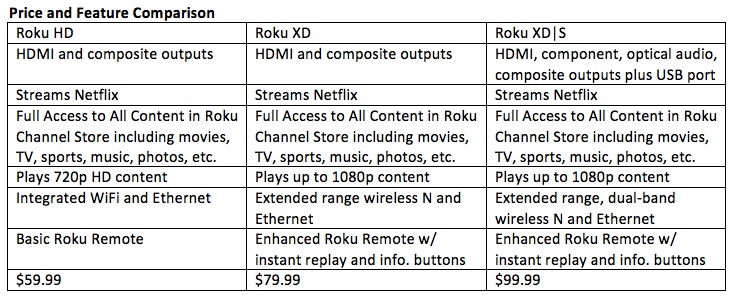
Roku's new lineup is called the HD, XD and XDS and still has the pricing tier of $59.99, $79.99 and $99.99. The cheapest model supports 720p while both models in the XD category support 1080p. All three models have HDMI and composite out with the $99 model also offering an optical audio and component port. WiFi is built in on all three units with the more expensive model sporting dual-band support. All three units are available for order today from Roku.com.


 Roku-sheet
But the biggest upgrade for Roku is that the $99 model now supports the playback of local contact connected via the USB port. Roku supports .mp4 playback today and will be including support for .mov next month. I've been using a flash drive and also an external hard drive via USB and 1080p videos look great.

All three Roku models ship with a new remote and the two XD models support what Roku calls "instant replay". The technology allows you to skip back in 10 second increments while a video is playing without having to re-buffer the stream. I don't know how Roku is doing this and have asked for more details on the technology but the feature is pretty unique for a streaming device. Roku has confirmed that consumers who have older Roku models can take advantage of the instant replay feature simply by purchasing a new remote.

Overall, it's pretty hard to find anything wrong with Roku's new lineup of streaming devices. The new boxes are 40% cheaper than the original model and all three now support HD. If Roku adds support for video formats outside of just .mp4 and .mov, Roku's higher-end box becomes even more valuable. The only thing I'd like to see added in the next revision is a security slot since these devices continue to get smaller and can easily go missing from dorms rooms and other high-traffic areas.

While some people want to compare Roku to all kinds of other stand-alone devices like Boxee, Google TV, Xbox 360 etc., only Apple TV and Western Digital's WD TV Live are really competitive to Roku. But with Roku having support for 1080p, the ability to support playback of video and photos via USB and an open SDK, not to mention 75 channel partners, Roku clearly beats the new Apple TV hands-down.

Keep an eye on my blog next week as I'll be giving away a new Roku XDS unit to one lucky reader.