Condensed News From CES: The Stuff That Matters

Last week I read through over 3,000 posts in my RSS feeds covering news from the CES show. I've sorted through all the noise, stripped out all the releases about WiFi washing machines (seriously), and condensed it down to bring you the most important topics pertaining directly to the streaming and online video industry. Since it's a long post, I've highlighted topics and company names to try and make it easier for you to find specific news.

On the streaming devices front, I didn't see many new devices that were all that interesting. What stood out for me and what I would consider to be the best new device announcement from the show is Vizio's $99 streaming box. When it launches later this year it will trump both Roku and Apple in functionally and will have the Google TV platform built in. (Here's why I think this device has the potential to do very well) Roku announced that their Roku LT and Roku 2 XS models are now available for pre-order in the UK and Ireland, due to ship at the end of this month. Forty channels will be available on the devices including Netflix and MLB.TV amongst others and Roku recently announced that to date, they have sold 2.5M boxes in North America.

In other device news, Western Digital announced that their WD TV Live player in the UK received a firmware update to support not only BBC iPlayer but also Netflix's new streaming service in that region. Microsoft announced that they have now sold 66M Xbox 360 consoles worldwide and have sold 18M Kinect motion-sensing systems in a little over a year since introducing the Kinect system to the market. While lots of $99 streaming boxes are available in the industry, so far, Microsoft and Sony still dominate the living room and combined, have sold more than 100M Xbox 360 and PS3 gaming consoles worldwide. As of now, that's still the device to beat for the battle of the connected living room.

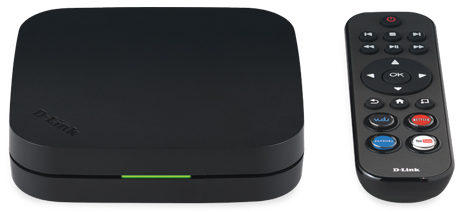
Boxee didn't announce anything new at the show, but was showing off their Boxee Live TV dongle that will ship at the end of this month for $49. To use the dongle, users also have to have a Boxee Box by D-Link and when combined, users will be able to capture live over-the-air TV broadcasts and stream the video via the Boxee box. There is no DVR functionally included however, so while this product is great for anyone who wants to get over-the-air live broadcasts, like sports, it's not a replacement for any kind of DVR-like functionality. One new device that supports the recording of video from over-the-air and was shown for the first time at CES is called the Simple.TV box. The box pulls in over-the-air channels and encodes them in MPEG-4 streams for playback to other devices. The box itself contains no storage but you can attach your own for DVR purposes but you might have to pay a monthly fee to really get the most out of the box.

Connected TV platforms were a big theme at CES this year and while broadband enabled TVs and Blu-ray players are the future mass-market devices of this industry, that adoption is still many, many years away. Multiple vendors announced new offerings slated to hit the market later this year, but we'll have to see if they actually come out. Verizon announced a partnership with LG that will bring 26 live channels to LG's smart TVs and Blu-ray players but you have to be a subscriber to Verizon's FiOS TV service to use it. Samsung announced a similar deal with DirecTV to allow some of their 2012 lineup of smart TVs to access live broadcast and stored content without the need for a set-top-box.

I guess it's nice if you want to mount a TV on the wall and don't want to deal with a set-top-box, but how well will these services actually work? Will consumers be charged more for this functionality since the MSO stands to lose revenue from the rental of their set-top-boxes? And how many TV models from Samsung and LG will actually support this? Will they be affordable or only the big screen TVs that cost more than $2k? It's really too early to know how successful this can be but it's no real game changer.

In other connected TV platform news, Panasonic announced new social TV features for their Vierra Connect TV platform with new apps from Skype, Disney, Facebook and others. The BBC launched new apps for connected TVs from Sony and is talking about launching an HTML5 version of their app for Virgin Media's TiVo boxes. Yahoo! announced more connected widgets and now has 8M TVs in the market that support their platform and 1M active users each month. Sharp announced it has launched their own connected platform, dubbed SmartCentral, due to launch later this year on most of their TV sets and also has a free media-sharing app that allows users to send photos, music and video via wireless to a Sharp Aquos Wi-Fi enabled set from their IOS or Android smart phone or tablet.

Probably the most interesting TV news in general was the announcement by Samsung that its top of the line TV model will have dual CPUs for running apps and will feature something called "Smart Evolution". A feature that will let users to swap out the dual core processor for something more powerful down the road if they want to upgrade. That's interesting as I don't believe I've heard of another TV manufacturer doing that, but it also concerns me that it may be a sign that TVs will need more processing power to deliver a truly good connected experience.

On the content side of the house, lots of news came out, but most of it was of little significance. The most interesting news was that Microsoft was working on building a subscription based service for their Xbox LIVE platform, but cancelled their plans due to licensing costs from the content owners being too expensive. However, Microsoft did announce some content deals at the show, saying that Comcast's Xfinity TV service will soon be coming to the Xbox 360. In addition, a new partnership with News Corp will bring Fox News, Wall Street Journal, Fox and IGN to the Xbox LIVE platform.

Showtime announced that Verizon FiOS customers now have access to ShowtimeAnytime.com via their iPad app giving customers access to 400 hours of on-demand content. Meanwhile, Comcast announced that customers will soon have access to AnyPlay, Comcast's offering that will allow customers to watch any channel in their subscription available for viewing, on the iPad inside your home. Sky announced a partnership with Zeebox and is creating a companion app for its scheduling and it includes social features and the ability to purchase merchandise.

The most important content news that came out of CES was that Warner Brothers is pushing the delay window for new DVDs rented by Netflix and Blockbuster from 28 days to 56 days. It's expected that this will also happen to Redbox when their deal with Warner Brothers is up for renewal at the end of this month. No surprise on this one as anyone who tracks the industry knows that once the studios created the 28 day windows, they sold more DVDs. So typical of the studios, they only care about money and have no interest in truly embracing digital. Consumers are saying they want and will pay for first run content in digital form, at a reasonable price, and the studios respond by saying "buy more DVDs". At some point, the studios will get burned, just like the music industry did.

DirecTV is raising rates and started notifying its nearly 20 million subscribers that it will be charging more for its programming services starting in February with most packages seeing an increase of $3 to $5 a month. TiVo rolled out their much anticipated software update for TiVo Premiere owners that includes the ability to do streaming from one Premiere box to another along with the TiVo guide finally being offered in HD. The company also released their TiVo Remote app in the Android Market. Dish Networks announced the addition of video on-demand streaming to its Remote Access iPad app and a new DVR called the Hopper that can record up to six shows at once.

There was a lot of tablet news from the show and the most revealing theme was that many tablets will be coming out this year in the $250 price range or less. NVIDIA and ASUS announced a $249 seven inch tablet with Ice Cream Sandwich (Android 4.0), but no release date as of yet. Viewsonic announced the ViewPad e70, another seven inch tablet with Android 4.0 set to be released in March for $169 (video). And if you thought that was cheap, MIPS Technologies announced the Ainovo Novo 7 Paladin, a $79 tablet with Android 4.0 that is currently for sale in China. While no date was announced, the company said it expects to bring this tablet to the U.S. at a similar price point later this year. Additional new tablets were also announced at the show, but all of the others were in the $500-$700 price range.

Regarding tablet apps, one awesome piece of news is that Sling Media confirmed that they will release a SlingPlayer app for Amazon's Kindle Fire, due to hit the Amazon App store for $29 later this month. While not yet an actual app in the market, TiVo demoed DVR video streaming to their iPad companion app, which looks really cool and hopefully, will one day be released. Dijit launched their remote control app for the iPad with a TV guide and the ability to control Roku streaming boxes. And last week, Amazon launched a workaround to Apple’s in-app purchasing restrictions by launching a Web-based HTML5 Kindle store specifically optimized for the iPad.

Of course Google had a lot to talk about regarding their Google TV platform, announcing new partnerships with LG and Samsung and expanded deals with Sony and Vizio. They also announced new deals with chip providers Marvell and MediaTek, which are expected to give the Google TV platform support on a larger number of devices. That said, Google's partners didn't seem to be promoting their support for the Google TV platform much, instead deciding to focus most of their attention on their own connected platforms. While Google mentioned Samsung as a new partner on their website, Samsung didn't do any media outreach promoting Google at all.

Sony has decided to take Google's TV platform off of TVs for now and announced a new network media player that supports Google TV, due to come out this summer. Vizio and LG both announced new TV sets that will support Google TV later in the year, but LG only announced two models and Vizio three. Support will be on sets that are at least 47" in size and also have 3D functionality, so don't expect them to be cheap. If you're looking for new 24"-42" sets in the market that will support Google TV, it doesn't look like that's going to happen any time this year. That said, Sony is still selling their Sony Internet TV with Google TV and has recently slashes prices on all sizes, from 24"-46". I have a few of these sets at home and really like them.

On the UltraViolet front, the big news was that Amazon revealed that rights for electronic sell through have been secured from one of the big studios, with CNET identifying the studio being Warner Brothers. Samsung also announced disc support for UltraViolet but the entire platform has a lot of problems, namely the fact that Apple, Disney and Netflix won't join, not to mention, lots of technical issues in making the service work correctly. The movie industry is betting big on UltraViolet and it won't be the first time things don't work out like they expected. Remember Movielink?

For all the news that came out, I didn't see anything that was really unexpected, aside from the Vizio streaming box. More TVs and Blu-ray players with the Google TV platform baked in, which we knew was coming, and lots of new models of TV sets, all pushing connected platforms. It's good to see more devices getting smarter, but sales of TVs have not picked up in the market and worldwide, is only expected to grow 2% this year. So it will take a lot more than connected TVs and apps to really get the market growing any time soon. Some of the tablets announced at the show look interesting, especially at those low price points, but lets see how many of them actually get released into the market.

Keep in mind that a large percentage of devices announced at CES each year never actually come out. Many get cancelled or delayed and in almost every case, vendors don't announce any specific dates of when their products will come out or what they will cost, especially in the case of connected TVs. So the jury is still out on what impact all of these news announcements from CES will really have on the market.

Sponsored by

Announcing The 4th Annual Content Delivery Summit: Call For Speakers Now Open

Screen shot 2012-01-16 at 6.59.05 PMI’m happy to announce that I have now opened the call for speakers for the fourth annual Content Delivery Summit, (www.cdnsummit.com), taking place on Monday May 14th, at the Hilton hotel in NYC and being held in conjunction with the Streaming Media East show. (#cdnsummit)

This year we’ll be covering a wide range of topics pertaining to the Business and Technology of Web, Acceleration and Media Delivery Infrastructure. In addition to focusing on the infrastructure of online video, the show continues to expand and will also feature presentations and discussions on:

  • CDN and cloud convergence
  • transparent caching
  • application acceleration
  • licensed CDN models
  • front end optimization
  • interconnection and federated CDN
  • dynamic site acceleration
  • content management and the CDN ecosystem
  • mobile content delivery
  • and much more

As I have done in the past, I design the conference program based on feedback from the industry. I am looking to get as much input as possible on which topics you think we should cover and how you and your company might want to be involved. I am looking to highlight as many real-world deployments as possible with customer presentations and case studies.

The program will be a combination of presentations from carriers, telcos, MSOs and content owners as well as a limited number of product demos from vendors. We’ll also have round-table panels and if you are interested in organizing and moderating a session of your own, please contact me ASAP.

While I appreciate all of the interest in the show each year, as a one day show I only have about 50 speaking spots. I can’t possibly fit all of the proposals into the program and I can’t stress enough how quickly things book up and you can’t wait till the last minute to contact me or submit your proposal. Please let me know as soon as possible that you want to chat and I’ll gladly setup some time for us to speak.

I look forward to your feedback and involvement in the show and as always, you can contact me at anytime via email or phone.

List Of Online Video Conferences, Tradeshows and Events

I often get asked by others what online video conferences and events take place in the industry and I thought it would be helpful for me to share a list of the events I track. While this list is by no means complete, I tried to keep it to events where video is the core focus. If you think an event is missing from this list, please add it to the comments section. Most of these links go the 2011 shows since many events have yet to announce 2012 dates.

Also, some of these events I’ve never heard of before, so do your homework and get references before you spend any money exhibiting or sponsoring them.

These are events that, as far as I know, are no longer taking place:

  • AlwaysOn On Media Summit
  • Broadcast Live & Video Forum
  • BRX Video Summit
  • ClickZ Online Video Advertising Forum
  • Content Delivery Economics
  • Digital Media Summit
  • Driving Digital Content
  • Digital Entertainment 2.0
  • EconSM Conference
  • Future TV Show
  • Future TV Show Europe
  • IP Media Expo
  • iTV Con: Internet Video Conference and Expo
  • Mobile Content World Summit Europe
  • Mobile TV World Summit Europe
  • Mobile TV and Video Summit
  • New Video Summit
  • NewTeeVee Live
  • Online Publishers Association Europe
  • OMMA Video NY
  • Outfront Conference
  • TV Over Net Europe
  • VideoOnTheNet
  • Video Search Summit
  • Web Video Summit

Akamai Now Has A VP/GM For Their Licensed CDN Initiative

Over the past few weeks, I've been getting many questions from Wall Street analysts as to when Akamai will hire a VP/GM for their licensed CDN (LCDN) initiatives. Normally I don't highlight when vendors fill job openings unless they are at the C level, but in this case, since I'm being asked so often I'll share what I know. While Akamai didn't respond to my request when I checked with them recently about the position being filled, I have learned that Akamai has promoted someone internally to fill the position and the job opening has since been removed from Akamai's website.

Lior Netzer, who was the VP of mobile network strategy at Akamai is now taking on the role of VP/GM of carrier products at Akamai. Lior worked at Akamai from 1999-2002, left Akamai and started some mobile startup ventures, and then came back to Akamai in 2010 to take on the VP role for mobile. For a product that is going to be targeted to carriers, it's odd that Akamai would promote someone internally instead of hiring someone from outside the company who has deep domain expertise with carrier software deployments and comes from a telco background. Also, considering that Lior was one of the main point people working on the mobile product with Ericsson, one has to wonder what that now means for the Ericsson offering and who Akamai is going to have leading that development.

Some in the industry have told me that no one outside of Akamai wanted the LCDN job as they don't think Akamai can be successful with an LCDN product and two people that Akamai was considering for the position essentially told me the same thing and didn't take the job. Whether or not Akamai can be successful with an LCDN product is anyone's' guess, but they have a lot of work to do to get the product to the market and they are pretty far behind EdgeCast and Jet-Stream who have been very successful with their LCDN offerings.

While Akamai talked a lot about an LCDN offering at their analyst day in November, I haven't seen the company provide any kind of guidance, as of yet, on how big of a market the LCDN opportunity represents. I get asked that question all the time and while I have never put out numbers on the size of the market, it's very small. If I had to estimate the market size for 2012 based on the revenue from some of the companies who offer an LCDN product, specific to video, and the data I collect from dozens of carriers and telcos around the world on what they are buying, I would say the total market opportunity for an video based LCDN offering is probably under $50M. It's small, we expect it to grow, but that won't happen overnight and as many know, carriers, telcos and ISP take a long time to test carrier grade solutions before they roll them out on their network.

Related Posts:

A Closer Look At Akamai's Strengths & Weakness For A Licensed CDN Offering

Akamai Developing A Licensed CDN Offering For Telcos and Carriers

Akamai Lowering CDN Pricing In Effort To Be More Competitive

About 45 days ago, I noticed Akamai was being more competitive when it came to pricing CDN deals and around that same time, Akamai's sales reps were highlighting this pricing reduction in emails to potential customers. One of the emails I received from an Akamai sales rep said, "as we are at the end of 2011, I wanted to keep you informed that we are significantly reducing bandwidth costs to be at a competitive stance." Initially I thought this might be an end of the year thing as many CDN vendors tend to lower pricing on selective deals in a bid to close as much business as possible in December. But in this case, that doesn't seem to be the case.

In checking these latest pricing trends with Akamai, last month, the company confirmed to me that they have lowered pricing, with the reasoning behind it being that they have reduced their internal costs and are passing those savings on to customers. While the company agreed to provide me with more details on which costs have been lowered, to date, I haven't received any of that info. It's possible that Akamai's costs associated with their CDN services have gone down, but since the company doesn't break out operating costs based on product, there's really no way to know if that's the case. Clearly Akamai is looking to try and gain more CDN market share and add more volume on their network by offering lower pricing and it just may work.

In a check with Akamai's competitors for CDN services, many of them stated that they have seen Akamai be much more aggressive in the last 30 days. What percentage of Akamai's M&E revenue is directly attributed to CDN services we don't know, but running a CDN is all about the economics of scale. If Akamai can get enough new business on their network fast enough and grow their traffic at a high enough rate, that can offset the decline in margins that comes from lowering pricing. And if any CDN can also lower their own delivery costs at the same time, that only accelerates the CDN cycle of lower pricing and higher volume. That's the underlying fundamentals of how a successful CDN operates but we won't know for some time how this lower pricing strategy will impact Akamai.

Naturally, many are going to ask me by what percentage Akamai has lowered their pricing. While I don't have an exact number, since multiple deals I have seen vary in size and commitment levels, it's enough of a decline in pricing to where Akamai is now pretty much at the same price as Limelight, Level 3 and EdgeCast, for the right sized deals. One of the last deals I saw, Akamai had quoted the customer $0.05 per GB for a monthly commit of 250TB a month. Previously, those sized deals, amongst all the vendors, was averaging about $0.07 per GB.

Akamai's year over year media and entertainment revenue declined or stated flat for the first three quarters of 2011 and the company has stated that the rate of volume growth on their network has slowed. So it's not surprising that Akamai is now looking to try and win back some wallet share with a lower CDN pricing strategy. This is the exact same approach Akamai took in Q1 of 2010 and they did gain some share last time they got aggressive, but they didn't grow traffic fast enough to make up for the pricing decline in their M&E business. Whether or not they can be successful this time around it's too early to know, but something to keep an eye on.

I'll be doing my annual CDN pricing survey with customers next month, which typically collects data from 500-800 CDN customers, so I'll have more detailed pricing trends to share at the end of Q1.

Disclaimer: I have never bought, sold or traded a single share of stock in any public company ever.

Related Posts:

A Closer Look At Akamai's Strengths & Weakness For A Licensed CDN Offering

Akamai Developing A Licensed CDN Offering For Telcos and Carriers

Akamai To Acquire Cotendo, Good For Akamai, Bad For Customers

More Thoughts On The Akamai/Cotendo Deal and Its Impact On AT&T

Vizio To Launch $99 Streaming Box, Trumps Roku and Apple TV In Features

Screen shot 2012-01-10 at 6.37.06 PM[Updated August 21, 20102: Check out my review of the new Vizio player at: “Vizio Co-Star Review: Hands-On With Vizio’s New $99 Streaming Box“]

At the CES show, Vizio announced a bunch of new TVs and computers, but the most interesting product they briefly mentioned was a new box called the Vizio VAP430 Stream Player. Vizio’s press release didn’t include a lot of details on the device, but Vizio was kind enough to answer a lot of questions for me in a phone interview late Tuesday.

The box, which will launch in the first half of this year in the U.S. only, will be priced at $99 and be sold exclusively via Vizio’s website. The box has built in ethernet, WiFi, two HDMI ports (in and out), DLNA support, one audio IR port and has USB to support the playback of local content. Vizio didn’t have a list of all the formats that will be supported for local content playback but did say it will support at least MPEG4, WMV and MP3 amongst others. The box supports 1080p streaming and is so robust, Vizio says it also supports 3D streaming and will have an app for OnLive’s gaming service.

On the content side, the box comes bundled with the Google TV platform which Vizio says they have completely re-skinned, thereby creating a new user interface for the Google TV platform. In addition the box supports content offerings from Netflix, Hulu Plus, YouTube, Amazon Instant Video, HBO GO, Wall Street Journal, Pandora, iHeartRadio, Slacker Radio, M-GO video-on-demand and other content services not yet announced.

Included with the box is a bluetooth touchpad universal remote with QWERTY keyboard. Vizio says the idea with the all in one remote is to allow customers to connect cable or satellite set-top boxes through the player’s built-in HDMI ports for a smoother experience for the overlay of live TV. Vizio says the user experience switching between live TV, Google TV and apps is similar to the transition that Apple has in OS X with spotlight. If that’s the case, it means the user experience and interface is going to be very fast and really polished. While the box is currently called the “Vizio Stream Player”, Vizio said they plan to brand the box with a better name at the time of release.

Over the years, a lot of companies have tried to compete in the $99 streaming box market, with Roku being the leader of the pack and selling 1.5M boxes last year. In addition Apple (Apple TV), Western Digital (WD TV Live), Sony (SMP-N200) and Netgear (NeoTV) also have offerings in the market, but none of them come bundled with the Goolge TV platform, have HDMI in and most don’t have DLNA support. Vizio has a great brand name, lots of penetration in the living room with their TV sets and if the device performs as well as Vizio claims, the company should sell a lot of these boxes.

Streaming Media News Roundup From CES (non device related)

With all the device and connected TV platform news this week from CES, any news not pertaining to devices gets lost in the mix. Below is a quick roundup of streaming media news I have seen that’s not TV related. I’ll have comments on all the device news from CES shortly.

Investcorp Acquires Stake in Thought Equity Motion

EdgeCast launches licensed CDN program following global deployment of two major carrier CDNs

Akamai Advances its Intelligent Platform to Address New Business and Consumer Needs for the Online Entertainment Industry

Level 3 Selected by iMusti, Global Provider of Music and Video Content, to Deliver Caching and Download Service

Cisco Advances Its Videoscape TV Platform with ‘Video in the Cloud’

VBrick Systems Delivers ‘Technology Firsts’ with Next Generation Video Encoding Appliance

CSG International Demonstrates Groundbreaking UltraViolet Direct-to-Consumer Content Experience at 2012 International CES

Shodogg Launches at CES and Radically Transforms Streaming Video Delivery by Fueling Industry Expansion With Content Providers

Accedo and Verimatrix Partner to Accelerate Over-The-Top TV Service Delivery

University of Massachusetts Chooses ZiXi’s Video Transport Platform to Air Division 1 Athletic Events

Thoma Bravo Completes Acquisition Of Telestream

Dolby Leads Industry’s Transition Toward Providing Immersive Content Anywhere, Any Time, on Any Device

Vidyo Demos Multipoint Video Conferencing on Amazon’s Kindle Fire and Extends VidyoMobile Support to Android 4.0 ‘Ice Cream Sandwich’ Smart Phone

DTS Unveils New Multi-Channel Audio Encoding Technology for Digital Content Creation: DTS 5.1 Producer