Content Delivery Summit – Call For Speakers Now Open: CDN, DSA, FEO and More

banner.jogI have just opened the call for speakers for the 2014 Content Delivery Summit, taking place Monday May 12th in NYC. Now in its sixth year, the Content Delivery Summit is a one-day conference that brings together telecom carriers, service providers, premium content owners, and industry vendors for a detailed look at CDN platforms for the delivery of video and content acceleration. This is the place to meet those who are building out some of the largest public and private CDN deployments to date. Topics covered at the summit include:

  • Last Mile Video Delivery
  • Dynamic Site Acceleration
  • Transparent Caching
  • Front-End Optimization
  • Licensed/Managed CDN
  • Application Acceleration
  • Telco CDN Deployments
  • Mobile Content Acceleration
  • Cloud & CDN Business Models
  • Managing OTT Video Quality
  • CDN Federation Models
  • QoS Measurement Data

The summit will include case studies on real-world deployments, demos of new technology platforms and discussions on business model considerations. Previous speakers and attendees have included: Apple, Google, Netflix, Amazon, Comcast, Yahoo!, Time Warner Cable, Verizon, China Telecom, Deutsche Telekom, Telefonica, Orange, Korea Telecom, SK Telecom, Telecom Argentina, TeliaSonera, Telstra Global, Cox Communications, Charter Communications, ESPN, DIRECTV, AOL, YouTube, Viacom, eBay, LinkedIn and many others.

The deadline for submissions is February 21, 2014. If you have any questions on the submission process or would like to discuss your submission idea before you complete the form, please feel free to email or call me at anytime (917) 523-4562. As a one day summit, we have a limited number of about 50 speaking slots available.

Sponsored by

Apple Building Out Their Own CDN To Deliver Content To Consumers

AppleOver the past year, there has been speculation of when or if Apple would build out their own content delivery network for the purpose of delivering content to consumers. To date, all of the CDN deployments done by Apple have been for internal purposes only, but that’s about to change. For the past few months, those in the networking community have been discussing some of the new people Apple has recently hired, all of whom have a deep background in building out large-scale networks. These employees are part of a new group that was formed inside Apple last year, who are tasked with the build out of a new CDN for external use.

Historically, Apple has always relied on CDN providers Akamai and Level 3 to deliver Apple related content including apps, iTunes video, and software updates for their iOS and OS X platforms. Akamai has more of Apple’s business than Level 3, and while Akamai has never mentioned Apple by name, it’s widely known that Apple spent more than $100M with Akamai last year, for delivery of content and professional services. The news of Apple’s own CDN plans comes at an interesting time because Akamai announced a few months ago that they were in contract renegotiation with their largest media customer which would take place last quarter or the current one. While Akamai didn’t mention Apple by name, those who track the CDN market all know it’s Apple, especially when Akamai said the re-pricing would likely result in several quarters of negative revenue impact.

Since Apple is still in the build-out stage of their new CDN, it’s too early to know how this may impact Akamai and Level 3. We don’t know what scale Apple wants to build their CDN out to, what region(s) of the world they want to have more control over and how quickly they can get it done. Clearly, Akamai is more at risk than Level 3 though as Akamai’s contract with Apple is worth a lot more and Level 3 could still sell Apple other services it needs for their build out, like IP transit, fiber, co-location and other products and services Akamai does not offer.

Over time, more details will come out on exactly what Apple is doing and trace routes will tell us more about their plans as they change the way they currently deliver content. I’m most interested to learn the strategy Apple takes with regards to whether or not they work directly with ISPs and the decisions they make on the type of content they plan to deliver. What Apple is working on aligns with what all of the other big content syndicators out there have already built, including Microsoft, Google, Netflix, Yahoo!, Twitter, and Facebook; which is a considerable amount of their own distributed origin infrastructure, for both large and small objects.

What we still don’t know is how Apple plans to structure their CDN with regards to the type of content they will deliver. Apple could use it to handle more of their long tail content, the stuff that’s more difficult to deliver, since most of Apple’s content is not delivered from inside ISP networks. Or they could take the hot content and put that on their CDN and take the long tail content that’s hard to cache, and costly to build a CDN infrastructure to support, and offload it to the third-party CDNs. That would be the most economical way to do it, but I don’t know that economics is the key driver in why Apple is doing this.

I’m hearing that part of Apple’s reasoning for building their own CDN is because of performance issues with iCloud, with Apple wanting to have more control over the QoS of content going to their devices. Apple already controls the hardware, the OS (iOS/OS X) as well as the iTunes/App store platforms. Right now they control the entire customer experience, except for the way content is delivered to their devices. Since Apple does not own the last mile they won’t be able to have complete control, but having their own CDN would give them more control and security than they have now. The next set of questions to ask is what type of technology Apple uses? Will they go the open source route and built it in a non-proprietary way, or keep it closed? Some will also wonder if Apple might make their CDN into a commercial offering, but that wouldn’t make any sense for their business, unless they had some kind of content subscription service akin to Netflix.

It’s too early to know the degree of impact this will have on Akamai’s business with Apple this year as it takes time to build out CDN infrastructure to scale. When YouTube, Microsoft and Netflix all took their CDN delivery to in-house platforms, it took them about 18 months or more before they moved enough traffic away from the CDNs to impact their revenue. However, even in those cases, Microsoft and Netflix still rely heavily on Akamai, Level 3 and Limelight for a substantial portion of their content delivery needs, even to this day. So don’t count the CDNs out just yet. Apple still needs to execute, get to scale and some of the CDNs, primarily Level 3 and Verizon, could make up for lost CDN revenue or gain new revenue altogether, by selling Apple other infrastructure related services.

Apple didn’t respond to my request to comment on this story.

Moderator’s Wanted: Online Video Advertising, Mobile Video, Live Streaming & More

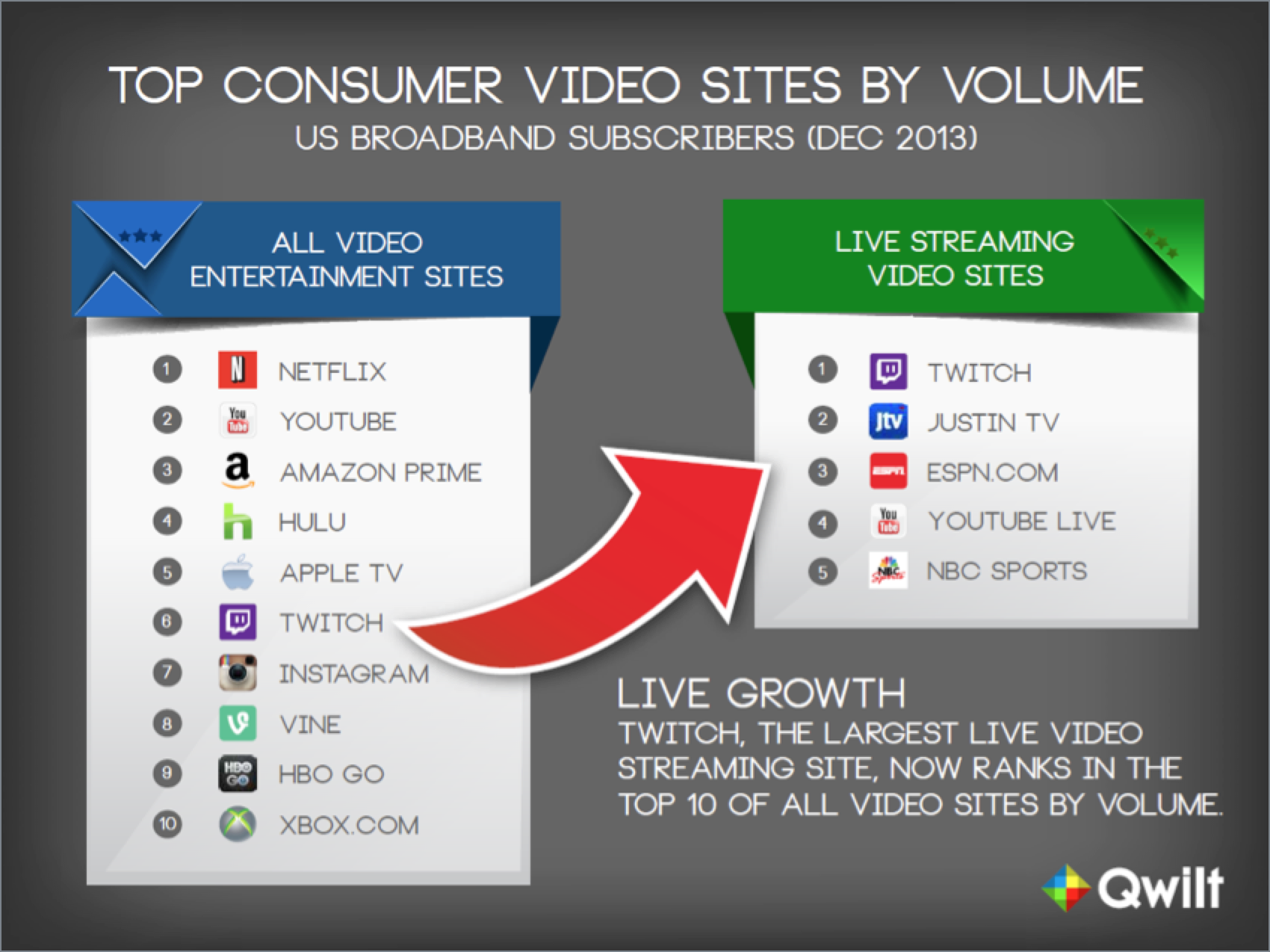
In the next few days, I will be finalizing the advance program for the Streaming Media East show, taking place May 13-14 in NYC. I have a few open spots left for those who want to moderate and lead a round-table panel. While I already have more than 600 submissions, I’m missing proposals on subjects pertaining to online video advertising models, mobile video, live streaming (specifically services like Twitch) and other topics. This is a great opportunity for you to showcase your knowledge on one of these subjects by leading a round-table panel. Be recognized as a thought leader in the industry and help facilitate a great discussion with other executives. As a moderator, you can help bring awareness to the rest of the market for a topic you are passionate about.

So if you want to get involved as a moderator, have a topic you really want to see in the program, reach out to me NOW. Email me, call me (917-523-4562) – but do it fast as all moderator spots will be gone in the next few days.

Right now I am only placing moderators and finalizing the topics for the event. I won’t start placing speakers till next week so if you are looking to get on a session, hang tight. I’ll publish the advance program next week and here’s a sneak peak of the presentations and sessions that are already confirmed:

  • TV Everywhere’s Impact on Changing Media Consumption Habits
  • 4K Streaming: Cost, QoS, and Cutting Through The Hype
  • Netflix’s Transcoding Workflow Explained
  • Paid Media on YouTube: Strategies for Brands
  • DASH In The Real World: What You Can Deploy Today
  • New Opportunities for Monetizing Premium Video
  • The Business of TV As An App
  • Monetizing Premium Video: How to Measure, Analyze, & Drive Value from Video
  • Content Management Strategies for Enterprise Content Platforms
  • Server-Side Ad Insertion: Reducing Video Player Complexity & Improving Reliability
  • The Future of Digital Entertainment in a Multiscreen World
  • Standards-Based Premium Content Consumption
  • Best Practices For Live Streaming Production
  • Fast Tracking Content Support on Connected Devices
  • Big Streaming: Technical Challenges of Large Scale Live Events
  • The Business of TV Everywhere
  • Unique Deployment Challenges for Mobile Video in the Enterprise
  • How Advertisers can Master the Spend Between Television and Digital Video
  • Streaming Deployments in Higher Education
  • OTT Services and Their Effect On The Bundled TV Model
  • How Video is Reinventing Education
  • How To: Producing And Deploying HEVC
  • How To: Encoding For Multiple Screens
  • How To: Building a DASH Video Player
  • How To: Choosing the Right Online Video Platform for Your Video
  • How To: Driving Commerce through Streaming Video
  • How To: Deploying a Video Management System

New White Paper Available: Delivering Video To Android Devices

Screen Shot 2014-01-28 at 1.27.48 PMFrost & Sullivan has just released a new white paper entitled “Mobile Video Distribution on Android: Challenges, Opportunities and Solutions“, which is sponsored by and includes mobile video usage data from Ooyala. The paper discuss how due to so many new devices coming to the market each year, running a multitude of different OS versions, content owners are having a hard time making mobile video playback work effectively and generating a profitable ROI. In particular, proliferating versions of the Android OS are rapidly creating a special challenge in delivering live video, especially for premium content owners.

Based on Ooyala data, last year, mobile and tablet video viewers spent more than half of their total online viewing time watching long-form videos. And 25% of total tablet viewing time was spent watching video content of more than 60 minutes in length. The white paper provides detailed data and charts on mobile video consumption, and shows how premium content consumption is growing at an even greater rate than video consumption in general. You can download the white paper for free from Ooyala’s website.

Thursday Webinar: Q&A Session on Advanced Transcoding Essentials

On Thursday January 30th, at 2pm ET, I’ll be moderating another StreamingMedia.com webinar, this time on the topic of, “Advanced Transcoding.” Take your encoding and transcoding knowledge to the next level with this instructional webinar highlighting the latest advanced techniques. Get details on delivering higher video quality at lower bitrates and how to prepare high-quality video for delivery to any screen using multiple formats. Full Q&A session in which your questions will be addressed. Please do prepare questions in advance – we will address as many as we possibly can, live.

Join our expert panel from Telestream, Haivision, Wowza and the 1,000+ other industry professionals tuning in to this high level, live technical web event, which is free too attend.

Google Launches Video Quality Report, Rates ISPs On Delivery Of YouTube Content

Screen Shot 2014-01-21 at 11.38.17 PMGoogle has just launched something new called the “Google Video Quality Report“, which ranks ISPs based on how well they deliver YouTube content. It’s an interesting website as Google also takes the time to explain, via simple diagrams, how video gets to consumers and the factors that can affect the quality of the video they receive. Right now the results are only open to those in Canada and Google won’t say when or if this will come to the U.S. Also, the main icon that says, “troubleshooting tips for improving video playback”, links to a page that says, “Page not available”. Clearly Google still has some work to do with the site and needs to roll it out to more regions if they want it to be useful, but this is a good first start in addressing how video is delivered and putting pressure on ISPs to improve it, just like Netflix has done with their ISP speed index ratings.

I have been complaining about the quality of YouTube video delivery for seven years now [1, 2, 3, 4, 5, 6]and I still routinely get buffering times of 20+ seconds for YouTube clips. So it would be nice to shame ISPs that to date, haven’t been very good in making sure they can deliver YouTube’s content without issues. It’s interesting to note that on their new website, Google calls out the fact that they will directly interconnect with any ISP who can reach their 70 points of presence worldwide without charge. This isn’t new with Google, they have been working with ISPs for years, but the problem is that some ISPs don’t care about the QoS of YouTube’s videos. I’ve even heard of some ISPs who know they have issues, but don’t want to work with Google, buy enough transit, or deploy transparent caching solutions to handle YouTube’s traffic over their last mile.

On the new site, Google also discusses their methodology for how an ISP can become “YouTube HD Verified”, but it’s confusing. It’s interesting to note that they use 720p video as the default, not 1080p. Also, the ISP has to deliver video with quality only 90% of the time, which seems like a pretty low bar. They mention that to become certified ISPs must provide consumers with “quick load times,” but don’t define what that means, even if you read through their methodology. Since this website is targeted towards consumers, Google should make it simpler and use a sliding scale of seconds when it comes to startup times, as a way to explain their methodology.

Google tried to do something like this in the past when in 2010, they launched the “YouTube Video Speed Dashboard”, with the goal of giving users an, “insight into what your YouTube speed looks like compared to the YouTube speed of users in other regions and different ISPs.” While that sounded like a good idea, the results didn’t tell you anything in terms of your “YouTube video speed” or the quality of the video you were viewing. At the time, the results were not based on data from actual streams, so YouTube’s video speed dashboard was nothing more than a speed test of your ISP.

Google says that their new Google Video Quality Report will be based on billions of YouTube videos watched across thousands of ISPs, but that’s not going to happen if the service only works in Canada. So hopefully this means they have plans to make it available to many more regions. If they do, we should finally be able to see some real insight into how ISPs are delivering Google’s content, but since I’m not in Canada and can’t see what the results look like, it’s hard to really gauge the service.

Updated Jan 23: Here’s what the chart looks like:

Screen Shot 2014-01-22 at 6.42.59 PM

Verizon’s Planned Acquisition Of OnCue Is About Cost Savings and Making FiOS TV 100% IP Based

I’ve read just about every piece on the web today about Verizon’s plans to acquire the OnCue assets from Intel, and the one question I haven’t seen anyone answer is, what exactly is Verizon getting for their money? What are OnCue’s “assets”? Intel has never been very open with regards to OnCue from a product or technology standpoint and as a result, no one other than Verizon really knows what they are acquiring. It’s impossible to evaluate what this deal means for Verizon, outside of the cost savings benefit, as too many questions are still unanswered. We don’t know how far along the OnCue technology is, how much additional development is needed or how quickly Verizon can deploy it at scale. Many assume it works perfectly right now, as is, but that’s a big assumption. You also have to think about the integration time that it would take Verizon to deploy this inside their network, which won’t happen overnight.

I’ve seen a few people write that Net Neutrality plays a role in this since Verizon is getting Intel’s “over-the-top TV service”, but that’s not accurate as Intel doesn’t have a service of any kind. Intel never brought any kind of service to the market, so Verizon isn’t acquiring a “service”, only technology assets and people. Others are talking about the impact this will have on Verizon being able to offer some kind of OTT content play, but Intel didn’t have any content deals in place, so that’s not why Verizon wants to acquire them. This deal isn’t about content, or even OTT as much as it is about infrastructure, costs savings and providing IP services at scale.

From the little I do know about Intel’s OnCue technology, what Verizon is getting out of the deal, and what I would classify as the most valuable part, is the technology to be able to make their FiOS TV service 100% IP based. A lot of North American MSOs talk about going all IP, but none have yet to do it, at scale, and from what others have told me, that’s what the OnCue technology gives Verizon. Verizon would have the only true 100% IPTV service in North America and the cost savings alone they would get from going all IP would by itself pay for the OnCue acquisition.

Anything Verizon gets from OnCue on top of that regarding the front-end consumer facing piece, like video playback interfaces, search and usability would all be an added benefit. Some have said that the user interface Verizon will get is “key to the deal”, but Verizon’s not paying hundreds of millions, if that sale price estimate is accurate, just to get a better interface. So initially this deal isn’t about accelerating Verizon’s content strategy or OTT play, at the core it’s all about costs savings and infrastructure, at scale. Everything else they get on top of that is gravy.

Verizon had a total of 6.1M FiOS Internet and 5.3M FiOS Video connections at the end of 2013.