Bending Spoons To Acquire Brightcove in an All-cash Transaction Valued at Approximately $233 Million

Bending Spoons, a Milan-based mobile app development company, announced plans to acquire Brightcove in an all-cash transaction valued at approximately $233 million. Brightcove shareholders will receive $4.45 per share in cash for each share of Brightcove common stock, with the deal expected to close in the first half of 2025. This deal is a natural progression for the company, and over the past 18 months, I spoke to multiple PE companies that were looking to take Brightcove private. It was only a matter of time before this happened.

While Brightcove has struggled to grow revenue over the past four years, it has a clean balance sheet and has projected a non-GAAP loss from operations of $0.1M — $1.1M for 2024. The company ended Q3 with $27M in cash and cash equivalents. Brightcove’s 2024 revenue guidance is $197.7M – $198.7M, so Bending Spoons is valuing the company at about 1.2x projected 2024 revenue. Brightcove’s 2023 revenue was $201.1M, 2022 revenue was $211.1M, and 2021 revenue was $211.09M.

If the acquisition goes through, this won’t be Bending Spoons’s first company in its portfolio tied to video. Earlier in the year, they acquired StreamYard (also known as Hopin) and previously acquired Evernote, WeTransfer, Issuu, Filmic, and Meetup. Earlier this year, Bending Spoons raised $155 million in its latest equity financing round, giving them a post-money valuation of $2.55 billion. It raised $340M in 2022, and earlier this year, Bending Spoons CEO and Co-Founder said the company had raised over $500M to date. In 2022, Bending Spoons announced it surpassed $100 million in annual revenue, and during a 2024 media interview, the CEO disclosed the company’s revenues were $392M in 2023 and expected to surpass $500M in revenue for 2024.

While it’s unknown what Bending Spoons’ plan is for Brightcove, the company has a history of mass layoffs and shutting down US operations for companies it acquires. After acquiring Evernote, Bending Spoons closed its operations in the US and Chile, laying off almost all the staff in those areas, and moved the business to Europe. After acquiring WeTransfer, bending Spoons laid off 75% of its employees. After Bending Spoon’s acquisition of Filmic, they laid off the entire staff, and after acquiring Meetup, they moved operations to Europe, resulting in mass layoffs.

Much has been written about how Bending Spoons regularly cuts the employee headcount of companies it acquires to operate them profitably and have a clear, tight product focus. While that’s not good for the employees of the companies it acquires, it’s simple business economics. While I have no insight into how Bending Spoons might staff Brightcove after the acquisition, I expect them to do a large round of layoffs as there will be much job overlap from the previous companies they have acquired. In a 2024 interview, the CEO stated that Bending Spoons had 300-400 employees. At the end of 2023, Brightcove had 671 employees.

Sponsored by

New Data Shows That 4K Bit Delivery Growth is Still Flat Across CDNs

New data shows that 4K bit delivery growth is still flat across CDNs. In 2022, I detailed how many streaming services were optimizing their encoding and, in some cases, reducing the highest rung in their bitrate ladder to save money. CDNs I spoke to then were very open about seeing a drastic reduction in the volume of video bits delivered due to bitrate optimization.

According to new data this month from CDN77, 4K video playback is still not significantly driving traffic growth across the CDN industry. Across all their customers, while 4K titles make up less than 15% of available content and approximately 10% of initial requests, they account for less than 5% of overall playout time on their network. Other CDN vendors I have spoken to recently reinforce what CDN77 is seeing, with some CDNs telling me that 4K bit delivery still makes up 5% or less of the total bits they deliver each month, flat from last year.

CDN77 recently analyzed its logs and spoke to several customers to get insight into the latest trends regarding 4K content libraries and playback. They found that 4K video takes up 12-15% of their clients’ content libraries, meaning up to 15% of titles are available in 4K. 8-10% of all initial requests are made for 4K, but interestingly, 4K represents less than 4% of the overall playout time.

This discrepancy is partially caused by the fact that while users (or players) frequently request 4K content, it often switches to a lower profile during playout, reducing overall 4K playout time. Interestingly, some clients admitted adjusting their ABR algorithms not to push 4K as a default profile even if end users’ connectivity allows. Instead, they force lower quality (720p/1080p) as a default, leaving 4k as an option for the client to choose manually.

Also, some streaming services, like Max, charge more monthly to get 4K streaming as an option. Their With Ads and Ad-Free Plan offer up to 1080p, but to get 4K, you must sign up for their Ultimate Ad-Free plan at $20.99 monthly. The cost for the 4K plan is more than double their base plan at $9.99 per month. And while no third-party CDN delivers video for Netflix, they charge $22.99 monthly for a plan with 4K streaming, more than 3x the cost of their Standard with ads plan at $6.99 monthly. Today, fewer subscribers are taking plans that give them access to 4K content, and most live events don’t even offer 4K video quality as an option. Amazon’s TNF games, YouTube’s NFL Sunday Ticket package, MLS Season Pass and Friday Night Baseball on Apple TV+ max out at 1080p. For all the talk in the industry about how sports events must be in 4K, content owners are very open that offering 4K as an option does not drive more viewership or revenue to the streaming service.

What we saw just after the pandemic with content owners looking to cut costs in their video workflow has not changed. There is still pressure to cut costs at the lower end of the bitrate spectrum, as content providers tend to lower bitrates for smaller qualities, ultimately offsetting total bandwidth volumes. Some within the streaming industry keep talking about the “growth” and “need” for 4K video quality, but as the data shows, those statements are not grounded in facts, and the data from CDN providers says otherwise.

Related Posts:
Rate of Video Traffic Growth Declining Across CDNs and ISPs As OTT Services Optimize Encoding Bitrates, See Little Demand for 4K Quality

With Streaming Services Cutting Bitrates to Save Money, Vendors That Bet on 4K for Revenue Growth Have Lost

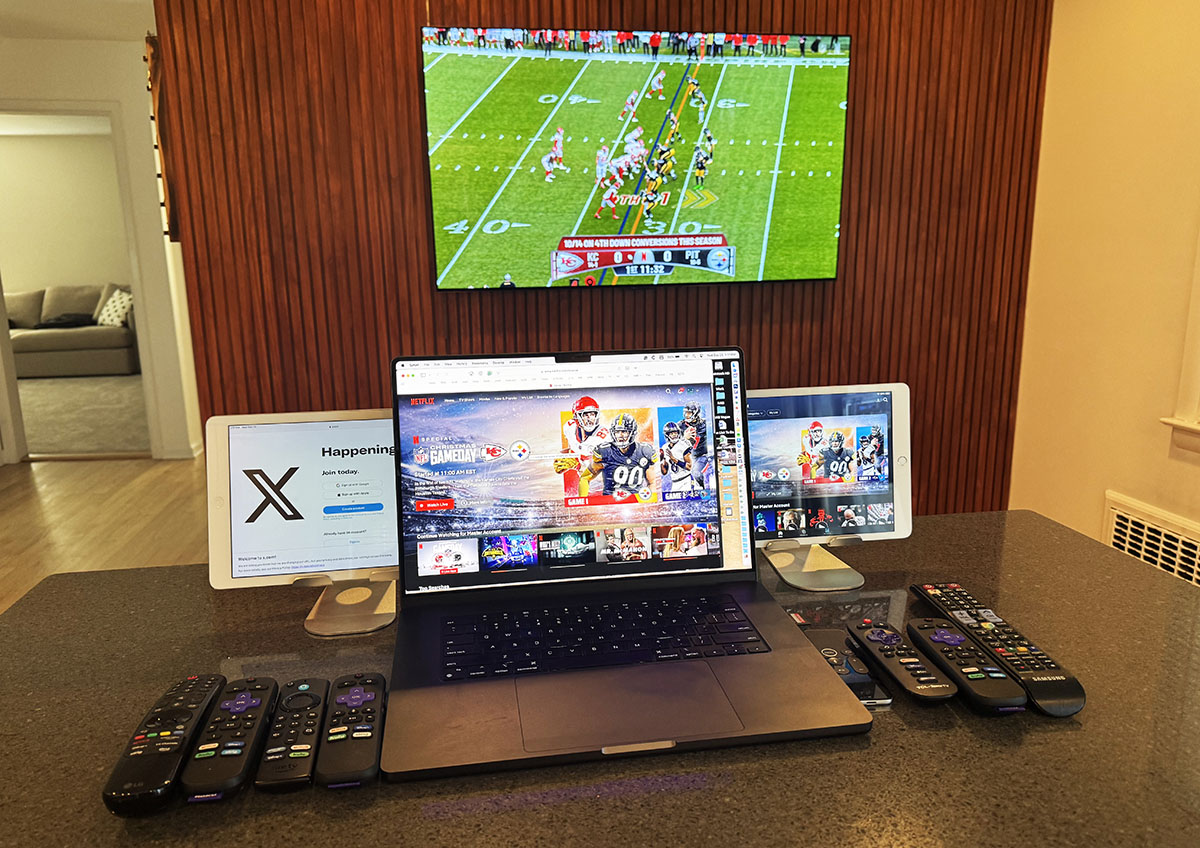
Debunking Myths From Netflix’s Boxing Stream: Focus On The Facts

Facts matter, except apparently in the aftermath of Netflix’s boxing event. This was Netflix’s 8th 9th live event (open to correction), not their first. Everyone is an expert in CDN and can “fix” Netflix’s live streaming, even though they don’t know the problems. Multiple vendors claim their cloud/edge/P2P/”insert anything here” solution could have solved the problem when some vendors are in beta with zero deployments. Many people share and compare numbers that are completely made up but state them as fact.

Having a fruitful conversation on the topic is hard since many refuse to take the time to educate themselves on the real numbers of past events. The volume of inaccurate posts I’ve seen on LinkedIn wastes people’s time. Stop posting made-up numbers. Here are a few points I keep seeing that need to be corrected:

  • FALSE: “It was Netflix’s first live event, so it will take them time to get it right.” This was Netflix’s 8th 9th live streaming event. (Love is Blind reunion, Netflix Cup, Chris Rock Special, 30th annual Screen Actors Guild Awards, UDUM 2023, The Netflix Slam, Tom Brady Roast, Joe Rogan Special)
  • FALSE: “The NFL games on Christmas will need capacity for 100+/110M concurrent streams”. The Las Vegas Raiders and Kansas City Chiefs drew an average audience of more than 29 million viewers on CBS — which made it the most-watched Christmas Day game in 34 years. Even with Beyonce as the halftime show, Netflix is not getting 110M concurrent streams.
  • UNKNOWN: “Only 0.1%/0.15%/1%/5% of the audience had a bad stream.” No one knows the percentage of overall users that had bad QoS, and people are pushing out numbers with ZERO sources, public or private. Using reports from downdetector is NOT a valid source!!!
  • FALSE: “Netflix spent ~$50M on the event.” Based on what the fighters said, the purse alone was more than $80M combined. Add marketing and production costs, and Netflix spent well over $100M to produce the event. I don’t know if they shared in the revenue from the venue ticket sales, and I have found no source of Netflix commenting on the topic. I also don’t know what Netflix made on sponsorships.
  • FALSE: “Akamai had major problems delivering the videos.” Netflix used its Open Connect infrastructure exclusively, and no third-party CDN was used. Some said, “If Netflix relied exclusively on its Open Connect CDN…” Why is anyone guessing? Do some traceroutes and talk to the vendors. All third-party CDNs were very open when asked and said they had no involvement in delivering the stream.
  • FALSE: “Netflix supplemented its own CDN with vendor CDNs for all their overflow traffic.” See above.
  • FALSE: “Netflix failed to test its capacity load properly.” You can’t simulate 65M concurrent streams in any real-world testing environment. Many want to point to “capacity” with ISPs, which I know, in many cases, was NOT the problem, as the ISPs told me.
  • FALSE: “The event can only be compared to the Super Bowl.” Super Bowl streaming viewership peaked at 8.5M last year; on TV, it peaked at 126.3M in 2017, and none of those 126M viewers had QoS issues.
  • FALSE: “Netflix has 8,000+ servers.” According to the last number they released, Netflix has close to 20,000 servers deployed across 175+ countries. In 2023, a half-rack of eight servers could deliver 200,000 concurrent streams. (Netflix did not say if that was VOD or live streams)
  • UNKNOWN: “Estimates put sign-ups from this event at 10% / Netflix signed up millions of new users.” Based on what source? 10% of what number?

For those making up numbers and publishing them without sources, and you have the title of “Research Director” or “Analyst,” shame on you. Playing fast and loose with numbers is not acceptable. All my numbers in the post are sourced from public blog posts and/or press releases from Netflix, CBS, and Paramount.

Akamai Wins the Bid for Edgio’s “Apps and Security Business Assets and Network Assets”

In Edgio’s bankruptcy asset auction, Akamai won the bid for Edgio’s “Apps and Security Business Assets and Network Assets.” Radware’s backup bid is for the Apps and Security Business Assets segment but not the Network Assets segment. The bankruptcy Judge will hold a hearing on November 25th to consider the transaction’s approval and transfer of the applicable assets. While network assets is the term used in the filing, I expect the deal includes Edgio’s delivery contracts and not their actual network assets tied to streaming and small and large object delivery. Lynrock won the assets for Uplynk and Interdigital, some of Edgio’s patents.

Adeia Sues Disney for Allegedly Violating its Video Streaming Patents tied to Disney+, Hulu and ESPN+

Adeia has sued Disney in Delaware federal court for allegedly violating its video streaming patents. Adeia also recently acquired some patents from Brightcove (for $6M), which originated from Brightcove’s predecessor, Unicorn Media. Some of the six Adeia patents in dispute involve “dynamic manifest generation, “key frame detection and synchronization,” and “user interface” methods.

Adeia says AT&T, Verizon, Cox Communications, Comcast, DirecTV, DISH, Spectrum, Frontier, Google, Paramount, Sony, TCL, Roku, and Samsung have all licensed Adeia’s media patent portfolio. Adeia was the intellectual property licensing unit of TiVo owner Xperi before Xperi was spun off into an independent company in 2022.

The patents in dispute are 9,762,639; 8,280,987; 9,860,595; 10,165,324; 8,542,705; 9,235,428. You can read the 168-page filing here: https://lnkd.in/eiqGgznC

Understanding The Impact of The Fed’s Interest Rate Cuts and Raises on Your Job and Employer

Fed interest rate cuts and raises directly impact your job and your employer. It is important to understand the correlation it has on companies being able to grow and invest in more employees versus having to cut back and do layoffs. During the pandemic, interest rates on the money loaned by financial institutions were so low, in some cases 1%, that businesses called it “free money.” In March 2020, the Fed cut interest rates to zero and held them steady for two years. With such low interest rates, companies could borrow capital and expand their workforce, invest in R&D, launch new products and services and push into new territories.

However, once the Fed started raising the interest rate, the short-term rate banks used to borrow from each other, many companies could no longer afford to take on capital and had to do more with less, leading to layoffs. Below is an example of the rate companies are paying who took on funding, and as you can see, the interest numbers are no where near what they were during the pandemic. Keep an eye on these interest rates going forward, they have a direct impact on your job and your company.

  • In April 2024, AMC Networks completed a cash tender offer to purchase outstanding 4.75% Senior Notes due 2025 and issued $875 million in new Senior Secured Notes due January 15, 2029, with an aggregate principal amount of 10.25%.
  • In January 2024, Fubo closed a privately negotiated exchange regarding some of its Convertible Senior Notes. The old notes were at a 3.25% interest rate, and the new notes are at 7.5% interest if paid in cash and 10% interest if paid in kind. This extended a meaningful portion of its debt maturities out to 2029 from 2026.
  • In May 2024, TelevisaUnivision announced that its wholly-owned subsidiary, Univision Communications, priced its refinancing of $1 billion of debt. This includes its offering of $500 million aggregate principal amount of 8.5% senior secured notes due 2031.
  • In May 2024, Charter Communications priced $3 billion in aggregate principal amount of notes consisting of $1.5 billion in aggregate principal amount of Senior Secured Notes due 2029. The 2029 Notes will bear interest at a rate of 6.1%.
  • In February 2023, Neptune BidCo US Inc., an affiliate of Nielsen, announced a private add-on offering of $500,000,000 aggregate principal amount of 9.29% Senior Secured Notes due 2029.

In the media, content, and cable industry, we have seen some interest rates as high as 16% on new loans and converting old debt to a low of about 5.5%. With the Fed having just announced its second rate cut this year, the hope is that interest rates will continue to go down, but it’s not guaranteed. All of this ties into the stability of your job and your company, and you need to watch the numbers and stay informed. Stay educated. The most valuable currency in the business world is (accurate) information.

Three CDN Misconceptions That Could Cost Content Providers

Outside of the few content owners that operate their own CDN, third-party CDN vendors deliver nearly every byte of Internet-related information, content, and data that exists. For all intents and purposes, their customers are almost literally everyone in the world.

CDNs provide two essential components for how we consume media today. First, they enable the wide distribution of content using a 1:1 distribution method. Thanks to the Internet and CDNs, content providers can deliver content whenever and wherever it’s requested and get much more information about their viewers (and their preferences) than broadcast TV ever allowed. This means content providers can essentially understand their audience down to a single viewer with the goal of offering individualized experiences so they stay engaged and subscribed.

Second, CDNs provide the scale needed to deliver all this streamed content, which amounts to tens of billions of hours yearly. To handle this level of distribution, CDNs work with Telcos and ISPs to serve streaming media to everyone requesting it, wherever they’re located, in the best possible response time and with the best possible quality. That’s a staggeringly huge lift, and it’s only getting harder as VOD and live streaming grows.

CDN Assumptions: What Content Providers Should Know

A few common assumptions about CDNs have caused the bigger picture to be often misunderstood, and I’m determined to shed more light on these areas. These assumptions might seem small or insignificant, but with increased streaming demand and major shifts like live streaming sports, they could negatively impact the media industry in the long term.

    • Assumption 1: Large CDNs are connected to all ISPs, even remote ones
      While large CDNs are connected to remote ISPs in “theory”, the idea that they are directly connected can be false. Think of the CDN<>ISP ecosystem like an onion. Global CDNs are only directly connected to the handful of larger networks surrounding them. In reality, most ISPs are indirectly connected to large CDNs, sometimes multiple network hops away (in the outer onion “layers”). These ISPs are often smaller and serve less populated subscriber networks – a fact that comes with its own set of problems around upstream capacity and potential impacts on QoE, especially when network traffic spikes.
    • Assumption 2: Large CDNs ensure packets are always delivered quickly and reliably
      While global routes allow content providers to send packets anywhere, they have no control over the efficiency of packet delivery from the CDN to the next connected network – or even the pathways data packets take as they travel across the Internet. Content providers may know that the packet arrived, but how well did it flow to the ISP network further downstream? Did it have to be sent three times because it got dropped due to network congestion?From the somewhat centralized position of a large CDN, it’s difficult to validate and verify every connection to every ISP, especially those located further downstream. Unfortunately, content providers often have little visibility into how quickly or reliably packets reach their destination. Blind spots in content delivery and performance metrics are becoming a big problem that could impact revenue or induce subscriber churn.
    • Assumption 3: Recent funding (e.g., fiber to the home) means we can now deliver higher-quality service in hard-to-reach networks 
      Global initiatives like Project Gigabit in the UK have recently been greenlit to fund new ISPs and AltNets serving broadband and wireless Internet in remote networks. While this is a big step in the right direction, the reality is that managing content delivery just got more complicated. With further-reaching access to fiber, content providers may not realize the backhaul capacity issues that ISPs now face, especially with the surge in live streaming. When network congestion drives consumption upstream (like live sports events often do), everything is ultimately connected to the same large CDN, and every smaller ISP suffers.Some ISPs even have to rebuild portions of their network to handle the scale, which can be costly and disruptive. Scale problems are already complicated, and live streaming with large concurrent viewers is setting up an even bigger battle. Receiving more volume at a higher rate means less time to solve an issue. With subscribers quick to complain on social media and treating contract-free subscriptions as disposable, content providers should carefully consider whether they have the right delivery partners in place.

As the demand for video content and live streaming continues to multiply and consumption becomes ever more individualized, these issues will only get more amplified and complex. In upcoming posts, I’ll expand on these challenges and how content providers can get ahead of them. Here’s a hint: thinking smaller and getting more granular will ultimately support the bigger picture.