Details From The Markman Ruling In Level 3 and Limelight Networks Patent Case

Markman
Over the weekend I got to read through the Markman order that was issued on December 10th in the Level 3 and Limelight Networks patent suit. While a Markman hearing typically does not bring a lot of surprises, there were some interesting details about the suit that came to light from the ruling.

The case was reassigned to a new Judge on September 17th of this year
and it is interesting, but not surprising, that the Judge was not
familiar with the technology being discussed. In fact, he even thanked
both parties saying that the materials they submitted and the technical
explanations provided "were all extremely helpful in
educating the Court about the nature of the technology at issue in this
case
." While the lack of technical knowledge by the Judge probably surprises no one, you'd think the court would try to assign the case to someone that has some previous experience with what is being discussed.

Level 3 and Limelight were originally in dispute over twenty two terms but came to agreement on four terms (Subscriber, Resource, URL, Default Path) leaving the court to rule on eighteen terms. The rest of the claim constructions in dispute were in reference to Level 3's 807 and 935 patents, which combined have 66 claims and make for some long reading. So if you want the details on each patent, hit the links for the filings.

The eighteen terms in dispute were Origin Server, Repeater Server, Repeater Server Network, Name, Rejecting the Client Request, Client Request for a Resource, Appropriate Repeater Server, Repeater Selector Mechanism, Subscriber Verifying Mechanism, Embedded, Handled, Obtaining a Client Request, Determining, Alternative/Alternate Path, Destination, Overlay Node, Dynamic Router and Real-time Traffic Information. 

For eleven of the terms, the Judge ruled in favor of Level 3's definition and for the other seven terms, the Judge used a combination of Level 3 and Limelight's definition and/or suggestions from the Court expert, Dr. Zegura, to create his own definition. The fact Limelight did not win any of the claims outright is really not surprising since typically the Plaintiff tries to assert very wide claims while the Defendant tries to narrow down the scope of the meaning. Some of Limelight's proposed definitions were too over reaching and some of Level 3's definitions were too broad and "technically correct but insufficiently descriptive."

There was one instance where Level 3 suggested to the Court that it should adopt its ruling on the definition of "Alternative/Alternate Path" because it was the agreed upon construction in the Cable & Wireless and Akamai suit. The Court didn't agree with the argument saying that "Akamai Technologies is a competitor of both Plaintiff and Defendant and a non-party to the instance case."

Overall, I think both sides got some of their definitions well established and while most would probably say that Level 3 did better, I don't think anyone truly knows if that is true until the case goes to court and we see what phrases and definitions are most important in the case. We can expect that to happen sometime next year.

Note: While I have worked as an expert on multiple patent suits, I have never worked on any patent suit involving any content delivery network.

Sponsored by

The Real Cost Of Licensing H.264: Pricing And Licensing Terms

H264-logo
Whenever StreamingMedia.com publishes an article on the subject of H.264, I get a lot of e-mails from readers saying that the licensing costs of H.264 are too expensive or are just too complex to even figure out. Those who sell proprietary codecs use the perception of H.264 licensing
as a labyrinthian ordeal as an ideal marketing tool to complement the
proprietary technology's "simple" license.

So what does H.264 cost to license? And is the licensing cost as complex to figure out as competitors make it out to be? To help clear up a lot of the confusion, StreamingMedia.com has just published an article by Tim Siglin about H.264 licensing costs breaking out the real numbers and how the different licenses are calculated. If you've always wanted to know the costs and licensing terms, this is a great article to read.

Review: Highwinds CDN Reporting System “StrikeTracker” Loaded With Functionality

Striketracker
Anyone who has read my blog long enough knows that I am always saying that content delivery networks need to offer a lot more functionality in their reporting and analytic packages. Earlier in the year, in a StreamingMedia.com survey of over 1,000 customers, more than 75% of them said reporting and analytics was the number one complaint they had with their current CDN. In April of this year, I posted the top twenty customer requests on ways content delivery networks could improve their offering.

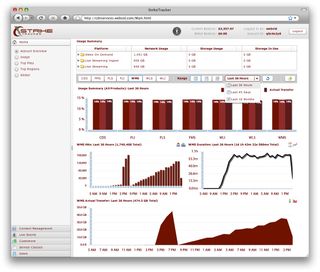
Seeing a real demand in the market, content delivery network Highwinds has been working for the past year on improving their web based reporting product and offering all of the functionality that customers asked for in the survey. In that time, I've had the ability to watch Highwinds product continue to evolve and have been able to get a few in-person demos along the way. To date, their reporting package is one of the best solutions I have seen from any of the CDNs in the market.

Highwinds reporting system, called StrikeTracker, enables customers to get real-time analytics, self-service live event provisioning and enable policy-based content-access protection, all via a web based dashboard. They currently offer multiple metrics for live events, something many CDNs don't have, and soon will give customers the ability to watch individual viewers signing on/dropping off of live events. All customer data is updated typically in 30 seconds or less so it provides actionable information during a promotion or campaign, not just after it has ended. While other CDNs offer near real-time reporting, typically it is at intervals of ten minutes or more.

One of the great things you notice right away when using StrikeTracker is that it was built in Adobe Flex, with a major focus placed on usability and providing a graphically-rich, yet streamlined interface that quickly highlights key statistical information. And because to date, Highwinds has primarily gone after resellers, they have spent a lot of time making sure the system provides reporting for sub-accounts and is viewable through APIs in the StrikeTracker console. Their sub-account reporting and billing data is also rolled up through a hierarchy of parent accounts and can be viewed by sub-account or as an aggregate for all levels.

Another really nice feature of StrikeTracker is that the system will go out to 24 months at the monthly roll-up level today. Many CDNs tell their customers that they don't hold onto raw logs for longer than six or twelve months and I hear from many customers all the time who are forced to have to download and save their raw logs every few months or risk them being deleted.

One thing I am always telling CDNs is that they should have a login to their reporting system, on their home page that anyone can demo at any time. It's not enough for a vendor to send a customer a PDF with a screen shot of their system or a document that gives a high-level overview. If you stand behind your reporting, then let any potential customer login and see the real functionality, without saying you can't because you don't wan your competitors to know what you are doing. To date, I don't know of any CDN that does this, yet it's the number one request of customers. Even when a CDN is pitching a customer on their services, many times they still don't give the potential customer a login to get hands on with the system which should make any potential customer wary.

While I asked Highwinds to give me a user name and password that anyone could use to login and see the system themselves, they said only one person can use the same user name and password at a time. So
while Highwinds is not able to provide an account that can be shared by a large group of people, they are willing to provide a unique login and user ID to anyone who is interested so they can see all the functionality in real-time. You can contact Mark at Highwinds directly and he'll be happy to set you up with an account. Highwinds also has a seven minute demo video of their StrikeTracker system which gives you a really overview of all the functionality.

While I took a few dozen screen shots of the system, it's easier for you to get an account to see it in person or watch the demo video for an overview. I think it's great to see Highwinds addressing a major concern of customers in today's market and it is really important for CDNs to remember that customers won't spend more money on services if they aren't provided with the tools they need to measure their success.

Streaming Media Industry Sourcebook Coming in February: Sign Up For Free

For those interested in the business, technology and content of online video, our annual Streaming Media Sourcebook will publish in February. It’s our biggest issue of the year, and it includes comprehensive year-in-review articles looking at the most notable developments in 2008, as well as a look forward at what’s likely to come in 2009. It also includes case studies and a slew of how-to and buyer’s guide features, including the following:

  • Choosing a Camcorder
  • Selecting the Right Nonlinear Video Editor
  • The 2009 Video Encoder Shoot-Out
  • Picking a Content Delivery Provider
  • How to Add Closed Captions to Online Video
  • How to Generate Automatic Speech Transcripts in Flash Video
  • Making Sense of the H.264 Licensing Labyrinth
  • The Live Mobile Video Landscape
  • and many more.

Also featured are a roster of case studies from each of the major verticals: entertainment, education, enterprise, government, and advertising. You can subscribe to the magazine for free, and if you’re interested in advertising, contact Joel Unickow.

Pacnet Looking To Acquire Public CDNs In Asia: CDNetworks or ChinaCache In Play?

Images
In a story on Bloomberg this morning focusing on Pacnet delaying their public offering, CEO Bill Barney is also quoted talking about acquisitions in the content delivery market. He's quoted as saying, “We’ve been looking at acquisitions not only in Australia, but also in Japan, China and India. We call them players in the content delivery space and we’ve been quite active in the last few weeks.” The article also goes on to say that Pacnet’s acquisition targets include two listed companies, the names of which Pacnet would not identify.

While there are a bunch of companies offering content delivery services in Asia including Broadmedia, CDNetworks, ChinaCache, J-Stream, NTT Communications and PCCW amongst others, CDNetworks and ChinaCache are clearly the leaders in the APAC market when it comes to CDN related revenue and number of customers. In addition, the two are pureplay CDNs who's focus is primarily on delivering content, as opposed to some of the other companies who have many services outside of CDN. Although ChinaCahe is not listed on any exchange, I don't think that rules them out.

I expect we will start to see even more carriers start to make some moves before long to enter the CDN market, especially in Asia and India.

CNN, Netflix and NFL Using Level 3 For Content Delivery

Over the past few days I have been using tools to examine DNS and CNAME records for a lot of the major sites on the web to see which CDNs are delivering their content. While there have not been a lot of surprises, I did found out that Level 3 is delivering videos for Netflix and the NFL and delivering small objects for CNN.

I have been saying for some time now that Level 3 is getting some good traction with their CDN offering, yet many ask me if that is that is the case, why hasn't Level 3 announced a lot of these big customers? While they have announced a few, like the NHL, in many cases customers don't let CDNs use their name for press or marketing outreach. This is quite common amongst all CDN customers and not unique to Level 3.

But by using tools that examine DNS and CNAME records, it's not too hard to figure out which CDNs are delivering the content. That's exactly what I found out when I examined where content from Netflix and CNN is coming from. While it was always clear that Limelight delivers the vast majority of Netflix's content, Level 3 is also delivering some of their videos and Netflix's business is not exclusive to Limelight as I originally thought. And while Akamai is still delivering all of the videos that I saw coming from CNN.com, many of the small objects on CNN.com are being delivered by Level 3's caching network.

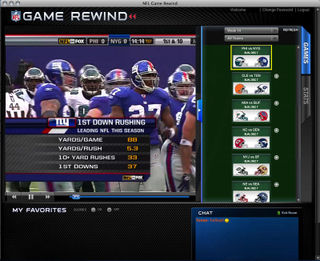
I've also learned that Level 3 is delivering the new NFL video on-demand service, "Game Rewind", which is really no surprise being that it is using Move Networks technology. While many may not know the connection there, Level 3 invested $6 million into Move Networks earlier in the year and as a result, gets a lot of Move's business. In addition to Game Rewind videos, Level 3 is also delivering the live stream for the NFL's Game Pass HD service; a subscription based offering that is only available to users outside the U.S. and Canada.

To gather most of the details, I used Fiddler, which runs as a “proxy” between your web browser and the network and listens to Port 80 (HTTP) or 443 (SSL). There are a bunch of other tools out there as well and if anyone knows of a Mac based tool, I'd love to know what it is.

Related:

Level 3 Opens Broadcast Encoding Centers: Ecosystem Offering Now In Play

Q&A With Jim Crowe, CEO of Level 3 About Their CDN Business

NFL Launches “Game Rewind”, Every Game On-Demand In HD With No Commercials

Nfl1

Updated 9/11/2011: NFL Now Offering Four Ways To Stream Games Online

Today, the NFL launched a new video on-demand service called Game Rewind that lets you watch every NFL game in HD quality, with no commercials. The service, which costs $19.99 for the season or $4.99 for a week pass, also provides DVR functionality and lets you watch up to four games at once. While it is not known exactly how quickly games are made available after they end, for now the NFL is saying within 24 hours, but it is expected times will be much shorter.

The NFL is using Move Networks for the service, which is the same technology partner used for the NFL's live video service called GamePass HD, available to those outside the U.S. As expected, the quality of video for Game Rewind is amazing and the NFL kept the interface clean and simple. While you can see a demo of the service at NFL.com/gamerewind, the interface I got through an actual account looks a little different. You have the option of just watching the game with no additional content, or including things like stats and chatting with others during the game or watch up to four games at once. Initial buffering times took about a second for me on my Mac, in Safari and I experienced no stuttering at all getting the 2.4MB stream.

Nfl2 While it's not ideal that the NFL would charge for games on-demand, at twenty bucks a year, it's very affordable and by providing HD quality and no commercials of any kind, I'd throw down twenty dollars for it. I'd prefer to see the NFL offer this kind of on-demand video with this kind of quality, for free, but with online video monetization models being what they are today, you can't fault them for charging viewers. With the NFL now providing this kind of video quality for two out of their three online video services, I hope the games they broadcast on Sunday night in conjunction with NBC start getting the HD treatment, or least encoded into a much higher video quality. 

Macbook Click on the image on the left to see what fullscreen looks like on my 15" MacBook. Keep in mind, the camera does not show how good the quality is, but it gives you an idea.


Related:

NFL Offers HD, Full-Screen Streaming, But Only Outside The U.S.

NFL's Live Streaming Leaves A Lot To Be Desired: Capping Users, Poor Video Quality

Is Adobe Paying The NFL To Use Flash?