Australian Telco Telstra Launches New Content Delivery Network For Video

Telstra_logo(1) Yesterday, Australian based Telstra announced the initial launch of their new content delivery network across their IP backbone with nine nodes deployed around Australia. The company also detailed their plans to spend $14M over the next three to five years to further expand their CDN and cloud computing efforts by building out twelve "network and media centers" at some of their existing ethernet aggregation points. The company's new CDN was deployed over the past nine months with help from Cisco.

Telstra executives commented that the new CDN will enable them to reduce their backhaul costs, lower their network latency and give them a footprint to put content closer to the customer. Michael Lawrey, executive director of network and technology at Telstra Operations was quoted as saying, "We also have flexibility building our own CDN that we wouldn't have with the likes of Akamai."

While some might interpret this quote as an indication that telcos and other carriers are moving away from using or working with the pure-play CDNs, that's not the case. For a regional carrier like Telstra, who only delivers content in Australia, it makes a lot of sense for them to build their own CDN in-house. Setting up a CDN to cover one region is not that costly nor difficult for a company that already own the network. But trying to do it on a global scale, across many different product lines, that's a completely different story. I expect we will continue to see more announcements of regional carriers and ISPs building out their own CDN services, but we have yet to see any indication in the market that the global carriers and telcos plan to follow suit. From what they are saying, that's still a few years off.

Sponsored by

Sonic Solutions To Acquire DivX: Their Success Or Failure To Be Decided By The Studios

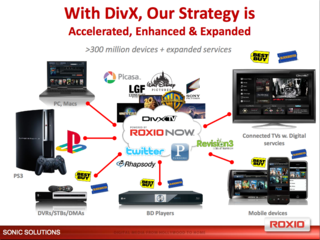
Screen shot 2010-06-02 at 12.07.55 PM This morning Sonic Solutions, best known for the backend white-label platform that powers Blockbuster and Best Buy, announced plans to acquire DivX in a cash and stock deal valued at $323M. The deal, which is subject to approval of the shareholders of both companies is expected to close in September.

For DivX, it marks the end of a long effort to find a buyer for the company and potentially positions their technology as part of a larger service offering in the market. The biggest concern with a deal like this is that both Sonic and DivX
are relying on the studios in order to be successful. Studio executives need to change their thinking and start offering
movies in the quality consumers want, at the price they want, and for
playback on multiple devices, but have so far been reluctant. While
DivX has a great track record of getting on lots of devices, their
commercial success has been limited by the fact that content owners have
not exactly made a lot of their content available for purchase in the
DivX format. It's been less than a year since some of the major studios
finally put some content online, but there hasn't been much mentioned
from any of the companies since then.

While I do think that there are some synergies for both companies on paper, some of the benefits that Sonic lists in their press release don't make sense to me. I see the value to Sonic in wanting to get their platform on devices, something DivX has been successful at, but don't agree that it now provides them with a, "more extensive solution for Internet video delivery including the dominant tools for content preparation in the cloud." DivX has never been successful as a stand alone video format on the web and that's not a market it can win. In fact, for all the video I watch each day, I've personally never had to download the DivX player to see any of it.

For DivX, web based video not been their focus and their success has really been on the device front where they say their technology, "resides on over 300 million devices shipped into the global market". The "cloud" based services that Sonic mentions in their release simply refers to where content is stored and how it is delivered, but that's not an area DivX has ever been involved with. Sonic may use DivX's technology to try and get into that market, but I suspect they will be best served only focusing on using DivX's deep relationships with the CE manufactures to get their RoxioNow platform on devices.

The thing that worries me when I see a deal like this though is how the release and associated documents that go with it make it look like the two companies now cover 100% of the market and somehow rule the world. The Sonic press release mentions over-the-top (OTT) video, cloud based services, retail storefronts and every type of device you can think of. I get the sense they want to be everything to everyone, for every device that can play back video.

On paper, some of the synergies between the two companies clearly makes sense. But Sonic's success or failure as a company is going to come down to whether or not the studios are willing to truly adopt digital offerings and start listening to consumers. Today's video offerings are not being held back in any way because of technology or any kind of platform limitation but rather by the studios themselves who still have not truly embraced digital.

Related:

Sony's Day-And-Date Strategy: Stream Movies For $24.95, For 24 Hour Rental

This Is Just Stupid: Digital HD Downloads Still Cost More Than DVDs

Movie Studios Just Don't Get It, Part IV: Pay More For Movies On USB Drives

Verizon Highlights My Use Of FiOS And Streaming For Web Commercials

As a FiOS customer, I’ve been a big fan of Verizon’s service and have written about my experience with the product many times over the past few years. Recently, Verizon has been using quotes from my blog in their marketing materials for direct mail pieces as well as on the Verizon.com website. And recently, I started guest blogging on Verizon’s website and Verizon sent a video crew to my house to film how I use my FiOS service to consume video to all the different broadband-enabled devices in my living room.


With a series of three video commercials now showing up on the web, I’ve been getting a lot of questions lately from folks asking me if I now work for Verizon. It’s a fair question and one that’s easy to answer. I don’t work for Verizon in any capacity and don’t get any free services in exchange for them using content from my blog or highlighting my use of streaming in their commercials. Of course, that’s going to have some asking me why I spend time promoting a service from a vendor I’m not getting paid by? The easy answer is that Verizon’s FiOS service is just that good and frankly, I can’t think of another technology innovation over the past five years that has had such an impact on how I work and how I use the Internet as a consumer. So I’m happy to promote something that works so well.

On a day when the FCC says the average residential download speeds are typically only half as fast as the maximum speeds advertised by U.S. broadband providers, it’s nice to know that with FiOS, consumers never have to worry about what they are getting. Thanks to Verizon spending billions to bring fiber-to-the-home (FTTH), their FiOS service always delivers what they say. So while I don’t work for Verizon, I’ll continue to do anything to help promote their FiOS service as long as it stays as good as it is now.

The Streaming Media West Show Is Coming To LA – Need Speakers, Workshop Instructors

New-SM-West-Logo For those that haven't already heard, the 2010 Streaming Media West show will be in a new city this year, taking place November 1-3 at the Hyatt Regency Century Plaza in Los Angeles, CA. This will mark the 13th year for the West Coast show and with the move from San Jose to Los Angeles, we expect the show to be bigger and better than ever.

While the show is not for another six months, I'm already actively working on the advance program and the call for speakers is now open. In addition to speakers, I'm also looking for moderators and potentially one or two workshop instructors. One of the workshops I want to add this year is on HTML 5 video, so if you can present on the topic and have prior training/teaching experience, please contact me ASAP.

I'm looking for all ideas, listening to all proposals and looking to pay
one or two people to help me program some of the show. If you're
interested in getting more involved on this level, please contact me ASAP.

With the move to LA, some might be concerned that the show might now only focus on media and entertainment subjects. But rest assured, we're still going to cover all of the business, technology and content topics we've covered at our previous shows.

With the show now in LA, and with all that goes on in the city, we're also looking to involve and work with as many local video organizations as possible. So if you know of a meetup group or association based around video, content creation etc. we'd love to hear who they are.

In addition, we're pleased to announce that in conjunction with the Streaming Media West show, we're once again having the two-day Online Video Platform Summit that was such a success last year. Hit up the website for more details on speaking and how to send in your speaking proposal.

Each year I go to plan a show, I get tons and tons of calls and emails from companies last minute who want to be involved in the event and are upset when the program is already filled. We do tons of marketing months before the event and a lot of the program has to be planned far in advance for these marketing purposes.

The bottom line is that NOW is the chance for you to have a say and make
an impact on the program. So if you have an idea, want to run something by me, have a question, want to moderate or get paid to help with the West show, the next 4 weeks is the time to contact me. You can send me email or call me anytime at 917-523-4562. I look forward to hearing from you.

If you want more details on the OVP Summit, contact Eric at 920-342-6263.

Report: New Apple TV To Cost $99, Subscription Service Needed To Go With It

Last week Engadget reported that Apple is working on their next-generation Apple TV, described as an "iPhone without a screen" saying it will retail for only $99. The report says the device will have capacity for 16GB of storage via flash memory and will support 1080p streaming. While any Apple device priced at $99 will sell well, if Apple offers a monthly subscription service similar to Netflix, then this truly could be a game changer for the industry.

Clearly the big difference with this new Apple TV is the fact that Apple is going to focus on delivering movies via streaming for rental or via some kind of subscription service, rather than consumers purchasing the content for download. With only 16GB of storage, the new Apple TV can't hold many movies but can act as the streaming gateway between iTunes and your TV. This also make sense since Apple has already said they plan to bring a lot of their content into the cloud when they open their new data center in North Carolina later this year.

If Apple does not offer some kind of subscription based service, the device will sell well if priced at $99, but will not truly be a game changer. Just renting one movie at a time is not a big deal and won't draw in a new group of consumers. From a hardware perspective, the original Apple TV wasn't lacking any functionality, it was simply too expensive and didn't have any kind of content service consumers wanted. But in the three and half years since the Apple TV was released, we've seen Apple launch each of their new devices with some kind of content lineup.

The hardware specs for the new Apple TV is not the big story, instead, it's how Apple plans to package their content lineup in the iTunes store for the device and what content owners will let them do. Apple can't make any money from a $99 device, so we all know there is going to have to be some kind of content based service offering and my guess is that it will involve some kind of subscription service.

Internet Video Distribution Will Not Displace Cable TV: “Cord Cutting” Is Hype

I know I am not the only one who thinks there is way too much hype within some segments of the online video industry and none more than the subject of "cord cutting". Far too many writers, bloggers and analysts are preaching about consumers dropping their cable service in favor of getting video content from the Internet when in reality, that's not happening in any large scale and shows no signs of doing so. I get the sense that many are simply writing for headlines and want to use scare tactics like cord cutting to create a false sense of panic amongst those who don't know better.

As the economy starts to show small signs of improving, it seems more people want to try to build this industry back up with hype rather than with cold hard facts. The online video industry has been through a lot of bubbles in the past and any vendor in this space will tell you they stink for business. Part of the bursting of those bubbles is due to many preaching about things taking place in this industry that simply aren't happening and as a result, are setting wrong expectations.

That's not to say the topic of cord cutting should not be discussed, but when many people use
the phrase, they make it sound like it's impacting the market, when it
isn't. In fact, the cable companies continue to grow their subscriptions
to TV year after year and more than 90% of U.S. households subscribe to some kind of pay TV service. Anyone who thinks the cable companies are dying
or that online video based content offerings even come close to what
cable offers in terms of reach, inventory and quality, is fooling
themselves and hurting the industry by implying it.

The cord cutting phrase could turn out to be the single biggest downfall in this industry, simply to do the fact, that's it's not taking place in volume. In fact, to even imply it, without mentioned that it's an isolated case is simply wrong. When some want to imply, suggest or predict that the cable industry is going to be taken over by an online video based offering, they setting up a lot of companies in this market to fail. Based on those wild predictions, vendors change their entire strategies, raise new capital for a market that does not exist and lose focus on the real business opportunities in the market today. Companies start believing the hype and get so focused on what they think is the "holy grail" of the online video industry that they lose their way. All we have to do is look at "TV Everywhere" as an example of this.

When Comcast first announced their TV everywhere service, now called Xfinity, the vast majority of bloggers and analysts fell all over themselves to talk about how good it was going to be and how it was the start of a new "TV Everywhere" revolution. The service was not even live in the market and blog post after blog post hyped the service like never before. Yet, now that the service has been out for five months, where are all those analysts who said it was the start of a whole new TV Everywhere revolution? When was the last time you saw anyone write anything about Xfinity? So far, it's has had absolutely zero impact on the market, yet how much hype surrounded it before it even launched? And now that it's in the market, where are those same writers and analysts who said it was going to change the landscape for pay TV? And I'm not picking on Comcast because three years before Xfinity, all the hype was around Joost and the impact it would have on cord cutting. How well did that work out?

Every month is seems like a new report is coming out that wants to imply that cord cutting is taking place and is going to ramp up over the next few years. A recent report from the Yankee Group predicts that 1 in 8 consumers plans to cut their TV service this year in favor of Internet options but rightfully points out that, "the decision to cut off pay TV services is an economic one." I know of many folks who have cut their cable service simply due to the fact that they don't watch a lot of TV to begin with and are simply trying to save money. But that has nothing to do with getting video online.

And by survey standards, even I would be classified as one of those eight users who the Yankee Group says, "will reduce their pay TV services" since I recently canceled my HBO service as I watch more cable shows than I do movies. But I didn't cancel HBO because I can get their content online, I can't. I reduced my pay TV services simply because I wasn't watching movies. Consumers do cancel services for other reasons besides just replacing them with a different distribution medium. I do like the fact that in the report, the Yankee Group does say that cord cutting is a, "small phenomenon now" which puts things properly in perspective, but sends quite a different message than the title of the press release which is, "New report finds consumers reducing or eliminating pay TV services in favor of Internet options." That's a bit of a mixed message.

Another report by Strategy Analytics estimates that, "the number of so-called "cord cutters" could reach more than 10% of US television households by the end of the year." What they don't say is why these consumers will supposedly cut the cord and whether the cord cutting is a result of a poor economy with people trying to save money, or because they are replacing that video consumption in some other way. This is just one example but there are lots of reports out in the market that use language that's very generic, yet also seems to want to alarm readers.

At the Cable Show last month, executives from multiple cable companies said so far, "there’s not any real evidence" of cord cutting and mentioned that telephone companies that reported earnings in May added about 500,000 net new subscribers combined in the first quarter. Or course, you can't always believe what a cable executive may tell you when it comes to online video, since they have a vested interest in not seeing more content move to the web, but it's hard to argue with the number of new subscribers for pay TV. Not to mention, if even 10% of all the current TV subscribers went to the web to get video at the same time, delivering that video on the Internet would not scale with a guaranteed quality of service (QoS).

Of course, just like the print business, we know the pay TV business is
being disrupted thanks to the Internet, that I am not debating. But instead of many thinking of
online video as a replacement for TV, it should really be thought of as a
compliment to it. While we each have our own opinions on pay TV
services, frankly I'm happy paying $95 a month for a 25Mbps FiOS
connection, tons of channels I actually watch, video quality I can't get
online and unlimited phone calls. Clearly some won't agree with me but
that's simply a difference in video usage, content tastes and perceived
value of the service. But to imply that any large volume of people are cutting their cable TV service in favor of online video, or that there is any data to show this is a major trend moving forward, simply would not be accurate.

Related:

Cable Companies Hyping Over-The-Top Video, But Where's The Business Model?

Some Industry Vendors Betting Big On TV Everywhere, Most Will Lose

The Promise Of TV Everywhere Is Doomed For Failure, Here's Why

TV Everywhere Offerings Will Struggle To Be Successful

Widespread Adoption Of VP8 Will Take Years, But Google Can Afford To Wait

While I agree with those that think Google making VP8 an open-source video codec is a big deal, even if it ends up having licensing issues, it's way too early for anyone to talk about the demise of H.264. It took years for H.264 to surpass VP6 and become the preferred video codec  and it will take years for VP8 to seriously challenge H.264. While initially the introduction of VP8 is bad news for content owners since it means more complexity in their workflow, over time it's really about giving them more choice, which is a good thing.

For Google, they know that VP8 is a long-term play, just like YouTube has been. Google is willing to spend the time and money to get VP8 widely adopted without the need for the codec to have to generate any revenue for any of their product lines. Google makes no money from licensing VP8 so this is not about money for them, not yet at least. Initially, VP8 will be just like YouTube. A platform that enables them to get mass scale and reach and plenty of time to integrate video into other major lines of their business.

As the browser wars continue to heat up and companies take sides on which video codecs they will support, Google's in a unique position. Not only do they own one of the fastest growing browsers with Chrome, but now they also own the VP8 video codec and control YouTube which has the most traffic of any site on the web. While some have suggested that all Google needs to do is convert everything on YouTube over to VP8 to get mainstream support for VP8, that by itself won't be enough. If it was that easy, then Google would not be working with all of the other hardware, software and platform partners they announced last week.

This is a long-term play for Google and one that involves multiple devices, which means they have to have hardware support. And even with the hardware partners they announced last week, we still don't know exactly what those hardware providers are going to do. While many partners were quick to say they "support" Google's initiatives, they haven't said exactly how they will do that or which future chipsets will offer support for VP8. The bottom line is that that true VP8 support is going to take years to get but Google is in a position where they don't need to rush the adoption. Google can take their time to do this right since HTML5 is still not ready for prime time and content owners still have plenty of time to devise content monetization models.

I'm sure some will judge Google based on the adoption of VP8 six months or even a year from now, but that would be short-sided thinking on their part. With the news Google put out last week and the groundwork they are laying for what will become of VP8, the real judge of VP8's impact on the market won't be truly felt for a few years.