 [Updated Sept. 4th 20102:Check out my new review at: “Roku 2 vs. Apple TV: How To Chose The Right $99 Streamer“]
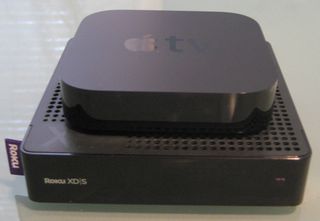
What’s better, the new Apple TV or the newly announced lineup of Roku boxes? That’s the question I keep getting asked now that both devices are in the market. Over the past week, I’ve had the chance to use both the Apple TV and a Roku XDS model and here’s my review on how they stack up in a head-to-head comparison. Before the review, I think it’s important to note that while many in the media are quick to compare and mention devices like Apple TV, Boxee, Google TV and Roku to one another, those aren’t fair comparisons. The four similar devices that should be compared are Apple TV, Roku, Sony Netbox and Western Digital’s WD TV Live Plus media player. While I’ve used and have all four devices, for this post I’m going to focus exclusively on Apple TV versus Roku. (I’m also giving away an Apple TV and Roku)
Hardware
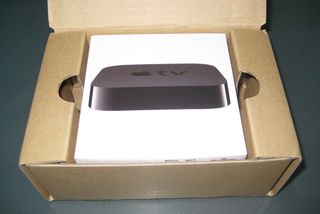
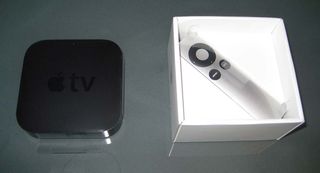
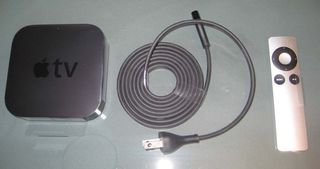
The new Apple TV has HDMI, an optical audio connection, ethernet, WiFi (802.11a/b/g/n) and a USB port which Apple says is for “service and support” of the unit. The device supports video up to 720p and also comes with a remote and power cord with no power brick. Apple TV retails for $99 and while some units have already shipped, the Apple website currently lists a 1-2 week ship date for new orders. Apple offers a one year warranty on their device and consumers can extend the warranty by another year for $29.
Last month, Roku announced a new lineup of three boxes called the HD, XD and XDS. For the purpose of the comparison with Apple TV, I used Roku’s top of the line model, the Roku XDS. The XDS has HDMI, optical audio connection, component, composite outputs and USB. The device has support for WiFi (802.11a/b/g/n), supports playback of video up to 1080p and comes with a remote and power supply. The XDS retails for $99 and is shipping today from Roku.com or next week from Amazon.com. All of Roku’s boxes comes with a one year warranty and you can add a second year for $14.99.
When it comes to the hardware, Roku beats the Apple TV hands-down. All three Roku models, even the cheaper ones, support 1080p while Apple TV stops at 720p. While I’ve seen some argue that the lack of 1080p support by Apple TV is not a big deal since not many content owners are streaming in 1080p today, who wants to have to buy a new device a year or two from now in order to upgrade? The Roku boxes are future proof as they ensure that when 1080p is prevalent, their boxes will be ready. Some details have emerged saying Apple TV can play 1080p content from iTunes, but it can still only output in 720p.
Another hardware advantage that Roku has over Apple TV is that you can hook it up to older TVs that may not have an HDMI connection. Clearly Apple is targeting users with newer TVs that already have support for HDMI, but for $99, do you want a device that has more connection options or fewer? I would argue that even though HDMI is the future, that is no reason for Apple not to support other options, especially since many older TVs only support 720p, which is what the Apple TV maxes out at. So on one hand Apple only supports the new HDMI connection for newer TVs, yet doesn’t support 1080p which most new TVs support. That does not make a lot of sense.
While both the Apple TV and Roku XDS have USB ports, only the Roku model supports playback of local content via a USB drive. Apple says that the USB port on the Apple TV is only for “service and support” and while one could imagine a future software upgrade to enable the port to playback local content, Apple TV can’t support it today. The Roku unit supports .mp4 playback and will be including support for .mov next month. Owners of the older Roku HD-XR models will also be able to get support for 1080p and the playback of local content via USB in a software update that will come later this year. Apple TV supports playback of .m4v, .mp4, or .mov files but only via sharing within iTunes, not via any connected drives.
When it comes to the remotes, Roku again has the edge in a few areas. One of the things I don’t like about the Apple TV remote is that it doesn’t take standard sized batteries. It’s not a huge deal breaker, but I have a lot more triple AAA batteries lying around for the Roku remote, than the watch sized battery that the Apple TV remote takes. All three Roku models ship with a new remote and the two XD models support what Roku calls “instant replay”. The technology allows you to skip back in 10 second increments while a video is playing without having to re-buffer the stream and works very well. Owners of older Roku models can buy the new remote which enables the instant replay feature.
Software & Content
Not surprisingly, the interface on the Apple TV is a lot smoother, cleaner and more polished than navigating on the Roku. But while it looks nicer, navigating the Apple TV interface is not as easy as it should be and requires far too many clicks to enter text or passwords. Apple uses a long list of letters that you have to scroll through and have to travel end-to-end as opposed to being able to skip around. Having to enter a lot of text is a real pain. Apple TV is a bit easier to setup than the Roku, but not by much. I could give either device to my Mom and she’d be able to setup both devices on her own without having to call me for tech support.
As for the content available on both devices, this is really where Apple TV falls short. Today, Apple TV supports content from Netflix, YouTube and $0.99 rentals from ABC, Disney, Fox, and the BBC. They also support some free Internet content from folks like Revision3 and others, but all of that content is lumped in under the Podcast heading in Apple TV, so most folks probably don’t see it. Apple gives you 24 hours to watch movie rentals and 48 hours to watch TV shows once you begin viewing. When Steve Jobs announced the Apple TV he made a big point to reinforce the fact that Apple would have HD movies available to rent on the same day they are released to DVD. This was one of his major selling points, yet so far, that’s simply not the case. In fact, some of the content Steve Jobs showcased in the launch is no longer even available for rental. Clearly the studios still have all the control regarding what content they will make available for licensing to the Apple TV.
While Roku’s interface make not be as polished as the Apple TV, the Roku makes up for it with all the great content that’s available. Roku has channels for Netflix, Amazon Video On Demand, MLB.TV, UFC, Pandora, Flickr, Facebook Photos and Roku has just announced support for Hulu Plus coming later this year. Roku has more than 75 content channels and expects to have nearly 100 by the end of the year. Roku has an open SDK and as a result, has a lot of content partners working to bring more channels to Roku devices. Compare that to the Apple TV which today, has no SDK and doesn’t run any apps on the box. Some are speculating that the Apple TV will run apps in the future since internally it has 8GB of Flash storage, but none of that is happening today.
Airplay
One of the big features of the Apple TV that many think could be a game-changer is Airplay. The technology allows a user to start watching a video on an iPhone, iPod or iPad and then move that content over to the Apple TV in realtime. While Airplay looks promising, it won’t be released until November and there are still a lot of unanswered questions about how well it will work. For instance, you can move content from iOS devices to Apple TV, but you can’t move content from Apple TV back to iOS devices. Also, one has to wonder how well video streaming will work when you start watching a video encoded for a mobile device, but then want to transfer it back to a large screen. There is also the question of how DRM is going to work with Airplay and my guess is that only content in the H.264 or .MP4 format is going to work, which likely means only FairPlay will be supported. Airplay looks like interesting technology, especially for streaming music, but for video, there are a lot of unanswered questions. So before all the Apple fanboys take over the comments section saying just how groundbreaking Airplay is, we’ll have to wait and see how well it really works once it’s available in the market.
Netflix and Video Quality
While I’ve seen a couple of reviews saying that the quality of Netflix streaming looked better on the Apple TV when compared with other devices, personally, I don’t see it. Testing both the Apple TV and the Roku XDS on a 50″ Vizio plasma TV and a 42″ Samsung LCD TV, it was hard to notice any difference in quality. I felt like Netflix streaming started up just a but faster on the Roku, but really could not tell. The video quality on both devices seemed to be identical to me. What’s not identical on the devices is the Netflix application. The Netflix app is much better on Roku than it is on Apple TV. On the Apple TV, you have to choose the program before you get a description of the movie but Roku gives you description of the program on the first screen. There are a lot of little differences in the Netflix experience where Roku has the edge which should be expected since they have been refining the Netflix interface for their device over the past few years.
Conclusions
I’ve read a lot of reviews of the new Apple TV and many have described it as “a solidly built device” or said “it feels really solid”. While the Apple TV is well built and feels like a heavy hockey puck, that really has nothing whatsoever to do with how Apple TV performs as a streaming device. Others have said that Apple TV is best for those who “value design” yet for a streaming device, performance has to outweigh design. Not to mention, the new Roku XDS models are very slick, really small and in my opinion, very well designed themselves. You can have the nicest, most solid looking device on the market but if it can’t access the content you want, at the quality you want, then the design does not matter.
To me, Apple TV is really nothing more than a crippled iPod that you hook up to your TV. It depends on iTunes running on another device to feed content to it and Apple’s sole purpose with the device is to get you to rent more content. Some have suggested that the Apple TV will provide more value since the hacker community is already jailbreaking the Apple TV, but I would ask why some users always have to jailbreak Apple Products to make them work according to their needs?
While some want to suggest you buy a Boxee or Google TV instead, Apple TV and Roku aren’t trying to be a DVR-esque media hub. Boxee and Google TV are really going after a different kind of user and their products are 4-6x more expensive than the cheapest Roku box, which starts at only $59.99. So if you are interested in a Apple TV or Roku, don’t be put off by people who say you should wait until Google TV is out in the market. Google TV looks to be really cool and also has support for Netflix, but the device will cost close to $300 and serves a different purpose in the market.
After spending a lot of time with both the Apple TV and Roku XDS, I’d much rather have a Roku due to the flexibility with the hardware, the support for 1080p and the fact it gets a lot more content than the Apple TV. If I was trying to decide where to spend my $99, Roku would be the hands down winner in my book. If you have any questions on either device, put them in the comments section and I’ll try and answer them.
Note: I’m giving away both an Apple TV and a Roku XDS to a lucky reader of my blog. You can enter the Apple TV giveaway here and the Roku XDS giveaway here.
UPDATE: I see that some folks in the comments section are implying that I don’t like Apple products and that’s why I picked Roku. So to put that to rest, I should mention that I own a 13″ and 15″ MacBook Pro, an iPad, four iPods, two Airport base stations, and an old and new Apple TV. That’s over $5k in Apple gear. Oh, and did I mention I use to work for Apple as a certified technician back in the days? So I’m anything but an Apple hater.

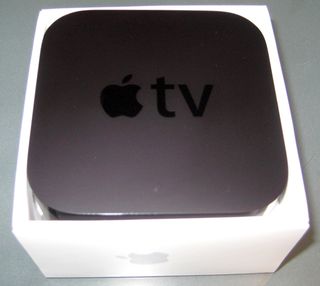 The contest is now closed. Earlier today I reviewed the new Apple TV player in a head-to-head comparison with Roku's new XDS model. As a result, I have one extra Apple TV unit to give away to a lucky reader of my blog. To enter the drawing, all you have to do is leave one comment on this post and make sure you submit the comment with a valid email address. The drawing is open to anyone with a mailing address in the U.S. or Canada and the winner will be selected at random on October 18th. I'm also giving away a Roku XDS unit and you can enter that drawing here. Congrats to Gina Sepowski who won the Apple TV.