New Hardware & Games From Roku Won’t Cut It, New UI and Format Support Needed

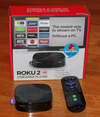
Roku officially took the wraps off their latest line of Roku devices today with three new models due out by the end of this month. StreamingMedia.com has the details on the specs and I'll be doing a hands-on review with the new units shortly as well as giving some away to readers of my blog. While I've always felt the Roku is the best box on the market for under $100, the addition of Angry Birds on the most expensive Roku model is not going to help Roku sell that many more boxes. Roku does not need games, it needs a better UI, faster software and more features in the hardware. [for a chart that compares all of the streaming media devices in the market check out www.StreamingMediaDevices.com]

In a story on USAToday.com an analyst is quoted as saying, "gaming through a Roku box will hurt established players like Microsoft and Sony," which shows just how out-of-touch some analysts are when it comes to streaming devices. Combined, Microsoft and Sony have sold more than 100M Xbox 360s and PS3s worldwide. Roku has sold less than 2M. Bringing Angry Birds and other games to the Roku is not going to "hurt" or impact Microsoft or Sony in any way. I've read more than a dozen articles today about the new Roku models and while many articles were quick to compare the Roku to products from Microsoft, Sony and Apple, not a single article mentioned sales numbers.

Roku's CEO is quoted as saying the, "Roku is the best-selling streaming player on the market because of its simplicity, breadth of content and value." How Roku defines "best selling" I don't know but I've asked the company for additional details. The latest number I heard from company executives was that Roku was aiming to have a total of 3M Roku boxes in the market by the end of this year. As much as I like my Roku, that's still a small number and that has to be kept in perspective.

Consumers are buying stand-alone streaming devices to stream, not to play games. Roku has not truly updated their UI in years. It's still slow, not as responsive as it should be and has poor navigation. While the Roku has the best lineup of content around, that is the saving grace for the device. What I don't like seeing is that Roku dropped support of dual-band wireless from their new top model, something the previous Roku had. Also, only Roku's most expenisve model at $99 has built in ethernet which is something that should be standard on all of their boxes and previous generation models that were cheaper than $99 use to have it.

While two of the three Roku boxes support 1080p streaming, Netflix still doesn't offer that level of quality on the Roku units. That means the only way to get 1080p streaming content to the Roku is to buy the most expensive model and use the USB port to load your own content. The probelm there is that one of the biggest things still lacking from the Roku is support for multiple video codecs. Boxee supports everything under the sun but Roku still only supports MP4/M4V, MOV, MKV and WMV. That does not give users a lot of choice when it comes to streaming their own content.

Roku really set the standard for the streaming device space when they launched in the market in May of 2008 and while they have been quick to refresh their lineup of boxes and add more content channels people actually want to watch, Roku is no longer the only option in the market. I would of liked to have seen some major upgrades to their UI, additional format support and more hardware functionality instead of gaming. All of these streaming device manufactures can't survive in the long run just selling boxes, which means the faster they move to a platform licensing model the better they will be positioned to lead in the market. And the better their UI works, the easier it is to navigate and find content and the higher quality stream it supports, the faster they are going to get to their ultimate goal which is to exit the hardware business.

6a00d834518e1c69e2014e88a262d5970d-800wi
Realted Posts:

Apple TV and Roku Go Head-To-Head, Here's The Winner

Testing the Apple TV, Roku XDS and Xbox 360, Plus 10 Other Devices

Device Comparison: Apple TV vs. Roku vs. WD TV Live Plus vs. Sony SMP-N100

Roku Adds Official Support For Video Playback Via USB Drives

Roku Announces New Boxes, USB Support: Hands-On Review (with video)

Sponsored by

Webinar: Learn How To Deliver Video To Mobile & Tablets With Helix Media Library

Today at 12pm ET I'll be moderating another StreamingMedia.com webinar, this time on the topic of "Delivering Video To Mobile & Tablets With Helix Media Library". Today, everyone watches videos on their smartphones and tablets, whether it's for business, school or pleasure. But as an enterprise or university, organizing and delivering digital media – especially when your organization has hundreds of videos – can seem daunting.

Learn how to create, upload and organize your videos to create a YouTube-like experience customized with your organization's branding. If you have used popular video sites on the web, such as YouTube, creating your own Helix Media Library will be a simple and familiar experience. Viewers can access and play videos from their desktop, iPad, iPhone, tablets and other mobile devices.

At this webinar learn how to:

  • Upload and convert existing media files like MPEG, AVI, MP3, Windows Media or QuickTime files
  • Embed video and audio content created by your Media Library in your existing Training or Learning environment
  • Stream video and audio to desktops, mobile devices and tablets
  • Secure your organization's media assets utilizing existing authentication structures
  • Customize your organization's media library

Register here and bring your questions for the presenters for the live Q&A portion of the event.

Netflix’s Latest Pricing Increase Proves They Want To Exit The DVD Business

While Netflix won't admit it, and in fact says the opposite in their blog post, the latest pricing hikes by the company is a clear sign that they want to exit the DVD business. While they want us to believe otherwise, Netflix is smart enough to know that you don't raise rates by 62% and then expect to retain a large portion of your subscribers for that particular service.

Netflix clearly wants to take the money they will no longer have to spend on DVDs and use it to license more streaming content. And if by chance you do want both streaming and DVDs, Netflix is fine with that because as much as they would like to be a streaming only service, they have raised the monthly price for DVDs by a large enough amount, $6 a month, that they will make money off of most users that keep the option. In my opinion, this latest move by Netflix shows they are no longer in touch with the reality of their current streaming offering and its lack of content.

While it's nice to think that we can all move to a streaming only plan, Netflix knows very well that many seasons of shows are only available via DVD. So you could watch all the episodes of seasons 1-4 of Psych via streaming, but the final season is only available via DVD. If Netflix was trying to force all of us to streaming only plans and they had their entire DVD catalog available in streaming, fine, but we know that is not the case. Netflix has not increased the volume of their streaming content by much and having 25% or less of their entire DVD catalog in streaming is not going to cut it.

Netflix can spin this any way they want, but the bottom line is that they simply want to get out of the DVD business as fast as possible so they can take that money and use it to license more content for streaming. And with Netflix launching a streaming service in Latin America sometime this year, the company needs to license a lot of in-country content since a good portion of the content licensed for the streaming service in North America is not relevant to the Latin American market. As a result, Netflix's licensing costs are going to skyrocket and they need as much money as they can.

But forcing users away from getting DVDs in the mail only weakens their streaming service since Netflix's real value comes from a dual combination of streaming and DVDs.

Netflix Raises Rates Again: Business Model Has Serious Challenges Ahead

Today, Netflix announced that they are raising rates on monthly plans that allow customers to get unlimited streaming and one DVD out at a time. The plan which originally cost $9.99 a month will now cost $15.98 a month. In addition, the company is now splitting out streaming only plans from DVD plans and consumers can get an unlimited streaming plan for $7.99 a month, or one DVD out at a time for $7.99 a month. Essentially, Netflix is making people decide if they really want DVDs as part of their streaming subscription and if they do, requiring them to pay nearly $6 more for it per moth.

In November of last year, Netflix raised DVD plans between $1-$3 per month, depending on the plan you were in and now, only eight months later, they are raising rates again. This is a bad move on Netflix's part, but one that's not surprising as they look for ways to generate more revenue. With their licensing costs skyrocketing and the company aggressively pursuing more content deals for their expansion into Latin America, Netflix is feeling the pressure.

Now, they are forcing people like me who were paying $9.99 a month, to drop to a streaming only plan at $7.99 a month. That's $24 in revenue they are missing out from one customer, per year, and they are going to be millions like me who make that decision. Typically, I only got one or two DVDs a month, so Netflix wasn't losing money on me with the inclusion of DVDs in my plan. Now, when I want a DVD, I'll simply go to Redbox and get it for $1 a night. Forcing customers to go somewhere else for DVD rentals, when even Netflix admits there is still a demand for then, really isn't a smart move.

It was bad enough that Netflix gave in to the studios and agreed not to rent any new DVDs by mail for 28 days, just so the studios could force consumers to have to buy the DVDs instead. Now they are raising prices on DVD plans for the second time in 8 months and not increasing the selection and inventory of streaming only content fast enough or with content that's a lot newer.

In January of 2008, Netflix confirmed it had about 12,000 titles available for streaming. In September of 2009, ads on their website put that number at 17,000. Today, it appears that Netflix has about 20,000 titles for streaming, although Netflix won't confirm that number. If that number is accurate, it means that at any given time, Netflix has only added about 4,000 pieces of content a year for the past two years. That's not a lot of content.

Netflix is going to have a real challenge continuing to grow their subscriber numbers each quarter when they continue to give customers less for their money each month and make their plans less valuable.

Added: When logging into my Netflix account, unless I click on "your account" and then select "change plan", there is no notice that Netflix is going to raise my rate to $15.98 a month come September 1st. So unless you have heard of the news, imagine how many people are going to be surprised when they see their monthly fee change. Netflix should be highlighting this change to you immediately upon logging into their website.

Today’s Webinar: Strategies for Delivering Video to Tablets and Mobile Devices

Today at 2pm ET I'll be moderating another StreamingMedia.com webinar, this time on the topic of "Strategies for Delivering Video to Tablets and Mobile Devices". If you distribute or produce content that will be digitally consumed, you are faced with preparing your media for a multitude of screens. From Android-based tablets to the iPad, iPhone 4, and beyond, mobility is the new video frontier. So what's the right strategy to reach all these devices? How many variants of one clip must a publisher create? Which platforms will yield the greatest uptake?

Join Unicorn Media, KIT Digital, Kaltura and Wowza Media Systems and you will learn how to:

  • develop an effective and efficient mobile device strategy
  • simplify the complexity of video delivery to mobile devices
  • increase views and reach a broader audience with mobile video
  • overcome the challenges for monetizing video to mobile

Presenters will also discuss some of the differences between mobile apps and mobile browsing and show some examples of brands who have effectively used mobile video solutions to change the way they speak to their audience.

Updated List Of Vendors In The Content Delivery Ecosystem

It’s been about a year since I updated my list of carriers, telcos and pure-play companies in the CDN business and in that time, there have been quite a few changes in the market. I’ve decided to add to this list transparent caching providers and other vendors who are tied into the content delivery ecosystem for video. I’ve also added to the list a lot of providers who have long since been acquired and noted who they were acquired by. I think it is important that there is a running history of the vendors that helped shape the content delivery business since its inception nearly 15 years ago.

While content delivery is a generic term and probably includes hundreds of vendors if you include cloud based services, co-location companies, regional service providers, P2P networks and mobile platforms, I’ve tried to keep this list to vendors specifically tied to the delivery of video, be it as a service or platform for both On-net and Off-net applications. (To make the list easier to find on my blog, all you have to do is go to www.cdnlist.com for the latest update.)

Pure-Play CDNs

Non Pure-Play CDNs (telcos/carriers)

CDN Management Platforms/Transparent Caching Platforms:

If you think a current or former company should be added to my list, I’m happy to hear suggestions in the comments section below.

Facebook In Deal With Ooyala To Use Their Online Video Platform

Ooyala-logo Over the 4th of July weekend I've learned that Ooyala has closed an agreement with Facebook that will have the social networking site using Ooyala's online video platform. I don't have all the details of the deal, but Facebook has been testing Ooyala's platform for some time now and both companies are expected to announce the deal before long. This marks another big customer win for Ooyala hot on the heals of their recent deal with Yahoo! Japan.

I don't know if this has anything to do with the Facebook news briefing being held tomorrow.

[Ooyala didn't respond to my request for more info]