Akamai Lowering CDN Pricing In Effort To Be More Competitive

About 45 days ago, I noticed Akamai was being more competitive when it came to pricing CDN deals and around that same time, Akamai's sales reps were highlighting this pricing reduction in emails to potential customers. One of the emails I received from an Akamai sales rep said, "as we are at the end of 2011, I wanted to keep you informed that we are significantly reducing bandwidth costs to be at a competitive stance." Initially I thought this might be an end of the year thing as many CDN vendors tend to lower pricing on selective deals in a bid to close as much business as possible in December. But in this case, that doesn't seem to be the case.

In checking these latest pricing trends with Akamai, last month, the company confirmed to me that they have lowered pricing, with the reasoning behind it being that they have reduced their internal costs and are passing those savings on to customers. While the company agreed to provide me with more details on which costs have been lowered, to date, I haven't received any of that info. It's possible that Akamai's costs associated with their CDN services have gone down, but since the company doesn't break out operating costs based on product, there's really no way to know if that's the case. Clearly Akamai is looking to try and gain more CDN market share and add more volume on their network by offering lower pricing and it just may work.

In a check with Akamai's competitors for CDN services, many of them stated that they have seen Akamai be much more aggressive in the last 30 days. What percentage of Akamai's M&E revenue is directly attributed to CDN services we don't know, but running a CDN is all about the economics of scale. If Akamai can get enough new business on their network fast enough and grow their traffic at a high enough rate, that can offset the decline in margins that comes from lowering pricing. And if any CDN can also lower their own delivery costs at the same time, that only accelerates the CDN cycle of lower pricing and higher volume. That's the underlying fundamentals of how a successful CDN operates but we won't know for some time how this lower pricing strategy will impact Akamai.

Naturally, many are going to ask me by what percentage Akamai has lowered their pricing. While I don't have an exact number, since multiple deals I have seen vary in size and commitment levels, it's enough of a decline in pricing to where Akamai is now pretty much at the same price as Limelight, Level 3 and EdgeCast, for the right sized deals. One of the last deals I saw, Akamai had quoted the customer $0.05 per GB for a monthly commit of 250TB a month. Previously, those sized deals, amongst all the vendors, was averaging about $0.07 per GB.

Akamai's year over year media and entertainment revenue declined or stated flat for the first three quarters of 2011 and the company has stated that the rate of volume growth on their network has slowed. So it's not surprising that Akamai is now looking to try and win back some wallet share with a lower CDN pricing strategy. This is the exact same approach Akamai took in Q1 of 2010 and they did gain some share last time they got aggressive, but they didn't grow traffic fast enough to make up for the pricing decline in their M&E business. Whether or not they can be successful this time around it's too early to know, but something to keep an eye on.

I'll be doing my annual CDN pricing survey with customers next month, which typically collects data from 500-800 CDN customers, so I'll have more detailed pricing trends to share at the end of Q1.

Disclaimer: I have never bought, sold or traded a single share of stock in any public company ever.

Related Posts:

A Closer Look At Akamai's Strengths & Weakness For A Licensed CDN Offering

Akamai Developing A Licensed CDN Offering For Telcos and Carriers

Akamai To Acquire Cotendo, Good For Akamai, Bad For Customers

More Thoughts On The Akamai/Cotendo Deal and Its Impact On AT&T

Sponsored by

Vizio To Launch $99 Streaming Box, Trumps Roku and Apple TV In Features

Screen shot 2012-01-10 at 6.37.06 PM[Updated August 21, 20102: Check out my review of the new Vizio player at: “Vizio Co-Star Review: Hands-On With Vizio’s New $99 Streaming Box“]

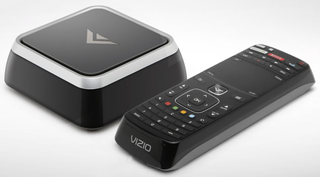
At the CES show, Vizio announced a bunch of new TVs and computers, but the most interesting product they briefly mentioned was a new box called the Vizio VAP430 Stream Player. Vizio’s press release didn’t include a lot of details on the device, but Vizio was kind enough to answer a lot of questions for me in a phone interview late Tuesday.

The box, which will launch in the first half of this year in the U.S. only, will be priced at $99 and be sold exclusively via Vizio’s website. The box has built in ethernet, WiFi, two HDMI ports (in and out), DLNA support, one audio IR port and has USB to support the playback of local content. Vizio didn’t have a list of all the formats that will be supported for local content playback but did say it will support at least MPEG4, WMV and MP3 amongst others. The box supports 1080p streaming and is so robust, Vizio says it also supports 3D streaming and will have an app for OnLive’s gaming service.

On the content side, the box comes bundled with the Google TV platform which Vizio says they have completely re-skinned, thereby creating a new user interface for the Google TV platform. In addition the box supports content offerings from Netflix, Hulu Plus, YouTube, Amazon Instant Video, HBO GO, Wall Street Journal, Pandora, iHeartRadio, Slacker Radio, M-GO video-on-demand and other content services not yet announced.

Included with the box is a bluetooth touchpad universal remote with QWERTY keyboard. Vizio says the idea with the all in one remote is to allow customers to connect cable or satellite set-top boxes through the player’s built-in HDMI ports for a smoother experience for the overlay of live TV. Vizio says the user experience switching between live TV, Google TV and apps is similar to the transition that Apple has in OS X with spotlight. If that’s the case, it means the user experience and interface is going to be very fast and really polished. While the box is currently called the “Vizio Stream Player”, Vizio said they plan to brand the box with a better name at the time of release.

Over the years, a lot of companies have tried to compete in the $99 streaming box market, with Roku being the leader of the pack and selling 1.5M boxes last year. In addition Apple (Apple TV), Western Digital (WD TV Live), Sony (SMP-N200) and Netgear (NeoTV) also have offerings in the market, but none of them come bundled with the Goolge TV platform, have HDMI in and most don’t have DLNA support. Vizio has a great brand name, lots of penetration in the living room with their TV sets and if the device performs as well as Vizio claims, the company should sell a lot of these boxes.

Streaming Media News Roundup From CES (non device related)

With all the device and connected TV platform news this week from CES, any news not pertaining to devices gets lost in the mix. Below is a quick roundup of streaming media news I have seen that’s not TV related. I’ll have comments on all the device news from CES shortly.

Investcorp Acquires Stake in Thought Equity Motion

EdgeCast launches licensed CDN program following global deployment of two major carrier CDNs

Akamai Advances its Intelligent Platform to Address New Business and Consumer Needs for the Online Entertainment Industry

Level 3 Selected by iMusti, Global Provider of Music and Video Content, to Deliver Caching and Download Service

Cisco Advances Its Videoscape TV Platform with ‘Video in the Cloud’

VBrick Systems Delivers ‘Technology Firsts’ with Next Generation Video Encoding Appliance

CSG International Demonstrates Groundbreaking UltraViolet Direct-to-Consumer Content Experience at 2012 International CES

Shodogg Launches at CES and Radically Transforms Streaming Video Delivery by Fueling Industry Expansion With Content Providers

Accedo and Verimatrix Partner to Accelerate Over-The-Top TV Service Delivery

University of Massachusetts Chooses ZiXi’s Video Transport Platform to Air Division 1 Athletic Events

Thoma Bravo Completes Acquisition Of Telestream

Dolby Leads Industry’s Transition Toward Providing Immersive Content Anywhere, Any Time, on Any Device

Vidyo Demos Multipoint Video Conferencing on Amazon’s Kindle Fire and Extends VidyoMobile Support to Android 4.0 ‘Ice Cream Sandwich’ Smart Phone

DTS Unveils New Multi-Channel Audio Encoding Technology for Digital Content Creation: DTS 5.1 Producer

More Thoughts On The Akamai/Cotendo Deal and Its Impact On AT&T

Since Akamai announced their plans to acquire Cotendo, I've gotten a lot of questions about what this means for AT&T, how I came up with my 6x revenue estimate, and I've also seen many sites incorrectly reporting what products and services Cotendo is focused on. I'll try and answer all of those questions here, add some clarity to what Cotendo does, and if you have a question I didn't cover, put it in the comments section and I'll answer it if I can.

In my blog post talking about the deal, I said that Akamai paid about 6x revenue for Cotendo which is based on Cotendo's projected 2012 revenue, not their trailing 2011 revenue. Cotendo will do about $30M in revenue in 2011 and based on that, the deal would be valued at about 9x revenue. But these deals are typically done on future projected revenue, from which I am hearing a revenue estimate for Cotendo was in the $45M range for 2012. Based on those numbers, Cotendo is valued at 6x revenue. Of course these numbers could be off a little bit as no one knows exactly how much revenue Cotendo would of done in 2012, but they were growing revenue quickly over the past three years, so their run rate looked good.

Some on Wall Street have said that the deal was smaller than they expected, that Akamai didn't have to spend as much as they thought they would have and that Cotendo and their investors should have waited for a bigger payout. Everyone has a different definition on what they consider a "small" or "large" deal to be, but personally, I think the deal size was right. For any company to raise $37M, have $30M in revenue and get bought out for $268M in cash, that's not a small deal and while Cotendo and their investors could have waited it out, there is no guarantee they would have gotten more.

I think it's also important to remember that Akamai didn't buy Cotendo for their revenue, they bought them for some technology, but mostly for insurance. Much of what Cotendo does Akamai already offers, so the real value to Akamai is keeping Cotendo out of the market, allowing Akamai to retain more share and over time, increase Akamai's margins since there will be less pricing pressure in the market. Akamai can't pay too much for this insurance, but that's what the Cotendo deal is. I think they paid a fair price and if Akamai can get their value add services year over year growth back to 35% like it was many quarters ago, down from 17% last quarter, the Cotendo deal will pay for itself.

Moving on to how this impacts AT&T, I've since learned that AT&T did not license Cotendo's software, as I originally reported. AT&T's partnership with Cotendo allows AT&T to re-sell Cotendo's offering and some of Cotendo's servers sit inside of AT&T's network. But AT&T is not paying Cotendo any revenue for the licensing of software. It now makes more sense as to why AT&T didn't buy Cotendo, since Cotendo's software is not what powers AT&T's services. That said, I still would have liked to have seen AT&T buy Cotendo to show their commitment to the industry, but clearly AT&T feels they have other options in the market.

That other option for AT&T is clearly EdgeCast, whom AT&T already has a relationship with for standard CDN services. Earlier this year I reported that AT&T licensed EdgeCast's software, which is running on the AT&T network as a licensed CDN offering (LCDN). While EdgeCast's platform was only supporting traditional CDN services at the time, EdgeCast has since rolled out application delivery functionality (more details on that here) and I suspect AT&T will now use that and stop re-selling Cotendo once the Akamai deal is finalized.

While I have seen some blogs implying that AT&T is Cotendo's main customer, that's not the case. Today, Cotendo gets a very small percentage of their revenue from AT&T. It's also not accurate for some to suggest that by Akamai purchasing Cotendo, it now gives Akamai a leg up in the licensed CDN (LCDN) market. Akamai is looking to develop and sell a LCDN product to telcos, carriers, MSOs that primarily focuses on video and large object delivery, not DSA and app acceleration. Cotendo's products do not solve problems the carriers are facing and Cotendo has no software licensing deals in place. EdgeCast has many carriers that have licensed their CDN software, but that's for a different service.

There have been many sites saying that Cotendo has mobile solutions for "video content" or that the company offers "video distribution to mobile devices", but that's not true. No where in Akamai's press release does the company even use the word video and Cotendo's mobile acceleration service is not primarily setup for video. Here is a post on how Cotendo's mobile content acceleration technology works: An Inside Look At Cotendo's Newly Announced Mobile Acceleration Service.

Cotendo's mobile acceleration service is, amongst other things, a combination of improved TCP algorithms and route optimization along with more advanced DNS mapping to speed up transport of packets at the network layer. It is not optimizing video content inside the carrier network for mobile video content owners. That is a solution that Akamai is currently working with Ericsson on, which Akamai expects to launch in the first half of next year. Some have also said or implied that, "Cotendo has a focus on mobile", but that's not entirely true. Cotendo gets the vast majority of their revenue from their non-mobile platform and Cotendo's mobile service was only released in the market five months ago. So while Cotendo does have a mobile platform, I would not say that it is their core focus, at least from a revenue standpoint.

As for my statement that the Akamai and Cotendo deal is bad for customers, I have yet to find a single customer for these services that disagrees. What I keep hearing from customers, and have from day one, is that they want more choices in the market, for all kinds of services. With Akamai taking out Cotendo, Akamai now owns the market. It's great for Akamai and their business, but bad for customers who want multiple choices and options and need to get competitive quotes in the market. So customers who want to compare offerings from multiple venors, in many cases, won't be able to since Akamai took out their biggest service based competitor for these services.

On the pricing front, I can't remember a single instance where a segment of the market consolidated and it lead to lower pricing. Years ago, Speedera and C&W were really starting to pressure Akamai for CDN delivery and pricing was starting to get lower in the market. Once Akamai bought Speedera and C&W went out of business in the U.S., CDN pricing went up, not down, because Akamai was the only game in town for CDN at any real scale. Years later, when more large-scale CDN providers came into the market and customers had choices again, pricing for those services went down and the market grew faster.

Competition is a good thing for the market, that's the point I was trying to make. Of course every vendor wants to have as little competition as possible, have high margins and protect those high margins and that's what Akamai has done with the Cotendo deal. It's a very smart business move for Akamai, but not great for customers who want choices as now, they don't have many other choices, unless they try and do it themselves, which is still competition to Akamai, but it's a different kind of competition as its competing against your customer as opposed to a service based vendor.

All of this aside, the real question is who plans to step up and try and fill Cotendo's void? Akamai will have quite a lock on the market for these services for awhile, but not forever, and there are a few vendors who will try and challenge Akamai and become the next Cotendo in the market. Some will suggest no one can fill that void, but that's also what some said when Cotendo launched in the market  and they managed to put enough pressure on Akamai to get themselves sued and then acquired, all in less than three years.

EdgeCast is probably the next to try and challenge Akamai for these kinds of services and I expect Amazon will also offer DSA at some point soon. Level 3 is not yet offering the same services that Cotendo does, that I know of; Limelight has a DSA offering but I don't know what functionality it has and they don't really promote it well; CDNetworks has some of these services but most of their revenue is outside the U.S. and we don't know what kind of success AT&T will have selling this in the market. So a clear challenger to Akamai has not yet been established. I'll outline in more detail which vendors I think have the best shot at challenging Akamai for these services, in a later post.

It’s Official: Akamai To Acquire Cotendo, Good For Akamai, Bad For Customers

[Updated: Part two of this post is now online: More Thoughts On The Akamai/Cotendo Deal and Its Impact On AT&T“]

As expected, this morning, Akamai announced that they have agreed to acquire privately held Cotendo for $268M, in a deal that is expected to close in the first half of 2012. While Akamai always portrayed to the market that Cotendo was never really any threat to their business, Cotendo was starting to put pressure on some of Akamai’s higher margin revenue and winning some big deals in the market. The fact Akamai paid about 6x revenue for Cotendo (updated: just to clarify, the deal is valued on expected 2012 revenue, not 2011 trailing revenue. Cotendo did about $30M in revenue this year) is a testament to the value of what Cotendo built and the impact they were starting to have on Akamai’s business. This is a good acquisition for Akamai and will help to shore-up their value add services and clearly the street likes it as Akamai is up over $4 a share as I write this post.

Cotendo launched on March 11th, 2009, and in less than three years, built out a very robust platform for application acceleration, dynamic site acceleration and mobile content acceleration with Facebook, HTC, Conde Nast, Answers.com, Vistaprint, Digg, Mashable and Bayer as customers. While I have seen others say that Cotendo’s core focus is mobile, most of their revenue is not from the mobile sector. Cotendo released their mobile acceleration product only six months ago, (here’s details on how it works), so most of their revenue it not from mobile delivery today. That said, Akamai knows where mobile is headed so Cotendo’s mobile product is a great fit into Akamai’s product portfolio not to mention, Cotendo’s DSA product was out-performing Akamai’s DSA product by up to 20% based on feedback from many of Cotendo’s customers.

Because AT&T licensed re-sells Cotendo’s technology to run on the AT&T network, AT&T did have right of first refusal to purchase Cotendo. But from what I hear, AT&T never made a serious offer for the company and Akamai wasn’t bidding against anyone else. To me, it’s a bad sign for AT&T that they didn’t step in to acquire Cotendo as it would have shown they are serious about the overall CDN space. What happens to AT&T’s products and services that rely on Cotendo’s technology is not known, but clearly there won’t be any more software updates from Cotendo and AT&T will have to build out any additional functionality to the platform on their own. it is expected that AT&T will stop re-selling Cotendo once Akamai acquires them and that AT&T will now default to EdgeCast for some of these same services since EdgeCast’s software is running diectly on AT&T’s network.

While this acquisition is great for Akamai and their business, it’s bad for the industry and for customers as a whole. Competition is a good thing because it makes companies innovate faster, helps foster quicker adoption of technology, drives pricing down in the industry and with more companies selling the same service, it creates better awareness in the market. With Akamai taking out Cotendo, they have locked up the market for app acceleration and mobile acceleration and are the clear leader, in terms of revenue, for DSA offerings. That’s not to say that others won’t compete over time (Amazon will, EdgeCast also), but Cotendo was really the only company that was getting some good traction in the market for these services, had some real revenue and customers to show for it and was putting pressure on Akamai.

With one vendor now controlling the vast majority share of the market, Akamai has no pressure to reduce pricing. Pricing for these services will go up, not down, the same way CDN pricing did when Akamai acquired Speedera. I’m sure Akamai will say otherwise, but with Cotendo customers saying that Cotendo was on average 30% cheaper than Akamai, that pricing difference will disappear once the acquisition is done and contracts have to be renewed. While some vendors like Limelight Networks, CDNetworks, AT&T, Level 3 and EdgeCast are trying to focus their products and services on more of what Cotendo was doing, none of them have gotten the kind of traction Cotendo has and it will still be awhile before any of them compete with Akamai at scale.

While this is a good acquisition for Akamai, there is one danger to it. Akamai needs to understand that many of Cotendo’s customers don’t want to work with Akamai or have left Akamai for Cotendo. Akamai has a history of acquiring competing companies, shutting their services down and essentially migrating all of those customers over to Akamai’s already exisiting products. In this case, that won’t work. Akamai has to keep Cotendo’s products alive and integrate them with the Akamai network in order for this to work.

After hearing the news, I reached out to some of Cotendo’s customers who naturally, weren’t happy to hear that Akamai would acquire Cotendo. One of them said, “the whole reason we are with Cotendo is that we didn’t want to be on the Akamai network anymore“. That’s the argument that many of Cotendo’s customers are going to have, so Akamai has their work cut out for them to make sure Cotendo’s customers feel like they can still use Cotendo’s platform, on the Akamai network.

One thing I hope for from this deal is that Cotendo’s culture may be able to rub off on Akamai. Cotendo is quick and nimble, they follow up with customers quickly, develop and roll out new products fast and are thought of as easy to work with. Akamai may be the leader in the market, but they are still very slow with new product introductions, are anything but nimble and customers still tell me all the time that it takes Akamai weeks to do things that their competitors do in days. Akamai’s management knows that the culture of the company needs to change, that their marketing message needs to be overhauled and that the value proposition of products and services, like their HD Network, aren’t being highlighted correctly. Hopefully Cotendo’s culture can help assist Akamai with that.

Note: I have a lot of emails from people asking me to call them to get my comments on the deal and I will get to all of them as I can. I am doing a lot of media calls as well, so if you have a question, you can reach me on my cell at 917-523-4562. I will return all calls.

Similar Posts:

Akamai Files Patent Infringement Lawsuit Against Cotendo, Acquisition On The Way?

Pressure On Akamai Growing, Company Needs To Make Some Acquisitions To Jumpstart Their Business

How Mobile Acceleration Works: An Inside Look At Cotendo’s Newly Announced Service

How Dynamic Site Acceleration Works, What Akamai and Cotendo Offer

CDN Cotendo Raises $17M, Adds Juniper and Citrix As Investors, Puts More Pressure On Akamai

AT&T Partners With Cotendo For App Acceleration, Will Challenge Akamai

CDN Cotendo Raises $12M, Has 120 Customers For DSA and App Delivery

New CDN Cotendo Launches: Focusing On Application Delivery, Not Video

Quick Survey. Would You Attend Conference Workshops On A Sunday?

We're looking at scheduling for the 2012 Streaming Media West show and wanted to get your feedback on whether or not you would still attend a workshop if it was held on a Sunday or if it was held post-show. Please answer the three questions below to help us better understand your preference. Thank you.

NFL and NBC Announce Plans To Stream The Super Bowl Online, For Free

Earlier today, NBC and the NFL announced that the 2012 Super Bowl will be be streamed live online, for free, using the same platform (Silverlight) that NBC uses to stream the Sunday Night Football games (SNF Extra). No authentication will be required and the Pro Bowl and NBC's wild-card playoff games will also be streamed live on NBCSports.com and NFL.com. Verizon will also stream the games live to mobile devices.

Since most people want to watch the Super Bowl on TV, I don't expect the traffic for the Super Bowl webcast to break any records. NBC has said that they average around 250,000 viewers for their SNF games, although that's probably total viewers, not simultaneous streams and the TV broadcast for Sunday Night Football averages more than 21M viewers. So NBC hasn't seen any evidence that online streaming of SNF has any kind of negative impact on TV viewership. Adding the Super Bowl as a live stream makes a lot of sense and I suspect NBC will also sell online only ads during the game, so there's also the ad monetization angle for NBC to try and cover their costs from streaming.

Akamai has confirmed for me that they will be involved in the webcast, which is no surprise since they already do a lot of streaming for the NFL. I don't know if Akamai will be the exclusive CDN, but I would not be surprised if NBC used more than one CDN for the webcasts and elected to have a dual-vendor approach when it comes to the distribution. I just hope NBC encodes the Super Bowl at a higher quality than they do the Sunday Night Football games, which right now, peaks at 2Mbps.