Balancing the Viewer Experience and the Need to Monetize Video

Making business decisions around the usability and the user experience for consuming video is often limited by budget, technical limitations of consumer devices, and business rules around the consumption of media. At the Streaming Media West show (#smwest) in two weeks, Oct. 30-31, we’ve got Michael Dube, Manager of Systems Integration and Operations at HBO moderating a session on the subject of “Balancing the Viewer Experience and the Need to Monetize“.  This session touches on issues such as design and usability in conjunction with technical features such as ad integration, security concerns, and inclusion of social media functionality, as they examine the needs of content owners versus the desires of consumers. Confirmed speakers include:

  • Moderator: Michael Dube, Manager, Systems Integration and Operations, HBO
  • Tad Ro, Executive Director, Digital Media, Warner Bros Telepictures
  • Barry Blumberg, EVP, President, Alloy Digital and Smosh
  • Gerald Abrahamian, VP, Digital Operations, NBCUniversal
  • Jonathan Wilner, SeniorDirector, Product Management, Ooyala

It’s not too late to get a pass to the show and readers of my blog can register using my own personal discount code of DRF1, which gets you a two-day ticket to the show for only $595. That’s $300 off the regular ticket price and it gets you access to both keynotes, 35 sessions and how-to presentations, 100+ speakers and all the networking events.

Sponsored by

The Media Loves To Hype Live Events: Red Bull Stratos Webcast Not A Record

On Sunday, YouTube broadcast the live jump by Felix Baumgartner for the Red Bull Stratos event. Soon afterwards, multiple media outlets were quick to call it the largest webcast ever and said it broke records, simply because YouTube’s player has a counter on it showing how many users were watching the stream. What they didn’t mention was that at peak, all videos on YouTube was down for many users, the live stream was encoded at a low bitrate and YouTube didn’t even broadcast the video on their network, but relied on third-party CDN Akamai instead. Seems nothing has changed from years ago when I wrote a similar posts asking, “Does Anyone Care About The Business Of Live Events, Or Just The Traffic?

[Updated 9:36pm: YouTube has just posted to their blog that “more than 8 million concurrent livestreams” of the event took place, but their numbers don’t match the ones that we have so far seen from Akamai. And they didn’t say “unique” streams. If they are going to put out vague numbers, they should at least put out the methodology on how they count streams as many times I could load the player, but not the video. So are they counting player loads or streams starting? Also, they say it was the “most concurrent views ever on YouTube”, but didn’t say “delivered by” YouTube. And unlike the media, no where did they imply it was the largest video event ever on the web, so I will give them credit for that.]

While the YouTube player showed a counter that went up and down during the event, it’s not a true indication of exactly how many simultaneous users were watching the stream. As an example, I watched the stream on three devices, all at the same time, but I am only one user. Is Google counting me as one unique user, or three unique users? Am I counted as one simultaneous stream, or three simultaneous streams? None of the numbers you see in the player are ever exact and many times, they are way off. Content owners who do live events across multiple CDNs will tell you that many times, the number of users they see via the tracking technology in their player and the number tracked via the content distribution network, rarely match up.

For the event, all streams I traced were coming back to Akamai which was clearly involved in the event and when I looked at Akamai’s reporting dashboard during the event, their “live stream” count never went above 3M. And that’s 3M for all of Akamai’s customers on their network, not just YouTube’s. It is possible that both YouTube and Akamai were both doing distribution of the video for the event, but people I spoke to who traced the stream in Europe and Asia all saw it being delivered by Akamai as well. One thing that was clear from this webcast is that Google still can’t seem to handle large-scale live events on their network. For the recent Presidential Debate and PSY concert, both of them crashed on YouTube and doing trace routes during those events, didn’t show any CDN provider like Akamai being involved.
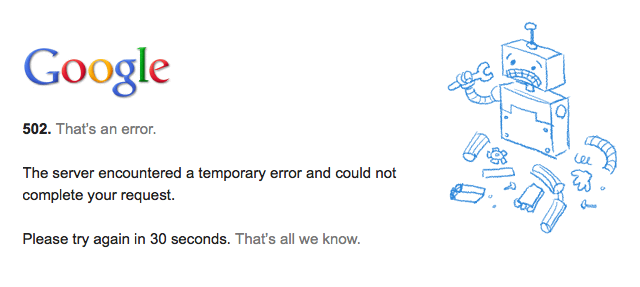
For this event, the live stream that Akamai hosted worked without any hiccups that I saw or that were reported, but the traffic in general to YouTube’s website caused a lot of 502 errors with the site being down for me and many others. While the media is so quick to want to call something the biggest ever, Google has never provided their methodology for how they count “simultaneous” streams and I’m sure they never will. As we have seen from past YouTube events, like the Olympics, they have never given out an exact number, but rather said “more than”, so I don’t expect them to break out the Red Bull webcast with any really detailed numbers, with methodology.

Far too many people in the media and in the industry want to judge the success of a webcast solely by the number of people who watched the event, rather than using that number as just one of many data points that need to be viewed together to judge the success of an event. But the biggest thing the media is missing, that no one has discussed yet, is who made money from this event? Why is the media so quick to want to talk stream numbers after an event, but then never looks at the bigger picture of what live events mean for content owners and publishers who are trying to monetize content? I didn’t get any ads during the event, so it does not look like YouTube monetized the stream and the way YouTube is throwing money at content owners, I’d be willing to bet that Red Bull didn’t even have to pay YouTube for the live stream, since YouTube was a sponsor of the event. The media should be focusing on what the business model was for this webcast and not simply how many streams it delivered.

So what is the largest record for a live event on the web, in terms of simultaneous numbers? The answer is, no one truly knows. None of the data provided after live events is usually very detailed, validated by a third-party and many large-scale webcasts take place with inflated numbers. The largest event I know of, based on the data I was given at the time and from research I did, was the 2009 Presidential inauguration. At the time, the media reported that Akamai did 7.7M streams of the event, but once again, got the data wrong. Akamai did 7.7M live streams of all their customers combined that day, of which 3.8M were the Obama inauguration, as verified by Akamai directly. Between Akamai, Limelight, Highwinds and a few smaller CDNs, all vendors combined, I estimate they did between 7-8M live simultaneous streams of the 2009 inauguration. But no one knows the exact number. And talking about business models, for all of the bandwidth Akamai did for those 3.8M streams, the company told me back in 2009 that they made less than $100,000 on the business. So for those that think there is a lot of money in distributing live events on the web, there isn’t.

Webcasting events live on the web has been going on for more than 15 years now and it’s time the media stops getting all giddy with bandwidth numbers and instead, starts asking the questions of how this medium can be monetized, when content owners will start to make money from live events and what changes need to take place in the market so that webcasts can be profitable events for content owners, as opposed to simply a way for someone to show off meaningless stream count numbers. In 2007 I wrote a post entitled “Webcasting Large Entertainment Events Still Unprofitable“, and five years later, as an industry, we’re still not seeing signs or discussions taking place about the business side of webcasting big events. The media needs to focus on the business, not the technology. Without a business model behind it, the technology is useless if content owners can’t cover their costs of using or deploying it.

And for those members of the media that having been picking up on the webcasting story over the last few hours, make sure you question the data. I’ve done a few interviews already where some have said to me that”YouTube said” they did 8 million streams. YouTube has not said anything of the sort. The numbers you are quoting come from articles in the Huffington Post and WSJ and none of them have quoted or said they have spoken to anyone at YouTube.

More Data On Large Webcast Events:

Akamai: About 3.8 M Simultaneous Obama Streams, Details Capping Of Customers

NBC Failed With Their Super Bowl Webcast, But Wants Us To Believe It Was A Success

– MSN Releases Traffic Numbers For LiveEarth Webcast, Sort Of

Oprah Webcast Draws 500,000 Simultaneous Viewers

Inauguration Numbers: CDNs Deliver Over 8 Million Simultaneous Video Streams

MSNBC.com Won’t Say Why Their Debate Webcast Failed

MSNBC Debate Webcast Constantly Buffering, Poor Audio

YouTube’s Live Event As Overhyped As The Company

Webcasting Large Entertainment Events Still Unprofitable

Does Anyone Care About The Business Of Live Events, Or Just The Traffic?

World Cup Streaming Numbers Show Online Video Not Replacing TV

Wednesday Webinar: “Maximize Video On-Demand Revenue with DivX”

Wednesday at 1pm ET I’ll be moderating another StreamingMedia.com webinar, this time on the topic of, “Maximizing Video On-Demand Revenue with DivX“. What do consumers want in an online viewing experience? What challenges do they face, and what devices do they prefer for viewing? What features do OTT service providers wish they could offer? The answers to these questions can help you maximize profits as a video content producer or distributor, and you’ll get them from Rovi on Wednesday’s webinar.

The webinar will also share results from a broad survey that identifies where consumers most enjoy watching their videos, the features they want, and what they find lacking in their current streaming experience. A parallel survey tracks the offerings of OTT service providers. After the event, you’ll have the opportunity to download a white paper with deeper findings.

Register here and bring your questions for the presenters for the live Q&A portion of the event.

CDNs Account For 40% Of The Overall Traffic Volume Flowing Into ISP Networks

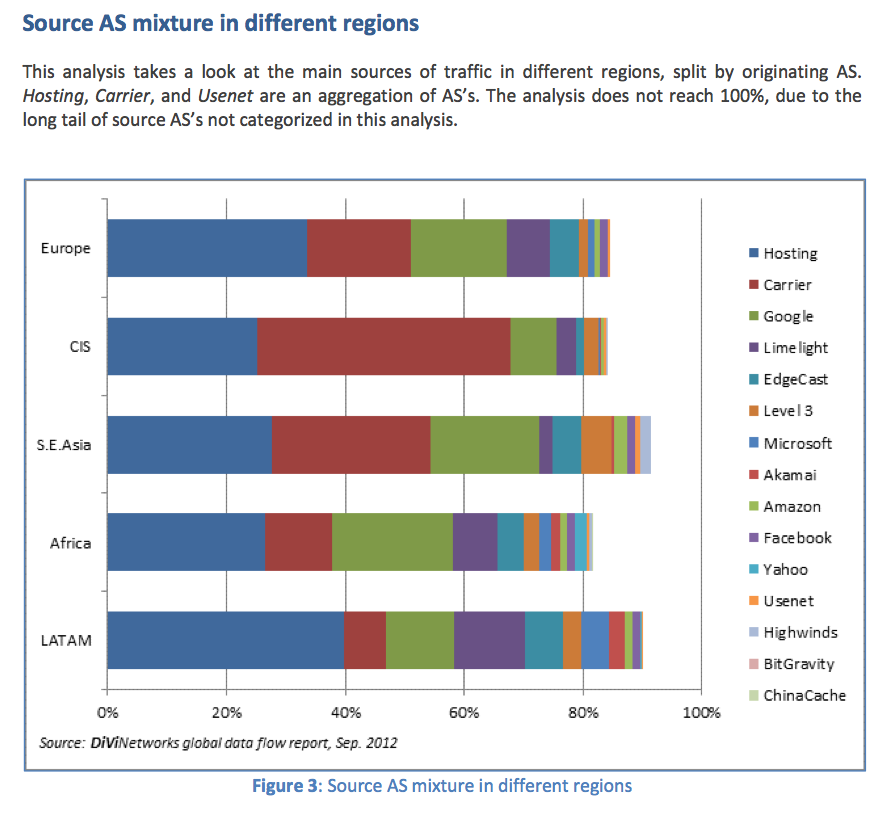
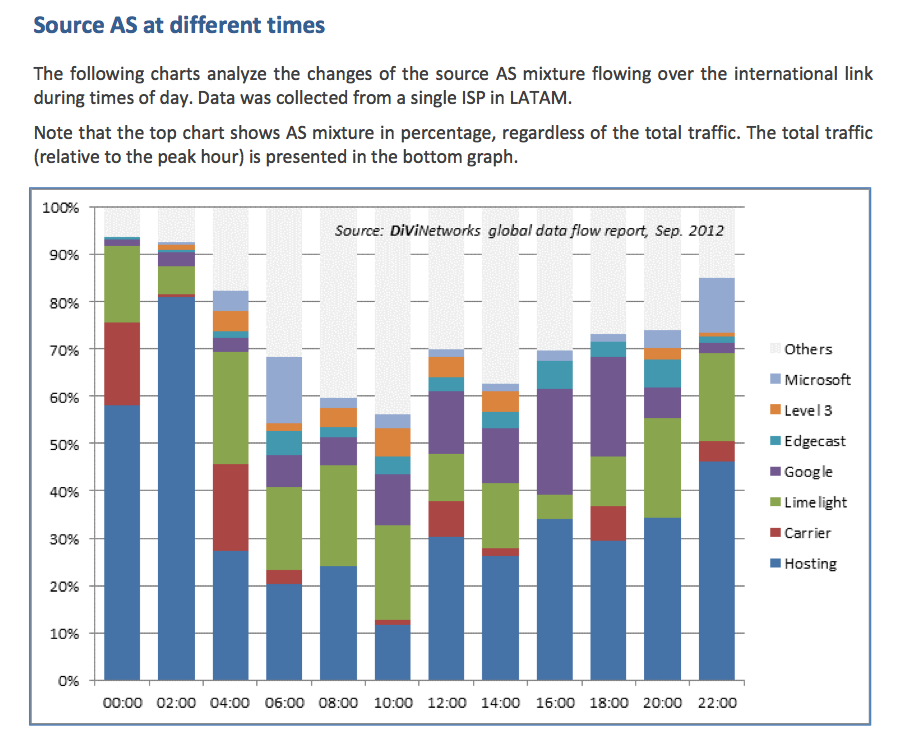
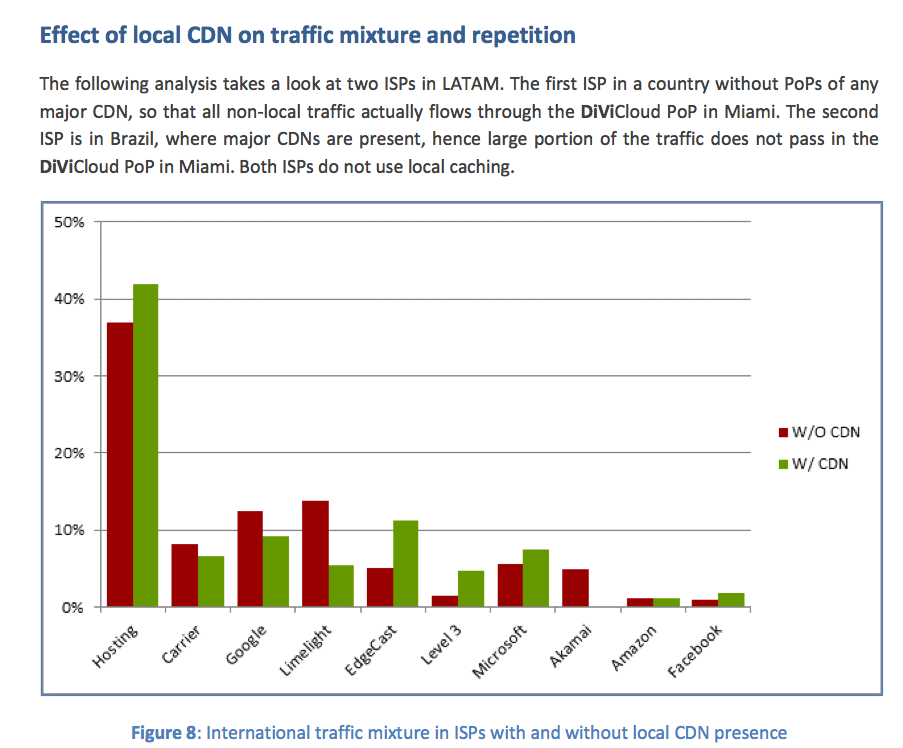
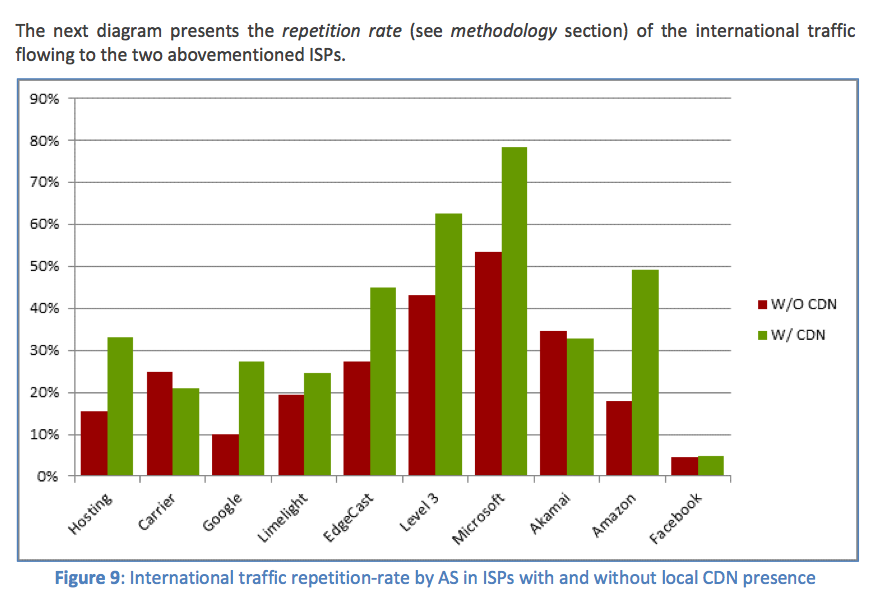
DiViNetworks, a provider of IP bandwidth expansion for network operators and service providers, holds a unique point of view – global PoPs positioned at strategic Internet junctions, combined with intelligent software overseeing masses of international traffic. This position enables them to study global data flow characteristics and trends, which they recently shared.

Close to 100 ISPs are served by the DiViCloud network and 100% of the international downstream traffic to the served ISPs passes through these PoPs and as traffic passes through the PoPs, the software in the PoPs collects traffic statistics. These statistics serve as the raw data for the their report named “Global Data Flow Report“. Based on the data, global CDNs play a primary role in traffic flowing into ISP networks, comprising around 40% of the overall traffic volume.

Open Speaking Spots For The Enterprise Video Conference

Some speaking spots still remain for the Enterprise Video Conference, taking place in conjunction with our Streaming Media West show October 30-31st in LA. We already have confirmed speakers from Wells Fargo, Stanford University, Accenture, Wellpoint, Lockheed Martin, Oracle, Harvard University, GE Capital, Microsoft, Northwestern University, Polycom, University of California at Berkeley, Cisco, Brigham Young University and others.

Speaking spots are still open and I welcome all submissions from vendors and end-user corporations and universities. I am filling up spots each day, so if you are interested in any of the sessions below, please contact me ASAP.

Tuesday, October 30th, 2012
Panel: Lecture Capture, Presentation Recording & Meeting Webcasts: How To Select a Solution
Systems for recording presentations – including audio, video, and presentation materials such as slides or desktop capture – continue to be crucial tools in both higher education and the enterprise. In this session, we’ll cover a range of options for recording or live streaming your presentations and lectures. You’ll learn about the variety of technologies available in this rapidly changing space. We’ll look at several implementation examples, including the trade-offs and benefits. Finally, you’ll learn how you can choose the best one to fit your needs.

Tuesday, October 30th, 2012
Panel: Student-Generated Video on Campus
Students no longer are passive consumers of video. The proliferation of video-shooting smartphones and social media has made them producers. Video is a tool for creative expression, but it is also an excellent tool for evaluating performance and progress, and for sharing ideas, solutions and innovations. In this session we’ll cover ways that student-generated video can be used in education, and methods for effectively and securely managing that video.

Tuesday, October 30th, 2012
Panel: Integrating Streaming, Video Conferencing, and Unified Communications Solutions
Learn how organizations leverage existing video conferencing infrastructure as production studios when integrated with a video streaming system. And learn how video conferencing allows presenters in multiple locations to participate jointly in webcasts. Finally, learn how this is all good news to those implementing streaming solutions because now they can be budgeted as part of a larger video communications budget.

Tuesday, October 30th, 2012
Panel: Unique Deployment Challenges for mobile video in the Enterprise
Deploying mobile video presents many challenges that are unique to enterprise environments. Enabling the bring-your-own-device trend complicates matters further. This session will address the major considerations for deploying mobile video in the enterprise, including encoding video for mobile devices, choosing the correct servers, and delivering to multiple devices and players, including HTML5. The final challenge discussed is networking, as enterprises need to determine if users are going to access the video over the enterprise Wi-Fi network or the public cellular network.

Tuesday, October 30th, 2012
Panel: Developing a Management System Strategy
It is becoming increasingly common for organizations to deploy multiple types of content management systems, from traditional content management systems like SharePoint, to Learning Management systems, to Media Management systems. Hear how leading organizations developed their management system strategy, how they use their systems independently or as an integrated hybrid model, and what best practices they’d suggest for organizations considering similar investments or integrations.

Tuesday, October 30th, 2012
Panel: Enterprise Live Video Production, Tips and Tricks
This session will focus on best practices for dealing with the “ever changing” nature of live video production. Each panel member will bring their “bag of tricks” for their top five items that all producers should be doing for live production in the enterprise. Live video production can be full of pit falls and unexpected changes and this session will give you the chance to learn from the folks who deal with all levels of live video production on a daily basis.

Wednesday, October 31st, 2012
Panel: Media Asset Management 101
Learn the basics of media asset management and metadata from a panel of content management experts.  We’ll look at best practices for creating, managing and applying metadata to media assets to maximize search and storage capabilities, and strategies for getting started.

Wednesday, October 31st, 2012
Panel: Creating an Internal CDN to Support Video Deployments
Video has gotten much easier—standards and simple interfaces have come a long way in recent years. But coping with video across the network can still be a headache. Learn how other organizations have successfully tackled this thorny issue and sort through the options to find the right one for your applications and organization.

Wednesday, October 31st, 2012
Panel: Developing A Device Strategy For Online Communications Video
Distinct from a focusing exclusively on mobility, this panel will discuss how organizations are developing online communications strategies for a wide array of devices, including tablets, phones, digital signs and other devices that may just be hitting the market. Hear how organizations are reacting to device trends, the risks and benefits they are experiencing, how they are budgeting and spending to support devices and whether they see the primary target device as shifting from the desktop.

Thursday Webinar: “Best Practices For Encoding Video for Digital Delivery, Including UltraViolet & Blu-ray”

Thursday at 11am ET I’ll be moderating another StreamingMedia.com webinar, this time on the topic of, “Best Practices For Encoding Video for Digital Delivery, Including UltraViolet & Blu-ray“. With consumer demand for content “anytime, anywhere,” the ability to address the latest digital delivery formats, unique bandwidth limitations, and codec requirements is essential. Join Rovi for this webinar, where they will explore how to efficiently encode video for a variety of digital platforms, such as retail, connected devices, and broadcast. Get a first-hand look at Rovi’s TotalCode encoding technology and have the opportunity to participate in a real-time discussion and take part in live polling.

During this webinar you will learn the answers to these questions:

  • How do I encode SD and HD UltraViolet CFF files?
  • What are the best practices for converting DVD titles to digital versions?
  • How do I encode and format streams from multiple input sources?
  • Why should I care about creating DivX Plus Streaming files?

Register here and bring your questions for the presenters for the live Q&A portion of the event.

Infrastructure News Roundup: 21ViaNet Acquires FastWeb, Akamai Acquires FastSoft, Allot Acquires Oversi Networks

Over the past few weeks, there’s been some acquisitions in the infrastructure space that I didn’t get to blog about. None of them are game-changers or dramatically change the landscape for those who offer distribution services, but they are interesting ones to watch with regards to how their technology will be integrated into the larger content delivery ecosystem.

  • 21ViaNet acquires FastWeb: Last week, Chinese web hosting service provider 21ViaNet announced they had acquired FastWeb, a China based content delivery network. 21ViaNet is one of China’s largest carrier-neutral Internet data center service providers, with more than 150 POPs in the country, yet they didn’t have any kind of CDN offering. So on paper, acquiring FastWeb makes a lot of sense and the company says they plan to use FastWeb’s CDN services to “diversify” revenue and improve the quality and reliability of their services. Terms of the deal were not disclosed and I haven’t heard any rumors on the evaluation.
  • Akamai acquires FastSoft: Two weeks ago, Akamai announced they had acquired FastSoft, a six year old company that was offering network optimization technology originally developed at the California Institute of Technology and funded by the National Science Foundation, DARPA and Cisco. While FastSoft didn’t get too much mention in the media, their software did  good job at accelerating web pages and web applications and customers I have spoken with always raved about how well it worked. While FastSoft offered acceleration services for video, applications, software downloads and small objects, most of the revenue didn’t come from accelerating video content, but Akamai has said that’s where they plan to use the technology within their network, at least to start. Terms of the deal were not disclosed, but the price that keeps been talked about in the industry is that it was a sub-$100M acquisition for Akamai. If I remember correctly, FastSoft had raised about $6M in funding. I’ll update this post if I can confirm the acquisition price from a reliable source.
  • Allot Communications acquires Oversi Networks: Last month, Allot Communications announced they had acquired another Israel based company, transparent caching provider Oversi Networks for $16M in cash. The company said Oversi will add about $2M a quarter in revenue and it expects the business to reach break-even by the first quarter of 2013. Allot plans to integrate Oversi’s transparent caching technology into their deep packet inspection (DPI) offering. Oversi had raised at least $13M in funding and had been shopping themselves on the market for over a year, so the sale is pretty much a wash for investors. It’s also interesting to note that Cisco was a shareholder in Oversi, yet Cisco didn’t bid on buying the company and recently partnered with transparent caching provider PeerApp instead.

For an updated list of content delivery and transparent caching vendors in the market please visit www.cdnlist.com