An Open Letter To Streaming Vendors: Adapt And Overcome

When I joined the military and entered basic training after graduating from High School, as soon as I got off the bus a drill instructor was in my face making it clear to me that by the time my training was over, I will have learned that even the most well laid plans can and do fail. Things change, stuff happens and there is only so much you can anticipate. Learning to adapt and overcome unexpected challenges was something we needed to learn if we wanted to make it and this concept is at the core of what they teach all new recruits, in all branches of our military.

Right now, many vendors are working to finalize their go-to-market strategy, budgets and plans in the New Year, with some making big bets on what will impact their business the most in 2013. A lot of vendors have reached out to me over the past few weeks asking what I see coming, where I see the most opportunity for their business and what trends we’ll see in the industry.

No matter how well any of us plan, market dynamics take place we can never anticipate and all vendors need to be able to adjust to changing market conditions. That’s what the leading vendors in any industry do, adapt and overcome, by being quick and nimble in how they react to changing conditions. In my opinion, too many vendors are focused on trying to figure out exactly what will happen and instead, should be looking at the bigger macro trends and thinking about the core strengths of their business, the key verticals they need to focus on and the problems they need to solve for customers.

Trying to come up with exactly how many streams will be served, how many more videos a consumer will watch by the end of the year, when Apple will ship an all-in-one TV, or what percentage of consumers will cut-the-cord (answer: less than 1% a year) aren’t questions that help your business in the short or long-term. Any good company needs to be able to make a game plan for steady, consistent growth of their business which highlights their key strengths and will make them successful, no matter how fast or slow a segment of the market grows.

Some vendors made some big bets years ago that TV everywhere would be rolled out by most MSOs and that they would be able to grow their business based on those deployments. Three years later, true TV everywhere deployments are hard to find and many of the vendors who shifted their business models to that segment of the market aren’t doing well. Companies like Cisco can bet big on TV everywhere, with their Videoscape offering, because they have the operational resources and more importantly finances to be able to wait until TV everywhere is a real market. It’s the same way Google was able to buy YouTube and lose money for many years, before the market was large enough, and business and content models had evolved enough, to where Google could profit from the deal. But most vendors aren’t in the position of the likes of a Cisco or Google.

Vendors need to get away from hardware products where the only value proposition is “higher performance” and focus on layering software on top of hardware. Delivery networks need to get away from focusing on delivering a huge amount of bits with small or no margins and instead, focus on delivering fewer bits, but ones that are profitable. Most are trying in this regard, but years later, still aren’t doing it fast enough. Vendors in the advertising markets need to stop telling us how well they allow for “monetization” and start offering better targeting of ads, better analytics and provide more help to get content owners higher CPMs. Online video platform providers need to stay away from focusing on who has the best platforms for encoding or player development, which are important, but aren’t really helping content owners with a strategy that leads to success. Highlighting the fact that you can help a content owner “reach every device” is meaningless if the devices they are reaching have low penetration rates, have no commerce functionality on them, or don’t allow for multiple business models and consumption abilities like pay to own, pay to rent, subscription etc. It has to be about more than just devices and hardware.

As a whole, vendors need to do a much better job of moving with the markets and being flexible, quick and nimble. Whenever a vendor tells me they are or have been working on a new product or service for two years or more, that’s a problem. Unless you have the financial and operational ability to work on something that won’t provide any revenue to your company for two years, you’re setting your company up for failure. I keep seeing companies trying to roll out new products and services into markets they should not be in. Just because you are in the broadcast market does not mean you can easily enter the enterprise market. Some companies can make the transition, with the right planning, but most can’t from a product, marketing and operational standpoint.

Every day I read reports saying how big a certain facet of our industry is, or how big the market opportunity is, yet when you look at the revenue of the vendors in that segment, it never adds up to the total market opportunity. Yet even with that, we see many vendors decide they no longer need to focus on that one segment and increase their share, but rather offer new products and services that don’t really align with their core business or their core verticals. If you are good at a few things, and you haven’t saturated your market, and it’s still growing by a healthy CAGR (compound annual growth rate), why are you taking your eye off the ball and losing focus?

While segments of the market can get crowded with lots of vendors, if you look at just about any product or service in the market, 3-4 vendors usually own the majority of the market share. And most of the reason for that is their laser focus. But lately, even some of those who have led the market are straying from their expertise and trying to “reinvent” their company, thinking they need to enter new markets or get into services that aren’t part of their core focus, just to grow their business. For most, that leads to problems.

The biggest advice I can give all vendors in the industry is to stay focused, spend time growing your core business, don’t bet big on services/products that are built on “hype” and learn to be quick and nimble so that you can adapt and overcome to changes in the market. Many companies seem so hell-bent on the idea that there is only one right way to do something or that their product/service is the only way to solve the customers problem at scale/costs/flexibility etc. that they lose sight of the fact that there are many different ways to accomplish the same task, all successfully. Live in the real world, not the fantasy world that most of the media who report on this industry live in. Setting real and proper expectations is all that matters.

The market you are in may not grow as fast as you hoped for, new competitors may start competing with you and customer’s challenges may become more complex to solve. But that’s the case of any industry, it’s what tends to take place each year, and in the online video world, that’s the cost of doing business. Vendors that are product/vertical focused, have systems in place to be nimble and move with the markets are truly the ones that are going to be able to adapt and overcome.
Sponsored by

Latin America Becoming The Next Hot Spot for OTT and Streaming Media Services

While many vendors talk about Europe and Asia as the regions of the world they are expanding into, Latin America is going to quickly become the next go to hot spot. In specific countries like Brazil and others, online video consumption has increased significantly in recent years. Just take a look at some of these recent stats:

While not every country in Latin America has a large population capable of getting a 2-3Mbps video stream, many do, and they have huge populations with large Internet penetration rates:

  • Argentina: As of March 2010 the country had a 64% Internet penetration rate with 26.6M users with an average broadband speed of 3.33Mbps.
  • Brazil: As of Dec. 2009 the country had a 37.8% Internet penetration rate with 75M users with an average broadband speed of 4.46Mbps.
  • Chile: At the end of 2009 the country had a 50% Internet penetration rate with 10M users with an average broadband speed of 6.62Mbps.
  • Colombia: In mid 2010 the country had a 48% Internet penetration rate with 21M users with an average broadband speed of 4.32Mbps.
  • Mexico: In 2010 the country had a 27% Internet penetration rate with 30.6M users with an average broadband speed of 3.54Mbps.
  • Peru: As of June 2010 the country had a 27% Internet penetration rate with 8.8M users with an average broadband speed of 4.62Mbps.

For all of Latin America combined, we’re looking at a population of roughly 600M with more than one-third of them online, with a combined average broadband speed of more than 3 Mbps.

Investments in companies involved in providing video services in the Latin American market are also starting to pick up, the latest being Brazilian premium video ad network Samba Ads, who announced last week that they have raised $500k in seed funding and Level 3’s purchase of Global Crossing at the end of 2011. We have also seen more content services launched in Latin America in the past few quarters with Deezer rolling out in 35 countries, Netflix launching in 43 countries and OTT offerings like Total Movie continuing to expand. I’m also seeing new tradeshows and conferences popping up in countries like Brazil and Columbia with Sportel Rio being a good business venue for high-level sports and new media vendors and Andina Link, which is Latin America’s premier trade fair for the broadband and cable television industry.

While you may not hear much about the Latin American market for streaming media services yet, you will soon. Over-the-top video has launched in several Latin American countries (with at least a dozen countries poised to follow), offered by no less than six digital media operators. We see it as being such a large opportunity for vendors that we hosted a whole panel on the topic at last year’s Streaming Media East show, with speakers from Telefonica, Total Movie, Bazuca and DLA. You can check out a video of that session here.

If your company is based in Latin America and offers streaming media services, please put the name and website URL of your company in the comments section below so I can keep track of vendors in that region.

Attention Startups: Demo Your Solution At The Content Delivery Summit Event In May

I’ve started planning the agenda for the fifth annual Content Delivery Summit, taking place Monday May 20th in NYC and like past year’s, I’m looking to highlight new startups or products pertaining to the infrastructure of web, acceleration and media delivery. We cover a wide assortment of technologies including the FEO, DSA, transparent caching, licensed/managed CDN, web acceleration platforms, mobile content acceleration and service provider deployments amongst others. Check out the home page at www.contentdeliverysummit.com for a deeper overview.

In previous years, companies like Cotendo, Qwilt, Deepfield, Cedexis, Yottaa, Aflexi, BNI Video and Conviva have all been featured as startups at the show. This is a great opportunity for stealth or startup companies to get some time on stage to showcase what they are working on and what problem they are looking to solve. If selected there is no fee to present and you’ll have 20 minutes to present.

If interested, reach out to me directly and let me know a bit more about your company and what you looking to showcase. I will be picking companies over the next 2-3 weeks, so contact me ASAP if you are interested.

And if you haven’t already seen the news, Ken Florance, VP of Content Delivery at Netflix will be the opening keynote speaker at the summit. So come join telcos, carriers, ISPs, MSOs, major content owners and CDNs to see and hear case studies on real-world deployments, see demos of new technology platforms and discuss business model considerations for web acceleration and media delivery.

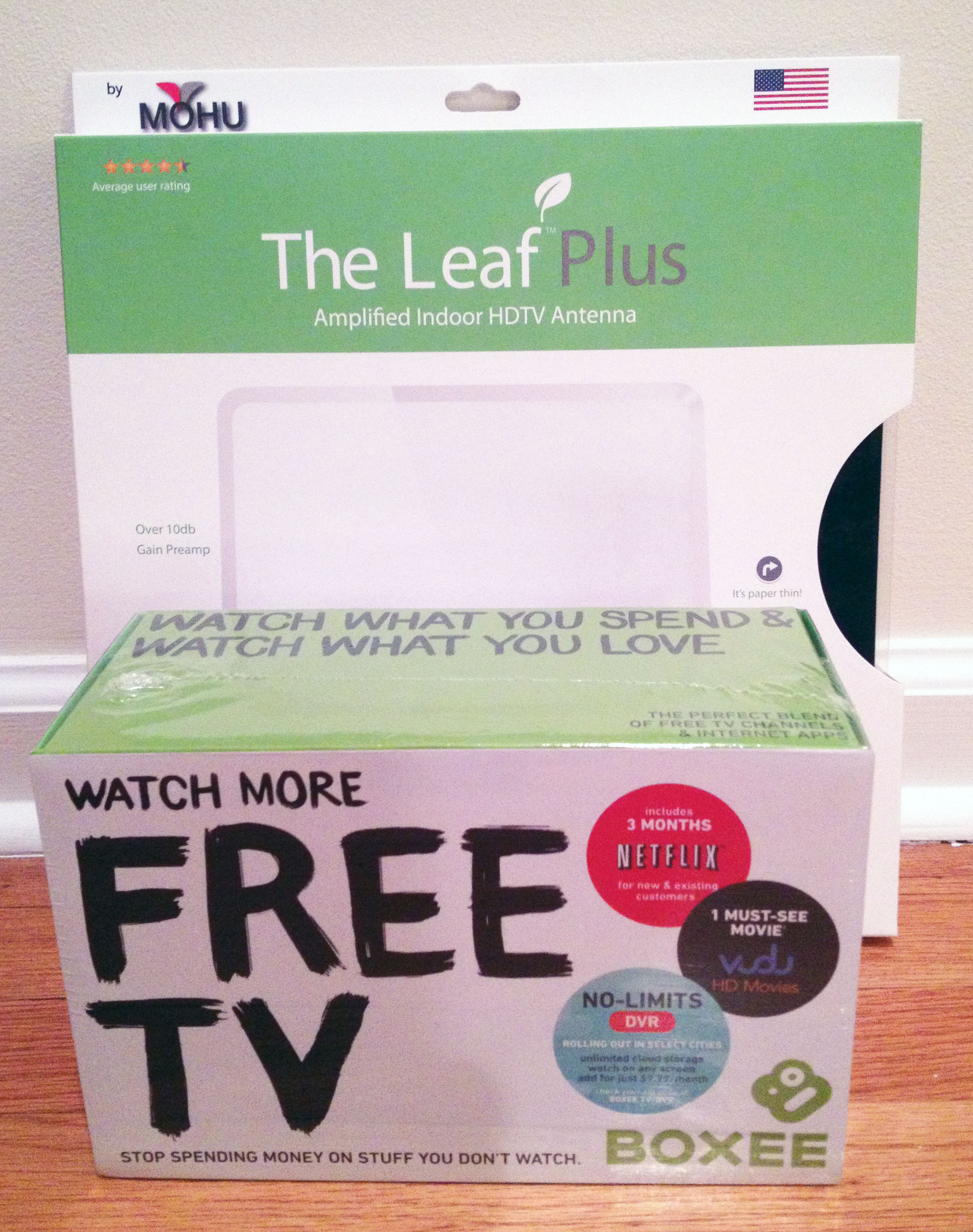
Free Giveaway: Win A Boxee TV With Mohu Leaf Antenna

photoI’ve gotten my hands on an extra Boxee TV along with a Mohu Leaf Plus antenna and am giving it away to one lucky reader of my blog. They come brand new in the box. To enter the drawing, all you have to do is leave one comment on this post and make sure you submit the comment with a valid email address.

The drawing is open to anyone with a mailing address in the U.S. and I will select one winner at random in two weeks. Good luck!

Product Link: Boxee TV – Product Link: Mohu Leaf Antenna

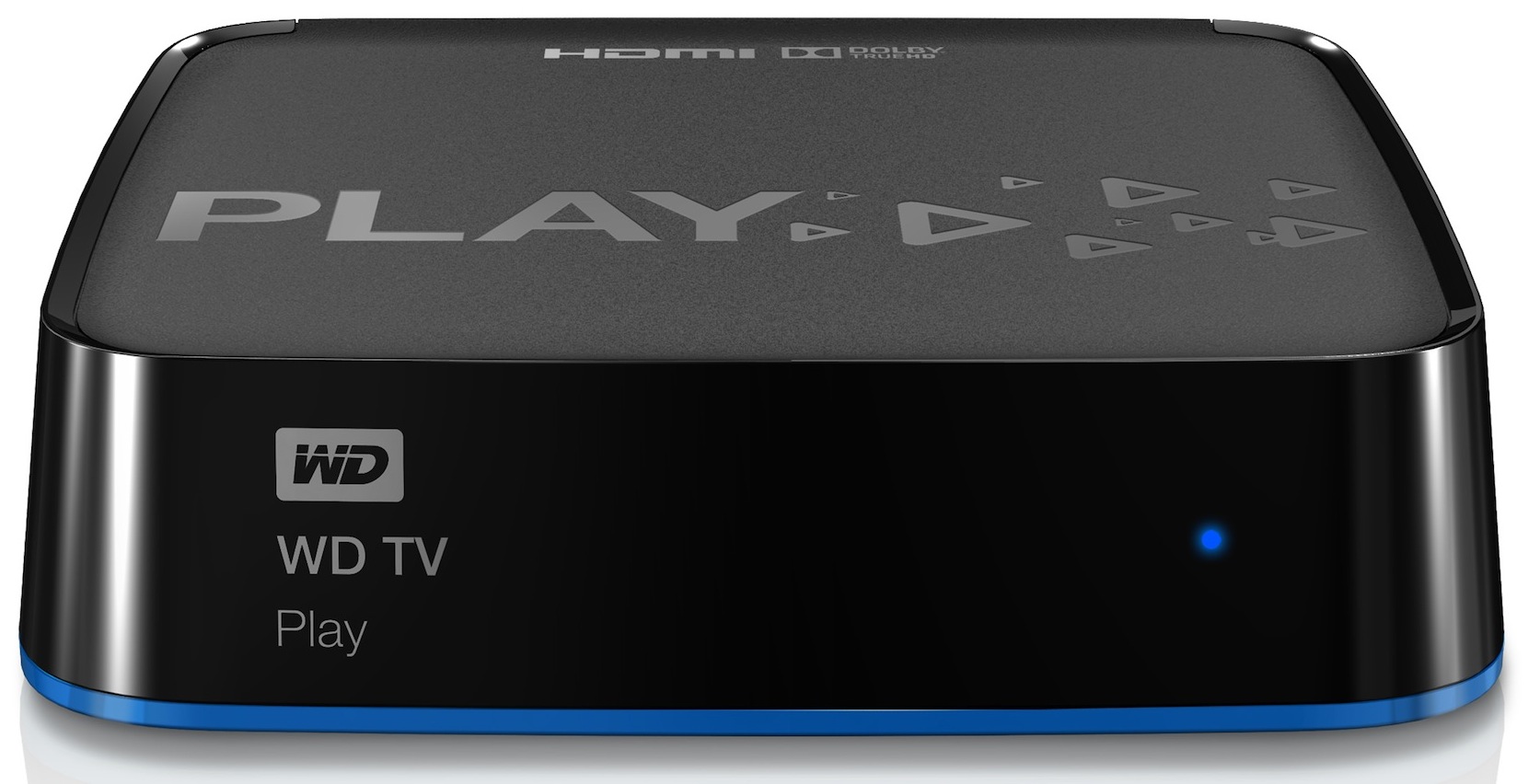
Western Digital Announces New $70 Streaming Player: WD TV Play

wdfWDTV_Play-3This morning Western Digital announced a new streaming player called the WD TV Play. The device is similar to the $99 WD TV Live, but is cheaper and retails for $70. One key thing that I see most members of the media missed in their posts is that in exchange for saving $30 you do sacrifice some functionality. Primarily support for MPEG, MPEG1, MPEG2, MPG formats and no support for DTS audio. Like the WD TV Live the Play device supports local content playback including:

  • Video: AVI (Xvid, AVC, MPEG4, VC-1), MKV (h.264, x.264, AVC, MPEG4, VC-1), TS/TP/M2T/M2TS (MPEG4, AVC, VC-1), MP4/MOV (MPEG4, AVC), WMV9, FLV (AVC)
  • Audio: MP3, WAV/PCM/LPCM, WMA, AAC, FLAC, MKA, AIF/AIFF, OGG, Dolby TrueHD.

The WD TV Play supports all the same video channels as the WD TV Live including YouTube, Hulu Plus, Netflix, Vudu, AOL HD and the SlingPlayer. The only new channel added to the WD TV Play is “Tweet,” which is a custom-built Twitter app developed by Western Digital. For consumers looking to stream content with local playback, the WD TV Play fits the bill nicely and seems to be directly targeting Roku’s mid-level box, the Roku 2 XD.

The WD TV Play still has to add a lot more content support like Amazon, HBO GO, MLB, NHL and NBA if it wants to be on par with the Roku 2 HD, but the WD TV Play does have support for YouTube and SlingPlayer, something Roku does not. And Roku’s playback of local content is extremely limited while the WD TV Play with handle almost any format you throw at it. And if more support is needed, you can easily upgrade to the WD TV Live.

Picking and choosing which box is best in the market all comes down to what each consumer’s specific content interests are and what they want to do with it. So blindly calling one box the best would be wrong. The WD TV Play is currently available for purchase, but only via Western Digital’s website.

The WD TV Play joins new boxes recently released in the market by ASUS, Netgear and Hisense, giving consumers a ton of choices in price and functionality. Here’s my updated list of streaming boxes currently in the market and there are more coming that have yet to be made public:

  • Apple TV
  • ASUS Qube with Google TV (coming March 2013)
  • Boxee TV
  • D-Link MovieNite Plus
  • Hisense Pulse with Google TV
  • Microsoft Xbox 360
  • Netgear NeoTV (3 models)
  • Netgear NeoTV PRIME with Google TV (coming Feb 2013)
  • Nintendo Wii U
  • RCA Streaming Media Player DSB772E
  • Roku (4 models + Roku Streaming Stick)
  • Sony PlayStation 3
  • Sony SMP-N200
  • Sony NSZ-GS7 Internet Player with Google TV
  • Vizio Co-Star with Google TV
  • Western Digital WD TV (3 models)

You can check out my comparison chart of streaming devices at www.streamingmediadevices.com. The chart is currently undergoing an update and I’ll be posting the latest revision shortly.

Amazon Adds More Functionality To Their Dynamic Content Delivery Platform, Lowers Pricing

amazon-web-services-logo-largeLast May, at the Content Delivery Summit event I organize each year, Amazon Web Services (AWS) announced support for dynamic content delivery, also referred to in the industry as dynamic site acceleration (DSA). (video presentation here). Since the launch, Amazon has been pretty quiet on what they have been working on so I spent some time with the company to get an update on where their support for dynamic content stands. For those not familiar with DSA technology in general, dynamic site acceleration is a suite of technologies and products that deals with optimizing dynamically served content across a network. Traditional DSA services often include TCP optimization, route optimization, connection management, on-the-fly compression, SSL offload and pre-fetching functionality amongst other technologies.

Amazon is targeting customers with their dynamic content delivery service for two distinct applications: content that changes frequently, e.g. sports scores, weather updates, stock quotes, etc., but may be cached for short periods of time, and content that represents the interactive or personalized portion of a website, created on-the-fly for each user and generally cannot be cached. To coincide with their new dynamic content delivery product, Amazon’s CDN CloudFront launched several new features to support their DSA offering.

These features include configurable minimum time-to-live (TTL), query string caching, support for multiple origins, and URL based cache behaviors. With configurable minimum TTLs, dynamic content can either be cached at the edge for very short periods of time or not cached at all. With query string caching, customers can cache dynamic web pages, such as search results pages, product pages, etc., at the edge for any amount of time. With support for multiple origins, customers can point at different origins for different types of content on a single website – e.g. Amazon S3 for static objects, Amazon EC2 for dynamic content, and a custom origin for third-party content. In addition to these new features, all previous Amazon CloudFront features (e.g. private content, invalidations, default root object, etc.) are also available for Amazon CloudFront accelerated dynamic websites.

Since May, Amazon’s been busy improving their dynamic content offering and CloudFront has added a number of new features to enhance the dynamic delivery. These features include:

  • Cookie support. Just like query strings, cookies are also used by customers to return dynamically generated content. With Amazon CloudFront, customers can now configure cookies to be part of the cache key so that the origin can personalize web pages for each viewer based on specific actions – e.g., response to a web form or after the viewer has logged in. See: http://aws.typepad.com/aws/2012/09/amazon-cloudfront-cookies-and-more.html.
  • Front-End-Optimization. AWS partnered with Strangeloop Networks to offer front-end-optimization (FEO) for dynamic websites. A joint customer already using this solution is Outrigger.com, as referenced in the AWS blog: http://aws.typepad.com/aws/2012/11/cloudfront-strangeloop-greatly-reduced-page-load-for-outriggercom.html.
  • Lower Pricing. On February 1, 2013 AWS lowered the price of data transfer from AWS Regions to Amazon CloudFront edge locations for “origin fetches”, in some cases by as much as 83%. This includes data transferred from Amazon EC2 and Amazon S3 to any Amazon CloudFront edge location.
  • New edge locations. Since May 2012, AWS added 9 new Amazon CloudFront edge locations, including new markets – Madrid, Spain and Sydney, Australia – to help improve performance for all Amazon CloudFront customers around the globe.

While Amazon has been busy improving their dynamic content offering, they still have a long way to go before it has a lot of the functionality Akamai’s DSA offering has, including support for commerce customers. But as with all of Amazon’s Web Services, it usually takes the company 18-24 months before their service competes for a large percentage of the market. One of the biggest reasons companies have taken note of Amazon’s new dynamic content delivery service is the fact that Amazon doesn’t charge a premium for their service, something most other vendors do. Amazon’s dynamic content pricing is the exact same price as their CloudFront CDN pricing. There are also no platform fees, setup fees, overage charges, and many customers find that they don’t need to use expensive professional services to configure dynamic applications, further decreasing the cost of using CloudFront for dynamic content delivery.

Since launching eight months ago, Amazon says thousands of customers have adopted Amazon CloudFront’s dynamic content delivery features. The company won’t discuss the breakdown of their customers, but I know that for now, they are mostly small customers who don’t pay a lot each month. But these customers represent a variety of use cases, including news portals, sporting websites, local/weather applications, targeted advertising systems, as well as social and gaming applications. For many of these customers, accelerating their entire website (including the dynamic portions of their site) was cost prohibitive in the past because they weren’t large enough to use a service from someone like Akamai. But with its cost-effective pricing model for dynamic content delivery, Amazon CloudFront is helping democratize this market for small customers and it’s only a matter of time before they start targeting and attracting much larger customers.

Just as AWS has done in the past, they plan to continue to rapidly add new functionality to their existing dynamic content delivery capabilities based on customer feedback and further additions to the service will be rolled out later this year. This includes performance improvements as well as adding new features and more edge locations around the globe.

Many have been quick to imply that Amazon’s dynamic content delivery service is too bare-bones to be able to compete for business from large media and enterprise customers looking for DSA services, but that’s a dangerous assumption to make. When Amazon’s CDN product CloudFront launched, it was in a beta stage for about 18 months with little functionality and many suggested it would never compete for the large RFPs in the market. But 18 months after launch, Amazon rolled out tons of additional product functionality to CloudFront, added in an SLA, lowered pricing multiple times and by my estimates (as well as their competitors), did more than $100M in revenue last year. So while Amazon still has some ways to go with the product, they’ve entered the market quickly and have the skills and resources to compete for the long-term.

Amazon’s dynamic content service will be no different. Sure it’s missing a lot of the functionality that Akamai and others offer today, but give it time. Amazon is in no hurry and can roll out more features and functionality in a steady and systematic way. Amazon’s not trying to dominate the market in the short-term, they are setting up the foundation to compete for a large portion of the market over time and they have all the resources to be able to accomplish it. So while many may write them off today, they won’t in the future.

What impact Amazon could have on DSA pricing in the market and how that could affect someone like Akamai, who dominates the industry with DSA and web optimization services, is still unknown. I’ll have more thoughts on that topic in another post. But one thing I would not do is bet against Amazon or not take them seriously as that would be a mistake. They have the resources and skills to impact any market they enter, including the web acceleration industry.

Call For Speakers Now Open For European Streaming Media Show

The next Streaming Media Europe show will take place at the Park Plaza Victoria in London on June 18-19. The call for speakers is now open and will close at the end of the month. If you are interested in speaking at the event, submit your request via the website. If you’ve got an idea for a thought-provoking panel, an insightful paper presentation, or an innovative “how-to” session, submit your proposal now, before it’s too late-the deadline for submissions is Thursday 28 February. Please note that I am not involved in the European event or the speaker selection process, so if you have questions about the speaking process please contact the event chairman Eric at erics@streamingmedia.com