Learn How To Create OTT Apps For Connected Devices

sm-west-arowsToday’s content services must contend with a playback environment comprised of hundreds of different device platforms, many of which require different technology frameworks and development approaches. At the Streaming Media East show, taking place May 21-22 in NYC, we’ve got a session entitled “Creating OTT Apps For Connected Devices” which will outline what is happening with various UI technologies including Flash, HTML5, and Webkit, and detail what silicon vendors are doing to aid support for premium content services.

Attendees will also learn about platform SDKs and what is required for content owners to deliver their services to connected devices. Confirmed speakers include:

  • Moderator: Mark Donnigan, GM, Dune HD
  • Joe Inzerillo, SVP, MLB.com
  • Maxwell Da Silva, Senior Video Software Engineer, New York Times
  • Matthew Durgin, Director, Smart TV Content, LG Electronics
  • Christopher Ince, Sales Director, Strategic Accounts, Sigma Designs

It’s not too late to get a pass to the show and readers of my blog can register using my own personal discount code of DR13, which gets you a two-day ticket to the show for only $695 and gives you access to 40 sessions and how-to presentations and 100+ speakers. You can also register for an exhibits only pass and get access to the show floor, both keynotes from CBS and ESPN and all the networking events, at no charge. #smeast

Sponsored by

Think Streaming Will Replace Cable TV? This Data On Streaming Quality Proves Otherwise

Screen Shot 2013-04-30 at 11.06.27 PMThese days, many want to suggest that cable TV offerings will be “killed” or “replaced” by content services being delivered over the Internet using content delivery networks. While that’s not reality, those who make these suggestions speak as if the quality of the content delivered online is the same as what consumers get from cable TV. However, thanks to Conviva, we have data from some of the largest streamers on the web, that shows how difficult it really is to deliver video on the Internet, with reliability. In fact, of the 22.6 billion streams Conviva monitored in 2012, 60% of them had quality issues. 60%!

The quality of online video isn’t even close to what cable TV delivers today when it comes to quality and reliability – yet many don’t want to admit this as it goes against their agenda. I like data because it proves what’s really going on in the market and when the sample size is so large, like what Conviva has shared, no rational person can argue with it. So rather than debate or speculate what may or may not work, we have the data to actually know.

In 2012, Conviva analyzed 22.6 billion streams for some of the largest content owners on the web including Netflix, ESPN, HBO, Viacom, VEVO, MLB, USA, NBC and many others. The data they share comes from content owners and syndicators who probably account for at least 75% of the video traffic on the web today, outside of Google. These content owners who use Conviva’s service add a small bit of code to their player, which allows Conviva to collect and monitor the user’s video experience, in real-time, and sends that data back to Conviva’s console. Last quarter, Conviva shared a lot of the data they collected in 2012 and here are some of the key findings:

  • 60% of all streams experienced quality degradation. Viewer interruption from re-buffering affected 20.6% of streams, 19.5% were impacted by slow video startup and 40% were plagued by grainy or low-resolution picture quality caused by low bitrates.
  • In 2011 a 1% increase in buffering resulted in 3 minutes less of viewing time per view of long-form content. In 2012, that identical 1% increase led to 8 minutes lost in viewing time per view for similar content.
  • The start time for a video to launch is critical. If video start time exceeds 2 seconds, the number of people that abandon viewing dramatically increases—400% for long-form VOD and for live content, abandoned views increase 140%.
  • Viewers with a buffer-free experience watch 226% more and are four times more likely to stay and watch if video starts in 2 seconds or less
  • For live video streams, viewers not impacted by buffering watch 10 times longer.
  • By improving buffering performance and video quality, a typical long form VOD provider, (with 10 million views per month) will increase revenue by as much as $1.4 million monthly.
  • In 2012, 124.8 billion minutes were spent in buffering.
  • More than 18% of viewers requesting a live stream abandoned before the video started—more than 4 times higher than long-form VOD.

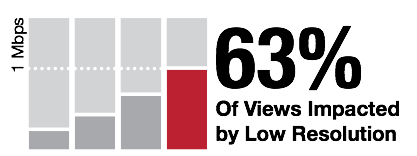
Conviva’s data shows that a staggering 60% of views were impacted by stalls, low resolution or buffering. 39.3% of streams were impacted by buffering and 4% never started. That’s over 900 million streams that never started! Ironically, for all the talk of HD, Conviva’s data showed that many consumers are watching on a screen capable of displaying high-quality (HQ) video, yet 63% are viewing below HQ resolution. And when it comes to buffering, for a live event lasting 90 minutes, Conviva’s data showed that 10.8 minutes of that content didn’t work thanks to buffering. Can you imagine turning on the TV to watch a movie and not being able to see 12% of it? Consumers would not stand for it.

So for those that want to talk to cable TV as being some sort of outdated technology that’s going to get “replaced” by streaming media based services, we have the data to prove otherwise. It’s not up for debate. Cable TV is still able to deliver a better quality user experience, nearly every time, over Internet video. You may not like the price you have to pay for cable TV, but the technology still surpasses Internet video because it works, it’s easy to use and you know what HD means. On the web, anything goes and you never know what you will get, as Conviva’s data proves.

A quick thank you to Conviva for sharing this data with the industry. If more companies showed what is really going on in the market, we’d have more realistic expectations being set, which would help the industry grow faster based on real business, not hype.


Featured Session At SM East: Understanding the Significance of HEVC/H.265

sm-west-arowsThe most recent video compression standard, HEVC / H.265, is expected to become the video standard of choice over the next decade. But how quickly will this adoption take place and what impact will it have on content owners and industry vendors? At the Streaming Media East show, taking place May 21-22 in NYC, we’ve got a session entitled “Understanding the Significance of HEVC/H.265“. The session will address what H.265 is, how it differs from previous generations of compression technology including H.264, key barriers to widespread adoption, and thoughts on when H.265 is likely to be implemented. Confirmed speakers include:

  • Moderator: Jan Ozer, Principal, Doceo Publishing
  • Keith Wymbs, VP, Marketing, Elemental Technologies
  • Will Law, Principal Architect, Media Division, Akamai Technologies
  • Thomas Kramer, VP, Product Management, Rovi

And if you think you’ve got an interesting angle to discuss about HEVC, let me know. I may add one more person to the panel who can bring a different perspective on the adoption of HEVC.

It’s not too late to get a pass to the show and readers of my blog can register using my own personal discount code of DR13, which gets you a two-day ticket to the show for only $695 and gives you access to 40 sessions and how-to presentations and 100+ speakers. You can also register for an exhibits only pass and get access to the show floor, both keynotes from CBS and ESPN and all the networking events, at no charge. #smeast

How To Choose an Online Video Platform: Picking and Choosing The Right Solution

sm-west-arowsAt the Streaming Media East show, taking place May 21-22 in NYC, we have a “how to” presentation that will help attendees identify their requirements for choosing an online video platform, with a particular focus on mobile and multi-channel scenarios. Learn about the products and platforms available in the market and the strengths and weaknesses of selected major players including Brightcove, Kaltura, and Ooyala.

Theresa Regli, Principal Analyst at the Real Story Group, a firm that publishes independent vendor evaluations that help you sort out suitable technology choices for your particular needs, will give you advice on how to get to a vendor short list, submitting brief and useful RFPs, what questions need to be asked, and other tips to ensure you choose the right solution. If you’re trying to figure out which online video platform can best help you manage your content, this is the presentation to attend.

It’s not too late to get a pass to the show and readers of my blog can register using my own personal discount code of DR13, which gets you a two-day ticket to the show for only $695 and gives you access to 40 sessions and how-to presentations and 100+ speakers. You can also register for an exhibits only pass and get access to the show floor, both keynotes from CBS and ESPN and all the networking events, at no charge. #smeast

Learn About TV Everywhere’s Innovations, Challenges and the Tools of the Trade at #smeast

sm-west-arowsTV Everywhere offers the promise of letting customers watch what they want to watch, wherever and—ideally—whenever they want to watch it. In order for TV Everywhere to take hold, MVPDs need to open up, partner, and extend their services to their customers wherever they may be. At the Streaming Media East show, taking place May 21-22 in NYC, we’ve got a session with Comast, Time Warner Cable, Samsung, ESPN and Synacor entitled “Driving TV Everywhere—Innovations, Challenges and the Tools of the Trade“.

Given technical limitations, rights limitations, and sensitivities around brand and user experience, how are MVPDs innovating around this challenge and getting comfortable with sharing their services and customer relationships? Find out what MVPDs and partners are doing to make TV Everywhere a reality, and learn about some of the experiences that are becoming available to end consumers. Confirmed speakers include:

  • Moderator: Mike Green, Senior Director, Strategy & Development, Comcast
  • Eric Hybertson, Director, Rendering Devices, Time Warner Cable
  • Glen Stone, Convergence Strategy and Standards, Samsung Electronics America
  • Damon Phillips, Vice President, WatchESPN & ESPN3
  • Michael Bishara, VP/GM TVE, Synacor

It’s not too late to get a pass to the show and readers of my blog can register using my own personal discount code of DR13, which gets you a two-day ticket to the show for only $695 and gives you access to 40 sessions and how-to presentations and 100+ speakers. You can also register for an exhibits only pass and get access to the show floor, both keynotes from CBS and ESPN and all the networking events, at no charge. #smeast

Netflix To Present The Technical History of Their Streaming Service At #smeast Show

sm-west-arowsNetflix started streaming in 2007 with an Internet Explorer plugin that hosted Windows Media Player. Today, there are more than 80 million active Netflix devices including smartphones, tablets, game consoles, and connected TV’s. At the Streaming Media East show, taking place May 21-22 in NYC, David Ronca, Manager of Encoding Tools for Netflix will present the technical history of the Netflix streaming service, looking at some of the key engineering decisions, codec and packaging, and a few key hacks. Some of topics that will be covered include Netflix’s first adaptive streaming client, their most unusual project, the BD-Live adaptive streaming client, and how Netflix developed their iPad app in just 60 days.

It’s not too late to get a pass to the show and readers of my blog can register using my own personal discount code of DR13, which gets you a two-day ticket to the show for only $695 and gives you access to 40 sessions and how-to presentations and 100+ speakers. You can also register for an exhibits only pass and get access to the show floor, both keynotes from CBS and ESPN and all the networking events, at no charge. #smeast

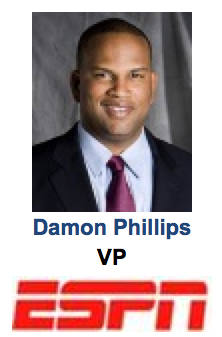
Damon Phillips, VP, WatchESPN & ESPN3 To Keynote Streaming Media East Conference

Screen Shot 2013-04-29 at 11.20.38 AMI’m very pleased to announced that Damon Phillips, Vice President of WatchESPN & ESPN3 will kickoff the Streaming Media East conference (#smeast), as our keynote speaker on Tuesday, May 21st. Damon will join more than 100 speakers from media, broadcast, MSO and enterprise companies discussing the latest business, content and technology subjects around online video. Register online and get admission to the keynotes and exhibition hall for free.

And it’s not too late to get a full conference pass to the show and readers of my blog can register using my own personal discount code of DR13, which gets you a two-day ticket to the show for only $695. That’s $200 off the regular ticket price and it gets you access to 35 sessions and how-to presentations, 100+ speakers and all the networking events.