Learn How To Design Content Services For The OTT Revolution

sm-west-arowsBroadcasters design their OTT distribution platforms considering many different factors, some of which can conflict with one another. Designing a product that both appeals to customers and enhances the offering can be constrained by budget, technical limitations, a fluctuating consumer device market, and existing licensing agreements and partnerships. At the Streaming Media East show, taking place May 21-22 in NYC, we’ve got a session that will explore how some of the most notable content owners in the industry are looking to satisfy the desires of consumers as they successfully deliver their product through non-traditional distribution. Confirmed speakers include:

  • Moderator: Michael Dube, Manager, Systems Integration and Operations, HBO
  • Frank Besteiro, VP, Head of Business Development and Partnerships, AOL Video
  • Kun Gao, CEO, Co-Founder, Crunchyroll
  • Jonathan Weitz, Partner, IBB Consulting Group

It’s not too late to get a pass to the show and readers of my blog can register using my own personal discount code of DR13, which gets you a two-day ticket to the show for only $695 and gives you access to 40 sessions and how-to presentations and 100+ speakers. You can also register for an exhibits only pass and get access to the show floor, both keynotes from CBS and ESPN and all the networking events, at no charge. #smeast
Sponsored by

Netflix To Keynote Content Delivery Summit: Highlight How ISPs Are Delivering Video

netflix-logoOn Monday May 20th, the fifth annual Content Delivery Summit will kick off in NYC with a keynote from Ken Florance, VP of Content Delivery at Netflix. Ken will highlight how major ISPs around the world are using the Netflix Open Connect Content Delivery Network to deliver Netflix video efficiently. If you’d want to hear the latest on Netflix’s CDN plans, go online and register using the discount code DR13 and get a pass for only $395.

The Content Delivery Summit has become the go-to event to learn about the technology behind web, acceleration and media delivery infrastructure. Telcos, carriers, ISPs, MSOs, major content owners and CDNs all gather to present case studies on real-world deployments, see demos of new technology platforms and discuss business model considerations for web acceleration and media delivery. And it’s not just about the infrastructure of video being presented at the show. We’re also covering commerce, caching strategies for small objects, dynamic content delivery and front end optimization.

You can see the entire agenda and full lineup of speakers on the Content Delivery Summit website.

Device Demos: Battle Of The $99 Streaming Boxes

sm-west-arowsWith so many streaming devices in the market, trying to determine what each one offers in the way of streaming quality and content inventory can be quite confusing. At the Streaming Media East show, taking place May 21-22 in NYC, I will present hands-on demos showcasing the leading streaming devices, including those from Apple, Roku, Boxee, Western Digital, Vizio and Netgear. Attendees will see these devices in action, learn which content platforms they run, and have a chance to get hands-on with them. I’ll also be given these devices away at the end of my presentation.

In addition, we’ll have an entire area on the exhibition floor, called theStreaming Device Pavilion, where attendees can get hands-on with more than 50 different devices and over-the-top (OTT) platforms.

It’s not too late to get a pass to the show and readers of my blog can register using my own personal discount code of DR13, which gets you a two-day ticket to the show for only $695 and gives you access to 40 sessions and how-to presentations and 100+ speakers. You can also register for an exhibits only pass and get access to the show floor, the device pavilion, both keynotes from CBS and ESPN and all the networking events, at no charge. #smeast
Broadcast TV Apps Are Not “TV Everywhere” – Industry Needs A New Definition

The term “TV Everywhere” is used every single day in the broadcast, cable and online video industries, yet it’s such a generic phrase that it really has no agreed upon meaning. Many seem to count broadcast apps as TV Everywhere when in fact, that’s not the reality. The orignal idea of TV Everywhere was that you would be able to get your full linear cable TV lineup wherever you went, on multiple devices. But for the most part, that’s not what’s happening.

Most cable operators allow you to get a limited amount of content, from some channels, on a few devices, mostly inside your home. That’s not “TV Everywhere” as the name would suggest. A few MSO’s are now allowing consumers to get live TV outside of their house, but this option is still very limited and some content owners are suing the cable operators for offering it. For the most part, broadcasters are creating apps that allow you to get a limited amount of their content in an on-demand fashion. And some apps are allowing consumers to get live content also on TV, but most of them are one-off events like the NCAA March Madness.

Creating one-off apps to allow consumers to view a live event is great, but that’s not TV Everywhere. I keep hearing industry people say that apps from TNT, CBS, FOX etc. are examples of “TV Everywhere” but those are from broadcasters, not cable operators and the inventory of content is limited. So how should “TV Everywhere” be RE-defined?

iOS Devices Beat Android When It Comes To Streaming Video Quality, But Challenges Remain

Today, there is a lot of growth of video usage on mobile platforms, with tablets leading the way. Based on recent numbers, tablet penetration is growing faster than any device in recent memory jumping from 45 million U.S. adults in January 2012 to 59 million in August. With smartphone penetration exceeding 50% in the U.S. late 2012, streaming to mobile devices continues to grow.

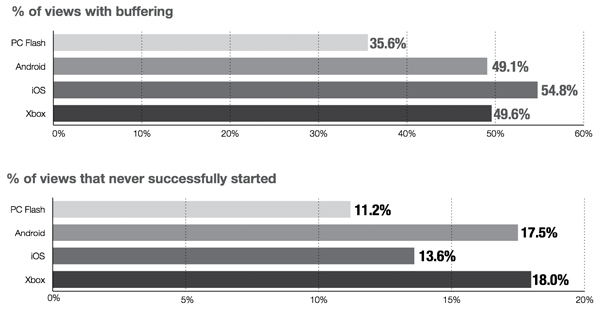
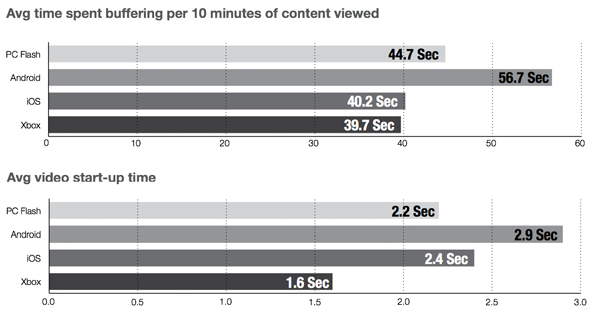
As part of the data Conviva recently released on the quality of service metrics for streaming, when it comes to reliably delivering video to mobile, nearly half of all the streams they monitored in 2012 experienced buffering issues. A for which mobile platforms performed better, iOS devices beat Android devices in every category. The average time spent buffering per 10 minutes of content for iOS was 40.2 seconds while Android was 56.7 seconds. Average stream startup time for Android was slower than iOS (2.9 seconds versus 2.4 seconds). The percentage of Android streams that failed to start was higher than iOS (17.5% versus 13.6%).

one

No clear winner has emerged in the mobile platform war when measured against the three important parameters of buffering, start-up time and failed starts. Mobile has a long way to go when it comes to being a reliable platform for high-quality video consumption and a lot of that has to do with the mobile carriers. While they imply that they want consumers to use their networks to watch video on mobile device, they really don’t. It’s one of the reasons why they have caps on data usage and keep them so low.

two

How much video can you really consumer when you only get 2GB of data transfer a month and then have to pay $10 per GB after that? When Netflix’s average mobile video stream is delivered at 400Kbps, that means you can only consume about 11 hours of video a month before you blow through your quota.  And that does not include any data transfer from surfing the web or doing other online activities, which counts toward your quota. In reality, the average person can probably consume 5-6 hours of video a month, over 3G or 4G, without going over their cap. That’s why most video consumed via tablets is done so over WiFi, not cellular connections. Mobile video still has a long, long way to go before mass adoption, at reasonable quality, for long-form content.

How To Manage OTT Video Quality For Service Providers and Network Operators (#cdnsummit)

LogoToday a growing number of consumers expect OTT video to reliably start playing in a couple seconds from pressing play and to look just as beautiful as video delivered over managed networks. Speeds and specs of network connections and video-enabled devices are not relevant to these consumers – they don’t want to hear about technical realities of best effort video delivery to dozens of different types of device, all they want is for it to work.

On Monday May 20th, at the Content Delivery Summit in NYC, we’ve got a session with Redbox, Comcast, Level 3 and Conviva discussing, “Managing OTT Video Quality For Service Providers and Network Operators.”

The session will explore the evolving consumer expectations of OTT video, plus the technologies and operational processes that network operators and service providers will need to implement in order to meet and maybe even exceed what consumers are increasingly demanding. Confirmed speakers include:

  • Moderator: Joe Ambeault, Chief Product Officer, Redbox Instant by Verizon
  • Barry Tishgart, VP, Network Services, Comcast Cable
  • Bill Wohnoutka, VP, Solutions Architecture Team, Level 3
  • Hui Zhang, CEO, Conviva
  • Staffan Gojeryd, VP, Product Management, TeliaSonera

Now in its fifth year, the Content Delivery Summit is a one-day conference designed to bring together telecom carriers, service providers, content owners, and industry vendors for a detailed look at CDN platforms for the delivery of video and content acceleration. Readers of my blog can register using my own personal discount code of DR13, which gets you a ticket to the show for only $395.

#smeast Session: Utilizing YouTube As An Online Video Platform

sm-west-arowsAs viewers continue to flock to YouTube, brands are reevaluating it as a practical alternative to costly online video platforms. At the Streaming Media East show, taking place May 21-22 in NYC, we’ve got a session where experts will critique YouTube’s cost benefits, built-in audience, established marketing channels, native device compliance, and technical features, as well as discuss YouTube’s platform as a destination for engagement. Learn the pros and cons of using YouTube as a video platform and hear which content and distribution strategies YouTube is best suited for. Confirmed speakers for the session include:

  • Moderator: Paul Kontonis, Chairman, International Academy of Web Television
  • Vanessa Pappas, Head of Audience Development, YouTube
  • Paul Cooney, YouTube Partnership Manager, AOL
  • Rob Sandie, CEO, Founder, vid.io

Are you a large content owner using YouTube for your video platform? If so and you’d like to talk about your experience, let me know. I may add one more person to this panel.

It’s not too late to get a pass to the show and readers of my blog can register using my own personal discount code of DR13, which gets you a two-day ticket to the show for only $695 and gives you access to 40 sessions and how-to presentations and 100+ speakers. You can also register for an exhibits only pass and get access to the show floor, both keynotes from CBS and ESPN and all the networking events, at no charge. #smeast