MPAA Whines About Piracy And BitTorrent On 60 Minutes, When Will They Learn

Sunday on 60 Minutes, members of the film industry and the MPAA were interviewed for a story about movie piracy. As usual, they were complaining about how much money they are losing, saying they can't do anything about it and how piracy prevents them from taking chances on making more good movies. What a load of crap. The reason they make so many crappy movies is because they don't know what consumers want and their model consists of producing five movies, with the hope that one will be a blockbuster. That's always been the movie business and it has nothing to do with piracy on the web.

Yes, piracy is not a good thing for any content owner, but rather than the movie industry giving consumers what they want, convenience and choice, they choose to ignore the demands in the market. Rather than embrace digital distribution, the studios still want to act as if it's a bad thing for the movie industry as a whole. Why not embrace it and start working with someone like Netflix who has a legit model for delivering movies via streaming? The whole reason Netflix doesn't have any first-run movies to date, is because Netflix can't afford to license the content because the costs from the studios aren't affordable.

Consumers say they want movies digitally, so the studios give it to them via iTunes, but then charge $5 more to download the movie, as opposed to buying the physical DVD. Where's the sense in that? There isn't any, unless of course you are the movie studios and are greedy, making more money off something that costs you less to distribute. The studios refuse to adopt new distribution models because they let big retails like Walmart and others push them around. The studios are so scared that if they price digital content the same as DVDs, stores like Walmart will balk at selling DVDs, which is the movie studios bread and butter.

Some will argue that movies on iTunes are more expensive than the physical DVD because the digital file is generally 720p in quality and consumers should pay more for it. Ok, fine. Can someone then please show me where I can download a lower quality movie below 480p, for less than $10? If consumers should pay more for higher quality movies, why isn't there any option to pay less for lower quality?

All studios ever do is complain. You never hear them sound like they are actually happy with digital technology, because in reality, they aren't. We keep hearing about how poor they are doing and how the Internet is ruining their business, yet this summer they grossed $4.7 billion in ticket sales, the highest grossing summer ever at the box office. How did that happen if the Internet is suppose to be eating into their business? Over the past ten years, the highest grossing year on record for DVD sales and rentals was 2004 with $24.9 billion. Last year, the total gross was $22.4 billion. That's not a huge gap to make up. If the studios actually embraced digital technology, new distribution models like Redbox and stopped treating customers as if they are all criminals, their business would be doing a lot better.

Sponsored by

Giving Away 200 Special Invite Codes For EPIX’s New Movie Streaming Service

Epix (Updated: Codes are now gone. None left.) Thanks to the folks at EPIX, I have 200 free invites codes to give away for anyone who wants to try out the online portion of their new movie service. While EPIX is giving out a limited number of 72-hour codes via their website, the codes I have will give you access to their online movie catalog for 30-days. All you need to do is send me an email asking for a code but you MUST be based in the U.S. or they won't work. Anyone who Retweets or links to my earlier blog post (http://retwt.me/1Jsp6) about EPIX's new service will get two invite codes.

Review: Hands-On With EPIX’s Movie Streaming Service, Free Trial Codes

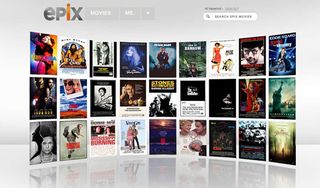
Epix-hdEPIX, a new premium pay-TV entertainment channel from Viacom, Paramount Pictures, Lionsgate and MGM, launches today for Verizon FiOS subscribers. The service, which costs $9.99 a month comes with a unique online video component. In addition to watching movies via the linear TV channel, or via the VOD model tied to a set-top-box, subscribers also have the ability to stream all of EPIX's content in HD quality at EPIXHD.com

Last night, I got hands on with the service, spent some time watching a bunch of movies and was very impressed. (If you want to see it for yourself, I'm giving away 200, 30-day invite codes.) The user experience, functionality, navigation, player controls and video quality were all excellent. For HD quality, videos are rendered out in 1280×720 and encoded in H.264 at two bitrates, 3Mbps and 2.2 Mbps to take advantage of Adobe's multi-bitrate technology. EPIX encodes for a total of six bitrates, including 500Kbps, 900Kbps, 1200Kbps, 1700Kbps and the two HD bitrates. The custom built Flash player has all of the usual bells and whistles but one of the nicest features is the detailed metrics it gives you on the quality of your stream.

Picture 1 When you click on the "stream info" button, a window appears in the video screen that tells you the speed of your connection, how many seconds before the video buffer is full, gives you the bitrate you're streaming at and gives you the option to maintain the maximum bitrate by turning off the variable bitrate functionality. Today, all of the videos are being streaming via Akamai, but as EPIX mentioned in a call last night, over time, they expect many of the MSOs who license the EPIX channel to bring the streaming inside their closed network. Verizon is not doing that as of yet, but I would not be surprised to see them do that over time as keeping the streaming inside their network would provide a better quality user experience.

EPIX said that by the second quarter of next year, their goal is to have 3,500 feature films available for streaming in HD. The one catch, due to licensing terms, movies can only be streamed in the U.S., so if you travel overseas, don't expect to be able to stream to your computer. While some have been quick to write EPIX off since they are launching on just one cable company, Verizon, deals with other providers are on the way. I've heard rumors that one of the impending deals is with DirecTV, but I have not verified that and EPIX had no comment when asked.

Some have suggested that right now, the last thing we need in the industry is another pay-TV service. That may be true, but in speaking with Emil Rensing, the Chief Digital Officer at EPIX, I've learned that the MSO has full-control on how they offer the service. Cable companies do not have to charge consumers to get access to EPIX and I would not be surprised to see some providers offer the channel for free, bundled in with their current TV packages, as a way to differinate themselves from others. It could be very similar to deals we have seen like ESPN360.com where Verizon has licensed the content and providers it to their FiOS users at no additional charge.

The other unique thing about EPIX is that right now, they are really the only ones that have the license to put all of their programming on TV, VOD and the web all at the same time. As a result of this, EPIX says they have more programming available on-demand than both Starz and HBO combined. They also make that content available to all three platforms at the same time without any window restrictions. In addition, while EPIX does not technically have a video offering yet for devices, nothing stops you from being able to watch movies on any device that has a web browser, a fast enough connection and a recent enough version of the Flash player. I'm going to have to give this a try on my PS3 over the weekend.

So far, I like everything I've seen with regards to the online portion of EPIX's offering and look forward to seeing the service evolve in the coming year. If you'd like to see the online portion of the service for yourself, I'm currently giving away 200, free 30-day trail codes.

In about two weeks, Emil Rensing, Chief Digital Officer at EPIX will be one of our keynote presenters at the Streaming Media West show. You can register for a FREE exhibits only pass and attend keynotes by EPIX, Xbox and FLO TV all for free.

Confirmed: Netflix Streaming Coming To The Wii Very Shortly

Wii Last week I received some images that showed Netflix streaming on a Wii console. I didn't run with the story at the time as I didn't know if the images were legit and it's taken me until today to confirm they are in fact real. I'm not disclosing who confirmed it for me but someone involved in the project has confirmed that Nintendo is currently in testing stages with Netflix to bring their streaming service to the Wii very soon.

What I'm hearing is that Nintendo originally planned to bring the Netflix service to the Wii before the end of this year, which still might take place, but that Nintendo is also considering holding off on the Netflix service until they release their next generation Wii HD unit in early 2010.

Note: I am not sharing any of the images I received as I don't want to burn the person who sent them to me.

Some Industry Vendors Betting Big On TV Everywhere, Most Will Lose

As many readers already know, I'm not a big supporter of the notion that TV Everywhere is going to do much to change our industry. Some vendors in the online video industry disagree with me and want to tell me how TV Everywhere is going to change their business, providing the catalyst for them to really grow their revenue.

While that sounds nice, for the vast majority of vendors, it's a pipe dream. None of these vendors I speak to seem to be able to tell me what the size of the market could be, how many MSOs would want to offer a TV Everywhere type service or how they actually make any money. I get the sense that many in the industry now think they have to use the phrase TV Everywhere to sound cool or to make it sound like they "get it", even though no one seems to be talking about the business side of the offering. (Definition of MSO: Multiple System Operator. It's the industry term for cable company.)

But the biggest problem with some vendors theory, with regards to the impact it could have on their business, is the fact that there aren't enough large MSOs to make an entire business out of TV Everywhere services. As of June 2009, numbers put out by SNL Kagan show that the top 25 MSOs in the U.S. have a combined total of 59,947,100 subscribers. Of that number, the top three MSOs combined, Comcast, Time Warner and Cox, make up 70% of all cable subscribers. Seventeen of the top 25 MSOs have less than 1M subscribers each.

Looking at those numbers, it's clear that very few MSOs are going to be in a position to offer TV Everywhere services. There is no incentive for a MSO with 300,000 subscribers to bring to the market any type of TV Everywhere offering. That being the case, it means the total number of MSOs that any one vendor could even try and sell their service to is probably five or six. That's not a large enough market for any vendor to bet their business on or expect to see big revenue growth from. Some vendors will do just fine selling into those five or six companies with the correct expectations that it's just another one of many verticals they focus on.

But for the vendors who talk about TV Everywhere as being the catalyst for taking their business to the next level, or enabling them to drastically grow their revenue, it's just not going to happen. When I tell this to vendors, some of them want to really argue the point, but so far, not a single one can explain to me why they think otherwise. It's easy to say something will have a major impact, but it's another thing to show, with data, or some kind of evidence how that's actually going to take place. If any vendor feels they have that, I'd love to see it. I've asked many vendors for it and so far, none of them have produced anything other than to tell me, in marketing terms, why TV Everywhere is such a big deal to their company. The comments section is open.

Related Posts:

– The Promise Of TV Everywhere Is Doomed For Failure, Here's Why

– TV Everywhere Offerings Will Struggle To Be Successful

– Cable Companies Hyping Over-The-Top Video, But Where's The Business Model?

Roku Announces Two New Devices, Hands-On, With Video: More Content Coming

This morning, Roku announced two new devices that they are calling the Roku player and the Roku HD-XR. At first glance, the new units look identical to the original Roku device but the new entry level Roku player has no support for HD. It is however priced at $79.99, twenty bucks cheaper than the original Roku HD unit. The new Roku HD-XR player is priced at $129.99 and now supports WiFI n and has a USB port on the back.

Roku is not saying what the new USB port on the HD-XR unit will be used for, but one could imagine all sorts of media extender functionality. Roku also said they are getting very close to launching their new Roku Channel Store, which will include pay and free ad-supported content to enable photo sharing and music streaming. We've already heard that content from TWiT.tv, Mediafly, blip.tv. Motionbox, Revision3, Pandora radio and Flickr will be coming to the Roku platform shortly.

So to recap, here is how the three Roku units stack up:

  • Roku player: $79.99. No HD support, WiFi b/g
  • Roku HD player: $99.99. HD support, WiFi b/g
  • Roku HD-XR player: $129.99. HD support, WiFi b/g/n, USB port

In addition, Roku said that once their Channel Store launches with their first round of content partners, a second round of partners who have been working with Roku's SDK are waiting in the wings to launch their services. It sounds like the Roku box is going to be getting a lot of content updates over the next couple of months. It's also going to be interesting to see just how many boxes Roku has out in the market by the end of the year. Roku has said that to date, they have sold a combined "high six figures" of units and with a good holiday season, I think they have the potential to have close to a million units in the field.

Join Me This Thursday For A Frost & Sullivan Webinar On The CDN Market

(Updated: The archived webinar and slides can be found here) On Thursday October 29th, I’ll be hosting another Frost & Sullivan webinar on the CDN market. Starting at 3pm ET, I’ll be presenting the current state of the CDN market, as well as providing the latest pricing data from a recently conducted survey of over 700 content owners. You can sign up for free here.

Every time I do a webinar on the topic of CDNs, I get a lot of questions and have a hard time getting to all of them during the event. So this time around, I’m going to save plenty of time for Q&A and also encourage you to send in your questions now if you like. Is there a topic you want to see me address during my presentation? If so, put it in the comments section below and I’ll do my best to cover it.