
Enterprise Video Provider Ignite Technologies Does Revenue North Of $10M In 09′

The vast majority of companies in the online video space are private and as a result, don't publish any details on their revenue, profit loss or rate of growth in the market. Many times, vendors will tell me off-the-record what their financials look like but don't allow me to give out any of those details in any public forum.

So it was great to have a call with Ignite Technologies last week where the company was willing to go on-record with numbers, drill down into their revenue and provided me with a list of new clients wins from 2009. While everyone is talking about content delivery over the public Internet, companies like Ignite are focused on providing a platform that enables enterprise corporations to deliver video and digital assets inside their firewall, across the customers own network.

Ignite signed up more than ten new customers last year including BP, FlowServe, Sepracor, Altria and Hyatt and ended the year with revenue over $10M. While that number is small when compared to CDNs in the market, those CDNs are in the service business, while companies like Ignite are in the software business.

While the topic of enterprise CDN does not get a lot of coverage in the media, it's crucial to the way enterprise corporations communicate with employees, customers, partners, suppliers and others in their value chain. The market for enterprise video delivery platforms is still small, under $100M last year, but it's a fast growing segment of the market and one that does not require any type of monetization model, like we see in the consumer entertainment market. Corporations understand the value of video and their challenges are things like managing content, scaling their network and integrating with CMS platforms, as opposed to ad insertion or content licensing models.

The enterprise CDN market does not get written about a lot because most of the work being done is not talked about, many customers don't want their name used and the nature of the content being delivered can't compete with exciting content like movies and entertainment. But there is a quiet revolution going on in the enterprise CDN space and if you speak to a lot of Fortune 500 corporations, the will tell you that their use of video delivery inside their firewall tends to double each year.

Related:

Enterprise Video Still Growing, Ignite Technologies Reaches Profitability

In These Economic Times, More Video Vendors Relying On The Channel

Sponsored by

Rob Glaser Deserves More Credit Than He Is Being Given By Bloggers

Rob-glaserx-inset-community Yesterday, after sixteen years as CEO of RealNetworks, the company announced that Rob Glaser would step down as the CEO and the day-to-day operations of the company. Rob will still maintain his chairman of the board duties and is still the largest single shareholder in RealNetworks.

When the news broke, it was very interesting to watch how many bloggers jumped on the story and published a post without really knowing anything about Rob, what he accomplished with RealNetworks and the role he played in starting the entire online video revolution. Many were quick to say he should have stepped down long ago, wanted to imply that RealNetworks business is in trouble or wrote about the "format wars" from nearly ten years ago.

The reason for this is that none of the bloggers I read are actually in, or from, the online video industry. They weren't around in 1995 webcasting with RealAudio 2.0 software, weren't encoding video two years later when Progressive Networks introduced RealVideo and they never had to negotiate a contract for a RealNetworks license. They simply don't know how important of a role Rob and Real have played and the groundwork they laid for the technology we have today. Half of them, including sites like USAToday.com, don't even know how to spell the name of the company or the word RealPlayer correctly. They are both one word, not two.

That's not to say I think Rob and Real did everything right and Rob and I have disagreed on many things over the years. Probably the biggest thing was in 1998, while at Globix, I negotiated a $200K Real license to be able to deliver content on our network, only to then find out that Real also planned to compete with us for the same business with their own network called RBN. That was a really bad move on Real's part and was one of the reasons Microsoft was able to get their foot in the door since so many delivery networks were upset with Real's licensing practice.

I also remember bashing Real in an article for Streaming Magazine in 1998 when Real decided to limit their support for the Mac client and I also didn't agree with many of the bets Real made over the last few years with regards to the iPod. But disagreements like those aside, while they don't deserve all of the credit, Rob and Progressive Networks started this industry, which can't be debated. Even former Microsoft employees who don't like Rob won't deny the fact that he deserves credit for what he's accomplished.

Today, many talk about multi-bitrate video delivery probably without even knowing that Real invented the technology ten years ago when they launched their G2 system and called the technology SureStream. Real was also responsible for the wide adoption of the RTSP protocol, the first video platform to support SMIL and a whole host of other firsts. Today, most don't know how the online video industry started, what companies were around back then, how the technology evolved or who was responsible for it. The media is so quick to judge companies with the what have you done for me
today mentality, as opposed to looking at what they have accomplished over many years.

As was evident by a lot of the bloggers who covered the news, most of them only know Real as a format that use to be around after losing the format wars to Microsoft. While that's accurate, that took place almost ten years ago and Real moved away from the online video format business nearly eight years ago. Today, they only think of Real as a gaming or music company and are quick to dismiss Real as a company that is struggling, without really knowing anything about their core business or where they get their revenue.

There is no question that Real has gone through hard times over the past eighteen months with lower revenue, layoffs and a sagging stock price. But show me a company who hasn't experienced the same thing? It's not like Rob left the company in some kind of financial turmoil, like other CEOs we could all list. As of Q3 2009, RealNetworks had $373.2M in cash and short-term investments. For the third quarter, their revenue declined 5% year over year, which considering the economy we are in, is not bad at all. Many companies would give anything to get a number that low.

While Real has not yet reported Q4 numbers, for all of 2009 the company will have generated more than half a billion dollars in revenue. That alone should get Rob some respect. In addition, Real's carrier platform is used by 85 mobile operators in more than 45 countries and in Q3, the company generated $47.4M in revenue just from their technology products and solutions alone. And for all the industry people who want to talk about the monetization of video, Real will generate close to $100M for all of 2009 from selling premium content services, syndication and player licenses. How many other companies are generating nearly $100M from content today?

While looking through a lot of the comments on other blogs about Rob stepping down, folks were quick to say how Real is losing the music battle to Apple or how five years ago they used the RealPlayer and didn't like it. I get the sense that the vast majority of people don't know what Real's business is today and it is very clear that many of the people writing about the news don't know the history of Progressive Networks and the important role they played.

Many bloggers were quick to try and get their post up first about the news that I found it sad that none of them, that I read, took the time to talk to one of the many folks who have been in the online video space since the early beginning, to ask them what Rob really meant to the industry. That alone is a good story, but many bloggers are less concerned with telling stories these days and just want to be the first to report news.

In many industries, most companies don't last sixteen years. In the Internet space, it's even more unheard of. In that time, Rob managed to not only start the online video revolution but stay the CEO of a company and grow revenue to half a billion dollars. Like it or not, it's pretty hard to argue with those facts. You don't have to agree with everything someone says or does to show them the respect they deserve for what they have accomplished.

Rob, for your efforts over the past sixteen years, and for what you have done for the industry over that time, you have my thanks.

Netflix Confirms It’s Coming To The Wii: But Most Wii’s Aren’t Internet Connected

As I reported in October, when I got access to some screenshots of Netflix streaming on the Wii, Netflix confirmed today that come this spring, Netflix members will be able to get streaming video to their Wii consoles. Similar to Netflix's offering on the PS3, users will be required to insert a DVD into the Wii console each time they want to stream something from Netflix.

While the current Wii console is not capable of displaying video in HD quality, for most Wii users, they won't care. I am willing to bet that the vast majority of content that will be consumed via the Wii is going to be content for kids and families where HD won't be a requirement. And in many cases, the content Wii users are going to consume, like cartoons, would not be impacted by the lack of any HD version.

Many have suggested that when Netflix is able to bring streaming to the Wii that it would be a big deal for Netflix since Nintendo has the most gaming consoles in the U.S. and has sold 26M Wii's to date. While it is a big deal for Netflix, the Nintendo deal won't be as successful or more widely adopted than the Xbox 360 platform, even though Microsoft has 6M fewer consoles in North America.

The biggest problem is that most Wii's are not connected to the Internet. While it is impossible to know exactly what percentage aren't connected, folks inside Nintendo have told me the figure is as high as 85%. And for anyone who wants to hook up their Wii to the Internet via a wired network to enable Netflix streaming, they have to go out and buy a $25 Wii Lan Adapter. Compare that to the Xbox 360 where Microsoft has said that roughly 80% of all 360 consoles are connected to the Internet and you get a clear picture that the Wii won't have that big of an impact on Netflix's revenue in the short or near term. It's a great deal for Netflix and for Wii users, but the impact to both companies won't be felt within the next year.

Why Can’t YouTube’s Player Auto-Detect When A User Should Get HD Quality?

For all the praise that the industry and the media continues to give YouTube, I don't understand why those same people never hold YouTube up to the standards that other media companies are held to. While everyone wants to discuss the business model behind YouTube, no one ever seems to question why the videos look so bad and why some of the most basic features that other sites have had for years are completely lacking with YouTube.

While the media was quick to cover how YouTube was moving to HD quality video last year, I didn't see a single person commenting that the YouTube player does not currently have the ability to auto-detect when a user should get the HD copy instead of the SD copy. This technology has been around for years and most sites have been using it for quite a long time. Why isn't YouTube? Why do I have to manually click on an HD icon to actually get the HD stream? Why can't YouTube auto-detect that I am on a fast enough connection to get HQ the quality video to begin with? It is so annoying that when you visit a page where the video is set to auto-start, you have to click on the HD icon to get the one you want and then wait again for it to re-buffer.

Today on YouTube's blog, they are asking people to send them ideas on how they can improve the service and to vote on what they think are the most important features that are missing, or not needed at all. First suggestion, FIX ALL THE BUFFERING ISSUES! A quick look at the comments section on YouTube's own blog shows I am not the only one who continues to have buffering problems – for the last THREE years! (2007, 2007, 2008, 2009)

YouTube needs to get with the times and have a user interface that actually takes advantage of some of the technology that has been in the industry forever. YouTube does not use any streaming protocols, only downloads via HTTP, has no player auto-detection feature and lately, 50% of the time myself and many others upload a file to YouTube we get an error message of "try again later." In addition, while YouTube has very limited functionality for variable bit rate (VBR) encoding for HD quality videos, they don't have the option at all for SD quality videos and default to a constant bit rate (CBR). The whole point of VBR is to improve the user experience by providing higher quality video without the need for the video to re-buffer. It's a standard on the web today, but apparently YouTube has not realized that.

If this was the search business and Google was missing some of the most basic features that every other search engine had, the media would hold Google accountable for it and there would be a lot of discussions taking place on the subject. Of course, we know Google does not have any of these problems in their search business but if they did, they would address them and correct them very quickly. But with YouTube, they don't seem to follow the same strategy. The service has been bad for years, the user experience is still very poor, the quality of the videos is not up to par with others on the web and the the YouTube platform has a long list of really major problems that still aren't being addressed or corrected. Users of YouTube are complaining about these problems in public forums, yet the media and many in the industry continue to heap praise on the company even though they are not doing anything to address the poor user experience.

Related:

Bandwidth Pricing Trends: Cost To Stream A Movie Today, Five Cents: In 1998, $270

Detailing Netflix's Streaming Costs: Average Movie Costs Five Cents To Deliver

Platform Overload: How Many Content Platforms Can Survive On TVs And Devices?

TV Everywhere: The Future of Television, or Another Over-Hyped Promise?

Rackspace Cloud Servers Versus Amazon EC2: Performance Analysis Results

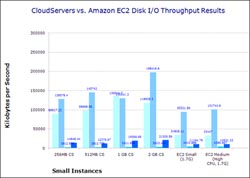
Rackspace This morning, Encoding.com put out a press release with Rackspace talking about how Encoding.com is using Rackspace’s cloud service to enable them to scale their transcoding platform. But the really interesting part of the Encoding.com release is that Rackspace Encoding.com commissioned Bitsource to compare Amazon’s EC2 performance versus their own cloud offering and is sharing the results.

While most companies put out statements all the time about company A being better than company B, they usually don’t provide any details. But in this case, Bitsource has published all of their performance findings along with their methodology for anyone to review.

I don’t know much about performance when it comes to cloud computing so I’ll let someone else analyze the results, but kudos to both companies for not simply delivering a bunch of marketing terms and actually showing us, in detail, what they compared and how they did the comparison. You can check out the results here.

Platform Overload: How Many Content Platforms Can Survive On TVs And Devices?

After all the news that came out of CES last week on the number of companies working on software platforms for TVs and devices, one has to wonder if these platforms are destined to follow the fragmentation we currently have on the hardware side. As an industry, we still haven’t figured out what devices can survive and co-exist in the long run. We currently have so many broadband enabled devices in the market including the Roku, TiVo, VUDU, PS3, Xbox 360, TVs, Blu-ray players, Apple TV and soon to be Boxee and Popbox, without having to figure out what platforms they can all run.

While it’s good to see the industry starting to talk about the platform that will enable us to find and consume the content, as opposed to being so focused on the hardware, the conversation is only going to get more confusing now that so many platforms exist. Here is a list of the platforms that I could think of:

  • VUDU: While VUDU started off as a hardware device, the company has since changed to a platform licensing model for third party devices and now has deals with LG, Mitsubishi, Samsung, SANYO, Sharp, Toshiba and VIZIO.
  • Yahoo!: While Yahoo! originally started off with some widget functionality that didn’t seem like a big deal, at CES, they announced a whole bunch of new partnerships with chip makes, TV manufactures and media player companies for their Connected TV effort. To date, they have deals with VIZIO, ViewSonic, Hisense International, Intel, Samsung, LG Electronics, Sony MIPS Technologies and Sigma Designs.
  • TiVo: While TiVo has always been a hardware and platform company, they have been working for years to try and diversify their revenue by licensing their platform to the MSOs. Recently, they have been very vocal that MSOs should use the TiVo platform as a gateway, or portal for OTT type content to enable MSOs to offer something similar to a VOD service. So far, they have signed up Virgin Media in the UK.
  • Netflix: While most think of Netflix as simply a content partner inside a platform like the Roku or Xbox 360, Netflix is also a stand alone platform for the numerous deals they have cut with device manufactures. Netflix said they expect to be on more than 100 broadband enabled devices by the end of this year which easily makes Netflix not only a content option, but also their own stand alone platform.
  • Best Buy: While we don’t know exactly when or what devices the Best Buy platform is coming to, Best Buy plans to enter the market some time this year with a digital download offering that’s powered by CinemaNow. Users will be able to download content via BestBuy.com and via select devices sold in Best Buy stores.
  • Blockbuster: While the company has been slow to get their platform, powered by CinemaNow, onto many hardware devices, expect to see a slew of consumer electronic deals announced this year. Blockbuster is available via TiVo’s platform and to date has one direct manufacturer deal with Samsung.
  • PlayStation Network (PSN): While the PSN always went along with Sony’s gaming devices, the company announced at CES that they would soon bring the PlayStation network to other Sony hardware products including TVs and Blu-ray players.
  • DivX: At CES, DivX announced the launch of of their embedded Internet TV platform called DivX TV along with a list of partners from integrated circuit manufacturers and consumer electronic companies including LG, ADB, Broadcom Corporation, Iomega and Viewsonic amongst others.
  • Rovi: While the company does not have any deals with hardware manufactures yet, it’s only a matter of time before Rovi branches out to devices with their recently announced TotalGuide EPG platform. The company’s goal is that their platform will become an interactive program guide integrated into TVs and set-top-boxes.
  • iTunes: While Apple’s iTunes platform is not yet connected to any TV device other than Apple’s own Apple TV, I would expect the company to start cutting licensing deals this year with major CE manufactures.
  • Boxee: For a company who’s platform has gotten more press and hype before even having a product out on the market, Boxee announced last week that it would also be entering the hardware market later in the year. While still a platform company at heart who’s main goal is to get integrated via set-top-boxes, Boxee now straddles both sides of the fence with a hardware and platform business.
  • CinemaNow: While the company has focused on white labeling their technology platform for Blockbuster and Best Buy, the company is planning to work directly with CE manufactures in the New Year.

Even with the names I probably overlooked from this list, that’s already a dozen platforms all targeting TVs and broadband enabled devices. So what happens when, years from now, we actually have a lot of these devices out in the market? How fragmented are all of these content services going to be when consumers buy a Blu-ray player or broadband connected TV and it has movies from one studio but not another? Are content companies going to have to follow the path of Netflix and get their content on every device out there, or can any of these video platforms get enough of an install base to really dominate the market?

For years we’ve been complaining about how fragmented the device market is, but if we thought that was bad, just try to envision what the platform market is going to look like three years from now. It won’t be pretty.

Call For Speakers Now Open For Streaming Media East: Moderators Wanted

Smeast_logo The call for speakers for the 2010 Streaming Media East show, taking place May 11-12 at the Hilton hotel in NYC is now open. And I’m excited to announce that once again I’ll be organizing the Content Delivery Summit, taking place the day before the East show on Monday May 10th. I’ll have more details about the summit shortly.

In the mean time, the call for speakers is now open. The deadline is January 25th. I have roughly 110 speaking spots and typically get over 800 speaking requests. Everyone always wants a speaking spot but I simply don’t have enough to go around. The key is to get a submission in on-time and for vendors, introduce us to customers. 75% of the speaking spots go to content owners and end-users, the companies who buy and use online video services. I always need introductions to new customers.

In addition, I always need moderators who can help organize panels. So if you wanted to moderate a session at the show, organize a discussion around a topic of interest to you or get involved in helping to create the programming of a session, now is the time to contact me. For me, the hardest part is always finding moderators that are neutral and understand the importance moderators play in helping us produce quality programming.

If you have experience moderating and are looking to help out and get involved, you need to contact me ASAP. I’m also looking to pay some moderators who are willing to help out with more than one session.