Walmart To Acquire VUDU: Get Ready For Another Failed VOD Offering

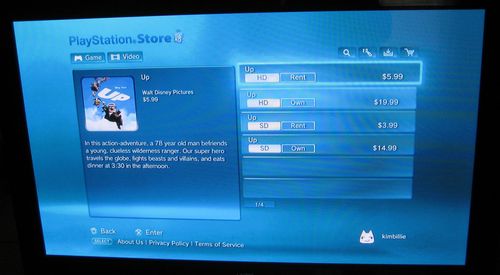
In January, Peter Kafka broke the news that rumors were circulating that Walmart might acquire VUDU and it appears a deal has now been reached. The New York Times is reporting that the deal is done and while there is no official word from VUDU or Walmart, I just spoke to a consumer hardware vendor that has a deal with VUDU that confirmed they were briefed on the news earlier today. Updated: Here is the official release from Walmart.

While we don't know the terms of the deal or how VUDU made out, it's a really bad business for Walmart to try to get into. This would be Walmart's third or fourth attempt to get into the digital media space after trying to compete with Netflix and trying a movie download and kiosk service that they killed within a year. While I like VUDU, Walmart will not know what to do with them. I know some will say that this is Walmart showing that they get digital and that it is the future, but that's not what this means at all. Walmart does not own any content or hardware which means the success or failure of any offering will be dependent on the studios and hardware vendors.

In order for any video on demand service to take off it has to have scale. And while Walmart sells a lot of CE devices that they could get the VUDU platform onto, the price would still be too high for any type of mass market adoption. Considering you can rent DVDs for $1 from Redbox and Blockbuster Express, why would I want to purchase a device to access movies at four or five times that cost? Maybe Walmart plans to sell content and compete with iTunes, but then won't get the reach Apple has since they don't have any devices of their own.

If Walmart really wanted to get into the space and was serious, they would buy Netflix and hit the ground running. While they would have to spend a lot more money for Netflix than they did for VUDU, they would have something to show for it. With VUDU, all they get is technology and some studio relationships. VUDU has less than 100,000 stand-alone devices in the market and Walmart now has to find a way to get enough devices in the market that have their platform on it. While VUDU has been cutting deals with CE manufactures and moving away from the hardware business, they still don't have enough deals in place to give Walmart any sizeable footprint today or anytime soon.

Yes, Walmart has a huge reach and physical presence with consumers, but that does not automatically translate over to success with regards to digital media, especially when the media is being consumed without the need for having to go anywhere, like to a physical Walmart store. For VUDU, they had to sell at some point as they could not survive long in the current state they were in and if they got a lot of money from Walmart, good for them. But I think whatever Walmart spent on this acquisition will be shown to be a complete waste of money and time on their part, sooner than they think.

Does anyone see an upside to Walmart from this?

Added: While some are suggesting that Walmart bought VUDU for the deals that VUDU has in place with seven TV manufactures to carry VUDU's platform, four of those manufactures don't even have TV sets out in the market. And if you look at the number of total Internet connected TVs expected to be sold in 2010, most analysts put that number around seven million. And out of that seven million, analysts predict about 25% will be connected to the Internet. That's not a lot of TVs.

Sponsored by

Selling Off Some Of My Domain Names With Streaming Media and Online Video

Over the years I have acquired almost a hundred domains names related to streaming media and online video topics. I really don't need many of them anymore and need to start getting rid of them. Rather than letting one of the domain auction services grab them when they expire and then charging someone way too much for them, I'd rather sell them to someone for cheap who can use it for their own blog or business purpose. Here's the first batch that I am getting rid of.

  • StreamingMediaVideo.com
  • ContentDeliveryPatents.com
  • P2PVideoBlog.com
  • EnterpriseVideoBlog.com
  • StreamingMediaBooks.com
  • VideoIPBlog.com
  • WebVideoMagazine.com
  • ManageTheWorkflow.com
  • DigitalMediaPatents.com
  • StreamingMediaPatents.com
  • StreamingMediaBlogs.com

If any of them interest you, drop me an email and we can work something out.

Jeff Hayzlett, CMO Of Kodak Confirmed As First Keynote For Streaming Media East

Kodak I'm happy to announce that Jeff Jeff Hayzlett, CMO and VP of Eastman Kodak is confirmed as our keynote speaker for day one of the Streaming Media East show on Tuesday May 11th. Jeff has been helping to lead Kodak’s turnaround and been doing a lot of it with innovative marketing and use of great tools like streaming media.

Jeff is also one of the executives responsible for the success of Kodak's line of consumer video cameras and will share with us the trends they are seeing with regards to how consumers are capturing, uploading and consuming video. And if you register for a platinum or gold conference pass before March 26th, you'll receive a FREE Kodak Zx1 Pocket Video Camera just for attending the show.

HBO’s Streaming Service Launches, Verizon Managing Videos And Doing The Delivery

Hbogo This week, HBO launched their new online video service called HBO Go for customers with FiOS TV and a subscription to HBO. While there have already been a couple reviews of the service, here are some details I haven't seen anyone talking about, the most interesting of which is that HBO is not using a CDN for the streaming.

I've been using the service over the past two days and overall, I'm pretty impressed. The quality of the videos is on par with what I think most consumers expectations would be with SD videos being encoded at 1.2Mbps and HD videos being encoded at 2.6Mbps. HBO has confirmed that currently, content is only being encoded for a single bitrate, although the company is looking at adding adaptive bitrates down the road. The video player has all of the controls that one would expect to see and navigating the site is pretty straightforward. Upon initial startup, the videos take a few seconds longer to buffer than I would like to see, but that's something that should be improved when HBO starts using adaptive bitrate technology.

Continue reading »

Encoding.com Would Be On My List Of Top Companies To Watch In 2010

Encoding Over the past few weeks, I've finally gotten around to taking a deeper look at Encoding.com's web-based transcoding platform and will post a hands-on review of the service shortly. While I still need to run some additional videos through the system and get some more details on the service, the more time I spend using it, talking to their customers and talking to the company's founder and President, the more I really like this company.

While there are plenty of great hardware and software tools out on the market today to enable just about anyone to do their own encoding, for many content owners, it's not a task they want to take on. For some content owners, it may make sense to bring their encoding in-house and setup their organization to manage the process themselves. But for most content owners, that's not something they want to manage or gain enough expertise with to be able to get the kind of results they need.

A couple of years ago, the act of encoding video was pretty simple as there were not many formats or platforms for delivering video. But today, with all the different formats, codes, devices and platforms that exist in the market for consuming video, it's not uncommon for one piece of content to have be encoded half a dozen times, all requiring different encoding specs. While encoding video is not rocket science, picking and choosing all of the right settings based on the type of content, source material and device it will be played back on can be complex. While many are always quick to talk about the quality of content as it pertains to which content delivery network it is being delivered from, many times the poor job of encoding the video is really what's to blame for a bad user experience.

With Encoding.com's platform, all of that complexity is removed from the process and getting video encoded is really quick and easy. The company has done a really good job of designing a interface that can be used by a novice, or someone who is more experienced and wants to drill down on the technical aspects of encoding. Everything about the service has been really well thought out, their customers I have spoken to rave about their support and their pricing is very affordable.

The company is now encoding more than 30,000 videos a day, which is more than 3x what they were doing only last summer. And last week, they announced their first round of funding from a group of angles in the amount of $1.25M. In a conversation I had with their President Jeff Malkin last week, he said with the company having spent the past year and a half to build a rock-solid platform on top of Amazon and Rackspace, they now plan to focus on using the money raised to ramp up sales and start marketing their service. For me, one of the clear signs that these guys are smart and get it is the fact they only raised $1.25M in funding. For a web-based service such as encoding, once it's built, you don't need a lot of money to add features to it and to continue to improve the service. If they had taken more than a few million dollars, one would have to be concerned that the company wasn't being realistic and had grand visions for building a gigantic company.

While some might think that a company like Encoding.com could get
pushed to the side by the CDNs or video platforms, those are in fact
some of Encoding.com's best customers. Many of the major CDNs use
Encoding.com as do companies like Brightcove and other video platforms. While the company initially started off targeting smaller content owners, as their service has grown, so too have their partnership deals with some of the larger vendors in the video ecosystem. They also have quite a few social media platforms who have private labeled the service and baked it into their own web based offering.

One of the things I really like about Encoding.com is that they are small, focused and want to be the best at only one thing. Their executives know the market, have spent a great deal of time and effort to create a very good platform and frankly, I think they are really smart. They know what they want to be, where their service fits into the market and what problem they need to solve. In just about every piece of the video ecosystem, be it content delivery or video management, there tends to be many players, but one clear leader. While Encoding.com is not the only SaaS based transcoding service on the market, they are already by far the leader in the space and I expect them to further dominate this segment of the market this year.

On2 Shareholders Finally Agree To Google Merger: Now What?

After months of drama and debate over the future of On2, the company announced late yesterday that shareholders have agreed to the $130M+ merger with Google. With the deal expected to close this week, it won’t be long before things should start to get interesting. While we’ve all spent the last few months debating, wondering and guessing what Google plans to do with On2, with the deal now done, pretty soon we’re going to find out.

For all the talk and speculation that someone other than Google would be interested in buying On2, clearly that was not the case. The same holds true for the speculation by some that a company like Microsoft would step in last minute to prevent the sale or that another bidder would come in if shareholders rejected the Google deal. In the end, with On2’s revenue growth stalled and the company running short on cash, they really didn’t have many options in the market. While plenty of On2 shareholders I spoke to last night are still mad at the deal and didn’t vote in favor of it, the deal will be a good one for On2’s technology which will now get a new home at Google.

While Google did get the majority of votes to get the deal done, I still don’t think the majority of shareholders were in favor of it. What I should have said was that the vote required to approve the merger was the affirmative vote of a majority of On2’s outstanding shares and not a majority of the shares voting. But at this point, none of that really matters and On2’s technology will now move on to bigger and better things. What exactly we don’t know, but I suspect we’ll all find out very shortly.

Video Platform SesameVault Up For Sale On eBay: Won’t Get Bought

This morning, after failing to raise an additional round of funding, Open Box Technologies announced they were putting the company up for sale on eBay with a starting price of $500,000. Included in the auction is their SesameVault video platform which does have some value, but not at the price they are looking for. Even if the starting price is matched, that won't meet the company's reserve price which is not being disclosed.

Last year, I used the SesameVault platform and gave it a quick run-through and while it did have a lot of nice features and seemed to work fairly well, it was very limited in its functionality. That's not to say that it would not be worth something to someone, but considering the company has raised $2.5M to date in funding and has a reserve price of over half a million dollars, I think they are simply being unrealistic in how much money they think they can get back.

While the company wont say how much revenue they have unless you sign an NDA, they did say they have over 100 paying customers. With SesameVault's pricing starting at $49 a month, even if all of their customers take their "most popular plan" at $199 a month, we're only talking about $20k a month in revenue or roughly $250,000 a year. That's not a lot of revenue. And when companies like this get bought, it's not uncommon for 50% of their customers to immediately leave, which means you really can't count on the revenue as one of the reasons for buying the company. While the company said that they, "don't imagine many will jump ship; more likely one of our competitors will try and poach them," if a competitor poaches them, that means they did jump ship. So no one is going to acquire the company for the revenue since it's anything but guaranteed.

When I asked the company more details on why a private sale to a CDN didn't take place, they did say that, "two potential CDNs contacted us in Q409 regarding an exclusive relationship (not necessarily an immediate acquisition).  The interest expressed by these companies combined with the difficulties we were experiencing on the fundraising front played a large part in our decision to sell." While I would image there are some CDNs that would be interested in the company, at the price they are asking, it simply won't sell. If they were to put a price on the SesameVault platform and technology and it was realistic, I think they could sell it pretty fast. But considering their starting price is already so high and does not even meet their reserve, all based on revenue that can't be guaranteed, I don't see the company even getting sold at this price.