Just Announced: Google TV To Keynote Streaming Media West Show In LA

Google We're excited to announce that Rishi Chandra, Product Lead for Google TV will be the keynote speaker on the first day of the Streaming Media West show, taking place November 2-3 in LA. With Google TV expected to launch sometime this fall, the timing for the keynote could not be any better. While I don't have any details to share as of yet regarding what Google plans to show, I expect that come November, attendees will be able to get hands on with Google TV via certain devices. Some of Google's partners like Logitech are expected to announce the availability of their Google TV companion box, named Revue, sometime in Q4 and I'm working on trying to get a few Revue boxes to give away after Rishi's keynote.

Keynotes at the Streaming Media West show are always free to attend and online registration is now open. Simply register for a free exhibit pass and you're in!

Sponsored by

Telus Enters CDN Space With An Exclusive Reseller Deal With EdgeCast

Telus Logo Chalk up another telco win for EdgeCast. This morning, the company announced that Canadian telco provider Telus would being reselling all of EdgeCast's content delivery services. Like many of the other carriers that work with EdgeCast, Telus will use EdgeCast's platform to provision and support their own customers across the EdgeCast network. Telus has spent the last few months training roughly 400 account managers responsible for selling into medium and large size enterprise and government accounts and are developing an overlay network of CDN specialists.

It's interesting to note that Telus mentioned that they "had a buy and a sell relationship with Akamai for years which was useful on some very specific opportunities", but that they "couldn't move it to the next level." Their deal with EdgeCast will eventually end up being an exclusive reseller agreement and Telus said the primary reason they picked EdgeCast was because they "understood carriers needs" and that EdgeCast "was designed to work in a carrier environment".

While many people have been speculating for the past two years that telcos and carriers would dominate the CDN space and put the pure-play CDNs out of business, that could not be further from the truth. Telus is another of nearly a dozen examples of carriers getting into the CDN space by partnering with pure-play CDNs as opposed to spending a lot of CAPEX to build out their own CDN capabilities. Telus mentioned to me that their capital spend and operational focus right now is all about national wireless network upgrades as well as backbone upgrades and spending money to build out their own CDN is not crucial to their success of their business. Like most carriers, they simply can't justify the CAPEX to build or buy their own CDN.

While the market for CDN services in Canada is still small when compared
to the U.S., projections, data from Cisco says the total CDN market in
Canada, for video and non-video content, was $106M last year, growing to
$174M by the end of 2010. When asked to comment on those numbers Telus
said they seemed a bit "high" and felt the size of the market in Canada
for CDN services was more along the lines of "about $90-$110M this year".

For EdgeCast, they are doing a nice little business dealing directly with the carriers and now have contracts with Deutsche Telekom, Global Crossing, Telus, AAPT in Australia, Dogan Telecom in Turkey and I hear more deals are on the way. Based on the deal sizes I have seen and the number of customers EdgeCast has, I estimate they are on a run rate of over $20M in revenue for 2010.

Hundreds Of Jobs Positions Open In The Online Video Space

It’s been awhile since I did a round-up of all the jobs available in the industry and taking a look at vendor’s websites and Monster.com, I see more than 300 open positions for sales, technical, marketing and product roles – and not just at vendor companies. Below is a run down of the ones I have seen so far and you can send me an email if you would like me to add your company to the list:

  • Adobe: has at least 12 open jobs pertaining to online video including a TV Everywhere Support Engineer, Sr. Computer Scientist for the Flash Media Server position and whole host of others.
  • Akamai: has at least two dozen open positions
    having to do with video including a Director of HD Strategy, Product
    Line Director of video delivery, Senior Product Manager for streaming,
    Quality Assurance Engineer for Streaming SQA and a lot of interactive,
    marketing, product and engineering positions.
  • Comcast: has multiple open positions for CDN engineers in their Comcast Converged Products (CCP) Service Delivery group.
  • EdgeCast: has 9 open positions for business development, programming, networking, database and marketing roles.
  • Elemental Technologies: has 4 open engineering positions.
  • Hulu: has 16 open jobs for software, database and customer support positions.
  • Kaltura: has 6 open positions for HTML5 developers and sales and biz dev roles.
  • KIT Digital: has 21 open positions for developers, engineers and project management.
  • Level 3: has at least 13 positions pertaining to video including sales and engineer positions.
  • Limelight Networks: has 15 open positions including those for account executives, engineers, webmasters, developers and analytic specialists.
  • Netflix: has an open position for a embedded software engineer on the media side to work on CE devices.
  • Sorenson Media: has 3 open positions for a web master, software engineer and senior sales executive.
  • Twistage: has 4 open positions for a Ruby on Rails Developer, web developer and Flash engineer.
  • Ustream: has 12 open positions for technical support engineers, product management, networks operations and customer support.

If your online video related company has any job openings, let me
know. In most cases I will highlight them here on the blog – free of
charge.

Limelight Acquires Delve Networks For Enterprise Video Management: Value $10M

Images This morning, Limelight Networks announced they have acquired privately held Delve Networks, a SaaS based online video platform (OVP) provider, in a mostly cash and small equity transaction. Terms of the deal were not disclosed but I have learned that Limelight valued Delve at about $10M. While the acquisition won’t add much in the way of top-line revenue to Limelight, it does give the company a crucial piece of software to help enterprise customers manage their video assets and also gives Limelight a video analytics component.

Delve Networks was founded in 2006 and since that time, had raised just under $10M in venture capital. The Limelight deal includes an earn out component for Delve based on meeting certain revenue targets so there is a chance that Delve’s investors may break even on the deal. With so many online video platforms (OVPs) in the space and the market not being large enough to support them all, more deals like this are inevitable. While OVPs play a crucial role in the market, there simply isn’t enough business to support the dozens of vendors all trying to help companies solve the problem of video ingestion, transcoding, management, monetization and tracking.

Delve’s CEO & Co-founder Alex Castro will stay on with Limelight as VP and GM of video platform solutions and Delve’s 22 employees will stay in Seattle and now become Limelight’s official office in that region. In addition to the technology, Limelight also now controls some unique patents granted to Delve pertaining to video search and speech recognition and Limelight greatly expands their engineering team since most of Delve’s 22 employees were on the engineering side.

For Limelight, this is a smart deal and one that I expect we’ll see them do more of. They have made two acquisitions in the past eight months and I expect
we’ll see one or two more deals of this size, probably having to do with site acceleration and analytics, before the year is up. While Delve was not doing a lot of revenue, they did have 100 120 customers and once they get integrated into Limelight’s infrastructure, Delve’s largest CAPEX cost gets reduce and their margins soar. Similar to Limelight’s recent purchase of EyeWonder, Limelight should be able to see Delve’s offerings have margins of more than 70%.

This is a really crucial time in the market for Limelight Networks and I consider 2010 to be a make or break year for the company. If they can continue to sell more value add services with higher margins and penetrate the enterprise vertical with more wins, the company has a chance at being profitable by the end of the year, thanks in large part to EyeWonder’s high-margin revenue. The company has not been able to show a lot in the way of revenue growth over the past 5-6 quarters, so deals like this make be just what the company needs to get their business going again.

As a result of Limelight focusing on more non-CDN services, it’s also interesting to note that I am hearing about companies who would not have though about potentially acquiring Limelight a year ago now keeping a closer eye on the company. While it has always been speculated that Limelight would some day be acquired by a telco, if they continue to move to being more of a SaaS provider, it probably wouldn’t be a telco that ends up taking them out of the market. (I’ll give out more details on this shortly and name some of the companies I think may be a fit in a longer post I am working on about Limelight’s business.)

Moderating Webinar At 2pm ET Today: “Making Sense Of The HTML5 Buzz”

Today at 2pm ET I'll be moderating another StreamingMedia.com round table webinar entitled "Making Sense of The HTML5 Buzz". We've been hearing a lot of noise on HTML5, and it's certainly been getting a front row seat by the press, but what exactly does it mean to online video?

Join our panel of presenters from Adobe, Kaltura, Limelight Networks and Tremor Media as we explore the topic, and provide an open Q&A forum to answer your specific questions relating to HTML5 and web video.

You can still register and attend for free at this link.

Blockbuster Says It Has “28-Day Advantage”, But Only Has 13 Movies Streaming In HD

6a00d834518e1c69e201157115de66970c-800wi For a company that is so far behind their competitors, I can only laugh when Blockbuster continues to talk about all of these supposed “advantages” they have in the market. Last week Blockbuster started running television commercials in two states highlighting the fact that they don’t have to wait 28 days to rent new releases. (Their commercial has since been pulled from YouTube due to copyright issues.) While that may seem like a big deal, we all know that consumers are starting to consume more movies digitally, yet Blockbuster’s supposed “28-Day Advantage” does nothing to help them with their failing digital strategy.

Last year, Blockbuster made a big deal about how consumers could now “rent hot new release moviesvia their TiVo. In reality, nine months later, Blockbuster has a total of 13 movies available for streaming in HD. And the 25 movies they list under “new releases”, two-thirds of them you’ve never heard of or they average ratings of under two stars.(Some of the new releases include movies such as “Shinjuku Incident”, “Our Family Wedding”, “Percy Jackson & the Olympians”, “Greenberg”, “Ninja’s Creed”, “Stacy’s Mom”, “8: The Mormon Proposition” and others duds.)

Even one of the newer Blockbuster releases, Avatar, isn’t available for streaming in HD from Blockbuster. (If you want to get it in HD, you can via the Zune Video marketplace on the Xbox 360.) When Avatar came out, Netflix and Redbox had to wait four weeks before they could rent it, unlike Blockbuster who paid to get access to the movie right away. Yet even with Blockbuster having access to the biggest movie of the past year and Netflix having to wait, Netflix’s business has done nothing but grow. Blockbuster’s so called “advantage” over Netflix has not translated into slower growth for Netflix or Redbox or increased market share for Blockbuster.

While some have suggested that Blockbuster’s deal with Sonic Solutions will get Blockbuster installed on more devices, keep in mind that Sonic’s own numbers say that the number of CE devices carrying their stores, under both their brand and those of their partners will be, “over 3M CE devices by June of 2010″ and “nearly 30M by June of 2011“. Netflix will be on 100M devices by the end of this year.

Blockbuster digital strategy clearly isn’t getting any traction, their inventory of movies available via digital is weak and yet the company still wants to waste time and money trying to convince consumers on how they think they have an “advantage” over their competitors. Blockbuster should know by now that something is only an advantage if the customer thinks so and is willing to pay for it.

Update: Someone sent me an email asking how Blockbuster’s HD inventory compares to Amazon. Via TiVo, Amazon Video On Demand has 51 HD titles available for streaming.

Related Posts:

Redbox’s Digital Strategy Won’t Challenge Netflix’s Streaming Service, Here’s Why

Ten Years Later, Blockbuster Still Lacks A Digital Media Strategy

Blockbuster Won’t Survive: CEO Says “Conservative Approach” Required For Digital

Blockbuster Streaming Comes To TiVo, But Service Won’t Reach Many Consumers

Platform Overload: How Many Content Platforms Can Survive On TVs And Devices?

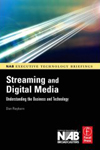
Giving Away Free Copies Of My Book “The Business Of Streaming & Digital Media”

200764710470828Update: All business books are gone. Only two Windows Media books left. I have seven copies of my book "The Business of Streaming & Digital Media", which is part of the NAB Executive Technology Briefing series and two copies of "Hands-On Guide To Windows Media" to give away. This is the last batch of books I have left. If you would like a copy of either, leave your name in the comments section with a working email address and I'll reach out to you for shipping details. The books are free and will be given away to the first few readers who ask for them.