Free Product Giveaways: Roku, Apple TV, Boxee, Logitech Revue, Harmony Remotes and More!

As a thank you to readers of my blog, over the next six weeks, I'm going to be giving away lots of different devices including multiple NETGEAR Roku's, Apple TV's, Logitech Revue's, Harmony Remotes, Boxee Boxes by D-Link, Zune HD players and a Sling Pro HD. A couple of these devices I personally bought as giveaways for readers, in particular the Apple TV's and Boxee's, and the rest I have thanks to the generous manufactures who make them available to me.

It's hard for me to believe but next year will be the fourth year for my blog and I would not have been able to keep it going without all of the support and feedback from my readers and followers. As a thank you, I'll be giving away as many devices as possible as we head into the holidays, so keep an eye on the blog over the next six weeks and good luck with the giveaways!

The first contest is now live. Enter to win a NETGEAR Roku here.

Sponsored by

Don’t Count Boxee Out: Company Announces Support For Hulu Plus and Netflix

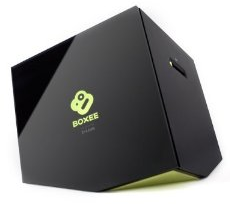
6a00d834518e1c69e20133f4f0c8e9970b-320wi At the Boxee launch party in NYC on Wednesday night, the company announced that by the end of the year, Boxee will support Netflix in addition to their recently announced deal with VUDU. The company also said that support is coming for Hulu Plus but didn’t give a time line for when it will be rolled out. While some have suggested that Boxee will never sell enough boxes at $200 a pop to make a real business out of it, I think it’s too early to count Boxee out.

Currently, they are many different streaming media devices out in the market with different functionality and at different price points, targeting various types of users. The problem that all of these vendors are dealing with is that consumers in general don’t know what type of content, video quality or business model these boxes support. Some do 720p, some 1080p. Some rent movies, some allow you to buy them. Some services all you to store movies in the cloud, others you download to a hard drive. But the one thing they all have in common is that they really started out as hardware devices first and platforms second.

But with Boxee, it’s been different. Boxee started off as and really always has been a platform first. Only fairly recently did the company decide to work with D-Link to build a box to make it easier to get the platform in the hands of more users. And while the box is expensive today at $199, we can expect that price to decline over time. Apple TV started off at $299 and is now $99. The Xbox 360 was $299 when it came out and now retails for $199. And today, Roku’s new boxes are 40% cheaper than the original model. Over time, Boxee’s price will come down and more units will be sold.

With Boxee supporting MKV, SSA, PGS, AC3, VC1, TS, H264, FLV, ASS, AVI, OGG, ISO, M2TS, VOB, SRT, AAC and FLAC file formats, it’s got quite a leg up on nearly all boxes on the market regarding format support, except for Western Digital’s TV Live Hub. It’s also good to see Boxee take a jab at Apple on their website telling readers that Boxee supports 1080p and that, “there is no reason to settle for 720p.” And with Boxee supporting HTML5 apps, the company is also future proofing their platform if and when HTML5 takes off.

For the time being, Boxee is definitely going to be a device that only hardcore video and tech folks buy. It’s not a device that the average consumer will learn about overnight and Boxee needs to be on store shelves for awhile to really get some traction. So while I don’t expect Boxee to sell tons of boxes anytime soon, I do expect Boxee to make a legitimate run at the mainstream consumer in the not so distant future.

I ordered a bunch of Boxee boxes from Amazon and will do a review of the platform when I get some time, maybe this weekend. And check back on my blog next week as I ordered extra boxes just so I can give them away on my blog.

Akamai Files Patent Infringement Lawsuit Against Cotendo, Acquisition On The Way?

Updated 11/11 with statement from Cotendo below.

Yesterday, Akamai and MIT filed a patent infringement lawsuit against Cotendo in reference to patents 7,693,959, 6,820,133 and 7,293,093. I find this an interesting turn of events as in the past, Akamai tended not to sue any company until in my opinion, they felt that company was starting to become competitive. Speedera was out in the market for few years before Akamai sued them and Limelight was operating for a couple years before Akamai went after them as well.

Cotendo has been around for just under two years, but with their recent deal with AT&T and some of Cotendo's recent wins, Cotendo has the potential to become a real competitor to Akamai, directly or indirectly via someone like AT&T, over time. If Cotendo was just offering CDN services I don't think Akamai would have really cared, but the fact Cotendo focuses on DSA and app acceleration, services where there is a lot of high-margin business at stake, I'm not surprised to see the suit.

It's also interesting to see that one of the patents in question, 6,820,133, was acquired by Akamai in their acquisition of Netli and some of Cotendo's management team, including their VP of operations current CEO and Co-Founder, worked at Netli and Akamai in the past.

With Cotendo being as small as they are, I don't see how they can afford to fight this suit by themselves over a long period of time simply due to the capital it requires. The two companies could very well settle this by Akamai buying Cotendo, which Akamai has a history of doing when it acquired Speedera and tried to buy Limelight during the trial. It's also possible that AT&T could step in and acquire Cotendo and then fight the Akamai suit since AT&T would have the resources to do so. I contacted AT&T to see if they wanted to speak about the suit but they had "no comment" and I don't have any public response from Cotendo that I can share at this time. Updated: Contendo has released a statement saying, "Cotendo believes there is no merit to the claims made by Akamai Technologies and Massachusetts Institute of Technology and will defend the suit vigorously. Cotendo does not expect this lawsuit to have any impact on its service offerings and will continue to meet the needs of its customers and partners."

If Akamai acquired Cotendo, they would really lock down the app acceleration and DSA market by a very wide margin. But if AT&T is serious about getting into this space, you would think they would keep that from happening. This is going to be an interesting one to watch. For the lastest updates on all of the patents suits amongst the CDNs, or to see the history of the suits, you can visit www.cdnpatents.com which will take to you to all most posts on the subject.

On a side note, for those wondering where the Akamai and Limelight suit stands, both companies are still waiting on a ruling from the Federal Court of the District Of California which is expected to come by the end of the year. Even if that happens, there is expected to be additional appeals and it does not appear as if this suit will be resolved in the courts for another few years.

Level 3 Now Confirms It Has Secured A “Multi-Year CDN Agreement” With Netflix

You'll hear more about in the coming days, but Level 3 has now gone on record with me and other news outlets to say that they, "have secured a multi year CDN agreement with Netflix." They also go on to state that, "the capex mentioned on our earnings call associated with a large customer is for Netflix and the large customer is Netflix."

Update On My Netflix and Akamai Story With Comments From Both Companies

Updated 6:42pm: "I can confirm that we have been awarded a deal with Netflix," a Level 3 spokeswoman told TheStreet.com.

As I am getting more calls and emails than I can possibly return about my earlier blog post about Akamai and Netflix, and because both companies are now willing to go on-record just a little, I've decided to give out more details on my post. Folks may still have questions after reading this post and I'm happy to answer them, if I can. All the emails and comments I am getting from crazy shareholders threatening me with bodily harm will be ignored.

Also, it should be noted that far too many websites that have picked up on my post have taken a lot of what I have said out of context or have implied things I never said. At no time did I say Netflix is, "no longer a customer of Akamai". Nor did I imply that, "Netflix won't have any relationship with Akamai in the New Year". I chose my words very carefully and third party sites need to use those exact words and not take what I said and imply something else from them.

Netflix is shifting their current video traffic from Akamai and over to Limelight and Level 3. Akamai has not denied it and neither has Netflix. Akamai did say for the record that, "it's no secret that Netflix has a multiple vendor strategy for its video service. Its for Netflix to decide how much traffic should be carried by each vendor based on their business needs. Our focus is always to work with our customers to ensure the best possible results for their business." There is also the strong and likely possibility that Akamai still gets some Netflix video delivery business for traffic not allocated to current contracts, new traffic from Netflix's expected International expansion and other video related offerings. Netlfix is constantly in contract discussions with many of their vendors throughout the year.

Akamai provides more than just streaming and they can lose a portion of Netflix's traffic, like video, while still retaining other portions of the business. The real debate seems to be why Netflix is shifting their video traffic to Limelight and Level 3 and whether or not poor performance is to blame. Normally I would not say how I got my info for my original post, but in this case I think it is important.

Technical folks inside Netflix have been telling me that in head-to-head tests between Akamai, Limelight and Level 3, Akamai has not always performed well. They have not always been the worst, but they have not always been the best. They have also told me that they have seen performance issues on Akamai's network, specific to video.

Some of the folks I spoke with at Netflix are also the same ones who told me earlier in the year that Netflix was moving their video traffic off Level 3 and over to Akamai. Two weeks after I wrote that post, talking about the change, Akamai announced that Netflix was a new customer. So my source for today's post inside Netflix has been accurate in the past. I don't see any reason why they would lie to me.

Interestingly enough, when I wrote back in March that Level 3 was losing all of Netflix's video traffic to Akamai, no one asked me for my source. No one even questioned the news. But this time, when the shift is from Akamai back to Level 3, everyone seems to want to know who the source is.

So lets get right down to it, has Netflix had performance issues with Akamai? Akamai says no and went on record to say, "as both companies have stated publicly, I’m happy to confirm that there have never been any performance issues re our support of Netflix’s business." A corporate communications person for Netflix went on to say that, "Akamai is a vendor and continues to be a vendor for Netflix. Reports of performance issues with Akamai are in accurate; we are and continue to be satisfied with their service. Netflix has a multi-CDN strategy."

While I appreciate the quotes from the companies, Netflix's is very generic. Netflix says they are satisfied with their "service" but don't say what service they are talking about. Akamai does more than just streaming for Netflix so Netflix can be happy with one service but not happy with another and their quote would still be accurate. Netflix says that Akamai is a vendor, but I never said they weren't. I didn't say Netflix was no longer a customer and my post was specific to Netflix's streaming only service.

Also, if Netflix had issues with any vendor, would they call them out in public? I doubt it. Netflix has had some major outages over the past year, not pertaining to CDN, and they won't give out any details on what the problem was, what caused it or what vendors had the problem. It is not in Netflix's best interest to speak badly about any one provider when they have a multi-vendor approach as they then lose leverage when it comes to negotiating.

But the real question to ask here is if Netflix is so happy with Akamai's service and hasn't had any performance issues, why are they shifting their video traffic to Limelight and Level 3? Why did Netflix not only sign a three-year contract with Limelight last month, but also allow Limelight to mention on their Q3 earnings call last week that Limelight would be, "expanding their role as one of Netflix's core delivery partners". Why is Level 3 spending $14M in CAPEX costs this quarter for one customer whom Level 3 didn't call out by name, but whom they said they signed a new contract with in October for business that will ramp up in the New Year? Neither Netflix nor Akamai will say why Netflix is shifting their video traffic from Akamai to others. If it's not performance and not price, why are they moving?

Is it a performance issue? I'll let you decide. I know what I was told from some tech folks at Netflix and I also know what Netflix and Akamai have now said on-record about the topic. We could cut through all this right away if Akamai and Netflix were to go on record with non-generic quotes, but neither company is willing to do that, which is pretty typical in these circumstances.

A few others things that I thing are important to discuss is the idea that some are telling me the news could not possibly be accurate as Akamai could never lose such a big customer. Yes, Akamai is the leading CDN in this space based on revenue, but many content owners jump from one CDN to another each year. We already know that Netflix was with Limelight, then Limelight and Level 3, then Limelight and Akamai, now Level 3, Limelight and Akamai, and soon Limelight and Level 3, and possibly Akamai again as well. And that's all within a span of about three years. For many content owners, that's simply the nature of the business.

I have been sent so many links in reference to my blog post today that I have not been able to read many of them yet. But I did see one that said Jefferies analyst Katherine Egbert wrote this morning that her checks find that, "Limelight likely has probably won back all of Netflix streaming, most likely due to performance issues, contrary to what Akamai is saying". Who her source is I don't know and I have not spoken to her, so you'd have to ask her directly. But the idea thay I wrote this blog post based on a hunch or assumption is not accurate. I was given info directly from the customer, who's info has been accurate in the past and public data put out by other vendors last week only helped confirmed a change.

What I make from all of this is that Netflix has decided to shift their current video traffic from Akamai to other providers for reasons that can be debated. As I said in my earlier post, I don't see this as a trend at Akamai, and unless I do, losing the video portion of traffic for one customer, to me, is not a big deal. It would be a much bigger deal and impact to Limelight if they were to lose their share of Netflix's business.

Also, I think it is important for me to let everyone know that Akamai was very responsive with regards to talking to me about this topic. We probably traded more than a dozen emails today about my post. Almost all of what we spoke of was off-the-record, but Akamai did a very good job of reaching out to me, being proactive and responding to my requests. I wish they could have said more on-the-record, but that's the nature of the business.

I also want to go on record once again for all of the folks who keep emailing me asking me if I made money from the news I put out today. For the record, I have never bought, sold or traded a single share of stock, in any public company – ever. And for those that have asked, yes, that implies to my wife as well. I don't trade stocks, never have and I don't write any post with the intention of thinking what it will or will not do to any company's stock price or value in the market.

If you have follow up questions, please put them in the comments section. If you want to disagree with me in any way, you're welcome to, but keep it professional. Any comments that are unprofessional will be removed.

More Coming On The Akamai and Netflix Post, Stay Tuned

My post is now up here: "Update On My Netflix and Akamai Story With Comments From Both Companies"

Sorry I can't return all the calls and emails I am getting today about by Netflix news, but in the next few hours, I will have an updated post on the subject. Both Akamai and Netflix are going on record with me with more details and I am working on the post now. The news about Netflix shiffing video traffic away from Akamai is accurate, but the real debate seems to be whether or not Netflix has experienced any performance issues with Akamai. I'll have more on all of this shortly and hope to have my post up by 3pm ET.

Akamai To Lose Netflix As A Customer, Level 3 and Limelight Pick Up The Business

Updated 3:45pm: I have written a follow up to this post here: “Update On My Netflix and Akamai Story With Comments From Both Companies

Updated 10:26am: I thought my post was pretty clear, but just in case there is any confustion, I am specifically talking about Netflix’s current streaming business, as it stands today. I am not talking about any potential business Akamai may have with Netflix outside of video streaming.

——————————-

At the beginning of this year, Akamai took the Netflix business away from Level 3 and become the primary CDN for Netflix with at least 51% of their video traffic. While it was a big win for Akamai at the time, it appears that it was short lived. Due to poor performance issues that Netflix has experienced with the Akamai network, Netflix now plans to move all of their “video” traffic off Akamai in the coming months and will go back to only using Level 3 and Limelight.

Last week, on Limelight’s Q3 earnings call, the company announced that Netflix had extended their contract with Limelight for another three years until the end of 2013. And while Level 3 did not mention any customer by name, they also said on their earnings call last week that part of their recent CAPEX spend was, “in support of a large content customer CDN contract we just won in October,” with Level 3 expecting to see revenue from that contract beginning to ramp in 2011. In addition, Level 3 also put out a release saying that they added 1.65Tbps of capacity to their CDN network in Q3 and added five new network locations, not surprisingly, two of which were in Canada. Clearly a move by Level 3 to offer more support for Netflix’s new streaming service in that region.

I sent Akamai an email to see if they wanted to comment on my post and they said, “It’s no secret that Netflix has a multiple vendor strategy. We continue to have an ongoing relationship with Netflix but we don’t comment on the specifics of customers, contracts or other providers.” So while Akamai is accurate and Netflix is still a customer of Akamai today, it won’t be for much longer.

While I am not going to go into Netflix’s pricing at this time, it is interesting to note that Netflix moved to Akamai for lower pricing, yet then didn’t get the performance they wanted. It’s another great example in the market that the CDN business is not just about the low cost leader, but rather good performance with reasonable pricing. Naturally, one of the things you have to wonder is why Netflix would have performance issues with Akamai, yet other video customers I speak to say they don’t have any. It’s hard to know exactly why that is, but part of it could simply be that Netflix has more video traffic going over CDNs than anyone else on the web, by far.

If there is one thing Netflix is good at, probably the best in the industry, it’s measuring the quality of their streaming. They constantly send out emails asking customers to rank the quality of the video they just watched and they have so much data on what works and what doesn’t. So when they choose one provider over another, they really have the data to back it up.

I know some are going to ask me what the value of Netflix’s business is to Akamai and while I don’t have exact numbers, it’s in the $10M-$15M range. (yearly) In addition to Level 3 picking up the Netflix business, Limelight also stands to get more of Netflix business in the New Year, as Limelight indicated on their earnings call, especially when it comes to Netflix expanding further out into the mobile space. And I heard at the Streaming Media West show last week that Netflix plans to release an Android app in the New Year, which would generate even more ridiculous growth for Netflix.

Another interesting point to note is that Limelight isn’t spending any additional CAPEX to support the increase in Netflix traffic, but Level 3 said that they estimate they will spend $14M in CAPEX in Q4 just to support “a large content customer” and already spent $10M in Q3 for additional CDN capacity. That’s $24M of CAPEX in two quarters for Level 3, just for their CDN business. That shows some of the differences in network capacity between Limelight and Level 3 and also gives you an idea at just how big of a customer Netflix really is.