Netflix’s Latest Pricing Increase Proves They Want To Exit The DVD Business

While Netflix won't admit it, and in fact says the opposite in their blog post, the latest pricing hikes by the company is a clear sign that they want to exit the DVD business. While they want us to believe otherwise, Netflix is smart enough to know that you don't raise rates by 62% and then expect to retain a large portion of your subscribers for that particular service.

Netflix clearly wants to take the money they will no longer have to spend on DVDs and use it to license more streaming content. And if by chance you do want both streaming and DVDs, Netflix is fine with that because as much as they would like to be a streaming only service, they have raised the monthly price for DVDs by a large enough amount, $6 a month, that they will make money off of most users that keep the option. In my opinion, this latest move by Netflix shows they are no longer in touch with the reality of their current streaming offering and its lack of content.

While it's nice to think that we can all move to a streaming only plan, Netflix knows very well that many seasons of shows are only available via DVD. So you could watch all the episodes of seasons 1-4 of Psych via streaming, but the final season is only available via DVD. If Netflix was trying to force all of us to streaming only plans and they had their entire DVD catalog available in streaming, fine, but we know that is not the case. Netflix has not increased the volume of their streaming content by much and having 25% or less of their entire DVD catalog in streaming is not going to cut it.

Netflix can spin this any way they want, but the bottom line is that they simply want to get out of the DVD business as fast as possible so they can take that money and use it to license more content for streaming. And with Netflix launching a streaming service in Latin America sometime this year, the company needs to license a lot of in-country content since a good portion of the content licensed for the streaming service in North America is not relevant to the Latin American market. As a result, Netflix's licensing costs are going to skyrocket and they need as much money as they can.

But forcing users away from getting DVDs in the mail only weakens their streaming service since Netflix's real value comes from a dual combination of streaming and DVDs.

Sponsored by

Netflix Raises Rates Again: Business Model Has Serious Challenges Ahead

Today, Netflix announced that they are raising rates on monthly plans that allow customers to get unlimited streaming and one DVD out at a time. The plan which originally cost $9.99 a month will now cost $15.98 a month. In addition, the company is now splitting out streaming only plans from DVD plans and consumers can get an unlimited streaming plan for $7.99 a month, or one DVD out at a time for $7.99 a month. Essentially, Netflix is making people decide if they really want DVDs as part of their streaming subscription and if they do, requiring them to pay nearly $6 more for it per moth.

In November of last year, Netflix raised DVD plans between $1-$3 per month, depending on the plan you were in and now, only eight months later, they are raising rates again. This is a bad move on Netflix's part, but one that's not surprising as they look for ways to generate more revenue. With their licensing costs skyrocketing and the company aggressively pursuing more content deals for their expansion into Latin America, Netflix is feeling the pressure.

Now, they are forcing people like me who were paying $9.99 a month, to drop to a streaming only plan at $7.99 a month. That's $24 in revenue they are missing out from one customer, per year, and they are going to be millions like me who make that decision. Typically, I only got one or two DVDs a month, so Netflix wasn't losing money on me with the inclusion of DVDs in my plan. Now, when I want a DVD, I'll simply go to Redbox and get it for $1 a night. Forcing customers to go somewhere else for DVD rentals, when even Netflix admits there is still a demand for then, really isn't a smart move.

It was bad enough that Netflix gave in to the studios and agreed not to rent any new DVDs by mail for 28 days, just so the studios could force consumers to have to buy the DVDs instead. Now they are raising prices on DVD plans for the second time in 8 months and not increasing the selection and inventory of streaming only content fast enough or with content that's a lot newer.

In January of 2008, Netflix confirmed it had about 12,000 titles available for streaming. In September of 2009, ads on their website put that number at 17,000. Today, it appears that Netflix has about 20,000 titles for streaming, although Netflix won't confirm that number. If that number is accurate, it means that at any given time, Netflix has only added about 4,000 pieces of content a year for the past two years. That's not a lot of content.

Netflix is going to have a real challenge continuing to grow their subscriber numbers each quarter when they continue to give customers less for their money each month and make their plans less valuable.

Added: When logging into my Netflix account, unless I click on "your account" and then select "change plan", there is no notice that Netflix is going to raise my rate to $15.98 a month come September 1st. So unless you have heard of the news, imagine how many people are going to be surprised when they see their monthly fee change. Netflix should be highlighting this change to you immediately upon logging into their website.

Today’s Webinar: Strategies for Delivering Video to Tablets and Mobile Devices

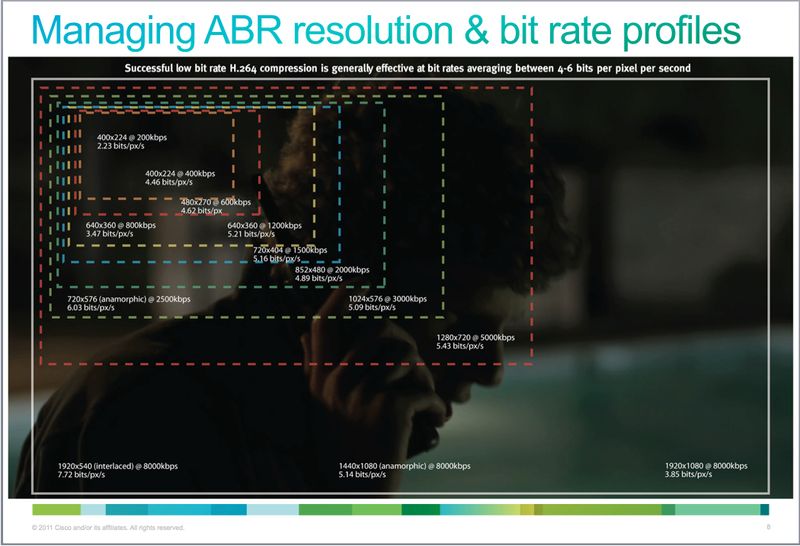
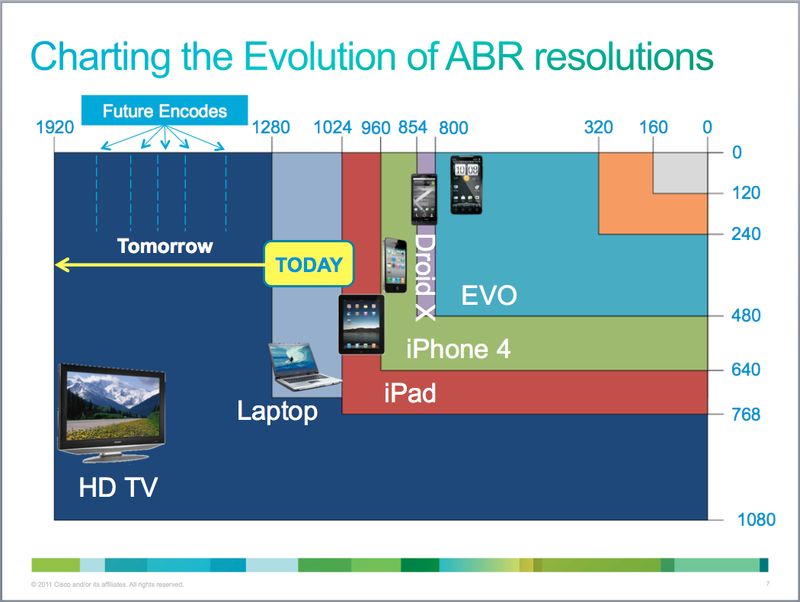
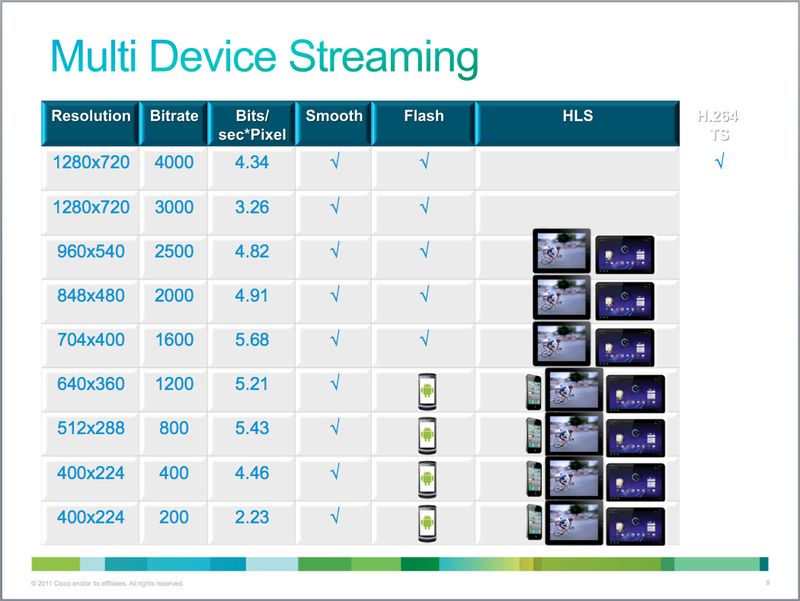
Today at 2pm ET I'll be moderating another StreamingMedia.com webinar, this time on the topic of "Strategies for Delivering Video to Tablets and Mobile Devices". If you distribute or produce content that will be digitally consumed, you are faced with preparing your media for a multitude of screens. From Android-based tablets to the iPad, iPhone 4, and beyond, mobility is the new video frontier. So what's the right strategy to reach all these devices? How many variants of one clip must a publisher create? Which platforms will yield the greatest uptake?

Join Unicorn Media, KIT Digital, Kaltura and Wowza Media Systems and you will learn how to:

  • develop an effective and efficient mobile device strategy
  • simplify the complexity of video delivery to mobile devices
  • increase views and reach a broader audience with mobile video
  • overcome the challenges for monetizing video to mobile

Presenters will also discuss some of the differences between mobile apps and mobile browsing and show some examples of brands who have effectively used mobile video solutions to change the way they speak to their audience.

Updated List Of Vendors In The Content Delivery Ecosystem

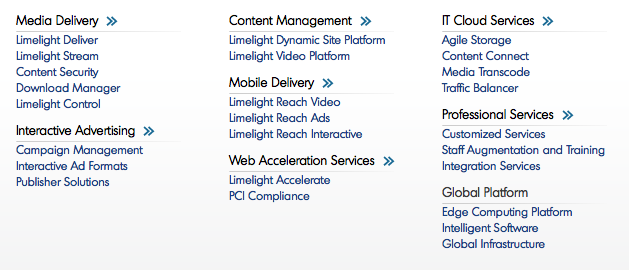
It’s been about a year since I updated my list of carriers, telcos and pure-play companies in the CDN business and in that time, there have been quite a few changes in the market. I’ve decided to add to this list transparent caching providers and other vendors who are tied into the content delivery ecosystem for video. I’ve also added to the list a lot of providers who have long since been acquired and noted who they were acquired by. I think it is important that there is a running history of the vendors that helped shape the content delivery business since its inception nearly 15 years ago.

While content delivery is a generic term and probably includes hundreds of vendors if you include cloud based services, co-location companies, regional service providers, P2P networks and mobile platforms, I’ve tried to keep this list to vendors specifically tied to the delivery of video, be it as a service or platform for both On-net and Off-net applications. (To make the list easier to find on my blog, all you have to do is go to www.cdnlist.com for the latest update.)

Pure-Play CDNs

Non Pure-Play CDNs (telcos/carriers)

CDN Management Platforms/Transparent Caching Platforms:

If you think a current or former company should be added to my list, I’m happy to hear suggestions in the comments section below.

Facebook In Deal With Ooyala To Use Their Online Video Platform

Ooyala-logo Over the 4th of July weekend I've learned that Ooyala has closed an agreement with Facebook that will have the social networking site using Ooyala's online video platform. I don't have all the details of the deal, but Facebook has been testing Ooyala's platform for some time now and both companies are expected to announce the deal before long. This marks another big customer win for Ooyala hot on the heals of their recent deal with Yahoo! Japan.

I don't know if this has anything to do with the Facebook news briefing being held tomorrow.

[Ooyala didn't respond to my request for more info]

Netflix To Offer Streaming Service In Central America, South America and the Caribbean

As I reported back in February, Netflix's plans to offer a streaming subscription service in Latin America and the Caribbean are now official with the company announcing the news this morning. Netflix says the service will be available in 43 countries but has not said when the service will launch. As I broke out in February, here is what the broadband penetration and speeds look like in some of these South American countries:

  • Argentina: As of March 2010 the country had a 64% Internet penetration rate with 26.6M users with an average broadband speed of 3.33Mbps. 
  • Brazil: As of Dec. 2009 the country had a 37.8% Internet penetration rate with 75M users with an average broadband speed of 4.46Mbps.
  • Chile: At the end of 2009 the country had a 50% Internet penetration rate with 10M users with an average broadband speed of 6.62Mbps.
  • Colombia: In mid 2010 the country had a 48% Internet penetration rate with 21M users with an average broadband speed of 4.32Mbps.
  • Mexico: In 2010 the country had a 27% Internet penetration rate with 30.6M users with an average broadband speed of 3.54Mbps.
  • Peru: As of June 2010 the country had a 27% Internet penetration rate with 8.8M users with an average broadband speed of 4.62Mbps.

In 2010, South America had a estimated population of just under 400M with 156M Internet users. Latin America had a estimated population of 154M with 38M Internet users. Depending on which territories exactly Netflix launches in, the company has the potential opportunity of expanding into a new market with a combined population of more than 500M users, with just under 200M of them online, with a combined average broadband speed of 3.2Mbps.

* Data on broadband penetration, population and download speeds were compiled from Wikipedia, the US Census Bureau, AMIPCI, ITU, eMarketer and SpeedTest.net

A Closer Look At Akamai’s Strengths & Weakness For A Licensed CDN (LCDN) Offering

[CDN consultant Frank Childs contributed to this article.]

As I wrote about last week, Akamai is looking to throw their hat into the telco CDN market with the development of a licensed CDN initiative (LCDN). Why the largest CDN player is now looking to enter this market, and more importantly, what it might mean for network operators is something I've been getting a lot of questions about. Akamai is in the development stage of their LCDN product and is still looking to hire engineers and others to build it out. So while it's too early to know what their product offering will look like, but here are some of Akamai's strengths and weaknesses when it comes to an LCDN offering.

Akamai has worked with network operators for years, installing their edge servers/caches inside the ISP's data centers. In the early days of the web, Akamai would receive payment from operators because of the perceived value to the operator. The ISP would save transit and backbone costs and would simultaneously improve the subscriber experience. Gradually, those payments from service providers have been drying up, but Akamai still gained access to regional data centers by promoting a win-win strategy.

The operator would give Akamai access to rack space, power, and network ports and in return would gain all the advantages of the Akamai caches inside the network. While they received no monetary compensation, Akamai would still get the benefits of being at the edge of ISP network with access to millions of subscribers, and free network bandwidth. This has been used by Akamai to differentiate their CDN offering on a worldwide basis as their servers/caches were closer to the end user, typically referred to as the last-mile.

Now that ISPs are developing their own CDN offerings, Akamai is trying to capitalize on this trend by developing a licensed CDN (LCDN) product to sell directly to network operators or through traditional telecom vendors such as Ericsson (see announcement). I have had several conversations with network operators, and while Akamai has proven technology, there are clearly several significant challenges that they will face to gain entry into these telco CDN projects. But first let's look at why an operator looking to jump start their CDN offering would consider Akamai:

Large Customer Base and Content Relationships: Akamai is the largest CDN and serves more traffic than any other CDN network. Depending on the structure of the LCDN deal, an ISP may gain instant access to a number of content companies looking for closer proximity to their subscribers. The ISP wins by quickly turning up a proven CDN; Akamai wins by licensing technology and by differentiating their CDN; Akamai's customers win by improved service quality, and the ISP subscribers win by a more responsive Internet delivering a higher Quality of Experience (QoE).

Proven Technology: Akamai has been doing this longer than anyone, and clearly knows all of the required components behind delivering a CDN platform. While many other vendors focus on specific elements within the CDN ecosystem, for instant just video, Akamai can deliver a platform that is more diversified and handles content caching, dynamic site accelerating, video delivery, etc. By going with a platform that addresses many different types of content delivery, an operator may gain a more complete solution from day one and avoid the costly process of having to integrate and manage multiple CDN elements from multiple vendors.

Internet Video Services: Akamai was early to the game of delivering video over the Internet (via their acquisition of INTERVU in Feb. of 2000), and while they may have lost some traffic to Level 3, Limelight, and others, they are still a dominant player that knows the space. At the same time, many ISPs today offer their own video services including linear broadcast channels, premium channels, and Video-on-Demand (VoD). In most cases, these ISPs are looking at increasing internet video services to complement existing triple play offerings. These services include: web content portals; three screen offerings; iPad and tablet apps; streaming to Internet set-top devices (Xbox, Roku, Boxee, etc.); and partnering with OTT video services (YouTube, Hulu, etc.). Some operators have developed their internet video offerings internally using vendors such as Cisco (Telstra announcement). Others are clearing looking for a more turnkey video solution which is what Akamai is looking to provide.

Clearly Akamai has some distinct advantages as they look to productize an LCDN offering. But they also have some serious challenges that will need to be addressed.

Not Embedded in the Network: To date, Akamai's direct interface with the broadband infrastructure has been minimal. They connect to network ports within their regional data centers, like many application servers. They have been accustomed to sitting in the data center and using DNS to receive traffic specifically for their customers. Moving closer to the broadband subscriber edge will require a tighter integration between their cache engines and other network elements which may include edge routers, Radius servers, policy management, and traffic management. Developing products that are more tightly integrated with other network elements has never been Akamai's focus, and it is certainly not trivial.

Telco, MSO, and ISP expectations and requirements of any network element that directly interfaces with the edge of their network are very different from what Akamai is accustomed. This is the world of Ericsson, Alcatel-Lucent, Cisco, Juniper and the like. Being able to identify and deliver on these requirements, and create the necessary partnerships, will be a challenge and will largely determine Akamai's level of success for the LCDN.

Does Not Support All Traffic: As network operators discuss moving caching and CDN capabilities closer to the edge of their networks to greatly reduce costs, improve network efficiency, and deliver superior performance, they desire a cache engine that addresses the most amount of traffic. The ISP would like to optimize their network in the most efficient manner, and they certainly do not want to deploy and manage multiple solutions. So an approach where they would need an Akamai cache, and a Google cache, and an Apple cache, and VoD server will not fly. It remains to be seen whether Akamai will offer a solution that is comprehensive enough to include traffic regardless of its point of origin.

Secretive Style: I have spoken to many Akamai customers that feel the company's service operates too much as a black box and that customers have very little transparency into how Akamai's network actually works. When it comes to analytics, they tell you what they see fit. When it comes to how they operate, the same rule applies. Telcos, MSOs, and ISPs are not in the habit of deploying black boxes in their networks. That may be fine for an application sitting in the data center, but not when deployed closer to the edge of the network where an incident could affect tens of thousands of customers. And not for something as strategically important as video and CDN.

So if Akamai really wants to play in the telco CDN space, they are going to have to participate in the telco RFI/RFP process, and respond in detail on their capabilities, processes, roadmap and the like. In addition, they are going to have to allow the telco to deploy, operate, maintain, and report on the inner workings of the CDN, because it will be their product. This is not something Akamai is accustomed to culturally, and will represent a significant shift in their actions if the want to sell into the telco space.

Is this a trojan horse strategy?:  This is a real question and concern that I hear from network operators. Perhaps the greatest challenge that Akamai faces is in convincing operators that their intentions are pure, and that this is not principally a strategy to gain valuable real estate inside the ISPs network. Fifteen or so years ago, Akamai sold web caching to ISPs, and used that position to gain an upper hand in the nascent world of CDN. As the value to the ISP began to shrink, network operators began to view Akamai as someone who consumed massive amounts of bandwidth and got a free ride. Now they have to convince the ISP that this time is different, and that the offering is genuinely for licensing technology to the ISP to delivery video and other content. There certainly is a growing market for this technology, but from many conversations that I have had, network operators are not yet convinced that Akamai is the answer to their problems; both technically, but more important strategically.

While it's too early to know how this will all play out, I think Akamai has a shot at being successful with an LCDN offering, but only if they can change the culture of the company and provide a lot more transparency into their technology and develop a platform specific to telcos that has a much deeper integration into the network. If Akamai can't do that, I don't think they can truly be successful with an LCDN offering and that could potentially impact how they are deployed inside last-mile networks.