Learn The Best Strategies for Preparing Your Video for Tablets and Mobile Devices

If you distribute or produce content that will be digitally consumed, you are faced with preparing your media for a multitude of screens. From Android-based tablets to the iPad, iPhone 4, and beyond, mobility is the new video frontier. So what's the right strategy to reach all these devices? At the Streaming Media West show, Nov. 8-9, come hear from MLB.com, Hearst Interactive Media, NBCUniversal – E! and PBS SoCal about which platforms will yield the greatest uptake. In this session, industry leaders with hands-on experience will answer these questions and provide a best practices approach to help you develop your content to multiple devices. Confirmed speakers include:

  • Moderator: Matt Smith, VP, OTT Strategy & Solutions, Envivio
  • Michael Dunn, CTO, Hearst Interactive Media
  • Gerald Abrahamian, VP, Digital Operations, NBCUniversal – E!
  • Joe Inzerillo, SVP, MLB.com
  • Jasmine Bulin, Senior Manager of Interactive, PBS SoCal

It's not too late to get a pass to the show and readers of my blog can register using my own personal discount code of DRF1, which gets you a two-day ticket to the show for only $595,if you register early.

And if you follow me on Twitter (@danrayburn) and re-tweet this post, you'll automatically be entered into a drawing to win one of three brand new Kindle Fire tablets that I will be giving away next month.


Sponsored by

Learn How To drive Video Views and Engagement with SEO and Social Media

Thanks to social media platforms and search engine optimization, a tremendous opportunity exists in building new audiences and driving views via outside channels. At the Streaming Media West show in LA in two weeks, we've got Mark Robertson of ReelSEO.com moderating a session on "Driving Video Views and Engagement with SEO and Social Media". For this session, speakers will present and discuss the case for social video and video SEO and will showcase real-life examples and case studies as well as provide expert guidance in terms of both planning for and implementing successful strategies and tactics to boost exposure and discover-ability. Confirmed speakers include:

  • Moderator: Mark Robertson, Founder, ReelSEO.com
  • Aparna Chennapragad, Product Manager, Google Search
  • Patrick Starzan, VP, Marketing and Distribution, Funny Or Die
  • Josh Warner, Founder, CEO, Feed Company
  • Travis Wright, Product Manager, Brightcove

It's not too late to get a pass to the show and readers of my blog can register using my own personal discount code of DRF1, which gets you a two-day ticket to the show for only $595,if you register early.

And if you follow me on Twitter (@danrayburn) and re-tweet this post, you'll automatically be entered into a drawing to win one of three brand new Kindle Fire tablets that I will be giving away next month.

Enterprise Video Webcasting Market Size $133M, Growing To $500M By 2017

In addition to my job at StreamingMedia.com and running my blog, I'm also a Principal Analyst at Frost & Sullivan in their Digital Media Group. We do a lot of private research for companies in the industry and we also produce quite a few reports each year that focus on the size of different products and services in the digital video ecosystem. One of the reports new to our list this year is on the topic of enterprise video webcasting, entitled "World Enterprise Video Webcasting Solutions Market".

As enterprise video gains popularity, video webcasting solutions have mushroomed across the enterprise landscape, empowering enterprises to communicate to many within the organization. Since its inception, the enterprise video webcasting industry has expanded its technology and service capacity, grown its market vertical and geographic coverage, and secured its status as a business critical communications application.

In 2010 the market achieved revenues of $112M and we anticipate the market to grow at a compound annual growth rate (CAGR) of 24.8% from 2010-2017, reaching more than half a billion dollars by 2017. Today, the total market comprises more than 21 vendors globally with 34.3% of the total revenues contributed by the top three market vendors. While today's market sizing numbers may seem small to some, these numbers are specific to enterprise webcasting platforms deployed inside the firewall. It does not include webconferencing systems, hardware or lecture capture solutions or webcasting in the media and entertainment market. Also, with the recent sale of vendors in this sector like Accordent and Qumu, we've also seen their revenues made public with Accordent doing $9M in 2010 and Qumu doing $15M in revenue this year.

For the purpose of the report we analyzed market size and growth trends for the total webcasting market as well as end-to-end enterprise video webcasting platforms. The latter is a rapidly growing segment within the total enterprise video webcasting solutions market, comprising over a dozen of the more than 21 key vendors. Frost & Sullivan defines an end-to-end enterprise video webcasting platform as a single platform that includes end-to-end technologies which enables and centralizes the functions of creation, capture, ingest, encoding/transcoding, management and delivery of video webcasts within the enterprise.

In addition to detailing the market drivers, the report also outlines the restraints to market growth, product and pricing trends, the competitive landscape and market forecasts and trend analysis broken out by region of the world for the next six years. The report also highlights vendors in the enterprise webcasting market including Accordent/Polycom, Cisco, Ignite, Kontiki, MediaPlatform, ON24, Qumu, Sonic Foundry, Telestream, VBrick and discusses those companies, including Cisco, who we believe will consolidate and dominate the enterprise video webcasting market in the future.

Copies of the report are available to any customer who has a subscription to Frost's Digital Media research service and anyone interested in getting a subscription can contact me for more details. Also, while many research analysts at other firms won't talk to someone unless they are a customer of that firm, I have and always will talk to any company who is interested in getting more details on any aspect of the online video ecosystem. You don't have to be a customer of Frost & Sullivan for me to take your call and do a briefing with you, so call or contact me at anytime.

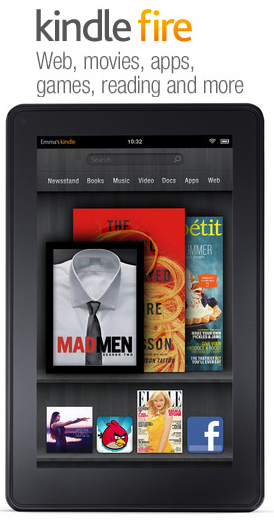
Amazon’s Kindle Fire Will Become To The Video Industry What The iPod Was To The Music Industry

KindlefireOver the past five years, very few companies have single-handedly help jump-start the streaming media industry and propelled the market forward as a whole. Looking back, companies like YouTube, Adobe, Netflix, Akamai and others have impacted the market in ways that most companies will never be able to. That's not to say that many small companies aren't innovating or are responsible for contributing to the growth of the market, (think Brightcove and ViewCast) but to truly move the entire market forward you need size and scale that most companies can never achieve. (Also see: Amazon Prime Streaming Will Disrupt Netflix, Here's How)

If you asked people to make a list of the companies that have had the most impact on the online video market, Apple would probably be mentioned by many. But while Apple gets a lot of credit for completely changing the mobile and music markets, and deservedly so, Apple has done little to truly push the streaming market forward. Apple is single-handedly responsible for starting the tablet market, yet when it comes to the iPad, the fact it provides a broken web experience and makes viewing video difficult, not to mention is lacking a content subscription offering, means that Apple's inclusion on the list could be debated. One could argue that the iTunes platform by itself is enough to get them on the list, and I wouldn't disagree with that, but I think others deserve more credit.

While no one would debate the impact of YouTube, in the coming years, other Google platforms like Google TV will reach the right size and scale to push the market forward, but for now, the impact of Google TV is a few years away. The next company I think should be added to the list who has truly impacted this market and will continue to help everyone in the online video value chain is Amazon. Thanks to Amazon's AWS services and CloudFront they have made distributing video easy and affordable with their self-service model not to mention, provided a cloud based platform for a lot of other vendors in the industry. Add in the fact that Amazon now offers more than 12,000 movies and TV shows for free with Amazon Prime and Amazon's got the content offering growing quite nicely and will drive more consumer video consumption with some of the same scale Netflix did.

For me, these offerings in the market from Amazon would be enough to earn them a spot on the list. But the thing that will really propel Amazon to the top of the video food chain will be the Kindle Fire. At no time in the industry, that I can remember, has a product come to the market that is affordable, dedicated to the consumption of video and will be sold by the tens of millions in such a short period of time. Some might argue that with more than 100M of the latest gaming consoles from Microsoft and Sony deployed in the market that they would classify, but those devices are still dedicated to gaming. The Kindle Fire truly is a product that was developed to consume video and will be adopted by the masses, with video being front and center.

When Amazon announced the Kindle Fire they didn't stop at only thinking about the hardware and also developed technology, Amazon Silk, a new web browser powered by their Amazon Web Services that will optimize the browsing experience as well. And while many have talked about how much faster web pages will load with Silk, Amazon has confirmed for me that Silk "is not limited to small objects" and will be used to build full pages, including video, which should mean Amazon's Kindle Fire will see crazy fast startup times for video. Amazon also has a very good track record of coming out with newer versions of the Kindle quickly, so just imagine how the second and third generation Kindle Fire's are going to perform.

Kindle Fire's are going to sell like crazy and Amazon is going to do something even Apple couldn't do and that's jump-start the streaming media industry to all kinds of new growth and consumption of video related content. And that growth is going to help not only content owners but also all of the vendors who help those content owners create, ingest, transcode, store, manage, protect, monetize, distribute and track their content. Within the next two years, the Kindle Fire is going to become to the online video industry what Apple's iPod was to the music industry. Many times I am asked what the next catalyst is for the streaming media industry and without a doubt, my answer would be Amazon.

If you follow me on Twitter (@danrayburn) and re-tweet this post, you'll automatically be entered into a drawing to win one of three brand new Kindle Fire tablets that I will be giving away next month.

Learn The Best Practices for Live Streaming From Those In The Trenches

Producers are taking advantage of new technologies, workflows, and production methods to create successful live events and at the Streaming Media West show in LA in two weeks, we've got Jon Orlin from TechCrunch TV moderating a session on the "Best Practices for Live Streaming". Presenters on this session are the ones in the trenches, producing some of the live events you see on the web today and will discuss the entire webcasting workflow, including how to get the video signal from the site to end user; how to build an audience; when to use multi-bit rate streaming; strategies to consider for reaching mobile devices, and how to leverage social media platforms. Confirmed speakers include:

  • Moderator: Jon Orlin, Executive Producer, TechCrunch
  • Dylan Armajani, Live Streaming Specialist, AOL
  • Alden Fertig, Product Manager, Broadcasting, Ustream
  • Pete Scott, VP, Emerging Media, Turner Sports
  • Adam Schneider, Live Event Producer (former Technical Director for LIVE @ Best Buy)

It's not too late to get a pass to the show and readers of my blog can register using my own personal discount code of DRF1, which gets you a two-day ticket to the show for only $595,if you register early.

And if you follow me on Twitter (@danrayburn) and re-tweet this post, you'll automatically be entered into a drawing to win one of three brand new Kindle Fire tablets that I will be giving away next month.

Learn How To Encode Video For Adaptive Streaming

At the Streaming Media West show in LA next month, we've got encoding guru Jan Ozer doing a one hour session on "How To Encode Video For Adaptive Streaming". Jan's seminar identifies the most relevant adaptive streaming technologies and details the most critical factors for comparing them. Attendees will also learn how to choose the ideal number of streams and key encoding parameters, get an overview of options for encoding and serving the streams, and closes by describing techniques for serving multiple target platforms like Flash and iDevices with one set of encoded H.264 files.

If you want to get some hands-on expertise with video encoding and get your questions answered by one of the most experienced encoding masters in the industry, then you won't want to miss Jan's session at the show in two weeks. It's not too late to get a pass to the show and readers of my blog can register using my own personal discount code of DRF1, which gets you a two-day ticket to the show for only $595,if you register early.

And if you follow me on Twitter (@danrayburn) and re-tweet this post, you'll automatically be entered into a drawing to win one of three brand new Kindle Fire tablets that I will be giving away next month.

Startup Qwilt Raises $24M To Develop Video Delivery Platform For Service Providers

QwiltLogoLooking to cash in on the expected growth of over-the-top video being delivered across service provider networks, last week Qwilt announced that they have raised $24M in two rounds of VC funding, with one of the investors being RealNetworks founder Rob Glaser as well as some of the original VC’s that invested in Facebook and Netflix.

Qwilt has spent the past two years on the platform which is still being developed and tested and the company expects to launch their offering sometime in the first half of next year. What exactly Qwilt’s solution will look like and how it technically works, the company isn’t saying. But from a high level, Qwilt is a software play that is layered on top of commercial hardware platforms and includes four main components including a DPI product tailored for video, an optimized storage system, a video server and an analytics platform.

It’s great to see more vendors coming to the market to help carriers deliver video more efficiently, but Qwilt already has some very serious competition in the market. Qwilt says they feel their solution is different in that it is “carrier grade” and can be “dropped in without any configuration of the network” and while that sounds good in theory, it’s also some of the exact same selling points other vendors make, including folks as big as Cisco. So Qwilt really has their work cut out for them in entering this market.

The one advantage Qwilt or any vendor like them has when developing a product like this is that today, HTTP is the key application protocol. Even as little as a few years ago this was not the case and trying to develop platforms for video was much harder. In addition, while most vendors are scrambling to try and grab as much of the market share today as they can, Qwilt feels, and I agree with them, that we are in the very early stages regarding the growth of video across service provider networks. Qwilt says they see no need to have to rush into the market and can afford to wait another 24 months until the market is more mature.

Without a product on the market and more details on exactly how Qwilt’s technology works, it’s hard to say how successful they can be. But service providers have only just begun building and deploying video delivery platforms and while the volume of traffic they are seeing today sounds like a lot, it will be nothing compared to what it looks like 24-36 months from now. And that is exactly what Qwilt is betting on, the long-term impact video is going to have on service providers and the expected growth of the market in the coming years.