Netflix’s CEO Is Trying To Use Net Neutrality To Deflect The Real Issue, Competition

On Sunday, Netflix’s CEO took to his Facebook page to complain that Comcast isn’t being fair when it comes to net neutrality principles. His argument is that Comcast’s Xfinity TV streaming app on the Xbox 360 doesn’t count towards consumers monthly bandwidth cap, yet services like Netflix and Hulu do. While it’s a nice try on his part to drag net neutrality in the subject and get people all worked up, he’s simply trying to deflect away from the real issue at hand, which is the competition Netflix is facing from Comcast and others.

For their part, Comcast says Xfinity does not count towards consumers 250GB cap per month because the Xbox 360 acts as an additional cable box for your existing cable service. No matter which side you take, the point that is being missed is that today, Comcast’s cap doesn’t matter. Comcast has said that less than 1% of their customers go over their 250GB cap each month. And based on Reed’s own post on Facebook, a one hour show takes up about 1GB of data. That means a user would have to consumer 250 hours of video a month, or 8.3 hours per day, encoded at 2.5Mbps in order to go over their cap.

Netflix could back up their argument by saying how many of their customers use Comcast and what percentage of them go over their cap, but of course, they won’t say. Because if they did, the real numbers would be so small it would not reinforce their argument. When was the last time you heard Comcast customers complaining their cap was “too small”? Almost never. And those that have gone over their cap, the vast majority of them never get charged overages. Just look a the comments on chat boards like DSLreports.com and others. Comcast has a cap in place so they can enforce it if they need to, for those that abuse the service, but most users who have done 300GB or 350GB a month haven’t been charged overages at all.

If Comcast does not raise their caps over time as consumers use more data, then that could be an issue and could affect a larger percentage of subscribers. But the fact is, today, the cap is not impacting the market or keeping content owners like Netflix from growing. Caps are something consumers in the U.S. don’t like as Americans don’t like being told they can’t do something. They want all you can eat for a fixed cost, which is evident by how well Netflix has done in signing up subscribers for a flat fee per month.

If caps are such a big issue like some want to make them out to be, then consumers should be happy that Comcast is allowing them to stream more content from Xfinity TV, without it counting towards any kind of cap. Isn’t that what consumers want? To be able to stream more content and not have to pay for it? Of course Netflix will argue that this kind of tactic could lead to MSOs deciding which content get priority, which is what net neutrality is all about. But Netflix’s CEO doesn’t really care about Comcast’s cap, he cares about how this could impact his costs. I challenge Netflix to share data with the industry that shows a large percentage of their consumers are going over their caps. Where is the data to validate their point? To date, Netflix won’t give out any real details on the consumption of their service, other than to talk about high-level numbers like total minutes of TV shows and movies streamed in a quarter.

Bringing this back to Netflix’s argument that this is a net neutrality issue, if you look at what net neutrality is about, this is not it. Net neutrality principles say that all traffic originating on the Internet be treated equally. But streaming Xfinity TV on the Xbox 360 originates from within Comcast’s own network and not from the Internet. Netflix and others are confusing “neutral” with give Netflix a free way to access the Comcast network. Now I don’t agree that Comcast should charge more to CDNs like Level 3 just to turn up ports on their network, but this Netflix argument really has absolutely nothing to do with anything “net neutrality” related. It’s simply Netflix trying to deflect from things like their stock being downgraded, their churn getting higher and more competition starting to impact their growth.

When Netflix was flying high, with no competition, you never saw them whining in the market and their CEO wasn’t complaining on his Facebook page. The company was focused on making their service better and doing a good job with customer service. They should go back to focusing on those things again.

Disclaimer: I have never bought, sold or traded stocks in any public company ever. I have a FiOS triple play bundle with Verizon and am not a customer of Comcast. I have been a customer of Netflix for many years.
Sponsored by

Level 3 Expands CDN Capacity, Owning The Network Has Its Advantages

This morning Level 3 announced it had expanded the coverage and capacity of their content delivery network. While all CDN vendors are always increasing the reach and capacity of their networks, it's nice to see a vendor put out some real numbers for a change. Level 3 says it has increased its globally available CDN capacity to more than 5.6 Tbps, which is a little more than double the 2.15 Tbps capacity they had in late 2010. In addition the company also announced expanded CDN offerings into multiple countries in Latin America as well as locations in Saudi Arabia and Canada.

While CDN pricing has remained pretty stable in the market, a trend I expect to continue in 2012, there is no question that Level 3 has a distinct advantage over most of the other CDNs in the market since Level 3 owns their own network and has a lower cost of delivering the bits. At a time when their competitors like Limelight Networks are slashing their capex costs from around $40M last year, to about $25M this year, Level 3 is still able to spend more money on capacity while still having higher margins, thanks to owning the network.

Capex, space and power are cheaper for Level 3 and they run on a very predictable capex cost decline. Commodity servers, like the ones Level 3 users, as well as some other CDNs, decline at 20-30% per annum. The throughput is then what drives Level 3's cost of that capex on a unit basis. If Level 3 doubles the throughput of their servers they just halved that element of the cost. Since Level 3 has been very focused on a particular segment, broadcast and media and entertainment, the right sort of library and traffic actually improves Level 3's cost base the more they get, as in the case of Netflix.

Some have suggested that Level 3 is spending a lot of money to support Netflix's continued expansion, which is a bad business model due to Netflix having such a low price per Mbps sustained. While it's true Netflix's price is low, it's not as low as some think and the entire CDN business is about the economics of scale. Even with Netflix having a very affordable price, the rate of volume growth means that Level 3 can make money on their Netflix business. While some might want to debate this, Level 3 did go on record with me in 2010 to say they make money on their Netflix contract and would continue to do so, even if Comcast charged them more money for every port Level 3 turned up on their network.

Some still want to debate whether or not owning the network is an advantage when it comes the CDN business and I think we've seen enough evidence to show that it is. This should not be something that's debated in the industry any longer. Other data in the market confirms this and it is one of the reasons we have seen MSOs like Comcast and Time Warner build out their own CDNs. They have stated it is cheaper for them to keep the delivery in-house because they own the network, have a lower cost, and they get the added benefit of QoS and the potential to try and monetize the video via OTT platforms down the road.

On a side note, Level 3 also announced a deal with Conviva which bundles Conviva's CDN performance measurement tool with Level 3’s MediaPortal, allowing customers to get CDN performance analytics from a third party. Conviva is working with multiple CDNs on this offering, (Limelight also) so that customers can compare the network performance from one CDN to another.

Video News Roundup From Day One Of The NAB Show

I’m not at the NAB Show this year, but here all the news releases I have seen so far today. I’ll add to this list as more news come in.

Livestream Announces $495 Webcasting Encoder That Could Truly Disrupt The Market

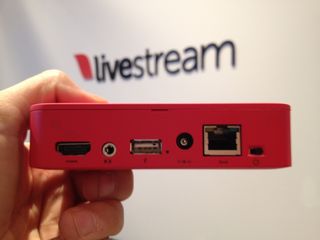
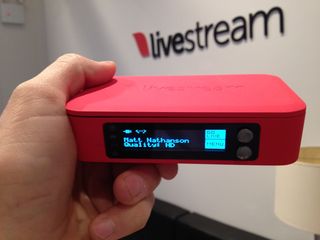
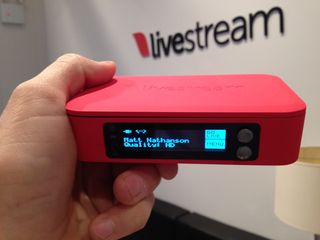
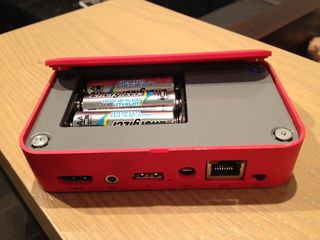
PhotoIt's not too often I see new products that I think will truly disrupt the industry, but this morning, Livestream announced a new hardware encoder that really should change the market for webcasting professionals. Called the Livestream Broadcaster, this $495 encoder makes encoding and distributing live HD events to the web and mobile devices easy and really, really affordable. (see below for more photos)

At only 4.8 x 3.0 inches in size and 1.25 inches in height, the device supports HDMI in (up to 1080i) comes equipped with a 3.5mm line-in audio input jack, 10/100 ethernet port, built in wireless 802.11 (b/g/n) and supports 3G, 4G and LTE connections via a USB adapter. It can run for up to three hours on three AA batteries, encodes video in H.264/AAC up to 720p at 2.5Mbps and will start shipping next month.

The built-in OLED screen means you don't have to lug around any kind of monitor and the simple LED indicators and two button controls make it really easy to use. While the market is filled with some really good encoding hardware from the likes of NewTek, ViewCast, Digital Rapids and others, those solutions are enterprise grade and cost thousands of dollars or more. Livestream's product is really geared towards the professional webcaster who doesn't have complex setups, isn't doing multi-camera shoots, can output 720p instead of 1080p and needs a product that's reliable, affordable and easy to use.

The encoder exclusively ties back into Livestream's platform where customers can stream unlimited live video, commercial free, for only $45 a month. Some might see that as a limitation of the device if they want to use their own network for the delivery, but that's not the target audience Livestream is going after since most professional webcasters and even content owners, want and use a SaaS based webcasting platform.

It's also one of the reasons Livestream can keep the device so affordable at the $495 price point. Clearly Livestream's not trying to get into the hardware business as a money maker, but rather is applying the Apple mentality of helping to subsidize the hardware costs to get customers to use their platform. And if the device works as advertised, they should have a lot of success in doing so.

Battery Photo (1) Photo

D-Link Releases $48 Streaming Player, But Can’t Compete With Roku

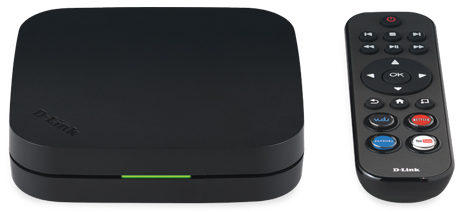
DlinkYesterday, D-Link announced a new streaming media player called the MovieNite which is only available via Walmart. While some have suggested this device will compete with the Roku, it falls far short of the Roku player. The good news is that Walmart is currently selling the $59.99 retail box for only $48. The player supports 1080p video streaming and has 802.11n WiFi, 10/100 ethernet port, HDMI out and composite video connections.

The bad news is that the player only supports content from Netflix, Vudu, YouTube and Pandora. It has no support to play back local content via USB, no slot for any kind of memory card and lacks a lot of content choices that Roku has. While Roku's 1080p streaming box is $30 more expensive than the D-Link model, you get so much more for your money with Roku, not to mention tons of content chocies. And for those who only want to spent $50 on a streaming box, chances are they don't care about 720p versus 1080p, in which case you can get a Roku for the same price as D-Link's box, with more content choices, but in 720p instead of 1080p.

While some might suggest this box does a lot less compared to Western Digital's WD TV Live player or the Boxee Box, that's not who D-Link and Walmart are targeting with this device. D-Link and Walmart are looking to sell this box to consumers who aren't very tech savy, don't have complex requirements and don't wan to play back local content. This is basically a $48 box made to promote the Vudu movie rental service, which is owned by Walmart. The one thing this box has over Roku is that it supports YouTube, something Roku still does not support for some very strange reason. YouTube is on just about every other box in the market, connected TVs, yet Roku is one of the most popular boxes in the market for years and they still don't have YouTube support.

We'll have the new D-Link box on display next month at the device pavilion in NYC at the Streaming Media East show, along with 50+ other streaming players, tablets, game consoles, connected TVs and Blu-ray players and content platforms.

The special broadband-enabled device pavilion allows thousands of attendees to get hands-on with more than 50 of today’s leading streaming devices and Over-The-Top video content platforms and is the only show where you can try out all of these devices and platforms in action, compare them side-by-side and get your questions answered – all for free.

Save The Date: NY Video Meetup Tuesday May 15th At Streaming Media East Show

6a00d834518e1c69e201348050e0cd970c-800wiIt’s that time of year again when we partner up with the NY Video Meetup group to co-host a special mega-session in conjunction with our Streaming Media East show at the Hilton hotel in New York City. Tuesday May 15th, at 6:30pm, local online video startups will demo their new products live in front of hundreds of local peers. After the demos, join us at the Bridges Bar in the hotel lobby for drinks (cash bar) and networking. I'll also be giving away some streaming media devices and other cool gear. Check out the NYVideo.org website which will post more details of the event in the coming weeks.

Looking To Fill Last Few Speaking Spots For Streaming Media East Show

I've been quiet on the blog for the past two weeks as I have been finalizing the Streaming Media East program as well as the program for the Content Delivery Summit. The Streaming Media East program is nearly complete with just a few spots left to fill. The agenda for the CDN Summit will be posted this week.

Below is what I have left to fill at the Streaming Media East show. If you are interested in one of these positions, please contact me ASAP. Any emails that simply say "I want to speak" with no other details on who you are, what your background is, how you are a fit for the session etc. will be ignored. If you want to speak, please make the effort to tell me how you are a fit for that session.

Tuesday, May 15, 2012
Making a Living on YouTube
Long gone are the days of cute kitten videos offering the only hope for "going viral," but is it possible to make a living creating YouTube videos? As the audience grows more savvy and technology more accessible, the quality of content that reaches the millions of views mark needs to be more engaging and of higher production value than ever before. Meet some of the creators who are reaching these milestones consistently, as well as advertisers trying to gain access to these creators' huge audiences.

Moderator: Jenni Powell, Content and Speaker Coordinator, VidCon
Panelist: Lauren Francesca, Actress, Creator, "Key of Awesome"
Panelist: Francesca Ramsey, YouTube Creator
Panelist: Randy Frank, Co-founder, Headquarters Studios
Panelist: One spot open

Tuesday, May 15, 2012
Will Internet TV Accelerate Online Video's Growth or Keep Television Stronger than Ever?
While cord cutting has yet to make any real impact on the cable TV business, in the future all devices will be connected and more content choices will be available. Traditional television still remains as strong as ever while online video has, in some ways, failed to disrupt the broadcast industry. In this session, content owners and CE manufactures will debate whether over-the-top (OTT) connected devices and platforms will accelerate the flow of consumers away from television and onto the web and outline what OTT services have the best shot at disrupting cable TV.

Multiple panelist spots open.

Wednesday, May 16, 2012
Unique Deployment Challenges For Mobile Video In The Enterprise
"Help! My CEO wants video on his iPad." Deploying mobile video in the enterprise presents many challenges that are unique to enterprise environments. Major considerations include encoding video for mobile devices, choosing the correct servers, and delivering to multiple devices and players—especially now that Flash will no longer be supported on mobile devices. The final challenge we'll discuss is networking, as enterprises need to determine if users are going to access the video over the enterprise Wi-Fi network or the public cellular network.

Multiple panelist spots open, for end-user enterprise customers.

Wednesday, May 16, 2012
Down and Dirty: Live Streaming on a Budget
In this panel we'll explore the tools and techniques for streaming live on a small budget. This session will discuss the entire webcasting workflow, including how to get the video signal from the site to end user; how to build an audience; when to use multi-bitrate streaming; strategies to consider for reaching mobile devices; and how to leverage social media platforms.

Multiple panelist spots open, for end-user customers.

Wednesday, May 16, 2012
The Business of TV Everywhere
Programmers and service providers have begun to strike deals that are making TV Everywhere a reality. But what business models will be the impetus for more deals that will make even more content available? What will that mean for traditional streaming video providers and the technology companies that support them? Finally, how are the over-the-top players going to fare against competition from the incumbents on this front? This session looks at how the market for TV Everywhere is evolving, the business challenges that need to be overcome to reach maturity, and how to measure success.

Multiple panelist spots open.

Wednesday, May 16, 2012
How MSOs Can Defend Against Cord Shaving
This panel will discuss how MSOs can improve their value to younger audiences (e.g., adapting to technological preferences such as allowing smartphones and tablets to act as remote controls), and how they can make a true stand against cord-shaving by offering video on multiple devices (e.g., TV Everywhere), superior video quality, and enhanced content recommendation and selection guides.

Multiple panelist spots open.

Wednesday, May 16, 2012
Best Practices For Video Workflow In The Cloud
A number of vendors offer cloud based video publishing platforms, the features and functionality—not to mention cost—vary widely. Some vendors focus their solutions on content management and monetization, while others are geared towards enabling syndication and interactive advertising campaigns. This session will lay the groundwork for content owners to better understand which type of cloud based publishing platform is best, what benefits the cloud provides to their business and ways to streamline their video workflow.

Multiple panelist spots open, for end-user customers who use cloud based platform services.