Apple Having Major Supply Issues: New iMac’s and iPad Mini’s Won’t Ship In Time For Holidays

Four days ago I bought one of the new 21″ Apple iMac’s in the store and when I tried to purchase another today, they were all sold out. None of the Apple stores around me have them in stock and each store said they did not know exactly when they would get them back in, with one employee saying it would be “at least a few weeks”. My local Apple store said they didn’t get very many in to begin with and while they didn’t give me an exact number they did say they received “less than 50”.

Trying to buy one via Apple.com and the wait is 10 business days before it ships. When I called Apple, they said it takes 7 business days to be delivered after it ships. So if it takes a total of 17 business days to get delivered, the delivery date would be December 27th. And that’s if they ship on time, which the person I spoke to at Apple saying that was a “best case scenario”. Trying to get one of the new iPad mini’s is no better with the shipping time being 14 business days. So that puts the iPad mini delivery date at January 2nd. And if you want the new 27″ iMac, realistically that’s not going to get delivered until the end of January.

I know Apple has acknowledged that they are having some supply chain problems, but one had to imagine this is really going to impact their sales during the holidays. No one wants to get someone a gift that won’t show up until weeks after the holiday.

Sponsored by

Hulu Opens A Pop-Up Store In Century City, Lets People Test Out Hulu Plus

I don’t know if Hulu has more of these, but in Century City California, Hulu has taken over part of the retail space of a restaurant that’s been boarded up and has opened a pop-up store. You can get hands-on with Hulu’s streaming service and check out how it works on multiple devices. Not sure if this going to be a permanent mini-store or was setup just for the holidays, but it’s a great idea for letting consumers test out Hulu’s service. Click on the image to see a higher-res copy of the photo.

Call For Speakers Now Open For The 2013 Content Delivery Summit

Now in its fifth year, my special Content Delivery Summit is a one-day conference designed to bring together telecom carriers, service providers, content owners, and industry vendors for a detailed look at CDN platforms for the delivery of video and content acceleration. The Content Delivery Summit (#cdnsummit) is the most focused show in the industry on the topic of CDN and the one all the others try to copy.

The 2013 show will take place on Monday, May 20th at the Hilton hotel in NYC and will include case studies on real-world deployments, demos of new technology platforms and discussions on business model considerations for web acceleration and media delivery. The call for speakers is now open and here’s some of the topic that will be covered at the show:

  • Over-The-Top Video Delivery
  • Dynamic Site Acceleration
  • Transparent Caching
  • Application Acceleration
  • CDN Economics & Business Models
  • CDN Pricing & Volume Data
  • Front-End Optimization
  • Managed/Licensed CDN
  • Analytics & Cloud Intelligence
  • Telco CDN Deployments
  • Mobile Content Acceleration
  • The Business of CDN Federation

If you are interested in speaking at the event, please fill out the speaking request form. I’m looking for moderators who want to lead sessions, stand-alone presenters who can share deployment data, case studies from customers who are implementing various CDN technologies and I will also be selecting a few vendors to demo new products and services being launched around the show.

We get a great mix of speakers and attendees to the show from MSOs, ISPs, Telcos, Carriers and major content owners such as:

  • BT, Telus, Korea Telecom, Vodafone, Netflix, Cablevision, Bell, Google, Comcast, Telefonica, Time Warner Cable, Verizon, Pacnet, AT&T, Global Crossing, Yahoo!, Xbox, Telecom Argentina, Deutsche Telekom, Cox and Orange as well as all of the leading vendors and suppliers in the market including the newest startups.

To help me in creating the program for the Content Delivery Summit, I do dozens of calls with CDN customers and vendors to hear what they think should be covered in the agenda and I reach out to past attendees asking them what additional topics they want to see discussed. If you’d like to be involved in the show, have a customer that is interested in doing a case study, or want to give me feedback on anything pertaining to the CDN industry, please reach out to me. Unlike last year where I didn’t start working on the agenda until January, I will be placing speaking much earlier this year, so DO NOT wait until the submission deadline to submit. I am also looking for some good end-users for potential keynote opportunities.

If you are interested in sponsoring the CDN Summit, please contact Joel Unickow.

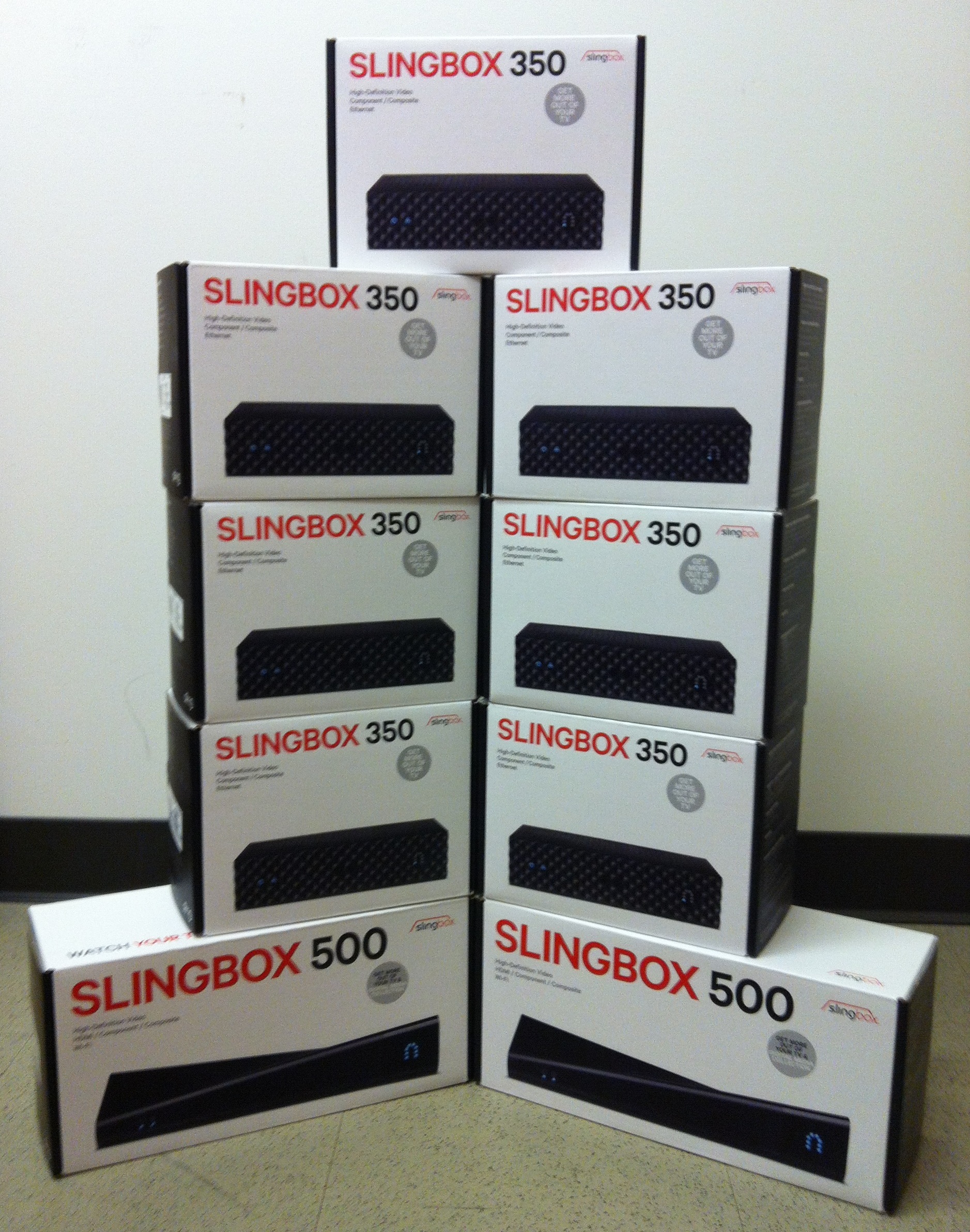
Free Giveaway: Win A New Slingbox 350 – The True TV Everywhere Device

If you are looking to access your full linear TV lineup wherever you go from your computer or mobile device, then the Slingbox is the only way to go. I’ve still got one brand new Slingbox 350 left over the Streaming Media West show last month and will give it away to one lucky reader of my blog.

To enter the drawing, just leave one comment on this post with your full name and submit the comment using a valid email address. I’ll pick one lucky winner at random next month. You must have a U.S. postal address as I will not ship it overseas outside the United States. Good luck!

Thursday Webinar: “Understanding The Business & Technical Challenges of MPEG-DASH”

Thursday at 2pm ET I’ll be moderating another StreamingMedia.com webinar, this time on the topic of, “Understanding The Business & Technical Challenges of MPEG-DASH“. Learn about MPEG DASH transcoding for adaptive bit rate applications optimizing image quality: bit-rate, resolution and video processing; factors to consider when making a stream selection; dealing with large files when a single video stream has multiple language streams; and sharing segmented files using manifests of differing standards.

Join Telestream, Sovee, Sorenson Media and RealNetworks in an interactive webinar and learn about:

  • MPEG DASH transcoding for adaptive bit rate applications
  • Optimizing image quality: bit-rate, resolution and video processing
  • Factors to consider when making a stream selection
  • Dealing with large files when a single video stream has multiple language streams.
  • Sharing segmented files using manifests of differing standards

Register here and bring your questions for the presenters for the live Q&A portion of the event.

Encoding.com Launches Universal Closed Captioning Solution For Video

Encoding.com recently announced the launch of their Universal Closed Captioning solution designed to deliver an easy-to-use, full featured, automated closed captioning workflow for delivery to all devices. Supporting the various closed captioning specifications required for iOS, Android, web and set-top box devices, the solution integrates with digital video authoring and distribution workflows and offers the speed and infinite scalability of Encoding.com’s public and private cloud platforms.

Encoding.com says the company’s Universal Closed Captioning Solution is the first to support universal closed caption delivery across all devices and identifies the following capabilities as representing only a few of the many options available to customers:

  • Utilize all formats including CEA-608/708, DFXP, SAMI, SCC, SRT, TTML and 3GPP Time Text
  • Seamlessly integrate with any existing digital video authoring and distribution workflow
  • Extract, inject, copy and mux closed captions tracks into sidecar (text) files or digital video
  • Extract standard closed caption tracks from source files and convert them into sidecar files
  • Copy closed caption or timed text tracks from source videos to output videos
  • Mux a sidecar file with a source video to encode closed caption tracks into output videos.

Implementation of closed captioning remains a popular topic among digital video distributors as pressures have intensified to comply with the Video Accessibility Act and to reduce overall time-to-market. Recently, Netflix reached an agreement with litigators after being sued for failing to support closed captioning and agreed to achieve compliance within 2 years. This rush to compliance reflects a common trend amongst VOD providers as companies like Hulu, Amazon and YouTube race to implement closed captions. Encoding.com also has a blog post that answers some of the most common questions they get asked by customers trying to implement closed captioning.

StreamingMedia.com is gearing up to publish a featured article on the topic of closed captioning, what’s required by law and what solutions are available in the market. It’s also a topic we will have how-to sessions on at the next Streaming Media East show in May of 2013.

Akamai Acquires Transparent Caching/Licensed CDN Provider Verivue; What It Means

This morning Akamai announced they have reached an agreement to acquire privately held Verivue Networks, which providers a transparent caching and licensed CDN platform to service providers. Akamai expects the deal to close by the end of this year and said they will pay all cash for the company, but has not disclosed any other terms of the deal. Verivue doesn’t have a lot of paying customers and has a small number of customer deployments with 2012 revenue in the $20M-$25M range, so I don’t expect Akamai to be paying much for the company.

While many are calling this a licensed CDN acquisition by Akamai, it’s also a transparent caching play. Verivue has two technologies that will benefit Akamai, a licensed CDN platform, and transparent caching technology, which is where Verivue gets a lot of their revenue from. Over the past year, many vendors have been working to combine the two technologies into one platform for service providers. PeerApp, the leader in the market has teamed up with EdgeCast, Juniper teamed up with Tata and Cisco is also working with PeerApp. For a better understanding of how transparent caching fits into the CDN market, read my previous post entitled “An Overview Of Transparent Caching and Its Role In The CDN Market“.

For those not familiar with the term “transparent caching” the idea is simple. Transparent caching platforms make intelligent decisions about which content can and should be cached inside a carrier’s network. By deploying intelligent caches strategically throughout their networks, operators can cache and deliver popular content close to subscribers and reduce the amount of transit traffic across their networks. CDNs like Akamai are good at what they do, serving content to subscribers quickly, and in the process alleviating peering costs for service providers. But there’s an enormous amount of traffic that CDNs do not serve, and that’s where the value of intelligent caching comes in.

Deployed throughout a carrier network, transparent caching improves subscribers’ experience and reduces carriers’ peering costs, but only if it delivers the features and intelligence required to adapt to constantly changing user behavior and content patterns, and most importantly, scales economically to tens or hundreds of gigabits per second. Akamai’s plan is to take the best of both technologies, licensed CDN and transparent caching and combine them into one platform, sold to service providers.

When Akamai announced their licensed CDN product in February, the company didn’t mention anything in their release about it having any transparent caching functionality. But in a briefing I had with the company when they announced it, Akamai divulged that their licensed CDN product would have transparent caching functionality build in. That was an interesting piece of news because Akamai’s platform would then offer all three services to an operator, those being on-net services/software, off-net delivery and transparent caching. At the time, Akamai said that 100% of the technology for their managed and licensed CDN product had been developed in-house and that they did not plan to licensed any transparent caching technology from any third-party. Clearly the company has changed their mind and acquiring Verivue will help them get to the market faster.

Since Akamai’s announcement of their licensed CDN product nine months ago, the company has yet to mention a single customer by name that is using their platform. This morning they mentioned to me that they have “three customers in trial” for their licensed CDN platform, which is still in beta but that they have “some paying customers today” for their managed CDN product. While we don’t yet know how much money Akamai is paying for Verivue, clearly they aren’t making too big of a bet on the licensed CDN business, otherwise they would have acquired EdgeCast, the leader in the licensed CDN market. But with expected revenues of around $70M this year for EdgeCast, coming from both regular CDN services and their licensed CDN platform, realistically, Akamai would have had to spend a few hundred million for EdgeCast, something I doubt they are paying anything near for Verivue.

As a stand alone business, the transparent caching market is expected to be $142M this year and the licensed CDN market is even smaller. So there is not a lot of revenue here – yet. Also, the market is crowded with transparent caching vendors including PeerApp, Qwilt, Juniper, Huawei, Fortinet, Conversant, BTI Systems, Brocade, Blue Coat, VidScale and Allot Communications who just acquired Oversi. Add to that all of the licensed and manged CDN vendors in the market like EdgeCast, Limelight Networks, Jet-Stream, Cisco, Alcatel-Lucent, XDN and others and it’s a very crowded market. But many of the players in the space are small, some are having trouble growing revenue and it’s only a matter of time before the market consolidates even more. No one truly knows what the size of the licensed CDN market is today, or what it can grow to because it’s only just getting started and we need to see a lot more customer deployments before we have enough data in the market to see how service providers use these platforms. But there is a real opportunity with the right kind of licensed CDN platform and it’s a market that is going to grow nicely over time. Acquiring Verivue should allow Akama to help get deployments in the market much faster.