Fox Corporation to Acquire Roku: Close in the First Half of 2027, $22B in Enterprise Value.
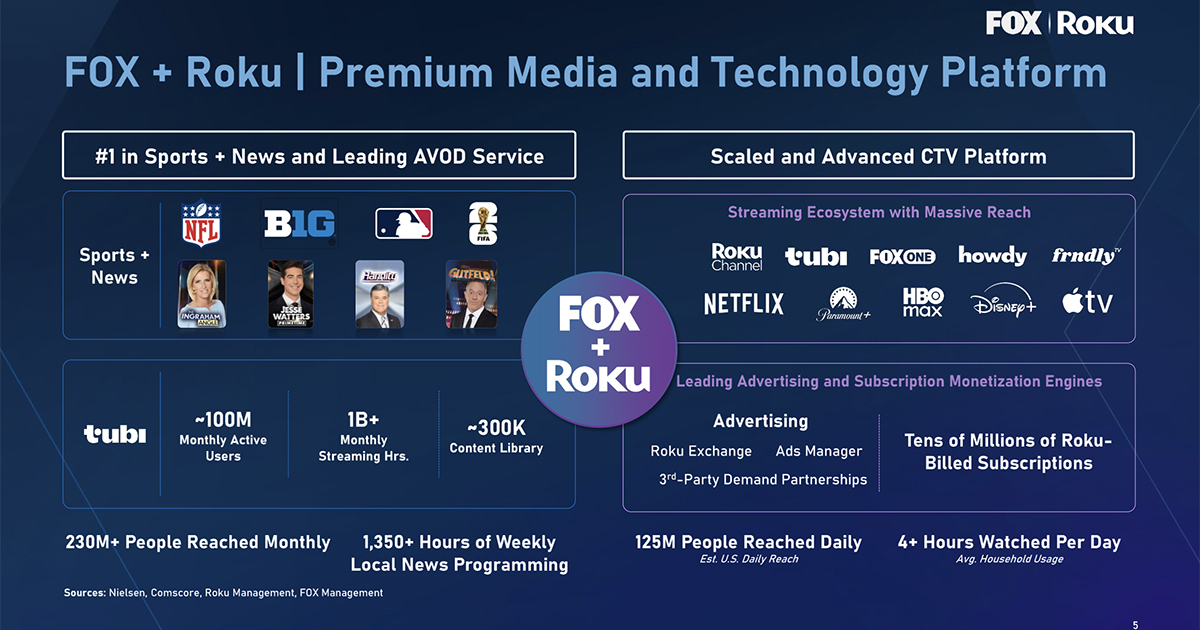
The rumors are true. Fox Corporation announced it has agreed to acquire Roku for $160 per share, in cash (60%) and Fox common stock (40%), valuing Roku at approximately $22 billion in enterprise value. Fox is taking on new debt to fund the deal and has secured $12 billion in fully committed bridge financing from Morgan Stanley.

The deal is expected to close in the first half of 2027, and upon closing, existing FOX shareholders are expected to own approximately 73% of the combined company, with Roku shareholders owning approximately 27%. Fox originally invested in Roku in 2013, participating as an early, pre-IPO investor

Fox says the deal is expected to be accretive to free cash flow per share by the second full year after closing and to achieve approximately $400 million in run-rate cost synergies, with additional revenue upside. In 2021, Roku’s Stock hit an all-time high of $479.50 during the pandemic-driven streaming boom, but it quickly declined to under $100 a year later. From April 2022 to December 2025, Roku’s stock only briefly peaked above $100 per share.

As expected, Roku will remain an open platform, and content from other companies will continue to be supported and promoted, with a continued focus on an aggregation strategy. Fox said they plan to keep Tubi and The Roku Channel separate after the deal closes, noting that about a third of their audiences overlap. While the combination of Fox and Roku brings together news and sports channels with two free streaming services, it’s the advertising side of Roku’s business that’s most valuable. Based on Wall Street estimates, the deal values Roku at 24x FY27E EBITDA.

During Roku’s Q1 earnings, the company broke out advertising and subscription business for the first time, with advertising revenue of $613M, up 27% YoY. Subscription revenue was $519M, up 30%. Total revenue for the quarter was $1.248B, up 22% YoY on net income of $85.7M. Revenue from device sales was less than 10% of total revenue, at $118M, down 16%. Streaming hours across the Roku platform were up 8% to 38.7 billion. Roku ended Q1 with $2.38 billion in cash and cash equivalents on hand, with zero long-term debt.

As part of the deal, Anthony Wood, founder, chairman and CEO of Roku, will join the Fox board. The Fox and Roku investor presentation is located here.
Sponsored by

Updated List of Streaming, OTT, and Brodcast Conferences and Events Globally

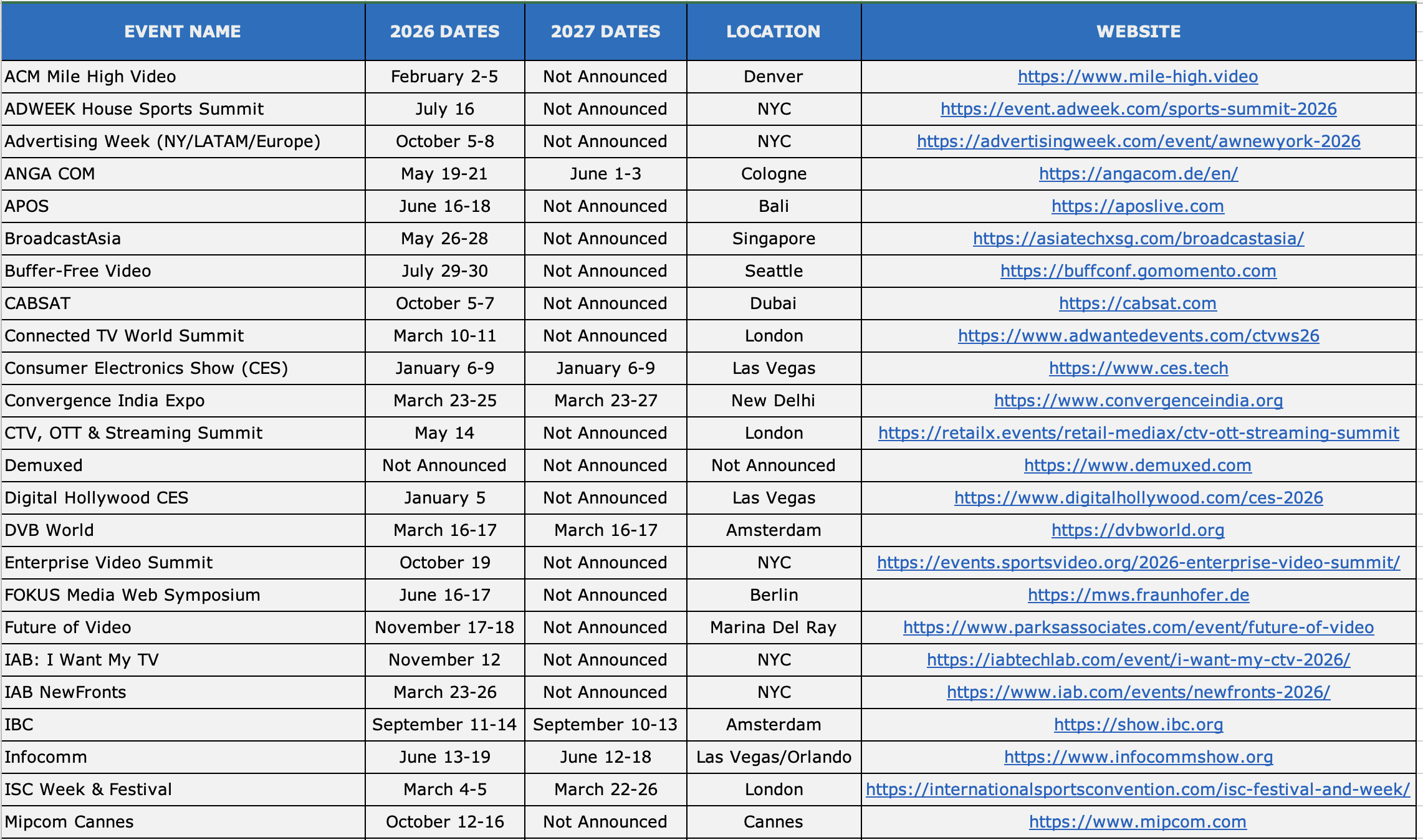
I’m often asked for a list of in-person conferences and events in the streaming media industry, so here’s an Excel sheet you can download listing nearly 50 events worldwide. For vendors wondering which events are the best fit, I’m happy to do a call with you and share my feedback on which events align with your objectives. Especially if you are new to a vendor’s marketing team, reach out to me. (dan@danrayburn.com)

My list does not include any private events, vendor-produced events, meetups, or events that are only open to members. The list includes events primarily tied to the broadcast/TV and sports industries, as well as OTT services. It does not include events where video is used for retail/commerce, security, education, gaming, government and other use cases. I have excluded any event that focuses solely on video production, filmmaking, or the creator economy and does not discuss streaming technology and business models.

Streaming is a technology. OTT is a business model. Broadcast is an industry. While many use the terms interchangeably, they are different, so other events do exist that are not on my list, depending on the video use case. If you think an event should be added to the list, please leave it in the comments section on this LinkedIn post, and I will consider it. I may not add it, but the Excel sheet is open and unlocked, so feel free to download and edit it as you wish. I will update the list a few times per year, and have included a date on the file so you always know when it was last edited.

CEO of BBC Studios’ DTC Business Discusses How North America Became British TV’s Biggest Opportunity

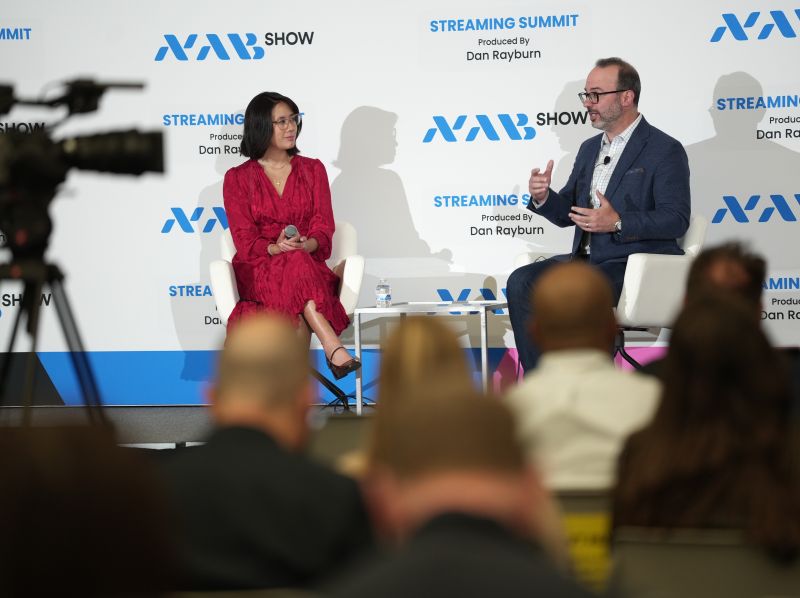
At the NAB Streaming Summit on April 20, 2026, Robert Schildhouse, CEO of BBC Studios’ DTC business, discussed the strategic evolution of streaming and the specific success of BritBox. Schildhouse, an industry veteran who helped launch Hulu in 2008, outlined how his division prioritizes a “durable and profitable” business model over the high-volume, “grow-at-all-costs” strategy popularized by Netflix.

Unlike general entertainment platforms aiming for 200 million global households, BritBox focuses on a disciplined, niche approach, which some might call the “Anti-Netflix” model. Some of Robert’s key takeaways on the business included:

  • Profitability Over Scale: BritBox prioritizes profit margins and lifetime customer value over sheer subscriber counts
  • Distinctive Content Lanes: BritBox leans into specific British genres that resonate with American audiences, particularly mysteries, crime, and period dramas
  • Retention vs. Hits: Instead of relying on a single quarterly “mega-hit” to drive sign-ups, the service focuses on its “deep cannon” of thousands of hours of programming to keep users engaged long-term

Schildhouse highlighted the successful launch of BritBox Premier, a premium tier that offers 4K quality, early access to shows, mobile downloads, and documentaries from BBC Select. Though launched with little fanfare, it already represents over 10% of its own-and-operated subscribers.

An interesting stat Robert gave out was that 50% of BritBox’s direct subscribers are on annual plans. These users are worth more than twice as much as monthly subscribers, given their significantly higher tenure and lower churn. BritBox’s audience leans older and more female, a segment Schildhouse describes as more loyal and less prone to “serial churn” than younger viewers.

Marketing efforts are highly specific: while a general viewer might not see BritBox ads, target demographics are “overwhelmed” by them across TV and social media to keep the service top-of-mind.
Robert also teased the May 6 release of The Other Bennet Sister (a Pride and Prejudice spin-off), which he views as a major “on-ramp” for reaching broader female audiences.

Schildhouse strongly believes the industry’s future lies in aggregation and bundling, not fragmentation. BritBox is actively experimenting with bundles—having already partnered with Starz, MGM+, and Hallmark—to introduce the service to unique, adjacent audience profiles.

My thanks to Robert for speaking at the NAB Show Streaming Summit and giving everyone an update on BritBox’s business and market strategy. My apologies that his fireside chat is not available on demand; we had a technical issue with the recording. The rest of the presentations from the show can be seen here.

Netflix Announces Its Ad Tier Now Has More Than 250 Million Monthly Active Users

At its UpFronts presentation, Netflix announced it has more than 250 million monthly active users (not subscribers) on its Standard With Ads plan, up from 190 million in November of 2025. During Netflix’s Q1 earnings, the company said 60% of new Netflix customers now choose the ad plan, and a new stat from the UpFronts also showed that more than 80% of ad-supported viewers sign in to Netflix weekly.

In its Q1 earnings report, Netflix noted its ad business is expected to double this year, reaching $3 billion in revenue. In a letter to shareholders, the company noted that building the ads business has been a priority and that Netflix now works with over 4,000 advertisers, up 70% year over year.

The 250 million number is not the number of subscribers on its Standard With Ads plan. Netflix uses its own data, not a third-party, to calculate monthly active users as everyone in a household who watches more than one minute of ads on the service each month.

Starting next year, Netflix will also launch the ad-supported plan in 15 more countries: Austria, Belgium, Colombia, Denmark, Indonesia, Ireland, the Netherlands, New Zealand, Norway, Peru, the Philippines, Poland, Sweden, Switzerland and Thailand.

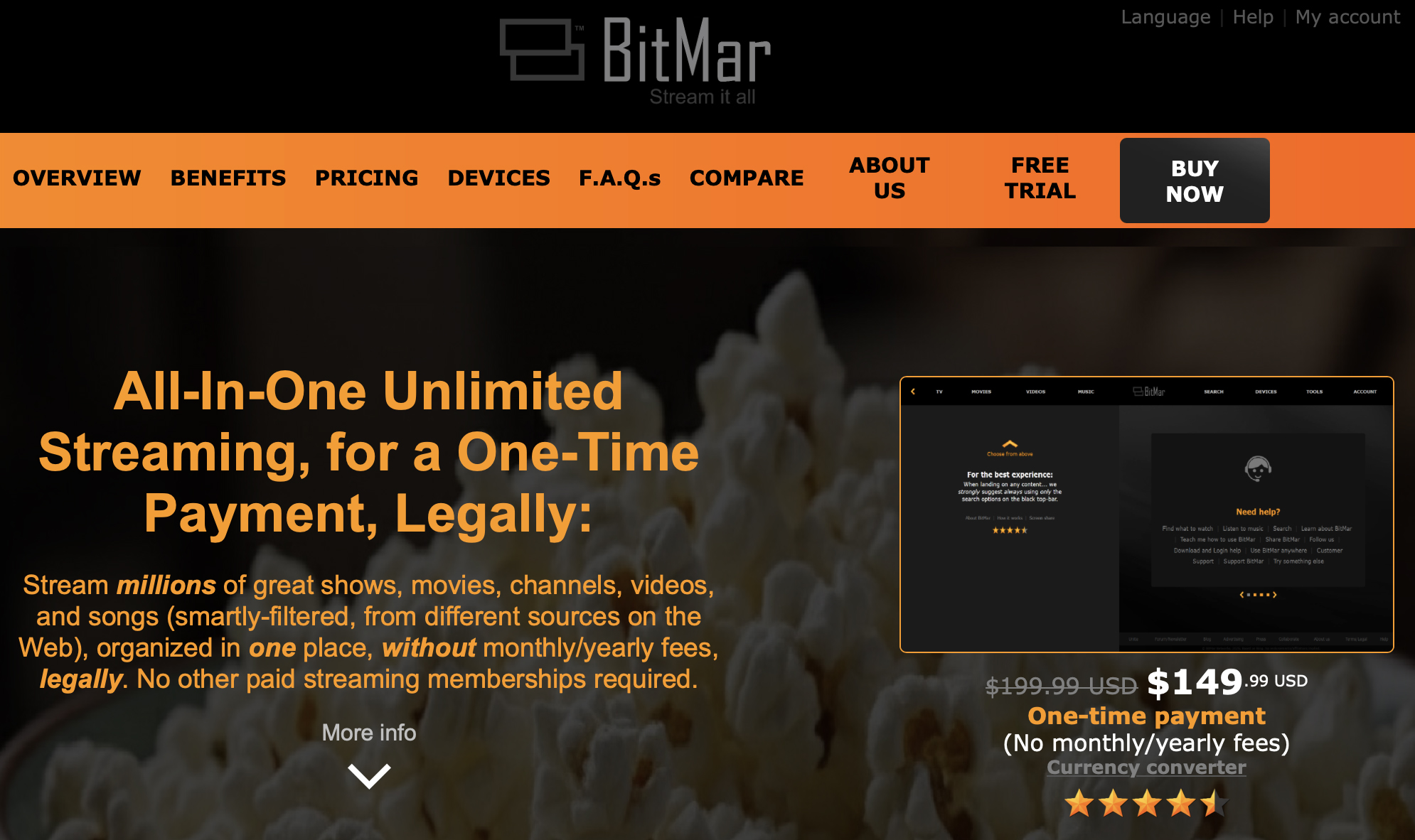
BitMar Is A Scam, Don’t Sign up For It: All Content Can be Found for Free Online

A company called BitMar, which promises to “stream everything legally,” is scamming people out of $150 by linking to free YouTube content via Bing search and Pluto TV. The CEO reached out, offering me a “personal lifetime membership” and hoping I would “inform my audience” about the service. I’ll be happy to inform them. Stay away from BitMar!
While the company doesn’t say it streams content from the major OTT platforms, it still uses their name in its marketing, saying: “BitMar provides easy access to more movies, and TV shows, than: Cable, Satellite, Netflix, Disney Plus, Max/HBO Max, Amazon Prime Video, Apple TV+, Peacock, and Hulu combined, and more songs, than: Pandora, Spotify, Amazon Prime Music, and Apple Music—combined.”

As expected, all of its recent reviews on the Google App Store are 1-star. Google shouldn’t allow this type of app in the store; Apple doesn’t. The fine print on BitMar’s site makes for a good laugh. “Some content may be internationally restricted. Not all content is free and/or accessible. We have a no-refund policy.”

If you are a consumer reading this post, do not pay for this service.

Wall Street Doesn’t Understand the CDN Business, What AI Agentic Traffic Is, and How Bits are Delivered

Fastly’s stock was down 40% on Thursday, May 7th, one day after its Q1 earnings report, with Piper Sandler saying, “The disappointment was in the core delivery business that saw lower quarter-over-quarter volumes than most were expecting, as pricing remained stable.” Who’s most, and why were they expecting something different?

If you talk to customers, which Wall Street doesn’t, in particular, the large ones, none of them are seeing delivery volumes accelerating faster than projected. These large customers matter most to Fastly, as its top 10 customers accounted for 34% of revenue in Q1. Customers have optimized their encoding, overall bitrates have gone down, and 4K traffic accounts for 1-2% of all bits delivered across CDNs and isn’t growing. There is no catalyst in the market for Wall Street to expect volume increases quarter-to-quarter, outside of a CDN winning a new contract(s).

Another Wall Street firm, KeyBanc Capital Markets, had been bullish on the potential for “agentic use of the internet and web applications to drive CDN traffic higher.” That statement demonstrates no understanding of delivery technology, the scale of traffic requests, and how content is delivered. Agentic traffic refers to traffic generated by autonomous AI agents. AI agents are not watching videos from streaming services or downloading large software files, which account for the largest majority of the bit volume for a CDN vendor. Anything an AI agent does, such as requesting information from a website, accounts for a very small volume of data per request.

As of late 2024–2025, the average home page size is approximately 2.1 MB, according to HTTP Archive. A 30-minute video streamed at 6 Mbps averages 2.7 GB of data delivered. The video delivers 1,200 times as many bits as a webpage, or 2,400 times more for a 60-second video.

Before earnings, year-to-date, Fastly’s stock was up 210%, and it rallied 19% ahead of earnings. Even with the stock down 40% as of 2:35pm ET, it’s still up 212% in the past year. While Fastly raised its full-year 2026 revenue guidance to $710-$720 million, the midpoint was below Wall Street’s $716 million estimate. That, plus Fastly’s Q2 revenue guidance of $170-176M, which would be mostly flat from Q1, would be a realistic explanation for the stock’s decline.

Anyone on Wall Street expecting an acceleration in bit delivery within the CDN product bucket clearly doesn’t understand the market conditions, pricing, contract terms, commitments, or size of files delivered. And yet, so many public data points exist, many from the CDNs themselves, that Wall Street misses.

Disclaimer: I have never bought, sold or traded shares in any public CDN vendor, nor do I own any shares in any private CDN vendor.

A Year Later: Examining Google Media CDN’s Evolution in Scale, Monitoring, and Architecture

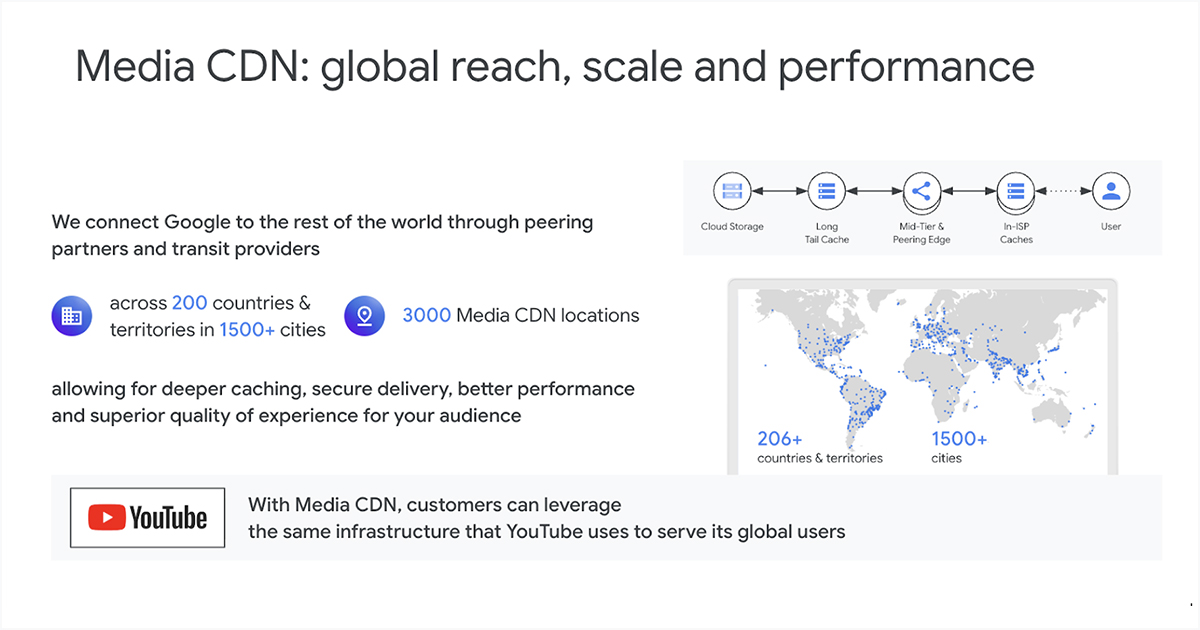
A year ago, I wrote about Google’s Media CDN offering and its positioning in the market, which was primarily centered on leveraging Google’s network for large-scale video delivery. As with any service, the initial value proposition is only part of the story. The more telling measure is its subsequent evolution in response to customer usage and industry demands. A year later, Google has made key enhancements to its Media CDN, focusing on adding capacity and operational tooling, as well as onboarding large media and entertainment customers.

The fundamental challenge for CDNs remains handling massive, concurrent traffic spikes associated with live streaming. Events over the past year, such as the Super Bowl, FIFA World Cup, and IPL, have continued to set new streaming benchmarks. One notable change in Google’s Media CDN offering is that since early 2025, it has tripled its delivery capacity through a combination of Google’s Media CDN offering and YouTube capacity. Beyond raw capacity, several architectural and commercial updates have been introduced to address common customer pain points around origin performance and budget predictability.

Google has added new caching and routing options, including Flexible Shielding, with shield regions in South Africa, the Middle East, and the U.S. The goal is to improve cache offload rates by keeping traffic within a region, thereby avoiding the latency and data-transit costs associated with the “hairpinning” effect of fetching content from a distant origin. This is an add-on feature that lets customers choose between optimizing for performance or offloading, in addition to the platform’s existing multi-region caching and shielding architecture, which is offered at no cost.

Google says a series of updates is aimed at solving common origin integration issues. For instance, the platform now supports HEAD requests, has increased its maximum segment size from 10MiB to 25MiB (likely to better support high-bitrate 4K streams), and has added support for multi-part range requests. These changes suggest a focus on improving interoperability with a wider range of customer storage configurations. On the commercial side, Google has introduced monthly savings plans. This model provides a committed-use discount, giving customers a more predictable TCO, a departure from a pure pay-as-you-go cost structure.

For live events, real-time performance visibility is critical. Google has introduced a Monitoring as a Service (MaaS) offering, positioned as a “broadcast operating center” equivalent. It is designed to provide a customer’s operations team with intensive, proactive support for events, with a consolidated view of an event’s health, from origin performance to end-user metrics.

The tool’s intended impact is to enable proactive issue detection, allowing teams to identify potential problems before they affect a large number of viewers. For customers with large-scale events that have used it, the tool is intended to provide real-time data needed to manage a professional broadcast.

Google’s initial market entry with its Media CDN offering was focused on its network foundation. The changes over the last year, however, indicate a shift toward addressing more specific, operational, and architectural challenges faced by large-scale broadcasters. The introduction of more flexible caching, origin compatibility fixes, and broadcast-grade monitoring tools suggests a maturing platform. The true measure will be how these enhancements perform under pressure across a broader range of customer workloads, but the direction of development is clear.